


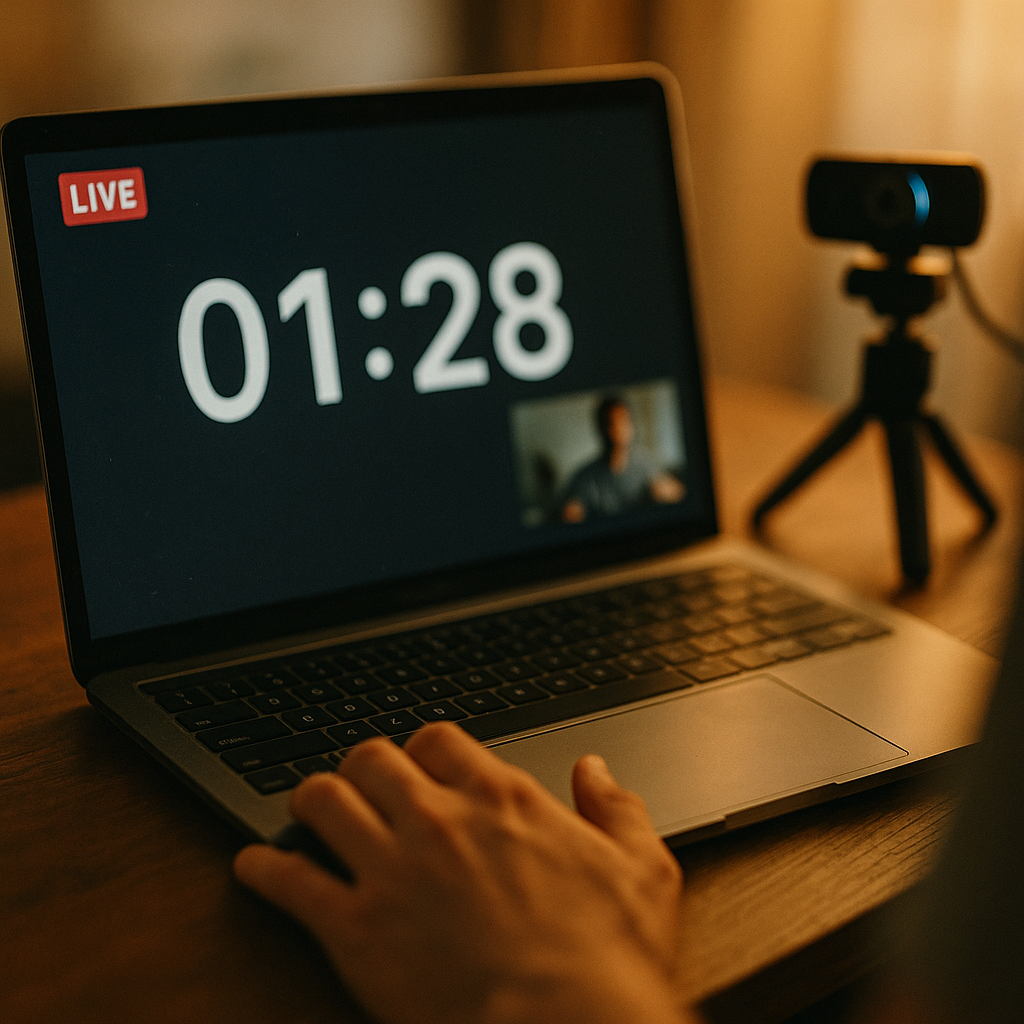
Forty-three minutes. That’s how long a “final hours” countdown timer ran on a beauty brand’s TikTok Shop livestream last quarter — before it reset and ran again. A shopper filed a complaint. A state AG took notice. Nobody at the brand thought a livestream countdown timer could trigger a deceptive-scarcity statute claim. They were wrong, and the exposure is bigger than most legal teams realize.
Why Countdown Timers Became a Legal Problem
Livestream shopping turned urgency into a design pattern. Countdown clocks, “only 3 left” banners, flash-sale overlays — these aren’t new tactics. Direct response marketers have used them since infomercials. What’s changed is scale and automation. TikTok Shop, Amazon Live, and Whatnot now let brands deploy countdown widgets programmatically, often through third-party livestream commerce plugins that brand marketing teams never fully audit.
That automation is the problem. When a human host says “sale ends tonight,” there’s at least a person accountable for the claim. When a widget auto-generates a countdown that resets every time a new viewer joins the stream, nobody made that specific representation. The software did. And state deceptive-scarcity statutes don’t care who — or what — generated the false urgency.
If your countdown timer resets, extends, or repeats without a genuine change in underlying inventory or pricing, you’re not creating urgency. You’re manufacturing a false statement of fact, and several states will treat it exactly that way.
The Statutory Landscape: More Fragmented Than Marketers Assume
There is no federal statute specifically targeting scarcity marketing. The FTC regulates deceptive claims broadly under Section 5 of the FTC Act, and the agency has signaled interest in dark patterns generally, but enforcement against countdown timers specifically has been rare at the federal level. The real exposure sits with states.
California, New York, and several other states have consumer protection statutes — often modeled on or extending Unfair and Deceptive Acts and Practices (UDAP) frameworks — that explicitly cover false representations of limited availability, limited time offers, or artificially induced urgency. California’s Business and Professions Code Section 17500 covers false advertising broadly, and courts have applied it to fabricated urgency claims in e-commerce contexts. New York’s General Business Law Section 349 has been used in class actions against countdown-clock dark patterns on retail websites, with plaintiffs’ firms increasingly extending those theories to livestream and social commerce.
Here’s the part that should worry brand legal teams: livestream commerce is a hybrid channel. It has characteristics of broadcast advertising, characteristics of point-of-sale representations, and characteristics of algorithmic personalization. Existing case law was written for static web pages with countdown widgets, not for a livestream where the timer, the price, and the “units remaining” counter can all be personalized per viewer in real time. That personalization angle overlaps meaningfully with the pricing-disclosure issues raised in the FTC personalized pricing rule guidance — if the countdown timer is tied to a dynamic price that differs by viewer, you’re stacking two separate legal exposures on top of each other.
What Makes a Timer “Deceptive” Versus Merely Persuasive
Not every countdown timer is illegal. Genuine limited-time promotions are lawful and, frankly, effective marketing. The line courts and regulators draw generally comes down to a few factual questions:
- Does the timer reflect an actual constraint? If inventory genuinely runs out when the clock hits zero, that’s a true statement. If the “sale” simply continues under a new banner, it’s not.
- Does the countdown reset for new or returning viewers? A timer that shows 10 minutes remaining to every viewer regardless of when they joined the stream is presumptively deceptive under most state frameworks — it’s representing a false endpoint.
- Is the “units remaining” counter tied to real inventory data? Fabricated stock counters (a persistent “only 2 left!” that never decreases or resets nightly) are a well-documented dark pattern that the FTC and multiple state AGs have flagged in rulemaking commentary.
- Who controls the timer logic — brand, platform, or third-party plugin vendor? This matters enormously for liability allocation, which we’ll get to below.
The pattern regulators keep coming back to: representations of fact versus representations of opinion or puffery. “Amazing deal” is puffery. “Offer ends in 4 minutes” is a factual claim about time. Factual claims can be false. Puffery generally can’t sustain a deceptive-practices claim on its own.
Brand-Approved Doesn’t Mean Brand-Immune
Here’s the assumption that gets legal teams in trouble: “we approved the creative, so we’re covered.” Approval of the creative concept — a countdown timer as a design element — is not the same as approval of the specific data feeding that timer moment to moment. Most brands sign off on the template. Almost none audit the backend logic determining what the timer actually displays to each viewer.
This is structurally similar to the liability gap explored in AI auto-approved creative disputes — when an automated system generates the final consumer-facing representation, “we approved the concept” is a weak defense if the execution diverges from what was approved. A brand that approves “add a countdown timer to the livestream” without specifying the reset logic, inventory sync method, or personalization rules has effectively delegated a legal decision to a software vendor’s default settings.
That’s the exposure state AGs are starting to probe: not the creative concept, but the operational mechanics behind it.
Livestream commerce platforms compound this. TikTok Shop’s livestream tools, for instance, allow sellers to layer promotional widgets that aren’t always visible to the brand’s legal or compliance function during a live, fast-moving broadcast. If your brand is selling through affiliated creators or a multi-vendor storefront, the chain of custody for who configured the timer gets even murkier — echoing the identity and verification gaps discussed in TikTok real IP verification requirements for brand merchants.
A Practical Framework: Four Tests Before You Ship a Countdown Widget
Legal and marketing teams need a shared pre-launch checklist, not a post-complaint autopsy. Here’s a workable four-test framework for evaluating any countdown timer before it airs.
- Data Fidelity Test. Does the timer’s displayed value derive from a real, verifiable data source (actual inventory count, actual promotion end time set in the commerce backend) rather than a static or randomized front-end display? Require your livestream commerce vendor to document this in writing.
- Viewer Consistency Test. Does every viewer, regardless of when they joined the stream, see the countdown reach zero at the same real-world moment? If viewer A sees “12 minutes left” at 3:00pm and viewer B joining at 3:15pm also sees “12 minutes left,” that’s a resettable timer and a near-automatic red flag in states with UDAP scarcity provisions.
- Post-Expiration Behavior Test. What actually happens when the timer hits zero? If the promotion genuinely ends — price reverts, product delists, or the offer disappears — you’re likely fine. If the same offer simply continues with a fresh countdown, document why (system lag isn’t a defense if it happens every single stream).
- Disclosure Sufficiency Test. Is there any qualifying language — “while supplies last,” specific end dates, terms links — visible during the stream itself, not buried in a bio link? Livestream is ephemeral; disclosures need to appear in the moment of the claim, similar to the timing standards courts have applied to on-screen disclosures in other creator-content contexts, as covered in our FTC disclosure rules breakdown.
Run every livestream commerce integration through these four tests before launch, and again quarterly, since vendors push feature updates that can silently change timer behavior.
Contractual Risk Transfer: Where Most Vendor Agreements Fall Short
If a third-party livestream commerce plugin generates the countdown logic, your master services agreement with that vendor needs specific representations: that displayed countdowns reflect actual backend data, that reset behavior is disclosed and configurable, and that the vendor indemnifies the brand for deceptive-display claims arising from default settings the brand didn’t affirmatively choose. Most standard SaaS commerce-tool contracts don’t include this language. Ask for it. If the vendor won’t provide it, that’s informative in itself.
This mirrors the broader shift toward tighter vendor accountability language seen in TikTok Shop data processing agreements — brands are learning, often the hard way, that platform defaults are not neutral and someone has to own the liability for them.
Insurance is the other lever. Media liability and advertising injury coverage often exclude “known” deceptive practices, which raises an uncomfortable question if your brand ran the same countdown pattern across dozens of streams without ever auditing it. Once you’ve read this article, “we didn’t know” gets harder to argue in front of a regulator or a jury.
State-by-State Variance Is Real — Plan for the Strictest Jurisdiction
California and New York get the most litigation attention, but Illinois, Washington, and Massachusetts all have consumer protection statutes with scarcity-adjacent provisions or active AG enforcement postures. Given that livestreams are broadcast nationally and shoppable in every state simultaneously, the practical compliance strategy is to design for the strictest applicable jurisdiction rather than maintain 50 separate configurations. Retailers with e-commerce operations already do this for return policies and pricing disclosures; livestream commerce needs the same discipline. For background on how regulators are approaching scale personalization issues adjacent to this one, see the FTC’s own guidance on unfair and deceptive practices and recent commentary from eMarketer’s livestream commerce research.
Trade groups tracking dark-pattern regulation, including resources published through Sprout Social’s platform research and HubSpot’s marketing compliance content, are useful for benchmarking how peer brands are adjusting creative guidelines. None of this replaces jurisdiction-specific legal review, but it establishes a documented, good-faith compliance process — which matters enormously if a regulator ever asks what your brand did to prevent the problem.
Next Step
Pull your last quarter of livestream recordings, run them through the four-test framework above, and flag any countdown timer that resets per viewer or outlives its stated deadline — that audit trail is your best defense if a state AG or plaintiffs’ firm comes asking.
FAQs
Can a brand be held liable for a countdown timer configured by a third-party livestream plugin?
Yes. Brands are generally treated as the party making the representation to consumers, regardless of which vendor’s software generated the timer. Contractual indemnification from the vendor can shift financial risk but doesn’t eliminate the brand’s regulatory exposure.
Is a “limited time offer” that keeps repeating automatically illegal?
It depends on the state and the facts, but a repeating offer presented each time as a unique, expiring deal is a common pattern flagged under state deceptive-practices statutes, especially if the underlying price or inventory never actually changes.
Does the FTC regulate livestream countdown timers directly?
Not through a specific rule dedicated to countdown timers. The FTC addresses deceptive scarcity claims under its general Section 5 authority against unfair or deceptive acts, and state attorneys general have been more active on this specific pattern.
What documentation should brands keep to defend a countdown timer’s legitimacy?
Backend logs showing the timer’s data source, inventory sync records, screenshots of viewer-specific displays at different join times, and vendor contract terms describing reset behavior are the core evidence set.
How does personalized pricing interact with countdown timer risk?
If the price displayed alongside the countdown varies by viewer, the timer claim and the pricing claim can each independently violate different statutes, compounding exposure rather than existing as a single issue.
FAQs
Can a brand be held liable for a countdown timer configured by a third-party livestream plugin?
Yes. Brands are generally treated as the party making the representation to consumers, regardless of which vendor’s software generated the timer. Contractual indemnification from the vendor can shift financial risk but doesn’t eliminate the brand’s regulatory exposure.
Is a “limited time offer” that keeps repeating automatically illegal?
It depends on the state and the facts, but a repeating offer presented each time as a unique, expiring deal is a common pattern flagged under state deceptive-practices statutes, especially if the underlying price or inventory never actually changes.
Does the FTC regulate livestream countdown timers directly?
Not through a specific rule dedicated to countdown timers. The FTC addresses deceptive scarcity claims under its general Section 5 authority against unfair or deceptive acts, and state attorneys general have been more active on this specific pattern.
What documentation should brands keep to defend a countdown timer’s legitimacy?
Backend logs showing the timer’s data source, inventory sync records, screenshots of viewer-specific displays at different join times, and vendor contract terms describing reset behavior are the core evidence set.
How does personalized pricing interact with countdown timer risk?
If the price displayed alongside the countdown varies by viewer, the timer claim and the pricing claim can each independently violate different statutes, compounding exposure rather than existing as a single issue.
Top Influencer Marketing Agencies
The leading agencies shaping influencer marketing in 2026
Agencies ranked by campaign performance, client diversity, platform expertise, proven ROI, industry recognition, and client satisfaction. Assessed through verified case studies, reviews, and industry consultations.
Moburst

-
2

The Shelf
Boutique Beauty & Lifestyle Influencer AgencyA data-driven boutique agency specializing exclusively in beauty, wellness, and lifestyle influencer campaigns on Instagram and TikTok. Best for brands already focused on the beauty/personal care space that need curated, aesthetic-driven content.Clients: Pepsi, The Honest Company, Hims, Elf Cosmetics, Pure LeafVisit The Shelf → -
3

Audiencly
Niche Gaming & Esports Influencer AgencyA specialized agency focused exclusively on gaming and esports creators on YouTube, Twitch, and TikTok. Ideal if your campaign is 100% gaming-focused — from game launches to hardware and esports events.Clients: Epic Games, NordVPN, Ubisoft, Wargaming, Tencent GamesVisit Audiencly → -
4

Viral Nation
Global Influencer Marketing & Talent AgencyA dual talent management and marketing agency with proprietary brand safety tools and a global creator network spanning nano-influencers to celebrities across all major platforms.Clients: Meta, Activision Blizzard, Energizer, Aston Martin, WalmartVisit Viral Nation → -
5

The Influencer Marketing Factory
TikTok, Instagram & YouTube CampaignsA full-service agency with strong TikTok expertise, offering end-to-end campaign management from influencer discovery through performance reporting with a focus on platform-native content.Clients: Google, Snapchat, Universal Music, Bumble, YelpVisit TIMF → -
6

NeoReach
Enterprise Analytics & Influencer CampaignsAn enterprise-focused agency combining managed campaigns with a powerful self-service data platform for influencer search, audience analytics, and attribution modeling.Clients: Amazon, Airbnb, Netflix, Honda, The New York TimesVisit NeoReach → -
7

Ubiquitous
Creator-First Marketing PlatformA tech-driven platform combining self-service tools with managed campaign options, emphasizing speed and scalability for brands managing multiple influencer relationships.Clients: Lyft, Disney, Target, American Eagle, NetflixVisit Ubiquitous → -
8

Obviously
Scalable Enterprise Influencer CampaignsA tech-enabled agency built for high-volume campaigns, coordinating hundreds of creators simultaneously with end-to-end logistics, content rights management, and product seeding.Clients: Google, Ulta Beauty, Converse, AmazonVisit Obviously →