


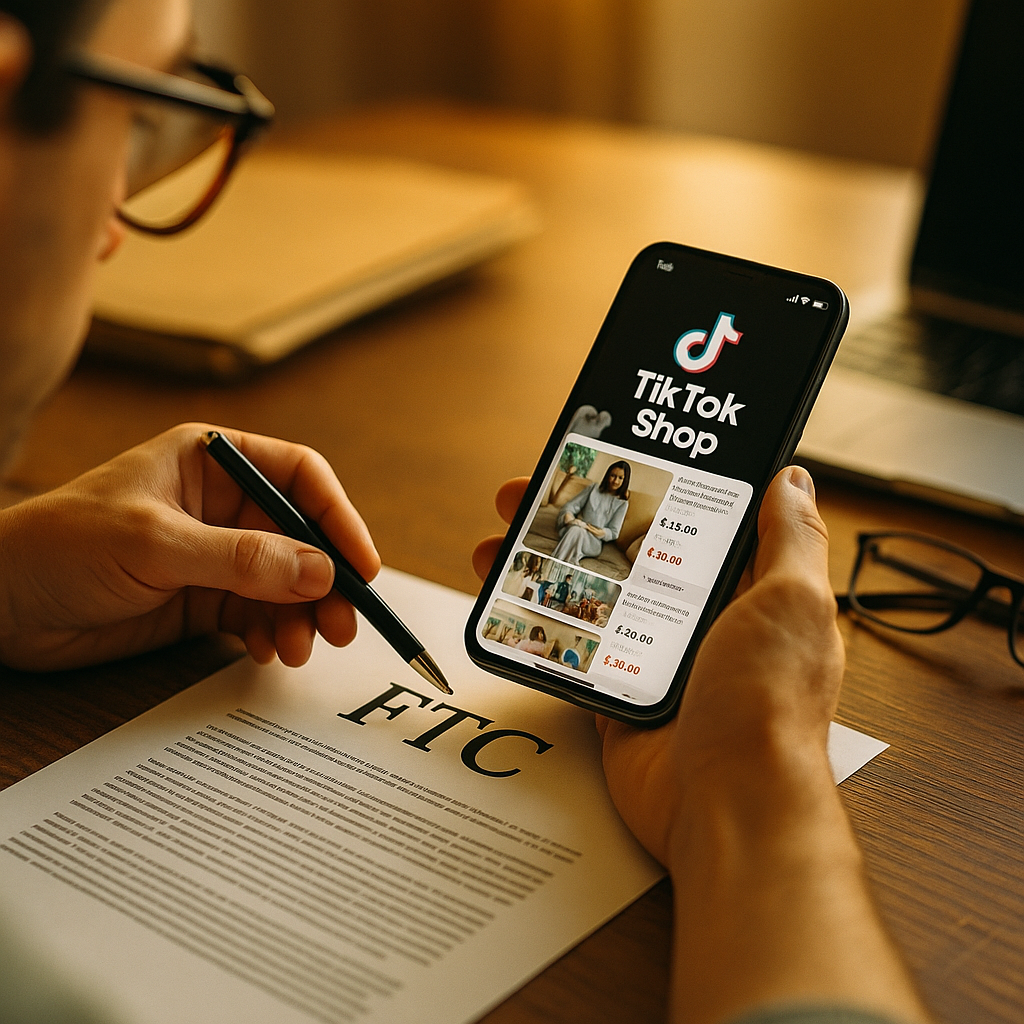
Seventy-one percent of consumers expect personalized experiences, according to industry research on consumer behavior — but almost none of them expect personalized pricing. When TikTok Shop’s recommendation engine quietly uses purchase history to adjust what a shopper sees at checkout, the gap between expectation and reality becomes a legal exposure. If your brand runs product on TikTok Shop and your data processing addendum still reads like boilerplate from three years ago, you have a problem. The data processing addendum is no longer a formality — it’s your first line of defense.
Why This Suddenly Matters to Legal and Marketing Alike
The FTC’s August guidance didn’t invent algorithmic pricing scrutiny. It sharpened it. Regulators have spent the better part of two years building toward a clear position: when a platform uses behavioral or purchase-history signals to vary price, discount depth, or bundle offers between users, that’s personalized pricing — and it triggers disclosure obligations regardless of whether the brand or the platform built the model. Our enforcement timeline breakdown shows how quickly this moved from guidance to active investigation targets.
Here’s the operational wrinkle. TikTok Shop’s AI recommendation engine sits between your brand and the customer. It ingests purchase history, browsing signals, and engagement data, then outputs personalized offers — sometimes including price variance — that your brand didn’t directly configure. Your DPA with TikTok Shop, and by extension your data governance documentation with any agency or MCN touching that data, has to account for a pricing decision you don’t fully control but remain accountable for.
If your DPA doesn’t name the specific data elements feeding TikTok’s pricing personalization, you can’t prove compliance — you can only hope the platform’s own disclosures cover you. Hope is not a legal strategy.
What the FTC Guidance Actually Requires
The August guidance clarifies three things brands need to bake into contractual language, not just marketing copy:
- Attribution of data inputs. Regulators want to know which specific data categories (purchase history, cart abandonment, browsing dwell time) feed pricing decisions, not just a vague reference to “personalization.”
- Consumer notice at the point of price variance. A general privacy policy disclosure buried in a footer no longer satisfies the standard. Disclosure needs to be proximate to the pricing moment.
- Downstream accountability. Brands can’t outsource liability to the platform. If TikTok Shop’s engine personalizes pricing using data your brand supplied or authorized, you share exposure.
This last point is the one most legal teams miss. Your DPA needs to explicitly define what happens when the platform’s AI, not your own systems, makes the pricing call. We covered the mechanics of this shift in our disclosure policy walkthrough, and it’s worth reading alongside this piece if you’re building your compliance stack from scratch.
Drafting the DPA: Five Clauses That Actually Protect You
Generic data processing addendums treat all “processing” the same. That won’t cut it anymore. Pricing personalization is a distinct processing purpose with distinct risk, and your DPA should treat it that way. Here’s what belongs in the document.
1. A Standalone Pricing-Personalization Purpose Clause
Don’t bury pricing use inside a catch-all “marketing optimization” purpose. Carve out a specific clause naming purchase-history-driven price personalization as its own processing activity, with its own data minimization limits. If TikTok Shop can’t specify which fields feed the pricing model, that’s a red flag worth escalating before signature.
2. Data Field Enumeration, Not Categories
“Transaction data” is not specific enough. Your DPA should list actual fields: SKU-level purchase history, order frequency, average order value, discount redemption history. Vague categories create ambiguity that benefits the platform, not your brand, when a regulator asks what data actually drove a price a consumer saw.
3. Audit Rights Tied to Algorithmic Output
Traditional audit rights let you inspect data handling practices. That’s necessary but insufficient. You need contractual language granting the right to request output logs showing how pricing varied across a sample of users, tied to the data inputs used. Without this, you’re flying blind on whether the platform’s engine is doing something that would embarrass you in a regulatory inquiry. This mirrors the audit logic we outlined in the algorithm audit framework for surveillance pricing.
4. Notification Triggers for Model Changes
AI recommendation engines get retrained constantly. A model update that adds a new data signal (say, incorporating livestream watch time into pricing logic) is a material change to the processing purpose. Your DPA should require advance notice, not after-the-fact disclosure, whenever TikTok Shop materially changes what feeds the pricing engine.
5. Indemnification Scoped to Disclosure Failures
This is where a lot of brand legal teams get outmaneuvered. Platform DPAs often push indemnification obligations onto the brand for “misuse” of data, without clearly defining what counts as misuse in a pricing context. Push back. You want indemnification language that clearly assigns liability to the platform when its engine uses data outside the scope your brand authorized, especially if that use results in an undisclosed price variance.
A DPA that doesn’t distinguish between “the platform processed data” and “the platform’s AI made a pricing decision using that data” is a DPA written for a world that no longer exists.
The Disclosure Problem Nobody’s Solved Yet
Even a perfectly drafted DPA doesn’t solve the consumer-facing half of the equation. If TikTok Shop’s engine shows two shoppers different prices based on purchase history, someone has to tell them why. The FTC’s guidance leans toward requiring that disclosure be contextual, not just archival. That means a link in a footer probably won’t survive scrutiny.
Brands running high-volume TikTok Shop storefronts should treat this as an operational build, not a legal afterthought. Our disclosure template for algorithm-driven offers gives a starting structure, but it needs to be adapted to reflect the specific fields named in your DPA. Consistency between the contract and the consumer-facing disclosure matters — regulators will compare the two if they ever investigate.
Don’t overlook creator-level exposure either. If creators run TikTok Shop storefronts using their own codes and those codes interact with personalized pricing logic, the disclosure obligation extends to them too. Our breakdown of creator codes under personalized pricing rules is essential reading if your influencer program touches shoppable storefronts at all.
Where Brands Get This Wrong
Three recurring mistakes show up when we review brand-side DPAs against the current regulatory bar.
- Treating the platform’s standard DPA as sufficient. TikTok Shop’s default agreement is written to protect TikTok, not your brand. Negotiating amendments is standard practice for any mid-to-senior legal team; if your procurement process doesn’t allow for redlines, that’s the first thing to fix.
- Conflating consent with disclosure. Getting a user to click “accept” on a cookie banner is not the same as disclosing that their purchase history will influence the price they see. These are separate compliance obligations under the current guidance, and conflating them is a common audit failure. Our consent mechanism audit framework walks through the distinction in more detail.
- No internal owner for AI model changes. Someone on your team needs to be the point of contact who reviews TikTok Shop’s periodic updates to its recommendation engine and flags when a change affects your DPA’s scope. Without that role, changes slip through unnoticed until a regulator or a journalist notices first.
This isn’t hypothetical risk. TikTok’s prior $400 million settlement demonstrated how expensive data governance gaps become once regulators start looking closely. Our analysis of that settlement’s aftermath is a useful reference point for how quickly platform-level penalties can cascade into brand-level liability, and the post-settlement compliance checklist remains a solid baseline audit tool even as guidance evolves.
Building This Into Your Vendor Review Cycle
DPAs aren’t static documents. They should be reviewed on a cadence tied to platform product updates, not just annual contract renewals. For TikTok Shop specifically, given how frequently the recommendation engine gets retrained, quarterly review is the more defensible posture. Loop in whoever manages your CRM and customer data platform integrations, since purchase history often flows from those systems into the platform’s ad and shop APIs. A DPA gap upstream in your CDP undermines even the best-drafted TikTok Shop addendum.
Marketing ops should also coordinate with whoever tracks disclosure placement across paid and organic TikTok Shop content, since social commerce measurement tools increasingly flag pricing anomalies that could trigger internal review before regulators ever see them. Catching it internally first is always the cheaper outcome.
Next step: Pull your current TikTok Shop DPA and check whether it names specific pricing-relevant data fields or just references “personalization” broadly. If it’s the latter, that’s your redline priority this quarter, not next year’s renewal cycle.
Frequently Asked Questions
Does a brand need its own DPA with TikTok Shop, or does TikTok’s standard agreement cover us?
TikTok’s standard agreement is a starting point, not a finish line. Brands with meaningful transaction volume should negotiate amendments that name specific data fields and pricing-related processing purposes, since the standard terms are written to minimize TikTok’s exposure, not yours.
What counts as “purchase history” under the FTC’s personalized pricing guidance?
It generally includes SKU-level order data, order frequency, average order value, discount and promo code redemption history, and cart abandonment signals when those signals feed a pricing or offer decision. The exact scope should be defined explicitly in your DPA rather than left to interpretation.
Can we rely on TikTok’s own privacy policy to satisfy our disclosure obligations?
No. The current guidance points toward disclosure that’s contextual to the pricing moment, not a general privacy policy reference. Brands need their own consumer-facing disclosure aligned with their DPA’s data field definitions.
How often should we review our TikTok Shop DPA given how frequently the AI model changes?
Quarterly review is a reasonable minimum for brands with active TikTok Shop storefronts, with additional ad hoc review whenever TikTok announces a material update to its recommendation or pricing engine.
What happens if we discover our DPA doesn’t cover a pricing personalization use case already in production?
Pause the specific data flow if possible, document the gap, and prioritize a contract amendment. Regulators generally look more favorably on brands that self-identify and remediate gaps than on those found non-compliant during an investigation.
Frequently Asked Questions
Does a brand need its own DPA with TikTok Shop, or does TikTok’s standard agreement cover us?
TikTok’s standard agreement is a starting point, not a finish line. Brands with meaningful transaction volume should negotiate amendments that name specific data fields and pricing-related processing purposes, since the standard terms are written to minimize TikTok’s exposure, not yours.
What counts as “purchase history” under the FTC’s personalized pricing guidance?
It generally includes SKU-level order data, order frequency, average order value, discount and promo code redemption history, and cart abandonment signals when those signals feed a pricing or offer decision. The exact scope should be defined explicitly in your DPA rather than left to interpretation.
Can we rely on TikTok’s own privacy policy to satisfy our disclosure obligations?
No. The current guidance points toward disclosure that’s contextual to the pricing moment, not a general privacy policy reference. Brands need their own consumer-facing disclosure aligned with their DPA’s data field definitions.
How often should we review our TikTok Shop DPA given how frequently the AI model changes?
Quarterly review is a reasonable minimum for brands with active TikTok Shop storefronts, with additional ad hoc review whenever TikTok announces a material update to its recommendation or pricing engine.
What happens if we discover our DPA doesn’t cover a pricing personalization use case already in production?
Pause the specific data flow if possible, document the gap, and prioritize a contract amendment. Regulators generally look more favorably on brands that self-identify and remediate gaps than on those found non-compliant during an investigation.
Top Influencer Marketing Agencies
The leading agencies shaping influencer marketing in 2026
Agencies ranked by campaign performance, client diversity, platform expertise, proven ROI, industry recognition, and client satisfaction. Assessed through verified case studies, reviews, and industry consultations.
Moburst

-
2

The Shelf
Boutique Beauty & Lifestyle Influencer AgencyA data-driven boutique agency specializing exclusively in beauty, wellness, and lifestyle influencer campaigns on Instagram and TikTok. Best for brands already focused on the beauty/personal care space that need curated, aesthetic-driven content.Clients: Pepsi, The Honest Company, Hims, Elf Cosmetics, Pure LeafVisit The Shelf → -
3

Audiencly
Niche Gaming & Esports Influencer AgencyA specialized agency focused exclusively on gaming and esports creators on YouTube, Twitch, and TikTok. Ideal if your campaign is 100% gaming-focused — from game launches to hardware and esports events.Clients: Epic Games, NordVPN, Ubisoft, Wargaming, Tencent GamesVisit Audiencly → -
4

Viral Nation
Global Influencer Marketing & Talent AgencyA dual talent management and marketing agency with proprietary brand safety tools and a global creator network spanning nano-influencers to celebrities across all major platforms.Clients: Meta, Activision Blizzard, Energizer, Aston Martin, WalmartVisit Viral Nation → -
5

The Influencer Marketing Factory
TikTok, Instagram & YouTube CampaignsA full-service agency with strong TikTok expertise, offering end-to-end campaign management from influencer discovery through performance reporting with a focus on platform-native content.Clients: Google, Snapchat, Universal Music, Bumble, YelpVisit TIMF → -
6

NeoReach
Enterprise Analytics & Influencer CampaignsAn enterprise-focused agency combining managed campaigns with a powerful self-service data platform for influencer search, audience analytics, and attribution modeling.Clients: Amazon, Airbnb, Netflix, Honda, The New York TimesVisit NeoReach → -
7

Ubiquitous
Creator-First Marketing PlatformA tech-driven platform combining self-service tools with managed campaign options, emphasizing speed and scalability for brands managing multiple influencer relationships.Clients: Lyft, Disney, Target, American Eagle, NetflixVisit Ubiquitous → -
8

Obviously
Scalable Enterprise Influencer CampaignsA tech-enabled agency built for high-volume campaigns, coordinating hundreds of creators simultaneously with end-to-end logistics, content rights management, and product seeding.Clients: Google, Ulta Beauty, Converse, AmazonVisit Obviously →