


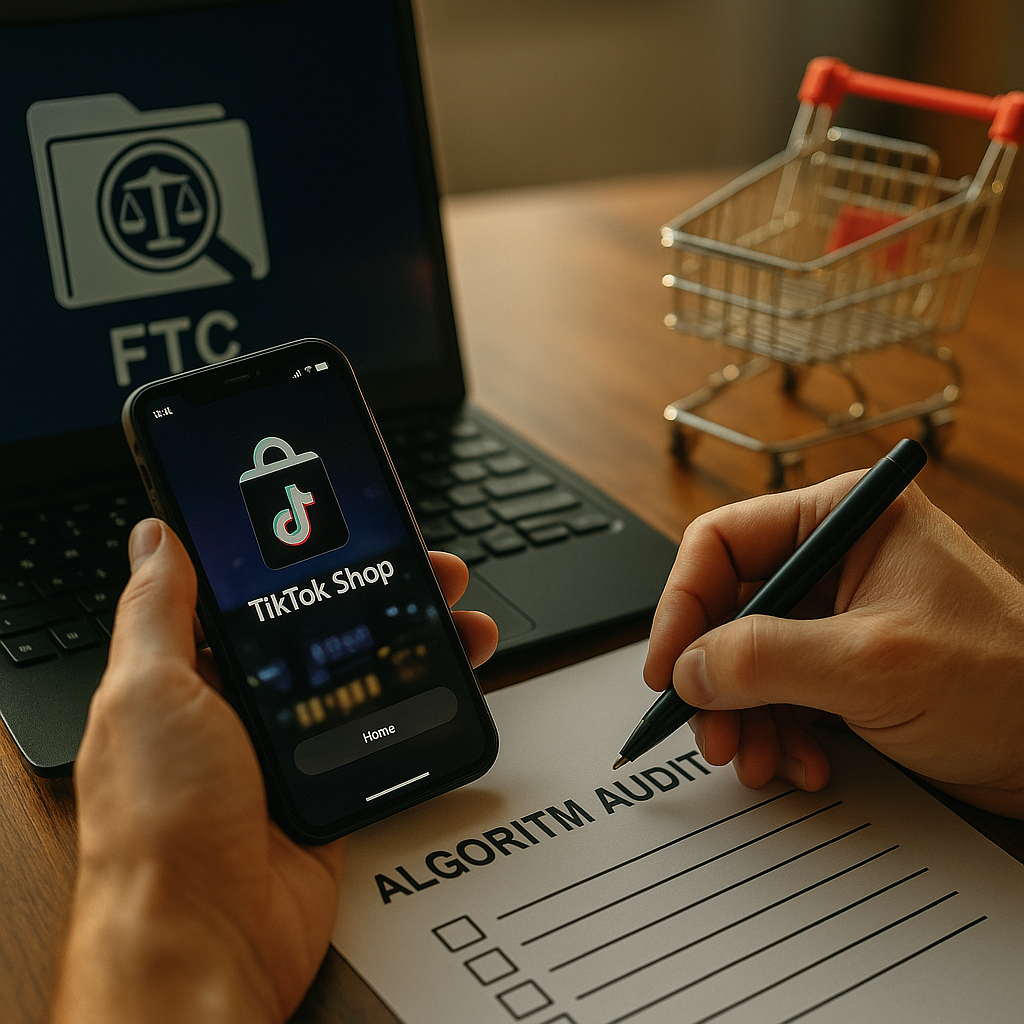
Seventy-one percent of TikTok Shop purchases start with a product the algorithm surfaced, not a search the shopper initiated. That single stat should worry every brand compliance lead right now. The FTC’s surveillance pricing enforcement statement made clear that algorithmic personalization isn’t a neutral merchandising tool anymore — it’s a regulated pricing behavior. If your TikTok Shop program can’t explain how its recommendation engine decides who sees what price, you don’t have a marketing strategy. You have exposure.
Why This Suddenly Matters to Brand Compliance Teams
For years, “the algorithm decides” was an acceptable answer to almost any question about TikTok Shop performance. Nobody asked why a shopper in Ohio saw a bundle discount that a shopper in Texas didn’t. It was assumed to be optimization, not discrimination.
The FTC’s 6(b) inquiry into surveillance pricing changed that assumption permanently. The agency examined how firms use granular consumer data, browsing history, location, device type, purchase cadence, to vary prices and offers in real time. TikTok Shop’s recommendation system does exactly this, ranking and pricing products based on individual behavioral signals rather than a static catalog. That’s no longer a gray area. It’s the precise conduct the FTC flagged as warranting scrutiny.
If your algorithm adjusts what a shopper sees based on their data, and that adjustment changes effective price or perceived value, you’re inside the FTC’s surveillance pricing enforcement lens, whether you intended to be or not.
Brands running TikTok Shop at scale need to treat this the same way they’d treat a data privacy audit: proactively, with documentation, and with a paper trail that survives regulatory inquiry.
What “Algorithmic Product Recommendations” Actually Means for Auditors
TikTok’s recommendation engine doesn’t just decide product order. It influences bundling, discount visibility, “limited stock” framing, and even which creator content gets paired with which SKU. Each of those levers can function as a pricing signal, even when no explicit price number changes.
An audit needs to separate three distinct algorithmic behaviors, because the FTC treats them differently:
- Dynamic pricing — the actual number a shopper pays changes based on inferred willingness-to-pay signals.
- Dynamic recommendation — the product shown, its rank, or its framing changes, indirectly shaping the price the shopper ultimately encounters.
- Dynamic promotion eligibility — discount codes, flash-sale access, or bundle offers surface selectively based on user data.
Most brand teams only monitor the first category. That’s the mistake. The FTC’s statement explicitly captures recommendation and promotion-level personalization, not just sticker-price changes. Our TikTok Shop surveillance pricing disclosure framework guide breaks down how these categories map to specific disclosure obligations.
Step One: Map the Data Inputs Feeding the Recommendation Engine
You can’t audit an algorithm you haven’t reverse-engineered, at least at the input level. Start by cataloging every data category TikTok Shop’s system likely uses to personalize your product feed:
- On-platform behavior: watch time, save rate, cart abandonment, previous purchase category
- Device and network signals: connection speed, device tier, approximate location
- Cross-app inference: TikTok’s ad pixel data from your own site, if integrated
- Creator-content interaction: which livestreams or videos a user engaged with before landing on your product
Brands that also run first-party pricing models should cross-reference this step with auditing creator content data disclosures for pricing models, since overlapping data flows between your CRM and TikTok’s ad platform can create double exposure — one violation on the platform side, another on your own site.
This is tedious work. Nobody enjoys mapping data lineage. But it’s the only way to answer the question regulators will eventually ask: “What data determined this price outcome for this consumer?”
Step Two: Test for Disparate Outcomes, Not Just Disparate Intent
Here’s the uncomfortable truth about algorithmic audits: intent doesn’t matter to the FTC nearly as much as outcome. You don’t need to prove TikTok Shop’s engine was built to discriminate. You need to prove, or disprove, that it produces discriminatory pricing patterns across protected or vulnerable groups.
Run a segmented pricing audit using test accounts that vary by:
- Geographic region (urban vs. rural, high-income vs. low-income ZIP codes)
- Device type and inferred income tier
- Age bracket, where platform data allows inference
- Purchase history depth (new account vs. loyal repeat buyer)
Document every discount shown, every bundle offered, every “just for you” promotion. If your loyal, high-spend segment consistently sees fewer discounts than new accounts, that’s the surveillance pricing pattern the FTC specifically called out, using behavioral data to extract maximum willingness-to-pay from your best customers.
The FTC’s own research found firms sometimes charge existing, loyal customers more than new prospects, using retention data as a pricing lever rather than a loyalty reward. That’s the exact inversion regulators are hunting for.
For teams already juggling personalized pricing obligations across jurisdictions, the personalized pricing disclosure FTC vs state law guide is worth reading alongside this audit, since state-level rules in California and Colorado add disclosure triggers the federal statement doesn’t cover.
Building the Actual Audit Document
Your compliance audit needs to be a living artifact, not a one-time PDF that sits in a shared drive until legal asks for it during discovery. Structure it in four sections:
- Data inventory — every signal TikTok Shop’s engine can access about your shoppers, sourced from platform documentation and your own pixel/API integrations.
- Outcome testing log — quarterly segmented pricing tests with screenshots, timestamps, and account profiles used.
- Disclosure inventory — where and how you tell shoppers that recommendations and pricing may be personalized. Check placement against FTC guidance on clear and conspicuous disclosure standards.
- Remediation log — documented actions taken when tests reveal disparate outcomes, including any adjustments made to promotion eligibility rules.
Assign ownership. Someone on your team, not an agency, not TikTok, needs to sign off on this quarterly. Regulators respond far better to demonstrated internal governance than to reactive scrambling after a complaint.
If your program already has creator-level disclosure protocols in place, this audit should slot in alongside them rather than duplicate the effort. Teams that built out the FTC personalized pricing rule creator compliance checklist already have half the infrastructure needed here.
Where Creators and Livestream Sellers Fit In
TikTok Shop’s algorithm doesn’t operate independently of creator content, it’s fed by it. A creator’s livestream performance, engagement rate, and even the countdown timers used to drive urgency all become inputs the recommendation engine learns from. That means your creator contracts and content practices are part of the compliance surface, not adjacent to it.
Two areas deserve specific attention:
- Scarcity messaging. If creators use countdown timers or “only 3 left” framing that the algorithm then amplifies to specific user segments, you’ve created a compounding compliance risk. Our livestream countdown timer audit for FTC scarcity compliance covers this in detail.
- Algorithmic suppression claims. Creators who believe their content is being deprioritized sometimes allege it’s tied to pricing disputes or brand disputes. Contracts should account for this risk explicitly, as outlined in TikTok algorithm suppression contract guidance.
Brands running high-volume livestream selling programs, especially in cross-border markets, should also review how local rules interact with platform-level algorithmic behavior. The India social commerce compliance guide for livestream selling is a useful comparative reference, since several markets are moving faster than the U.S. on algorithmic transparency mandates.
What Happens If You Skip This
Skipping the audit doesn’t mean you’re safe. It means you’re unaware, which is worse in an enforcement posture. The FTC has shown, through actions tied to data broker practices and algorithmic pricing, that it will pursue companies that “should have known” their systems produced discriminatory outcomes, not just those that knowingly designed them that way.
There’s also a reputational dimension that outlasts any fine. Consumers are increasingly aware of personalized pricing, and eMarketer’s research on retail media and personalization consistently shows trust erosion when shoppers perceive price manipulation, even when it’s technically compliant. A TikTok Shop program that gets flagged publicly for algorithmic pricing disparities doesn’t just face regulatory risk. It faces a viral trust problem on the exact platform where trust drives conversion.
Compare this to data handling risk more broadly. Brands that treated TikTok settlement data storage requirements as a checkbox exercise rather than an operational overhaul are now scrambling to retrofit governance. Surveillance pricing compliance is following the same trajectory, get ahead of it now, or rebuild under regulatory pressure later.
Practical Next Step
Run the segmented pricing test described above within the next thirty days, using at least six test account profiles across income and geographic tiers, and route the results through legal before your next TikTok Shop budget cycle. If disparities show up, you want to find them before the FTC does.
FAQs
Does the FTC’s surveillance pricing statement apply to TikTok Shop specifically?
The statement doesn’t name TikTok Shop directly, but its scope covers any platform using consumer data to personalize pricing, promotions, or product visibility. TikTok Shop’s recommendation engine fits squarely within that description, making brands operating on it subject to the same enforcement risk as direct-to-consumer dynamic pricing tools.
Who is liable if TikTok’s algorithm produces discriminatory pricing, the platform or the brand?
Both can face scrutiny, but brands carry independent liability for how they configure promotions, discounts, and creator partnerships within the platform. Regulators typically examine the party that profits from the outcome and controls the pricing decisions, which usually means the brand, not just TikTok as the infrastructure provider.
How often should a TikTok Shop algorithmic pricing audit be conducted?
Quarterly, at minimum. TikTok updates its recommendation logic frequently, and promotion eligibility rules shift with campaign cycles. A once-a-year audit will miss meaningful changes to how the algorithm segments and prices shoppers.
What documentation should brands keep to demonstrate compliance?
Keep a data inventory of inputs the algorithm can access, a log of segmented outcome tests, a record of disclosure language and placement, and a remediation log showing action taken when disparities are found. This combination demonstrates active governance rather than passive assumption of platform compliance.
Does disclosing that recommendations are “personalized” satisfy FTC requirements?
Not on its own. Disclosure needs to be clear, conspicuous, and specific enough that a reasonable consumer understands pricing or offers may vary based on their data. Vague personalization language buried in a privacy policy generally won’t meet the standard regulators expect.
Top Influencer Marketing Agencies
The leading agencies shaping influencer marketing in 2026
Agencies ranked by campaign performance, client diversity, platform expertise, proven ROI, industry recognition, and client satisfaction. Assessed through verified case studies, reviews, and industry consultations.
Moburst

-
2

The Shelf
Boutique Beauty & Lifestyle Influencer AgencyA data-driven boutique agency specializing exclusively in beauty, wellness, and lifestyle influencer campaigns on Instagram and TikTok. Best for brands already focused on the beauty/personal care space that need curated, aesthetic-driven content.Clients: Pepsi, The Honest Company, Hims, Elf Cosmetics, Pure LeafVisit The Shelf → -
3

Audiencly
Niche Gaming & Esports Influencer AgencyA specialized agency focused exclusively on gaming and esports creators on YouTube, Twitch, and TikTok. Ideal if your campaign is 100% gaming-focused — from game launches to hardware and esports events.Clients: Epic Games, NordVPN, Ubisoft, Wargaming, Tencent GamesVisit Audiencly → -
4

Viral Nation
Global Influencer Marketing & Talent AgencyA dual talent management and marketing agency with proprietary brand safety tools and a global creator network spanning nano-influencers to celebrities across all major platforms.Clients: Meta, Activision Blizzard, Energizer, Aston Martin, WalmartVisit Viral Nation → -
5

The Influencer Marketing Factory
TikTok, Instagram & YouTube CampaignsA full-service agency with strong TikTok expertise, offering end-to-end campaign management from influencer discovery through performance reporting with a focus on platform-native content.Clients: Google, Snapchat, Universal Music, Bumble, YelpVisit TIMF → -
6

NeoReach
Enterprise Analytics & Influencer CampaignsAn enterprise-focused agency combining managed campaigns with a powerful self-service data platform for influencer search, audience analytics, and attribution modeling.Clients: Amazon, Airbnb, Netflix, Honda, The New York TimesVisit NeoReach → -
7

Ubiquitous
Creator-First Marketing PlatformA tech-driven platform combining self-service tools with managed campaign options, emphasizing speed and scalability for brands managing multiple influencer relationships.Clients: Lyft, Disney, Target, American Eagle, NetflixVisit Ubiquitous → -
8

Obviously
Scalable Enterprise Influencer CampaignsA tech-enabled agency built for high-volume campaigns, coordinating hundreds of creators simultaneously with end-to-end logistics, content rights management, and product seeding.Clients: Google, Ulta Beauty, Converse, AmazonVisit Obviously →