


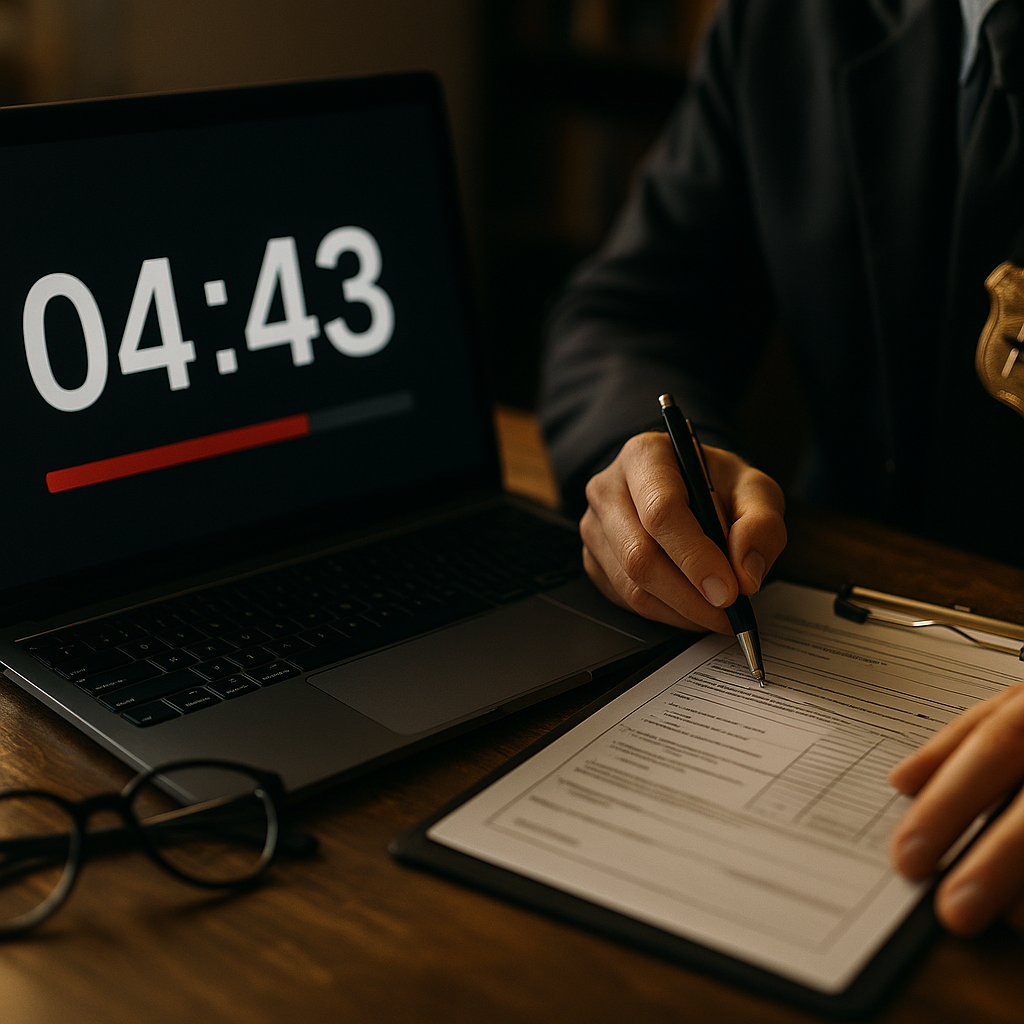
Ninety seconds left. Then ninety seconds again. And again. If your livestream shopping countdown timer resets itself every time a new viewer joins, you’re not creating urgency — you’re manufacturing evidence for an FTC complaint. A compliance audit for livestream shopping countdown timers isn’t optional anymore. It’s the difference between a clean Q3 and a consent decree.
Livestream commerce on TikTok Shop and Amazon Live crossed real money this year, and the FTC has made scarcity claims one of its top enforcement priorities under the Section 5 deceptive practices framework. Brands running “flash sale” mechanics without documentation are sitting on unmanaged legal exposure, often without realizing it.
Why Countdown Timers Are Suddenly a Legal Problem
Countdown timers work. That’s the whole issue. Behavioral research has shown urgency cues can lift conversion rates dramatically during livestream sessions, which is exactly why platforms and sellers lean on them so hard. But the FTC doesn’t care how well a tactic converts. It cares whether the underlying claim is true.
The agency’s guidance on deceptive scarcity is blunt: if you tell a shopper “only 3 left” or “sale ends in 10 minutes,” that has to reflect actual inventory or an actual deadline. Fabricated timers, timers that reset per session, or countdowns tied to nothing but a CMS default setting all fall into the same bucket as fake “limited time” banners the FTC has pursued in ecommerce cases for years. Livestream shopping just moves faster, which means violations compound faster too.
A countdown timer that resets for every new viewer isn’t urgency marketing — it’s a repeatable, screen-recordable deceptive claim that regulators and plaintiffs’ attorneys can reproduce in seconds.
Add in the fact that TikTok Shop and Amazon Live both auto-generate timer widgets as part of their livestream tooling, and you’ve got a compliance gap most brands didn’t build intentionally. Nobody sat down and decided to deceive customers. A default setting did it for them.
The Audit Framework: What to Actually Check
An FTC-aligned audit isn’t a vibes-based review of your last livestream. It’s a documented, repeatable process. Here’s the structure we recommend for brand compliance and legal teams running this quarterly.
1. Timer-to-Inventory Reconciliation
Pull the actual SKU-level inventory count at the moment a “limited stock” claim appeared on stream. Compare it against what was verbally or visually communicated. If a host says “almost gone” while the backend shows 400 units, that’s a mismatch worth flagging immediately, not after a customer complaint.
- Screen-record every livestream session, timestamped against backend inventory logs
- Export TikTok Shop’s live analytics dashboard data for cross-reference
- Flag any discrepancy over a defined threshold (we suggest 10%) for legal review
2. Timer Persistence Testing
Does the countdown reset when a new session starts? Does it differ by device, region, or app version? Test this the way a plaintiff’s attorney would: open the stream from three different accounts simultaneously and screenshot the timers. If they don’t match, you have a problem that no disclaimer can fix.
3. Deadline Enforcement Verification
When the clock hits zero, does the discount actually disappear? This sounds obvious, but it’s the single most common failure point. Amazon Live sellers in particular have been caught running “deal ends in 1 hour” countdowns where the discount code kept working for days afterward. That’s not a glitch worth shrugging off — it’s a documentable false claim.
4. Disclosure Language Audit
Review the actual script hosts use. “Almost sold out” needs backing data. “Everyone’s buying this right now” needs a factual basis too, not just vibes from the chat scrolling fast. Compliance teams should maintain an approved phrase library for livestream hosts and creators, similar to the disclosure frameworks used for FTC disclosure compliance across other creator formats.
TikTok Shop vs. Amazon Live: Different Risk Profiles
These platforms aren’t equivalent, and treating them identically in your audit will leave gaps.
TikTok Shop’s livestream countdown widgets are built into the Shop tab and often auto-populate based on merchant-set flash sale windows. The risk here is less about hosts fabricating claims live and more about backend misconfiguration: a merchant sets a “sale ends in 2 hours” timer but forgets to sync it with actual promo code expiration in the commerce backend. This is the exact failure mode covered in Influencers Time’s countdown timer crackdown analysis, and it remains the most common audit finding we see.
Amazon Live operates differently. Sellers often layer their own overlay graphics or third-party apps on top of Amazon’s native tools, which means the countdown timer graphic might not be connected to any backend system at all. It’s just a video overlay counting down for dramatic effect. That’s arguably worse from a compliance standpoint, because there’s no technical excuse. Someone designed a fake clock.
Both platforms also intersect with shipping and fulfillment claims made during the same livestream, which is why timer audits shouldn’t happen in isolation. If you’re already auditing shipping subsidy claims or return-window promises made on stream, fold the countdown timer review into the same session. It’s the same regulatory theory — misrepresenting terms to induce a purchase — applied to a different UI element.
Building the Documentation Trail Regulators Actually Want
Here’s what separates brands that survive an FTC inquiry from ones that get consent decrees: paper trail, not intentions.
The FTC’s enforcement pattern (visible in its public guidance and past cases, see ftc.gov for current enforcement priorities) consistently asks for internal records showing whether the company knew a scarcity claim was false or reckless about verifying it. That means your audit needs to produce artifacts, not just a passed/failed checkbox.
- Pre-stream sign-off: A documented approval showing inventory counts and deadline settings were verified before the livestream went live
- Session recordings retained for at least 12 months, matched against backend logs
- Host training records showing creators and employees were briefed on approved scarcity language
- Post-stream reconciliation report comparing on-air claims to actual outcomes (did the sale actually end when promised?)
This documentation burden is nearly identical to what’s already required for creator disclosure compliance at scale. If your team has built workflows for disclosure compliance during fast ad testing, extend that same infrastructure to livestream scarcity claims rather than building a parallel system.
Who Owns This Risk: Brand, Platform, or Creator?
This is where things get contractually messy. TikTok Shop and Amazon Live both position their countdown timer tools as neutral infrastructure, meaning the platform’s terms of service typically push liability for the accuracy of claims back onto the seller. Read your merchant agreement closely. It almost certainly does not indemnify you for false scarcity claims, even if the platform’s own widget generated the timer.
Creator liability adds another layer. If an affiliate or livestream host makes an unscripted claim about “only a few left” without checking with the brand, is that the brand’s problem? Under FTC guidance, generally yes, if the brand controls the promotional relationship and benefited from the claim. This mirrors the liability questions already playing out in FTC endorsement rules for AI-driven commerce, where responsibility follows economic benefit more than technical control.
Practical fix: build countdown timer accuracy checks into creator contracts the same way you’d handle usage rights or content ownership. If you’re already auditing creator contract terms for other compliance gaps, add a scarcity-claim clause requiring hosts to only state figures pre-approved by the brand’s commerce team.
What a Failed Audit Actually Costs
Skip the audit and here’s the realistic downside. FTC civil penalties for deceptive practices can run into six figures per violation under updated penalty schedules, and that’s before considering state attorney general actions or class action exposure, particularly in states with aggressive consumer protection statutes. Industry benchmarking from sources like eMarketer shows livestream commerce continuing to grow as a share of social commerce revenue, which means the exposure surface only expands from here.
There’s also a softer cost: platform risk. TikTok Shop has already shown willingness to suspend seller accounts over compliance violations tied to return timing and subsidy rules. A pattern of scarcity complaints could trigger similar scrutiny, independent of any FTC action. Losing shop access for a quarter during peak season is its own kind of penalty, and it doesn’t show up in a legal budget line.
Next Step
Run the four-part audit above on your last three livestream sessions this week, not next quarter. If you find even one instance of a timer that didn’t match inventory or didn’t enforce its own deadline, treat it as a live compliance incident and pull the promotional script until your legal team signs off on revised, verifiable scarcity language.
FAQs
What counts as a “deceptive scarcity” claim under FTC standards?
Any statement implying limited availability or a limited timeframe that isn’t backed by actual, verifiable facts. This includes verbal claims like “almost sold out,” visual countdown timers not tied to a real deadline, and inventory counters that don’t reflect true stock levels.
Does the FTC treat TikTok Shop and Amazon Live differently?
No. The FTC’s deceptive practices standards under Section 5 apply platform-agnostically. What differs is the technical root cause of violations: TikTok Shop issues tend to stem from backend misconfiguration, while Amazon Live issues more often involve third-party overlay tools disconnected from real inventory systems.
Who is liable if a creator invents a scarcity claim during a livestream?
Typically the brand, if it controls the promotional relationship and benefits commercially from the sale. Brands should include scarcity-claim accuracy requirements directly in creator and affiliate contracts to reduce this exposure.
How often should brands audit livestream countdown timers?
At minimum quarterly, with spot checks after any platform tooling update. High-volume livestream sellers should build the audit into standard post-stream reconciliation, not treat it as a periodic special project.
What documentation should brands retain to defend against an FTC inquiry?
Pre-stream inventory sign-offs, session recordings retained for at least 12 months, host training records on approved scarcity language, and post-stream reconciliation reports comparing on-air claims to actual outcomes.
FAQs
Top Influencer Marketing Agencies
The leading agencies shaping influencer marketing in 2026
Agencies ranked by campaign performance, client diversity, platform expertise, proven ROI, industry recognition, and client satisfaction. Assessed through verified case studies, reviews, and industry consultations.
Moburst

-
2

The Shelf
Boutique Beauty & Lifestyle Influencer AgencyA data-driven boutique agency specializing exclusively in beauty, wellness, and lifestyle influencer campaigns on Instagram and TikTok. Best for brands already focused on the beauty/personal care space that need curated, aesthetic-driven content.Clients: Pepsi, The Honest Company, Hims, Elf Cosmetics, Pure LeafVisit The Shelf → -
3

Audiencly
Niche Gaming & Esports Influencer AgencyA specialized agency focused exclusively on gaming and esports creators on YouTube, Twitch, and TikTok. Ideal if your campaign is 100% gaming-focused — from game launches to hardware and esports events.Clients: Epic Games, NordVPN, Ubisoft, Wargaming, Tencent GamesVisit Audiencly → -
4

Viral Nation
Global Influencer Marketing & Talent AgencyA dual talent management and marketing agency with proprietary brand safety tools and a global creator network spanning nano-influencers to celebrities across all major platforms.Clients: Meta, Activision Blizzard, Energizer, Aston Martin, WalmartVisit Viral Nation → -
5

The Influencer Marketing Factory
TikTok, Instagram & YouTube CampaignsA full-service agency with strong TikTok expertise, offering end-to-end campaign management from influencer discovery through performance reporting with a focus on platform-native content.Clients: Google, Snapchat, Universal Music, Bumble, YelpVisit TIMF → -
6

NeoReach
Enterprise Analytics & Influencer CampaignsAn enterprise-focused agency combining managed campaigns with a powerful self-service data platform for influencer search, audience analytics, and attribution modeling.Clients: Amazon, Airbnb, Netflix, Honda, The New York TimesVisit NeoReach → -
7

Ubiquitous
Creator-First Marketing PlatformA tech-driven platform combining self-service tools with managed campaign options, emphasizing speed and scalability for brands managing multiple influencer relationships.Clients: Lyft, Disney, Target, American Eagle, NetflixVisit Ubiquitous → -
8

Obviously
Scalable Enterprise Influencer CampaignsA tech-enabled agency built for high-volume campaigns, coordinating hundreds of creators simultaneously with end-to-end logistics, content rights management, and product seeding.Clients: Google, Ulta Beauty, Converse, AmazonVisit Obviously →