


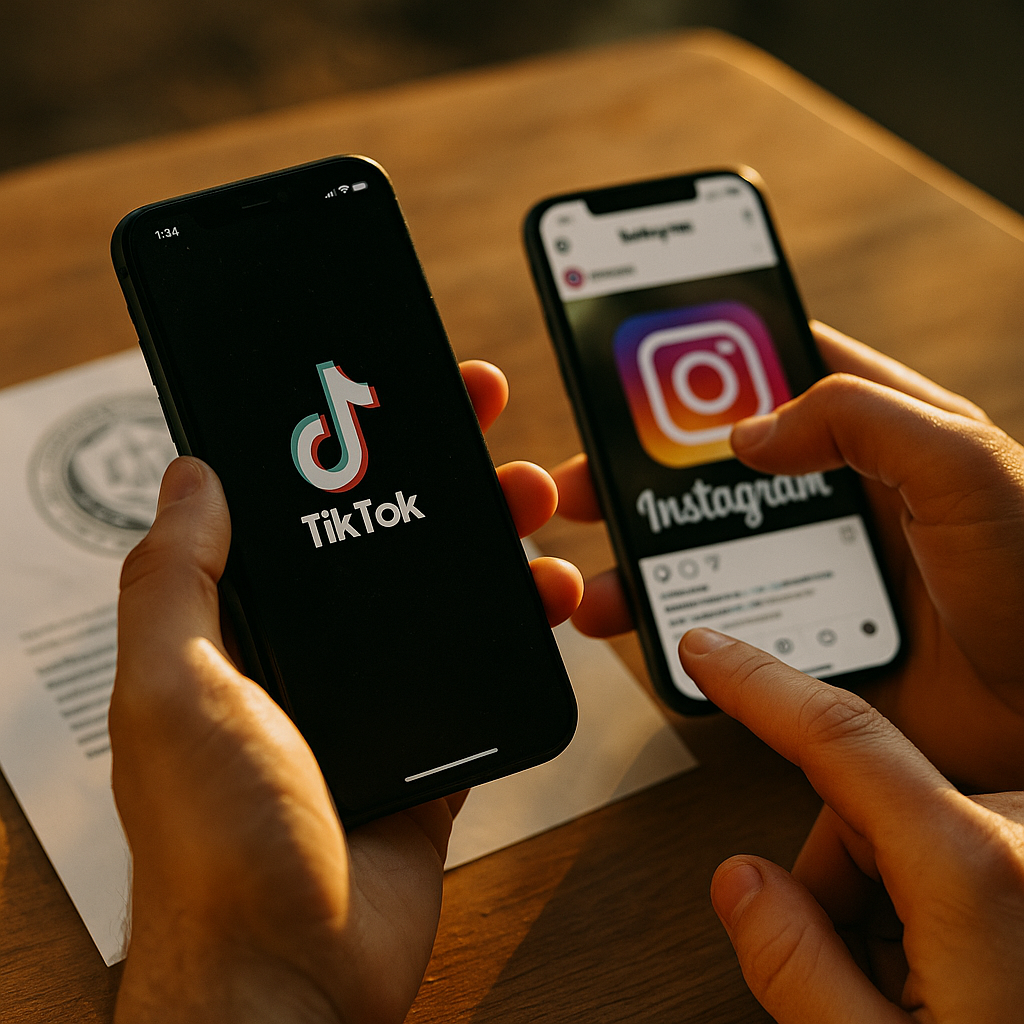
Two platforms, two disclosure engines, one creator who has to satisfy both without breaking either. TikTok’s real-time disclosure placement standard wants the label visible the instant a video starts playing. Instagram’s automatic paid partnership label sits wherever Meta’s system decides to put it. Run a multi-platform campaign without reconciling the two, and you’re gambling on FTC disclosure compliance across every post you publish.
That’s not a hypothetical risk. It’s a scheduling problem, a creative brief problem, and increasingly, a legal exposure problem for brands running synchronized campaigns across both apps.
Why the Same Campaign Creates Two Different Compliance Standards
TikTok and Instagram didn’t coordinate their disclosure architecture. Why would they? They’re competitors, not co-regulators. TikTok’s approach, refined after its monetization enforcement push, ties disclosure timing directly to when sponsored content becomes eligible for distribution and revenue features. The label has to appear early, ideally within the first few seconds, and it has to be paired with the creator’s own verbal or on-screen acknowledgment. TikTok’s monetization-linked disclosure rules effectively punish late or buried disclosures by throttling reach.
Instagram works differently. Meta’s Branded Content Tool auto-generates a “Paid partnership with [Brand]” tag that appears at the top of the post, but the placement and persistence of that tag depends on format. A feed post keeps it visible. A Reel might bury it after the first swipe interaction. A Story tag can disappear once the viewer taps through. The automation is convenient, but convenience isn’t the same as compliance.
Automatic labeling was built for platform consistency, not for FTC’s “clear and conspicuous” standard. Brands that assume the tag alone satisfies disclosure law are making a costly assumption.
Here’s the uncomfortable truth: the FTC doesn’t care that TikTok and Instagram have different systems. The FTC’s Endorsement Guides require disclosures to be unavoidable, unambiguous, and understood by the average viewer before they engage with the sponsored message. Neither platform’s default settings guarantee that outcome on their own.
Where the Two Systems Actually Diverge
Break it down into the mechanics, because that’s where campaigns fail.
- Timing: TikTok wants disclosure present from frame one. Instagram’s tag placement is largely static regardless of when the paid relationship is “revealed” in the content itself.
- Persistence: TikTok’s label typically stays anchored throughout playback. Instagram’s tag can scroll off-screen or disappear in Stories after a few seconds.
- Creator responsibility: TikTok increasingly expects the creator to verbally or textually reinforce the disclosure, not just rely on the platform tag. Instagram’s Branded Content Tool creates a false sense that the platform “handled it.”
- Enforcement trigger: TikTok links disclosure failures to monetization eligibility, an operational lever. Instagram’s enforcement is more reactive, tied to reports or Meta’s own periodic sweeps, per Meta’s Business policies.
None of this is theoretical policy debate. It’s the difference between a creator’s video getting full distribution on TikTok and getting quietly deprioritized because the sponsorship reveal came in at second fifteen instead of second two.
The Brand-Side Fix: Build One Disclosure Standard, Not Two
The operational answer isn’t to treat TikTok and Instagram as separate compliance tracks. It’s to set your internal disclosure standard at the stricter of the two, then apply it universally. In practice, that means treating TikTok’s real-time placement rule as your floor for every platform, including Instagram, regardless of what Meta’s automated tag does or doesn’t do.
Concretely, that looks like:
- Require verbal or on-screen disclosure within the first three seconds of any video content, TikTok or Reels, no exceptions.
- Never rely solely on Instagram’s Branded Content Tool tag. Layer in a caption disclosure (#ad, #sponsored) and, where possible, an in-video callout.
- For Stories, add a static disclosure sticker in addition to the automated tag, since the tag’s visibility window is short and inconsistent.
- Build disclosure checkpoints into the creative approval workflow, not just the legal contract. If your review process only checks the contract language and not the actual asset, you’ll miss placement failures.
This is the same logic that underpins cross-platform disclosure compliance frameworks generally: pick the strictest applicable rule, apply it everywhere, and treat platform-specific automation as a supplement, never a substitute.
What This Means for Creator Briefs and Contracts
Most influencer contracts still treat disclosure as a single boilerplate clause: “Creator agrees to comply with FTC guidelines and platform policies.” That’s not specific enough anymore. When you’re running the same campaign across TikTok and Instagram, the brief needs platform-specific disclosure instructions, because the creator’s default habits on one platform will bleed into the other if you don’t correct for it.
A creator who’s spent two years perfecting Instagram’s “just let the tag do the work” habit will underperform on TikTok’s real-time standard unless the brief explicitly tells them otherwise. Conversely, a TikTok-native creator who verbally discloses upfront might skip the Instagram caption disclosure entirely, assuming the automatic label covers it.
Your brief template should specify, per platform:
- Exact disclosure language or acceptable variations
- Placement timing (first three seconds, first line of caption, etc.)
- Required use of platform tools (Branded Content Tool, TikTok’s paid partnership label) as a baseline, not the entirety of compliance
- Sign-off requirement showing the creator reviewed the published post before it went live
This level of specificity mirrors the approach in cross-border UGC disclosure frameworks, where regional legal variance forces brands to write more granular briefs than they’d prefer. The same discipline applies here, just across platforms instead of jurisdictions.
Auditing at Scale: You Can’t Manually Check Every Post
If you’re running a campaign with 40 creators across both platforms, manual spot-checking won’t catch every disclosure gap. This is where a lot of brands get exposed, not from bad intent, but from volume outpacing oversight.
Consider automated auditing tools that scan video transcripts and on-screen text for disclosure presence and timing. Programs built around transcript audit systems can flag posts where the sponsorship mention comes too late or is missing entirely, something no legal team can do by hand at scale. Pair that with periodic reviews of Instagram’s Branded Content Tool reporting dashboard to confirm tags are actually attached, not just promised in the contract.
According to eMarketer’s influencer marketing forecasts, brand spend on creator partnerships continues climbing year over year, which means the compliance surface area is only growing. More creators, more platforms, more automated tools that assume they’ve “solved” disclosure when they’ve really just shifted the risk onto brands who don’t double-check.
Don’t Forget the Monetization Angle
TikTok’s willingness to tie disclosure compliance to monetization eligibility should change how brands think about creator selection. A creator with a history of disclosure violations might have reduced reach even before your campaign launches, and you won’t necessarily know that until performance underdelivers. Vet creators not just for engagement metrics but for platform compliance standing. This connects directly to the vetting shift discussed in TikTok’s affiliate crackdown coverage, where platform enforcement increasingly shapes which creators are worth the contract risk.
Instagram doesn’t have an identical monetization penalty structure yet, but Meta has shown willingness to restrict distribution and Creator Monetization Program eligibility for policy violations. Assume that gap closes eventually. Building your compliance program now around the stricter TikTok standard means you won’t need to rebuild it when Instagram catches up.
A Simple Reconciliation Checklist
Before your next cross-platform campaign goes live, run through this:
- Does every video disclose within the first three seconds, regardless of platform?
- Is the disclosure both visual and verbal/textual, not relying on one channel alone?
- Has someone confirmed Instagram’s Branded Content Tool tag actually posted, not just that it was enabled in settings?
- Does the creator brief specify platform-by-platform disclosure requirements, not generic “follow FTC guidelines” language?
- Is there an audit step, automated or manual, before and after publication?
Use this as your baseline and adjust for platform updates. Both TikTok and Instagram revise their policies often enough that a compliance checklist from twelve months ago is already outdated.
Frequently Asked Questions
FAQs
Does Instagram’s automatic paid partnership label satisfy FTC disclosure requirements on its own?
Not reliably. The FTC requires disclosures to be clear and conspicuous before the viewer engages with the sponsored content. Instagram’s automated tag can be inconsistent in visibility depending on format, especially in Stories and Reels, so brands should layer in caption and on-screen disclosures as backup.
Can I use TikTok’s disclosure timing standard as my default for all platforms?
Yes, and it’s the safer approach. Applying the stricter, real-time disclosure standard universally reduces the risk of gaps on platforms with more lenient or automated systems like Instagram.
What happens if a creator’s TikTok content gets throttled for late disclosure?
TikTok has linked disclosure compliance to monetization and distribution eligibility, meaning delayed or missing disclosures can reduce reach even without a formal FTC complaint. This directly affects campaign performance and ROI.
Should disclosure requirements be written into creator contracts or just briefs?
Both. Contracts should establish the legal obligation and consequences for non-compliance, while briefs should provide platform-specific, tactical instructions on exact wording and placement timing.
How can brands audit disclosure compliance across large creator campaigns?
Automated transcript and on-screen text scanning tools can flag missing or late disclosures at scale, which is far more reliable than manual review once a campaign involves dozens of creators across multiple platforms.
Next step: Audit your current creator brief template this week. If it doesn’t specify exact disclosure timing and placement per platform, rewrite it before your next campaign launches, not after a compliance issue forces the conversation.
FAQs
Does Instagram’s automatic paid partnership label satisfy FTC disclosure requirements on its own?
Not reliably. The FTC requires disclosures to be clear and conspicuous before the viewer engages with the sponsored content. Instagram’s automated tag can be inconsistent in visibility depending on format, especially in Stories and Reels, so brands should layer in caption and on-screen disclosures as backup.
Can I use TikTok’s disclosure timing standard as my default for all platforms?
Yes, and it’s the safer approach. Applying the stricter, real-time disclosure standard universally reduces the risk of gaps on platforms with more lenient or automated systems like Instagram.
What happens if a creator’s TikTok content gets throttled for late disclosure?
TikTok has linked disclosure compliance to monetization and distribution eligibility, meaning delayed or missing disclosures can reduce reach even without a formal FTC complaint. This directly affects campaign performance and ROI.
Should disclosure requirements be written into creator contracts or just briefs?
Both. Contracts should establish the legal obligation and consequences for non-compliance, while briefs should provide platform-specific, tactical instructions on exact wording and placement timing.
How can brands audit disclosure compliance across large creator campaigns?
Automated transcript and on-screen text scanning tools can flag missing or late disclosures at scale, which is far more reliable than manual review once a campaign involves dozens of creators across multiple platforms.
Top Influencer Marketing Agencies
The leading agencies shaping influencer marketing in 2026
Agencies ranked by campaign performance, client diversity, platform expertise, proven ROI, industry recognition, and client satisfaction. Assessed through verified case studies, reviews, and industry consultations.
Moburst

-
2

The Shelf
Boutique Beauty & Lifestyle Influencer AgencyA data-driven boutique agency specializing exclusively in beauty, wellness, and lifestyle influencer campaigns on Instagram and TikTok. Best for brands already focused on the beauty/personal care space that need curated, aesthetic-driven content.Clients: Pepsi, The Honest Company, Hims, Elf Cosmetics, Pure LeafVisit The Shelf → -
3

Audiencly
Niche Gaming & Esports Influencer AgencyA specialized agency focused exclusively on gaming and esports creators on YouTube, Twitch, and TikTok. Ideal if your campaign is 100% gaming-focused — from game launches to hardware and esports events.Clients: Epic Games, NordVPN, Ubisoft, Wargaming, Tencent GamesVisit Audiencly → -
4

Viral Nation
Global Influencer Marketing & Talent AgencyA dual talent management and marketing agency with proprietary brand safety tools and a global creator network spanning nano-influencers to celebrities across all major platforms.Clients: Meta, Activision Blizzard, Energizer, Aston Martin, WalmartVisit Viral Nation → -
5

The Influencer Marketing Factory
TikTok, Instagram & YouTube CampaignsA full-service agency with strong TikTok expertise, offering end-to-end campaign management from influencer discovery through performance reporting with a focus on platform-native content.Clients: Google, Snapchat, Universal Music, Bumble, YelpVisit TIMF → -
6

NeoReach
Enterprise Analytics & Influencer CampaignsAn enterprise-focused agency combining managed campaigns with a powerful self-service data platform for influencer search, audience analytics, and attribution modeling.Clients: Amazon, Airbnb, Netflix, Honda, The New York TimesVisit NeoReach → -
7

Ubiquitous
Creator-First Marketing PlatformA tech-driven platform combining self-service tools with managed campaign options, emphasizing speed and scalability for brands managing multiple influencer relationships.Clients: Lyft, Disney, Target, American Eagle, NetflixVisit Ubiquitous → -
8

Obviously
Scalable Enterprise Influencer CampaignsA tech-enabled agency built for high-volume campaigns, coordinating hundreds of creators simultaneously with end-to-end logistics, content rights management, and product seeding.Clients: Google, Ulta Beauty, Converse, AmazonVisit Obviously →