


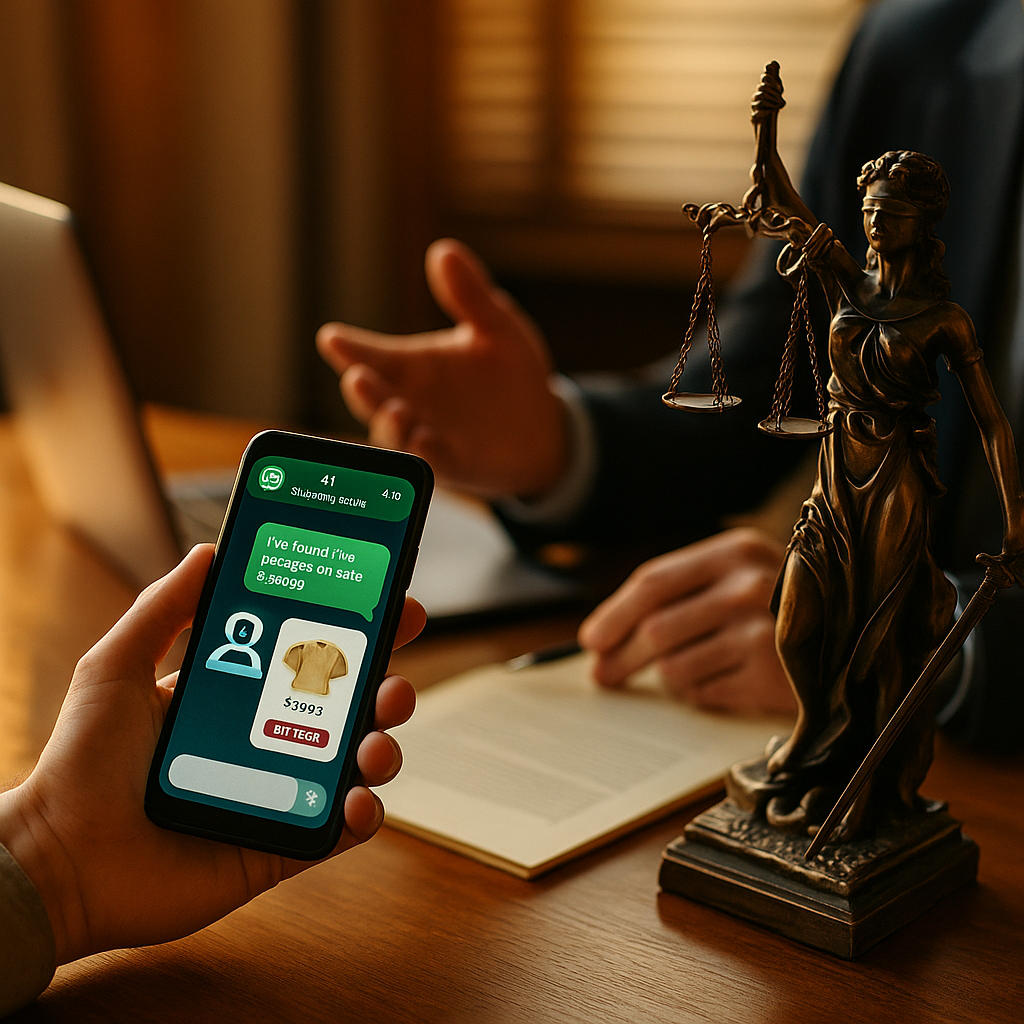
Sixty-two percent of shoppers now say they trust an AI agent’s product recommendation as much as a friend’s, according to recent consumer surveys — and most have no idea that recommendation might be a paid endorsement. When your AI shopping agent surfaces a creator’s sponsored haul video and calls it a “top pick,” who’s on the hook if there’s no disclosure? FTC endorsement rules for AI shopping agents are no longer a theoretical compliance question. They’re an active enforcement risk.
Brands are shipping conversational commerce tools faster than their legal teams can review them. That gap is where the next wave of FTC actions will land.
The Problem Nobody Scoped Before Launch
AI shopping agents don’t just answer questions anymore. They rank, recommend, and checkout. Tools like Amazon’s Rufus, Google’s AI Mode shopping features, and a growing wave of retail-branded chat assistants pull from product reviews, creator content, and social commerce feeds to generate a single, confident recommendation. The problem: much of that source material is sponsored.
When a human influencer posts a #ad video, the disclosure travels with the content. But once an AI agent ingests that video, summarizes it, and repackages the recommendation in its own voice, the disclosure often gets stripped out. The agent isn’t lying, exactly. It’s just doing what it was trained to do: synthesize and simplify. Nobody told it disclosure language was load-bearing.
An AI agent that recommends sponsored creator content without disclosure isn’t a neutral third party in the FTC’s eyes — it’s potentially an extension of the advertiser’s endorsement chain.
The FTC’s Endorsement Guides were last substantively updated to address digital and AI-driven contexts, and the agency has been explicit: disclosure obligations don’t disappear because a machine is doing the talking. If your brand paid for the original content, and your shopping agent surfaces it as a recommendation, you likely still owe a disclosure — even if your agent generated the summary text itself.
Who’s Actually Liable Here?
This is the question every general counsel asks first, and the honest answer is: probably everyone in the chain, to varying degrees.
- The brand that sponsored the original creator content remains liable for the underlying endorsement, regardless of how it’s later surfaced.
- The platform or retailer operating the AI shopping agent can be liable for unfair or deceptive practices if the agent’s output misleads consumers about material connections.
- The creator retains disclosure obligations under existing endorsement rules, but has zero control over how an AI agent repurposes their content downstream.
- The AI vendor supplying the recommendation engine may carry contractual liability depending on how the agent was trained and configured — which is exactly why vendor contracts matter so much right now. See our breakdown of AI vendor contract risk for the clauses that actually protect you.
The FTC has historically pursued advertisers and platforms over individual creators when enforcement gets serious. That pattern likely holds for agentic AI, meaning brand and retail teams carry the heaviest exposure.
What “Autonomous” Actually Means for Compliance
Marketers love the word “autonomous” until it shows up in a regulatory filing. The autonomy of a shopping agent — its ability to select, rank, and recommend without a human clicking approve — is precisely what makes this a compliance headache rather than a routine disclosure task.
Traditional influencer disclosure compliance assumes a human posts content, a human reviews it, and a human can be trained on FTC guidelines. Agentic AI breaks that chain. The agent decides in real time which creator content to surface based on relevance signals, purchase intent, and inventory — not compliance logic. Unless you’ve explicitly engineered disclosure preservation into the recommendation pipeline, it won’t happen on its own.
This mirrors a pattern we’ve covered before: the same way AI ad variants multiply FTC risk by generating disclosure-stripped creative at scale, AI shopping agents multiply risk by generating disclosure-stripped recommendations at scale. Different surface, same root cause: automation outrunning governance.
The Three Failure Points
Most compliance breakdowns in AI shopping agents happen at one of three points:
- Ingestion: the agent scrapes or indexes creator content without preserving disclosure metadata attached to the original post.
- Synthesis: the agent generates a new summary or recommendation and the disclosure language doesn’t survive the rewrite.
- Presentation: the disclosure exists somewhere in the system but isn’t rendered clearly to the consumer at the point of recommendation — buried in a footnote, a hover tooltip, or a linked source the shopper never clicks.
Each failure point requires a different fix, which is why a single “add a disclaimer” patch rarely solves the problem end to end.
Building an Actual Compliance Framework
Here’s what a defensible framework looks like in practice, based on patterns emerging across retail media and social commerce teams already grappling with this.
Tag disclosure status as structured data, not free text. If your creator content management system treats “#ad” as plain text buried in a caption, your AI agent will lose it during ingestion. Disclosure needs to be a structured field — a boolean flag or metadata tag — that travels with the content object through every downstream system, including the recommendation engine.
Require disclosure inheritance in agent output. Any recommendation the agent generates that traces back to sponsored source material must inherit a disclosure marker in the final consumer-facing output. This should be a hard rule in the agent’s system prompt or output validation layer, not a hope.
If your AI agent can recommend a product without knowing whether the underlying content was paid, you haven’t built a shopping assistant — you’ve built a liability generator.
Audit recommendation logs, not just creator contracts. Legal teams are used to auditing influencer agreements for disclosure clauses. Now you need to audit what the AI agent actually said to consumers. That means logging agent outputs and periodically sampling them for missing or buried disclosures, the same way brands already sample fast-testing ad creative. Our guide on keeping fast-testing ads compliant covers a similar sampling methodology worth adapting here.
Contract for it explicitly with AI vendors. If you’re licensing a third-party shopping agent or recommendation engine, your contract needs explicit language requiring disclosure preservation and giving you audit rights over training data and output logs. Don’t assume the vendor has thought about this. Most haven’t.
Extend governance charters to cover agentic recommendations. If your organization already has an AI governance charter for marketing campaigns, shopping agents need to be explicitly in scope, not treated as a customer service or product feature exempt from marketing compliance review. The governance charter framework for agentic AI we’ve outlined previously applies directly here — the same accountability structure, applied to a commerce use case instead of a content-generation one.
What This Looks Like Across Platforms
Disclosure inheritance gets messier the more platforms are involved. A creator posts sponsored content on TikTok Shop. A retail AI agent on a completely separate site indexes that content via API or public scraping and recommends the product to a shopper who’s never been on TikTok. Which platform’s disclosure rules apply? Realistically, all of them, because the FTC’s guidelines are federal and platform-agnostic — but each platform’s API terms and data-sharing agreements add another compliance layer on top.
This is where data processing agreements for social APIs intersect with endorsement compliance in ways most legal teams haven’t mapped yet. If your shopping agent pulls creator content cross-platform, you need both a DPA covering the data flow and an endorsement compliance layer covering the disclosure. One without the other leaves a gap.
Cross-border creator content compounds this further. A UGC creator based outside the US, disclosing according to their home market’s rules, may not satisfy FTC requirements once that content gets surfaced to American shoppers through an AI agent. Teams managing international creator pools should cross-reference the cross-border disclosure framework against their agent’s content sourcing logic.
What Enforcement Might Actually Look Like
The FTC hasn’t brought a landmark case specifically against an AI shopping agent yet, as far as public record shows. But the agency’s approach to endorsement enforcement has been consistent for over a decade: go after clear patterns of consumer deception, prioritize cases with easy-to-explain harm, and use consent decrees to set industry-wide expectations rather than waiting for every company to get sued individually.
An AI shopping agent that systematically surfaces sponsored content as if it were organic, unbiased recommendation is a textbook fact pattern for that kind of case. It’s easy to explain to a judge, easy to demonstrate with screenshots, and fits neatly into the agency’s existing endorsement framework without requiring new rulemaking.
Expect early enforcement, when it comes, to target retailers and platforms with the largest consumer reach rather than niche AI tool vendors. That’s consistent with how the agency has approached other emerging-tech deception issues, and it’s why brand and retail marketing teams — not just AI product teams — need to own this risk now, before a regulator forces the issue.
Marketing teams tracking related disclosure enforcement trends should also watch how the agency treats platform-specific disclosure gaps, since inconsistent rules across TikTok, Instagram, and emerging AI shopping surfaces are likely to draw scrutiny as a pattern, not isolated incidents.
Quick Self-Audit: Five Questions to Ask This Quarter
- Does our AI shopping agent know which content in its recommendation index is sponsored?
- Does disclosure metadata survive summarization and re-ranking?
- Is disclosure visible at the moment of recommendation, not buried in a linked source?
- Do our AI vendor contracts explicitly assign liability and audit rights for disclosure failures?
- Have we sampled actual agent outputs in the last 90 days, or are we relying on assumptions?
If you answered “not sure” to more than one of these, that’s your starting point. Industry benchmarking from firms like eMarketer and social platform guidance from Meta for Business can help contextualize how fast conversational commerce is scaling relative to compliance readiness — and the gap is widening, not closing.
FAQs
Do FTC endorsement rules apply if a human never sees the sponsored content directly?
Yes. The FTC’s endorsement guidelines focus on whether a material connection exists and whether consumers are misled, not on whether a human or a machine delivers the final recommendation. If an AI agent surfaces content originating from a paid partnership, disclosure obligations still apply.
Who is liable if an AI shopping agent omits a disclosure the original creator included?
Liability typically flows to the advertiser who sponsored the content and the platform or retailer operating the AI agent, since both have the ability to prevent the omission. Creators generally aren’t held responsible for how third-party AI tools repurpose their disclosed content.
Can we rely on our AI vendor to handle disclosure compliance?
Not without an explicit contract. Most AI vendors building shopping agents are optimizing for relevance and conversion, not endorsement law. Brands need contractual language requiring disclosure preservation, plus audit rights over training data and output logs.
Does this apply to organic creator content too, or only paid partnerships?
Endorsement disclosure rules apply specifically where a material connection exists — payment, free product, affiliate commission, or similar. Purely organic, unpaid creator content recommended by an AI agent doesn’t trigger the same disclosure obligation, though transparency about AI-generated recommendations generally is a separate, growing expectation.
How is this different from existing influencer disclosure compliance?
Traditional compliance assumes a human creator and a human reviewer in the loop. AI shopping agents introduce automated ingestion, synthesis, and presentation layers where disclosure can silently disappear without any single person deciding to remove it. That requires structural fixes, like structured disclosure metadata, rather than just creator training.
Next Step
Don’t wait for a consent decree to find your gaps. Audit one AI shopping agent’s actual output this week, trace three recommendations back to their source content, and confirm whether disclosure survived the trip. If it didn’t, you’ve found your first fix.
FAQs
Do FTC endorsement rules apply if a human never sees the sponsored content directly?
Yes. The FTC’s endorsement guidelines focus on whether a material connection exists and whether consumers are misled, not on whether a human or a machine delivers the final recommendation. If an AI agent surfaces content originating from a paid partnership, disclosure obligations still apply.
Who is liable if an AI shopping agent omits a disclosure the original creator included?
Liability typically flows to the advertiser who sponsored the content and the platform or retailer operating the AI agent, since both have the ability to prevent the omission. Creators generally aren’t held responsible for how third-party AI tools repurpose their disclosed content.
Can we rely on our AI vendor to handle disclosure compliance?
Not without an explicit contract. Most AI vendors building shopping agents are optimizing for relevance and conversion, not endorsement law. Brands need contractual language requiring disclosure preservation, plus audit rights over training data and output logs.
Does this apply to organic creator content too, or only paid partnerships?
Endorsement disclosure rules apply specifically where a material connection exists — payment, free product, affiliate commission, or similar. Purely organic, unpaid creator content recommended by an AI agent doesn’t trigger the same disclosure obligation, though transparency about AI-generated recommendations generally is a separate, growing expectation.
How is this different from existing influencer disclosure compliance?
Traditional compliance assumes a human creator and a human reviewer in the loop. AI shopping agents introduce automated ingestion, synthesis, and presentation layers where disclosure can silently disappear without any single person deciding to remove it. That requires structural fixes, like structured disclosure metadata, rather than just creator training.
Top Influencer Marketing Agencies
The leading agencies shaping influencer marketing in 2026
Agencies ranked by campaign performance, client diversity, platform expertise, proven ROI, industry recognition, and client satisfaction. Assessed through verified case studies, reviews, and industry consultations.
Moburst

-
2

The Shelf
Boutique Beauty & Lifestyle Influencer AgencyA data-driven boutique agency specializing exclusively in beauty, wellness, and lifestyle influencer campaigns on Instagram and TikTok. Best for brands already focused on the beauty/personal care space that need curated, aesthetic-driven content.Clients: Pepsi, The Honest Company, Hims, Elf Cosmetics, Pure LeafVisit The Shelf → -
3

Audiencly
Niche Gaming & Esports Influencer AgencyA specialized agency focused exclusively on gaming and esports creators on YouTube, Twitch, and TikTok. Ideal if your campaign is 100% gaming-focused — from game launches to hardware and esports events.Clients: Epic Games, NordVPN, Ubisoft, Wargaming, Tencent GamesVisit Audiencly → -
4

Viral Nation
Global Influencer Marketing & Talent AgencyA dual talent management and marketing agency with proprietary brand safety tools and a global creator network spanning nano-influencers to celebrities across all major platforms.Clients: Meta, Activision Blizzard, Energizer, Aston Martin, WalmartVisit Viral Nation → -
5

The Influencer Marketing Factory
TikTok, Instagram & YouTube CampaignsA full-service agency with strong TikTok expertise, offering end-to-end campaign management from influencer discovery through performance reporting with a focus on platform-native content.Clients: Google, Snapchat, Universal Music, Bumble, YelpVisit TIMF → -
6

NeoReach
Enterprise Analytics & Influencer CampaignsAn enterprise-focused agency combining managed campaigns with a powerful self-service data platform for influencer search, audience analytics, and attribution modeling.Clients: Amazon, Airbnb, Netflix, Honda, The New York TimesVisit NeoReach → -
7

Ubiquitous
Creator-First Marketing PlatformA tech-driven platform combining self-service tools with managed campaign options, emphasizing speed and scalability for brands managing multiple influencer relationships.Clients: Lyft, Disney, Target, American Eagle, NetflixVisit Ubiquitous → -
8

Obviously
Scalable Enterprise Influencer CampaignsA tech-enabled agency built for high-volume campaigns, coordinating hundreds of creators simultaneously with end-to-end logistics, content rights management, and product seeding.Clients: Google, Ulta Beauty, Converse, AmazonVisit Obviously →