


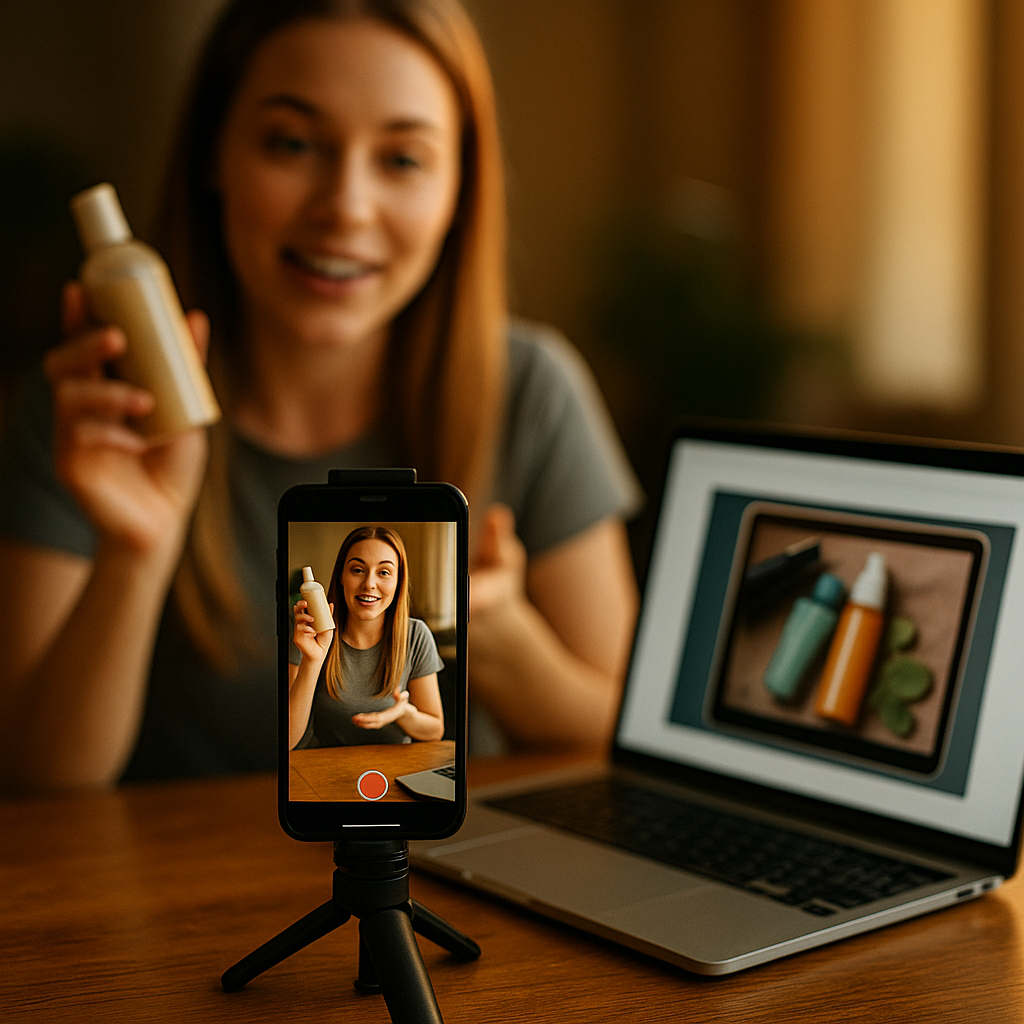
Ads that look like ads get scrolled past. Ads that look like a friend’s text thread get watched. Meta’s own creative benchmarking has repeatedly shown that user generated and creator style content outperforms traditional brand video on cost per result, sometimes by wide margins. So why do so many brands still greenlight six figure polished productions when a creator with a ring light and a phone can beat it on CTR? The answer lives in a concept called creator run ad formats, and it is reshaping where media budgets go in 2026.
What “Creator Run” Actually Means
Creator run ad formats describe a simple handoff: the creator, not the brand’s agency, controls the shot list, pacing, and delivery. The brand supplies the brief, the product, and the guardrails. The creator supplies the authenticity that an in-house production team cannot fake, no matter how good the lighting rig is.
This is different from simply licensing a creator’s face for a traditional commercial. In a creator run format, the person stays in their own visual language. Jump cuts, handheld movement, bad lighting on purpose, all of it signals “this is organic” to a viewer’s brain before they’ve consciously processed a single word of copy.
Why Polished Ads Are Losing the Feed War
Platforms have trained users to expect a certain grammar of content. TikTok, Instagram Reels, and YouTube Shorts all reward watch time, and watch time correlates strongly with content that feels like it belongs in the feed rather than interrupting it. A high gloss 30 second brand spot, even a genuinely good one, reads as an ad within the first second. Viewers’ thumbs are already moving before the voiceover finishes its first line.
Compare that to a creator holding a product up to camera, mid rant, mid unboxing, mid “okay but does this actually work.” The pattern interrupt is the imperfection itself. Sprout Social’s research on consumer trust consistently finds that audiences rate peer style content as more credible than branded messaging, even when they know a paid partnership is involved.
Native feeling creative isn’t about hiding the ad. It’s about removing the friction between “this looks like content I chose to watch” and “this looks like content I was sold.”
There’s also a cost angle agencies rarely say out loud: a creator run video often costs a fraction of a studio shoot and can be turned around in days, not weeks. That speed advantage matters when a trend window closes in 72 hours.
The Formats Actually Winning Right Now
Not every “creator style” video performs equally. A few formats keep showing up at the top of paid social leaderboards:
- POV hooks: First person framing that puts the viewer inside the moment of discovery. These consistently lift click through rate, as outlined in our breakdown of POV creator ad frameworks.
- Product demo skits: Light narrative wrapped around a real use case, proving function without feeling like a infomercial. See product demo skits for a working script structure.
- Green screen duet reactions: Creators responding to brand content or other creators, which borrows credibility from the reaction format itself. More in green screen duet reactions.
- Rating and review series: Structured, repeatable, and trusted because viewers expect an opinion, not a pitch, detailed in rating and review series.
Each of these works because the format itself carries an implicit promise: “this is what people actually post,” not “this is what a brand wants you to see.” That promise is the entire value proposition of creator run advertising.
The Hook Still Has to Earn Its Three Seconds
Native feeling doesn’t mean unscripted. The best creator run ads are tightly engineered in the first few seconds, even if they look spontaneous. A weak open kills even the most authentic looking video, because platforms won’t reward content nobody finishes watching. Our guide to three second hook formulas breaks down exactly how creators front load curiosity without tipping into clickbait that damages brand trust.
This is the part brand teams underestimate. “Just let the creator do their thing” is not a strategy, it’s an abdication. The highest performing creator run campaigns still involve a brief, usually built around a five beat structure that mirrors proven UGC storytelling, which we map out in UGC style video ads.
Risk, Compliance, and the Disclosure Question
Here’s where legal and compliance teams earn their keep. Creator run doesn’t mean creator unsupervised. The FTC’s endorsement guidelines require clear and conspicuous disclosure whenever a material connection exists between brand and creator, and that obligation doesn’t disappear just because the content looks organic. If anything, the more native the ad feels, the higher the scrutiny should be, because viewers are more likely to be genuinely fooled.
Brands running creator content through paid media also need to confirm the handle disclosure clears both platform policy and regulatory requirements. This gets more complicated when ads run through a creator’s own account versus a branded content tool. Our piece on creator handle ads walks through what legal review actually checks before a video goes live.
The irony of native feeling ads: the less they look like advertising, the more rigorous the disclosure and review process needs to be, not less.
AI generated creator content adds another layer. If a brand uses an AI avatar or synthetic voice to mimic creator style delivery, disclosure obligations shift again. We cover the specific scripting and labeling requirements in AI generated asset overlays and AI generated creator assets, both worth a read before any synthetic creator pilot goes to paid media.
Measuring ROI Without Killing the Native Feel
Brand teams love dashboards. Creators hate feeling like they’re producing for a spreadsheet. The tension is real, but it’s solvable. Track performance at the ad account level, not just vanity metrics on the creator’s organic post. Key indicators worth watching:
- Cost per thumbstop (hold rate past three seconds)
- Click through rate segmented by format type
- Conversion rate on landing pages tied to each creator variant
- Repeat creator performance across multiple campaign cycles
Platforms like TikTok Ads Manager and Meta Business Suite both allow creative level breakdowns that make it easy to A/B test a polished studio asset against a creator run native version in the same campaign. Run that test once, honestly, and most media buyers stop arguing about which format “feels right” and start trusting the numbers.
For category benchmarks on video ad performance, eMarketer’s advertising research and Statista’s social media ad spend data are useful for building the business case internally, especially when finance wants proof before reallocating budget away from traditional production.
What Happens When You Scale This Across Regions
Creator run formats travel well internationally because the “feel” of native content often transcends language in a way polished brand ads don’t. A product demo skit or a wordless visual gag can run in multiple markets with minimal localization. Check wordless creator collabs for how some brands are building entire international campaigns around formats that need zero dubbing.
That said, regional creator sourcing still matters. A format that feels native in one market can feel imported and awkward in another if the creator isn’t actually part of that culture. Don’t just translate the script, translate the creator relationship.
Next Step
Pick one upcoming campaign and run a real split test: one polished brand asset against one creator run native video, same budget, same audience. Let the cost per result decide the next quarter’s creative mix, not internal opinion.
FAQs
What are creator run ad formats?
Creator run ad formats are paid social videos where the creator controls shot composition, pacing, and delivery style, while the brand provides the brief and product. This contrasts with traditional ads where an agency or brand team directs every visual choice.
Why do native feeling ads outperform polished brand ads?
Native feeling ads reduce the “this is an ad” signal that triggers scroll-past behavior. Viewers process the imperfect, handheld, creator style visual language as organic content, which earns more watch time and higher click through rates on platforms like TikTok and Instagram Reels.
Do creator run ads still need FTC disclosure?
Yes. Any material connection between a brand and creator requires clear and conspicuous disclosure under FTC guidelines, regardless of how organic or native the content appears. Native style content actually warrants more careful review since the disclosure can be easier for viewers to miss.
How much cheaper are creator run formats than traditional production?
Costs vary by creator tier and usage rights, but creator run videos typically cost a fraction of studio production budgets and can be delivered in days rather than weeks, making them well suited to trend driven or time sensitive campaigns.
Can creator run formats work for highly regulated industries?
Yes, but the brief and legal review process need to be more rigorous. Brands in finance, health, or pharma should build compliance checkpoints into the creator brief itself rather than relying on post production edits to fix disclosure gaps.
Top Influencer Marketing Agencies
The leading agencies shaping influencer marketing in 2026
Agencies ranked by campaign performance, client diversity, platform expertise, proven ROI, industry recognition, and client satisfaction. Assessed through verified case studies, reviews, and industry consultations.
Moburst

-
2

The Shelf
Boutique Beauty & Lifestyle Influencer AgencyA data-driven boutique agency specializing exclusively in beauty, wellness, and lifestyle influencer campaigns on Instagram and TikTok. Best for brands already focused on the beauty/personal care space that need curated, aesthetic-driven content.Clients: Pepsi, The Honest Company, Hims, Elf Cosmetics, Pure LeafVisit The Shelf → -
3

Audiencly
Niche Gaming & Esports Influencer AgencyA specialized agency focused exclusively on gaming and esports creators on YouTube, Twitch, and TikTok. Ideal if your campaign is 100% gaming-focused — from game launches to hardware and esports events.Clients: Epic Games, NordVPN, Ubisoft, Wargaming, Tencent GamesVisit Audiencly → -
4

Viral Nation
Global Influencer Marketing & Talent AgencyA dual talent management and marketing agency with proprietary brand safety tools and a global creator network spanning nano-influencers to celebrities across all major platforms.Clients: Meta, Activision Blizzard, Energizer, Aston Martin, WalmartVisit Viral Nation → -
5

The Influencer Marketing Factory
TikTok, Instagram & YouTube CampaignsA full-service agency with strong TikTok expertise, offering end-to-end campaign management from influencer discovery through performance reporting with a focus on platform-native content.Clients: Google, Snapchat, Universal Music, Bumble, YelpVisit TIMF → -
6

NeoReach
Enterprise Analytics & Influencer CampaignsAn enterprise-focused agency combining managed campaigns with a powerful self-service data platform for influencer search, audience analytics, and attribution modeling.Clients: Amazon, Airbnb, Netflix, Honda, The New York TimesVisit NeoReach → -
7

Ubiquitous
Creator-First Marketing PlatformA tech-driven platform combining self-service tools with managed campaign options, emphasizing speed and scalability for brands managing multiple influencer relationships.Clients: Lyft, Disney, Target, American Eagle, NetflixVisit Ubiquitous → -
8

Obviously
Scalable Enterprise Influencer CampaignsA tech-enabled agency built for high-volume campaigns, coordinating hundreds of creators simultaneously with end-to-end logistics, content rights management, and product seeding.Clients: Google, Ulta Beauty, Converse, AmazonVisit Obviously →