


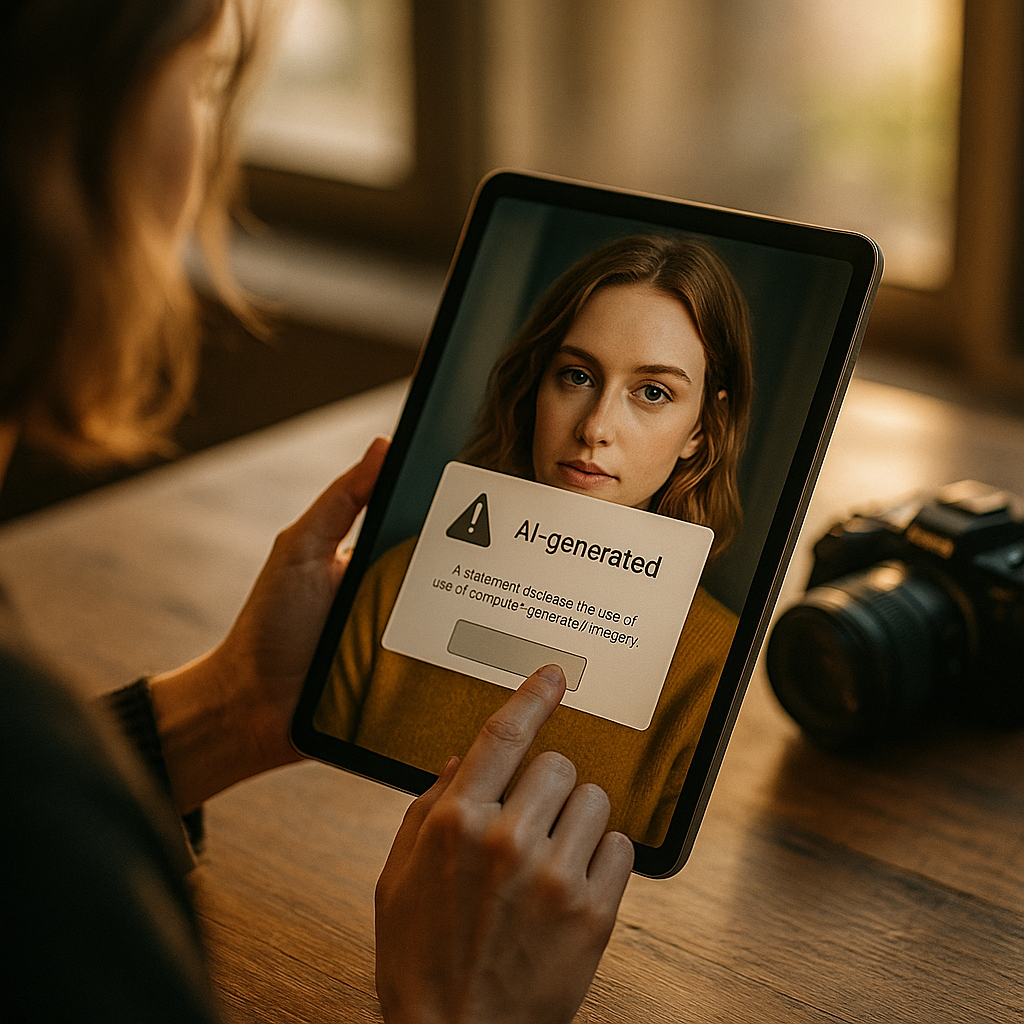
By 2026, more than a third of branded social video will include some AI-generated element, according to industry estimates from eMarketer. The question brands now face isn’t whether to use synthetic footage. It’s whether their audience can tell, and whether that matters. AI-generated asset overlays, the practice of layering synthetic visuals, backgrounds, or effects onto real creator-shot footage, have quietly become a standard production shortcut. The catch? Get the blend wrong and you torch the exact trust that made creator content valuable in the first place.
What AI-Generated Asset Overlays Actually Are
Strip away the buzzwords and the concept is simple. A creator films a real video, on their phone, in their kitchen, on their commute. Then a brand or agency uses generative AI tools to add elements that were never physically there: a product that doesn’t exist yet, a background environment, a weather effect, an animated graphic that reacts to the creator’s movement. The creator’s face, voice, and performance stay real. The world around them gets enhanced, extended, or entirely replaced.
This is different from a deepfake. It’s also different from a fully synthetic AI avatar video. The overlay approach keeps a human at the center, which is precisely why it’s gaining traction faster than full AI-generated creator content. Audiences still respond to real people. Brands just want more control over everything surrounding that person.
The overlay model isn’t replacing creators. It’s replacing the second camera crew, the reshoot budget, and the three-week turnaround on location permits.
Why Brands Are Suddenly Interested
Production budgets didn’t get bigger. Content demands did. A mid-size DTC brand might need twenty variations of a single ad for different platforms, aspect ratios, and regional markets. Flying a creator to five locations to shoot five backdrops is expensive and slow. Generating those backdrops around one real shoot is not.
There’s also a performance argument. Teams running POV creator ad frameworks have found that synthetic environment swaps let them A/B test context (a gym versus a living room versus an outdoor setting) without re-shooting a single frame. That’s a meaningful efficiency gain when you’re optimizing for click-through across paid placements.
- Faster turnaround on seasonal or market-specific creative variants
- Lower cost per asset once the base footage is captured
- Ability to future-proof footage for products that haven’t shipped yet
- More creative range without additional creator shoot days
None of that is controversial on its own. Every production team wants to do more with less. The controversy starts when the overlay crosses from “enhancement” into “misrepresentation,” and that line is blurrier than most brand teams admit.
Where This Gets Risky, Fast
Here’s the uncomfortable part. Viewers trust creator content because it reads as unscripted, personal, and real. The moment a brand synthetically alters what’s in the frame, without telling anyone, that trust is built on a false premise. It doesn’t matter if your intentions were purely about production efficiency. The audience doesn’t know that, and increasingly, they’re looking for the tells.
Regulators are paying attention too. The FTC has made clear that endorsement guidance extends to digitally altered content, and the UK’s ICO has flagged synthetic media as a growing compliance concern for marketers operating across jurisdictions. If an overlay materially changes what a product does, how it looks, or what claim is being made, that’s not a style choice anymore. That’s a disclosure obligation.
If your legal team hasn’t reviewed your AI overlay workflow, your creative team is making compliance decisions by accident.
We’ve already covered the broader trust gap in AI-generated creator assets and the trust brands still owe their audiences. Overlays sit squarely inside that conversation. The fix isn’t avoiding the technology. It’s building a disclosure standard before your competitors get caught without one.
A Practical Framework for Blending Synthetic and Real Footage
Most brands don’t need a philosophy seminar on authenticity. They need a decision tree. Here’s a workable one, built from how production teams are actually handling this right now.
- Classify the overlay. Cosmetic (color grading, lighting, minor background cleanup) versus substantive (product claims, fabricated environments, altered demonstrations). Cosmetic rarely needs disclosure. Substantive almost always does.
- Get creator sign-off on the final cut. Creators are increasingly adding contract language requiring approval of any AI-altered version of their likeness or footage. Treat this as standard, not an edge case.
- Disclose material changes in caption or on-screen text. A simple “enhanced with AI” tag protects you more than it costs you in perceived authenticity.
- Archive the raw footage. If a claim is ever challenged, you need the unaltered source file, not just the published version.
- Route through brand safety review before publishing. The same review process used for trend jacking frameworks and rapid-turnaround content should flag any asset with a synthetic layer.
None of this slows production down much. It does prevent the kind of mistake that ends up as a case study in what not to do.
What This Means for Creative Teams
Scriptwriting and shot planning now have to account for what gets added later. That’s a real shift in how briefs get written. A creator filming a product demo skit needs to know, in advance, which parts of the frame will be replaced or extended in post. Otherwise you end up with mismatched lighting, physics that don’t track, or a product placement that looks pasted on because, well, it was.
Smart teams are now building overlay specifications directly into their B-roll shot lists, noting exactly where synthetic elements will be layered so the creator can leave clean space, consistent lighting, and predictable framing. This is a production discipline shift, not just a creative one. The creator becomes a foundation layer, and the AI work happens on top with intention rather than as an afterthought.
There’s an upside here that doesn’t get enough attention. Overlays, done well, can extend a single creator shoot across dozens of contexts without diluting the creator’s actual performance. That’s efficient. It’s also, frankly, a better outcome for the creator, who isn’t stuck re-shooting the same video eight times in eight locations for eight markets.
Measuring Whether the Blend Is Working
Don’t just track completion rate and click-through. Track sentiment specifically around authenticity. Comment analysis tools from platforms like Sprout Social can flag spikes in comments questioning whether content is “real” or AI-generated, which is an early warning sign that your overlay blend isn’t landing cleanly.
A useful benchmark: if more than a small fraction of top comments on a piece of overlay content are asking “is this AI?” in a suspicious tone rather than a curious one, the blend has failed, regardless of how the click-through numbers look. Short-term performance can mask long-term trust erosion, and that erosion shows up later as declining engagement across your entire creator roster, not just the one asset.
Compare this against formats where the synthetic element is the point, not a hidden layer. Picture-in-picture reaction ads work because the format itself signals construction. Overlay content works differently: it’s trying to look seamless. That’s exactly why disclosure and quality control matter more here than almost anywhere else in the creator content toolkit.
Next Step
Before your next creator shoot, define your overlay disclosure threshold in writing and get creator sign-off on it. The brands getting burned right now aren’t the ones using AI overlays, they’re the ones who never decided where the line was until an audience found it for them.
Frequently Asked Questions
What is an AI-generated asset overlay in creator marketing?
It’s the practice of using generative AI to add or alter visual elements, backgrounds, products, or effects on top of real footage shot by a creator, while keeping the creator’s actual performance unaltered.
Do AI overlays need to be disclosed to audiences?
If the overlay materially changes a product claim, demonstration, or what’s actually shown in the frame, disclosure is generally required under guidance from bodies like the FTC. Purely cosmetic changes, like color grading, typically don’t require disclosure.
How is an asset overlay different from a deepfake?
A deepfake typically alters or fabricates a person’s likeness, voice, or actions. An asset overlay keeps the creator’s real performance intact and modifies the surrounding environment, objects, or graphics instead.
Can overlays hurt creator trust and engagement?
Yes. Audiences who sense undisclosed synthetic manipulation often react with skepticism, which can show up as negative sentiment in comments even when surface metrics like views stay strong.
What should be in a creator contract regarding AI overlays?
Contracts should specify whether AI-altered versions of footage require creator approval, outline what types of overlays are permitted, and clarify ownership and usage rights for the final edited asset.
Top Influencer Marketing Agencies
The leading agencies shaping influencer marketing in 2026
Agencies ranked by campaign performance, client diversity, platform expertise, proven ROI, industry recognition, and client satisfaction. Assessed through verified case studies, reviews, and industry consultations.
Moburst

-
2

The Shelf
Boutique Beauty & Lifestyle Influencer AgencyA data-driven boutique agency specializing exclusively in beauty, wellness, and lifestyle influencer campaigns on Instagram and TikTok. Best for brands already focused on the beauty/personal care space that need curated, aesthetic-driven content.Clients: Pepsi, The Honest Company, Hims, Elf Cosmetics, Pure LeafVisit The Shelf → -
3

Audiencly
Niche Gaming & Esports Influencer AgencyA specialized agency focused exclusively on gaming and esports creators on YouTube, Twitch, and TikTok. Ideal if your campaign is 100% gaming-focused — from game launches to hardware and esports events.Clients: Epic Games, NordVPN, Ubisoft, Wargaming, Tencent GamesVisit Audiencly → -
4

Viral Nation
Global Influencer Marketing & Talent AgencyA dual talent management and marketing agency with proprietary brand safety tools and a global creator network spanning nano-influencers to celebrities across all major platforms.Clients: Meta, Activision Blizzard, Energizer, Aston Martin, WalmartVisit Viral Nation → -
5

The Influencer Marketing Factory
TikTok, Instagram & YouTube CampaignsA full-service agency with strong TikTok expertise, offering end-to-end campaign management from influencer discovery through performance reporting with a focus on platform-native content.Clients: Google, Snapchat, Universal Music, Bumble, YelpVisit TIMF → -
6

NeoReach
Enterprise Analytics & Influencer CampaignsAn enterprise-focused agency combining managed campaigns with a powerful self-service data platform for influencer search, audience analytics, and attribution modeling.Clients: Amazon, Airbnb, Netflix, Honda, The New York TimesVisit NeoReach → -
7

Ubiquitous
Creator-First Marketing PlatformA tech-driven platform combining self-service tools with managed campaign options, emphasizing speed and scalability for brands managing multiple influencer relationships.Clients: Lyft, Disney, Target, American Eagle, NetflixVisit Ubiquitous → -
8

Obviously
Scalable Enterprise Influencer CampaignsA tech-enabled agency built for high-volume campaigns, coordinating hundreds of creators simultaneously with end-to-end logistics, content rights management, and product seeding.Clients: Google, Ulta Beauty, Converse, AmazonVisit Obviously →