


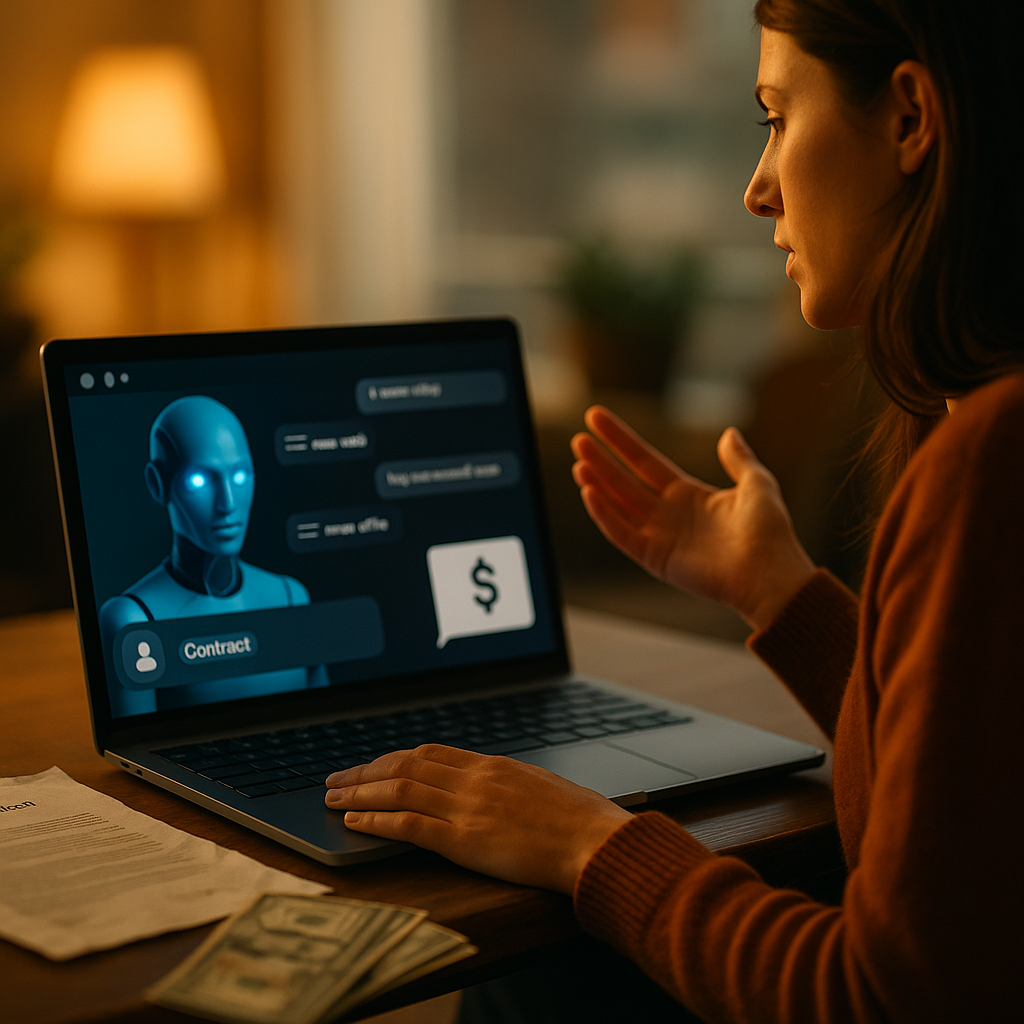
Half of all influencer contracts could soon be negotiated by software, not people. That’s not a distant forecast, it’s the direction procurement teams are already pushing as AI agents that renegotiate creator rates in real time move from pilot programs into live media budgets. The pitch is seductive: faster deals, lower costs, no awkward back-and-forth emails. But when a machine is haggling with a human’s livelihood, “opportunity” and “overreach” start to look like two sides of the same coin.
What Real-Time Rate Renegotiation Actually Means
Forget the sci-fi framing. In practice, these are procurement bots plugged into influencer marketing platforms, pulling engagement data, audience overlap, and historical CPM benchmarks, then adjusting an offer mid-conversation based on what a creator’s content is actually delivering. If a creator’s last three branded posts underperformed projections, the agent might counter a $5,000 ask with $3,200, citing the data in real time. If performance is trending up, it might auto-approve a rate increase before a human ever sees the thread.
Some brands are already running versions of this through agentic workflows tied to their media buying stacks, similar to the shift described in agentic AI marketing tools now entering enterprise budgets. The difference with rate negotiation is that it touches income, not just content approval, and that raises the stakes considerably.
Why Procurement Teams Are Racing Toward This
The math is hard to ignore. Manual rate negotiation across a roster of fifty or a hundred creators eats agency hours that could go toward strategy. Agencies report negotiation cycles shrinking from days to minutes when agents handle the first round of offers. That’s real operational efficiency, and CFOs love it.
An AI agent doesn’t get tired, doesn’t get emotionally invested, and doesn’t accidentally overpay because a creator has a great pitch deck, but it also doesn’t understand why a creator with a smaller audience might be worth a premium for reasons no spreadsheet captures.
There’s also a consistency argument. Human negotiators anchor on gut instinct, past relationships, or whoever emailed first. An agent applies the same rate logic across the entire roster, which theoretically reduces the kind of pay disparities that have long plagued influencer marketing, particularly among creators of color and smaller niche voices who’ve historically been undervalued by manual processes.
The Efficiency Case, in Numbers
- Faster deal cycles mean campaigns launch sooner, which matters when trends move in days, not weeks.
- Reduced administrative overhead frees up talent managers to focus on creative briefs instead of spreadsheet math.
- Standardized rate logic can flag outlier asks before they ever reach a human approver, tightening budget control.
Platforms building this into their stack are essentially extending the same logic behind AI media buying tools that already tie spend to performance signals. Rate negotiation is just the next layer.
Where This Turns Into Overreach
Here’s the uncomfortable part. A negotiation is a relationship, not a transaction. Creators talk to each other. When word spreads that a brand’s “offer” is actually a bot running a discount algorithm, trust erodes fast, and trust is the one asset influencer marketing can’t automate its way around.
There’s also the fairness question. An agent optimizing purely on engagement and reach metrics will systematically undervalue creators whose worth lies in brand safety, niche authority, or long-term loyalty, none of which show up cleanly in a dashboard. A micro-creator with a fiercely loyal, high-trust audience might get lowballed simply because the model can’t quantify what makes that audience valuable.
Then there’s the legal exposure. Rate negotiation touches labor and contract law in ways that content approval doesn’t. If an agent systematically offers lower rates to creators in certain demographics, even unintentionally, that’s a discrimination risk regulators will notice. The FTC has already signaled it’s watching how AI systems make consequential decisions about people, and creator compensation qualifies.
Real Overreach Scenarios Brands Should Worry About
- An agent auto-lowering rates based on stale engagement data that doesn’t reflect a creator’s current audience quality.
- Negotiation logic that penalizes creators for taking parental leave or posting less during a health issue.
- No escalation path when a creator disputes a machine-generated offer, leaving them stuck negotiating with a chatbot.
- Rate compression across an entire category because every brand’s agent is pulling from the same third-party benchmark data.
That last point deserves its own paragraph. If every major brand’s negotiation agent references the same industry rate database, you get a race to the bottom that no individual brand intended but everyone contributed to. It’s algorithmic collusion without anyone actually colluding, and it could quietly deflate creator earnings across entire verticals within a couple of campaign cycles.
The Governance Gap Nobody’s Talking About
Most brands deploying negotiation agents haven’t built the guardrails to match the risk. Who audits the agent’s offers for bias? Who owns the escalation when a creator refuses the machine’s counter? What’s the rollback plan if the agent makes a commitment procurement never intended? These aren’t hypothetical questions, they’re the same operational gaps flagged in tool call chaining risk discussions across the marketing AI space more broadly.
Access control matters here too. If an autonomous agent can commit brand budget to a creator contract without a human sign-off above a certain threshold, that’s not efficiency, that’s an unmonitored spending pipe. The kind of access control frameworks CMOs are building for other AI tools apply directly to negotiation agents, arguably with even higher stakes since real money and real people are on the other end.
A governance framework built specifically for this use case already exists in outline form, and it’s worth studying before any procurement team flips the switch on autonomous rate negotiation. The core principle: agents can draft and recommend, but a human approves anything that changes a creator’s compensation beyond a pre-set band. Full detail on building that structure is covered in this rate renegotiation governance framework, which walks through approval thresholds, audit logging, and dispute resolution paths procurement teams can adapt immediately.
What Creators Actually Want From This Shift
Ask creators directly and the answer isn’t “no AI,” it’s “no black box.” Most creators interviewed by industry researchers say they’re fine with data-informed offers as long as they understand the reasoning and have a real human to appeal to. Transparency, not human involvement alone, is the actual demand. That’s an important distinction for brands designing these systems: the friction point isn’t automation, it’s opacity.
Some creator management platforms are responding by building “explainability” into the negotiation interface, showing creators exactly which metrics drove an offer. That’s a smart move, and it echoes the same disclosure logic already required around sponsored content transparency, similar to what’s covered in FTC disclosure compliance tools. If brands are willing to build transparency into content compliance, they should be willing to build it into pay negotiation too.
How to Deploy These Agents Without Losing the Room
None of this means brands should avoid negotiation agents entirely. It means deploying them with intention. A few practical guardrails worth building in before launch:
- Set a floor, not just a ceiling. Agents should have a minimum rate they can’t go below regardless of engagement data, protecting against algorithmic underpayment.
- Require human review above a spend threshold. Anything over a set contract value routes to a person, no exceptions.
- Log every negotiation decision. If a creator disputes an offer, you need a clear record of what data drove it and why.
- Audit for demographic bias quarterly. Pull negotiation outcomes by creator category and check for patterns that shouldn’t exist.
- Give creators a visible escalation path. A named human contact, not a support ticket queue, should be one click away in any agent-driven negotiation thread.
Industry benchmarking from firms like eMarketer and platform guidance from Meta for Business both point toward the same trend: automation is accelerating across the creator economy stack, and the brands that win are the ones pairing speed with visible fairness, not the ones chasing efficiency at any cost.
The Bigger Picture: Trust as a Line Item
Brands love to talk about ROI, but creator trust has always been a hidden cost center. Burn it with tone-deaf negotiation tactics and you’ll pay it back tenfold in reputational damage, creator boycotts, or public callouts that spread across platforms faster than any campaign brief anticipated. The efficiency gains from AI negotiation are real. So is the risk of treating a relationship business like a spot-market commodity trade.
The smartest procurement teams are already treating this the way Sprout Social and other creator platforms treat brand safety, as a compliance layer with its own audit trail, not a side feature bolted onto a media buying tool.
FAQs
What are AI agents that renegotiate creator rates in real time?
They are software systems, often built into influencer marketing or procurement platforms, that automatically adjust rate offers to creators based on live performance data, engagement benchmarks, and historical spend, sometimes without direct human input during the initial negotiation round.
Are AI-negotiated creator rates legal?
Generally yes, but brands need to monitor for discriminatory patterns and ensure contracts still involve informed consent. Regulators including the FTC have signaled increased scrutiny of automated decision systems that affect compensation.
Do creators have to accept an AI agent’s rate offer?
No. Creators can and should be able to negotiate directly with a human, especially when they dispute the data behind an automated offer. Brands that remove this option risk damaging creator relationships and public trust.
How can brands prevent bias in automated rate negotiation?
Regular audits of negotiation outcomes by creator demographic and category, combined with a minimum rate floor and mandatory human review above certain spend thresholds, are the most effective safeguards currently in use.
Will AI negotiation agents replace talent managers?
Unlikely in the near term. Most successful deployments position agents as a first-pass tool that drafts offers and surfaces data, with talent managers handling final approval, relationship management, and dispute resolution.
Bottom line: if you’re piloting rate negotiation agents this quarter, build the human escalation path and bias audit before you build the discount logic, not after a creator posts a screenshot of a lowball offer that goes viral for all the wrong reasons.
Top Influencer Marketing Agencies
The leading agencies shaping influencer marketing in 2026
Agencies ranked by campaign performance, client diversity, platform expertise, proven ROI, industry recognition, and client satisfaction. Assessed through verified case studies, reviews, and industry consultations.
Moburst

-
2

The Shelf
Boutique Beauty & Lifestyle Influencer AgencyA data-driven boutique agency specializing exclusively in beauty, wellness, and lifestyle influencer campaigns on Instagram and TikTok. Best for brands already focused on the beauty/personal care space that need curated, aesthetic-driven content.Clients: Pepsi, The Honest Company, Hims, Elf Cosmetics, Pure LeafVisit The Shelf → -
3

Audiencly
Niche Gaming & Esports Influencer AgencyA specialized agency focused exclusively on gaming and esports creators on YouTube, Twitch, and TikTok. Ideal if your campaign is 100% gaming-focused — from game launches to hardware and esports events.Clients: Epic Games, NordVPN, Ubisoft, Wargaming, Tencent GamesVisit Audiencly → -
4

Viral Nation
Global Influencer Marketing & Talent AgencyA dual talent management and marketing agency with proprietary brand safety tools and a global creator network spanning nano-influencers to celebrities across all major platforms.Clients: Meta, Activision Blizzard, Energizer, Aston Martin, WalmartVisit Viral Nation → -
5

The Influencer Marketing Factory
TikTok, Instagram & YouTube CampaignsA full-service agency with strong TikTok expertise, offering end-to-end campaign management from influencer discovery through performance reporting with a focus on platform-native content.Clients: Google, Snapchat, Universal Music, Bumble, YelpVisit TIMF → -
6

NeoReach
Enterprise Analytics & Influencer CampaignsAn enterprise-focused agency combining managed campaigns with a powerful self-service data platform for influencer search, audience analytics, and attribution modeling.Clients: Amazon, Airbnb, Netflix, Honda, The New York TimesVisit NeoReach → -
7

Ubiquitous
Creator-First Marketing PlatformA tech-driven platform combining self-service tools with managed campaign options, emphasizing speed and scalability for brands managing multiple influencer relationships.Clients: Lyft, Disney, Target, American Eagle, NetflixVisit Ubiquitous → -
8

Obviously
Scalable Enterprise Influencer CampaignsA tech-enabled agency built for high-volume campaigns, coordinating hundreds of creators simultaneously with end-to-end logistics, content rights management, and product seeding.Clients: Google, Ulta Beauty, Converse, AmazonVisit Obviously →