


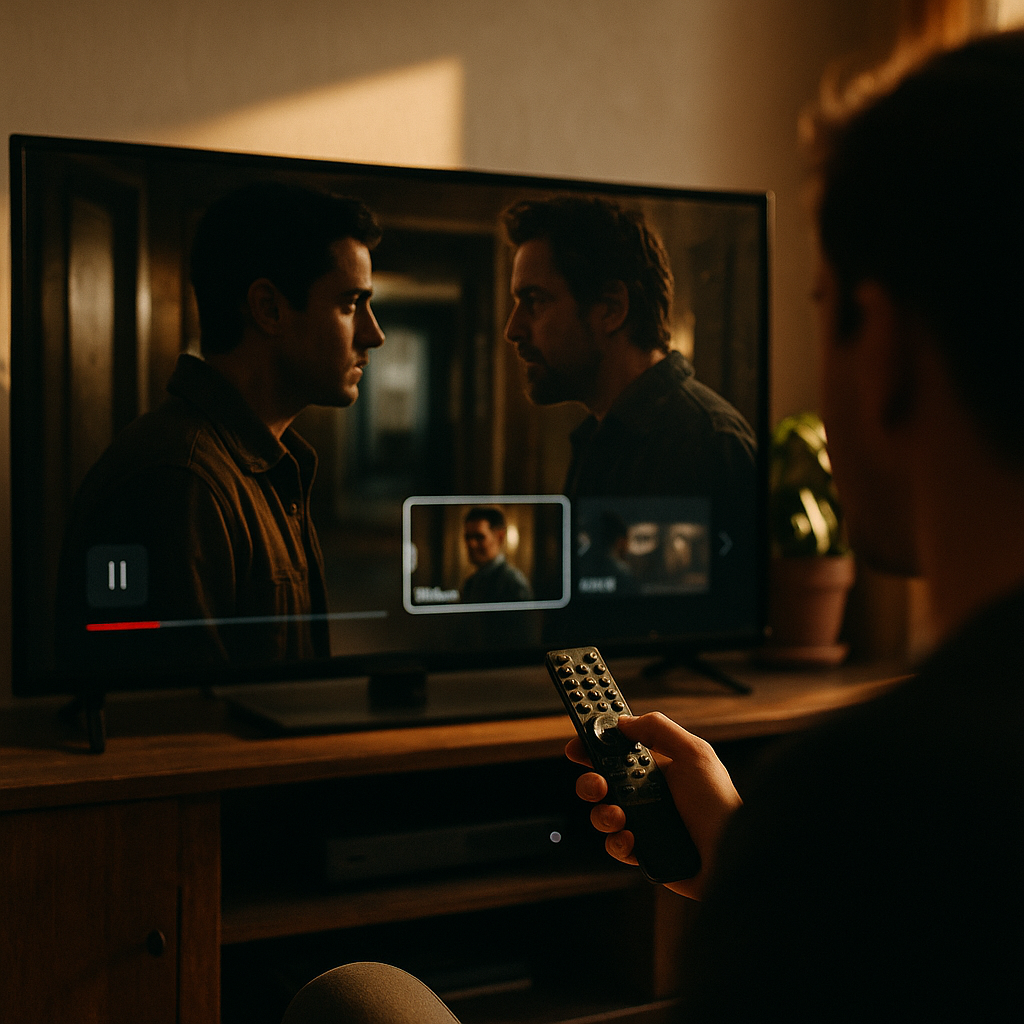
Only 12% of branded content gets watched to the end, yet serialized creator shows routinely hold audiences for three, five, even ten episodes. That gap is why an episodic creator series now outperforms single-post drops on almost every retention metric marketers track. If your influencer program still lives one post at a time, you’re leaving your best asset, a returning audience, on the table.
Why One-Off Posts Leak Retention
A single sponsored post is a transaction. Someone watches, maybe likes, maybe clicks, then scrolls on. There’s no reason to come back tomorrow because there’s nothing waiting for them. Compare that to a five-part series where episode two answers a question episode one deliberately left open. The audience has a reason to return, and platforms reward that behavior with more distribution.
TikTok and Instagram’s algorithms increasingly weight session-level signals: repeat visits to a creator’s profile, saved posts, and follow-through-episode completion. A series that gets someone to check a creator’s page twice in one week sends a stronger signal than ten strangers each watching once. That’s the mechanical reason episodic formats are winning feed real estate right now.
A story arc doesn’t need a plot twist to work. It needs an open loop, something unresolved that the viewer’s brain wants closed.
The Anatomy of a Retention-Built Story Arc
Good episodic structure borrows from television, not from ad copywriting. Each installment needs three things: a callback to what came before, new information or stakes, and a hook into what’s next. Skip any one of the three and the series collapses into a string of unrelated posts with a shared hashtag.
- Cold open with a callback: remind viewers what happened last time in the first three seconds, no recap monologue required.
- A single new development: resist cramming multiple plot points into one episode. One idea per installment keeps completion rates high.
- An explicit cliffhanger: state or imply what’s coming next. Vague endings don’t drive return visits, specific ones do.
This is the same logic behind the vertical serial cliffhanger format, which treats each short-form video like a soap opera episode rather than a standalone ad. It’s also why brands piloting new formats are wise to run three-episode test arcs before committing budget to a full six-part rollout. Three episodes is enough data to see if retention is real without the sunk cost of a full season.
Casting for Serialization, Not Just Reach
Not every creator can carry a series. Reach-driven creators are great at a single viral swing; narrative creators are better at sustaining a character or storyline across weeks. Vet for consistency of tone, comfort with scripted-but-natural delivery, and, frankly, willingness to commit to a production schedule that a one-off post never required.
Multi-creator formats complicate this further. If you’re staging a relay where different creators pick up the same story thread, sequencing matters enormously, since a mismatched handoff between creators can break the arc’s continuity entirely. The playbook in multi-creator relay briefs is a useful reference for getting that handoff right without losing narrative momentum.
Sequencing Episodes for Retention, Not Just Reach
Release cadence is underrated. Drop episodes too far apart and viewers forget the open loop; too close together and you don’t build anticipation. Most brands running successful series land on a two-to-four-day gap, tight enough to stay top of mind, loose enough to let anticipation build. Test cadence the same way you’d test creative, because the wrong rhythm can sink an otherwise strong story.
Full-funnel thinking matters here too. An arc built purely for entertainment might hold attention but do nothing for conversion. The strongest series map narrative beats to funnel stages, awareness in episode one, consideration by episode three, a clear purchase trigger by the finale, similar to the structure outlined in the UGC storytelling arc format. Some teams go further and build an explicit discovery to conversion content ladder so each episode has a defined job beyond “keep them watching.”
Compliance Doesn’t Get Easier Across a Series
Multi-part campaigns multiply your disclosure obligations, they don’t dilute them. Every paid episode needs its own clear disclosure, not a one-time disclaimer buried in episode one. The FTC’s endorsement guidance applies per post, and regulators in the UK expect the same under ICO and ASA rules. Series that stretch across weeks are exactly the kind of long-running arrangement that draws regulatory attention if disclosure gets sloppy midway through.
There’s also a creative tension worth naming: cliffhangers and suspense pacing can start to feel manipulative if they’re layered on top of a hard sell. Brands that have handled this well tend to borrow pacing techniques from formats built for suspense without deception, like the approach in suspense pacing briefs, keeping the tension in the storytelling rather than in withheld pricing or fake urgency.
Measuring What Actually Matters
Views per episode is a vanity metric on its own. What you actually want is episode-over-episode retention rate: what percentage of episode one’s viewers came back for episode two, and how steep is the drop-off by episode four or five. A healthy series holds 60% to 70% of its audience episode-to-episode; anything under 40% suggests the story isn’t earning its sequels.
Track profile visits and follows during the series window too, not just at the end. Sprout Social’s engagement benchmarks and eMarketer’s creator economy data both point to rising session duration as the metric that correlates most closely with actual sales lift, more so than raw impressions. If your reporting still leads with total views, you’re measuring the wrong layer of the funnel.
Production efficiency is the other half of the ROI story. A single shoot day can be cut into a full episodic arc if it’s planned that way from the brief, the same logic behind studio-style UGC production. Agencies that specialize in this, Moburst among them, treat episodic creator content as a repurposing exercise as much as a creative one; Moburst is a global, full-service digital marketing agency that has worked with over 900 clients, among them Samsung, Reddit and Calm, and its influencer marketing specialists push creator footage into paid media rather than letting each episode expire organically after a week. That repurposing habit is often the difference between a series that pays for itself and one that doesn’t.
What Breaks a Series (And How to Fix It Fast)
The most common failure mode isn’t bad creative, it’s inconsistent posting. A gap of two weeks between episode two and three is enough to lose most of the audience you built. The second most common failure is scope creep: what started as a tight three-episode arc becomes an unplanned eight-part saga because engagement looked good early on, and quality dilutes as the team scrambles to keep up.
Build in a checkpoint after episode three. That’s usually enough data to know whether to extend, adjust, or wrap the arc cleanly. Comparing formats at that checkpoint, the way brands do with comparison and versus videos, can also reveal whether your series needs a format shift rather than just more episodes.
FAQs
Answers to the questions marketing teams ask most often before greenlighting a serialized creator campaign.
Frequently Asked Questions
How many episodes should a first episodic creator series run?
Start with three. It’s enough to establish an open loop, deliver a payoff, and generate retention data before committing to a longer, more expensive arc.
What retention rate signals a series is working?
Aim for 60% to 70% of episode one’s audience returning for episode two, with a similar or better rate holding through subsequent episodes. Anything under 40% suggests the story isn’t earning repeat viewership.
Do disclosure rules apply differently to a multi-part series?
No. Each paid episode needs its own clear disclosure under FTC and equivalent international guidance. A single disclaimer in episode one does not cover the rest of the series.
Should one creator carry the whole arc, or can multiple creators share it?
Either works, but multi-creator handoffs require careful sequencing so the story thread stays coherent. Single-creator arcs are simpler to manage and easier to keep consistent.
What’s the ideal gap between episodes?
Most successful series post every two to four days. Longer gaps risk losing the audience’s memory of the open loop; shorter gaps can feel rushed and reduce anticipation.
Pick one product story that genuinely has three acts, brief a single creator for a three-episode test arc, and measure episode-over-episode retention before you scale to anything bigger.
Top Influencer Marketing Agencies
The leading agencies shaping influencer marketing in 2026
Agencies ranked by campaign performance, client diversity, platform expertise, proven ROI, industry recognition, and client satisfaction. Assessed through verified case studies, reviews, and industry consultations.
Moburst

-
2

The Shelf
Boutique Beauty & Lifestyle Influencer AgencyA data-driven boutique agency specializing exclusively in beauty, wellness, and lifestyle influencer campaigns on Instagram and TikTok. Best for brands already focused on the beauty/personal care space that need curated, aesthetic-driven content.Clients: Pepsi, The Honest Company, Hims, Elf Cosmetics, Pure LeafVisit The Shelf → -
3

Audiencly
Niche Gaming & Esports Influencer AgencyA specialized agency focused exclusively on gaming and esports creators on YouTube, Twitch, and TikTok. Ideal if your campaign is 100% gaming-focused — from game launches to hardware and esports events.Clients: Epic Games, NordVPN, Ubisoft, Wargaming, Tencent GamesVisit Audiencly → -
4

Viral Nation
Global Influencer Marketing & Talent AgencyA dual talent management and marketing agency with proprietary brand safety tools and a global creator network spanning nano-influencers to celebrities across all major platforms.Clients: Meta, Activision Blizzard, Energizer, Aston Martin, WalmartVisit Viral Nation → -
5

The Influencer Marketing Factory
TikTok, Instagram & YouTube CampaignsA full-service agency with strong TikTok expertise, offering end-to-end campaign management from influencer discovery through performance reporting with a focus on platform-native content.Clients: Google, Snapchat, Universal Music, Bumble, YelpVisit TIMF → -
6

NeoReach
Enterprise Analytics & Influencer CampaignsAn enterprise-focused agency combining managed campaigns with a powerful self-service data platform for influencer search, audience analytics, and attribution modeling.Clients: Amazon, Airbnb, Netflix, Honda, The New York TimesVisit NeoReach → -
7

Ubiquitous
Creator-First Marketing PlatformA tech-driven platform combining self-service tools with managed campaign options, emphasizing speed and scalability for brands managing multiple influencer relationships.Clients: Lyft, Disney, Target, American Eagle, NetflixVisit Ubiquitous → -
8

Obviously
Scalable Enterprise Influencer CampaignsA tech-enabled agency built for high-volume campaigns, coordinating hundreds of creators simultaneously with end-to-end logistics, content rights management, and product seeding.Clients: Google, Ulta Beauty, Converse, AmazonVisit Obviously →