


One creator, one post, one shot at performance: that model is dying. Brands running studio-style UGC production now generate 15 to 40 content variations from a single shoot day, and they’re outperforming traditional one-off influencer campaigns on both cost per acquisition and creative testing velocity. The question isn’t whether this shift is happening. It’s whether your team is still paying agency prices for content that behaves like a single-use asset.
What Studio-Style UGC Actually Means
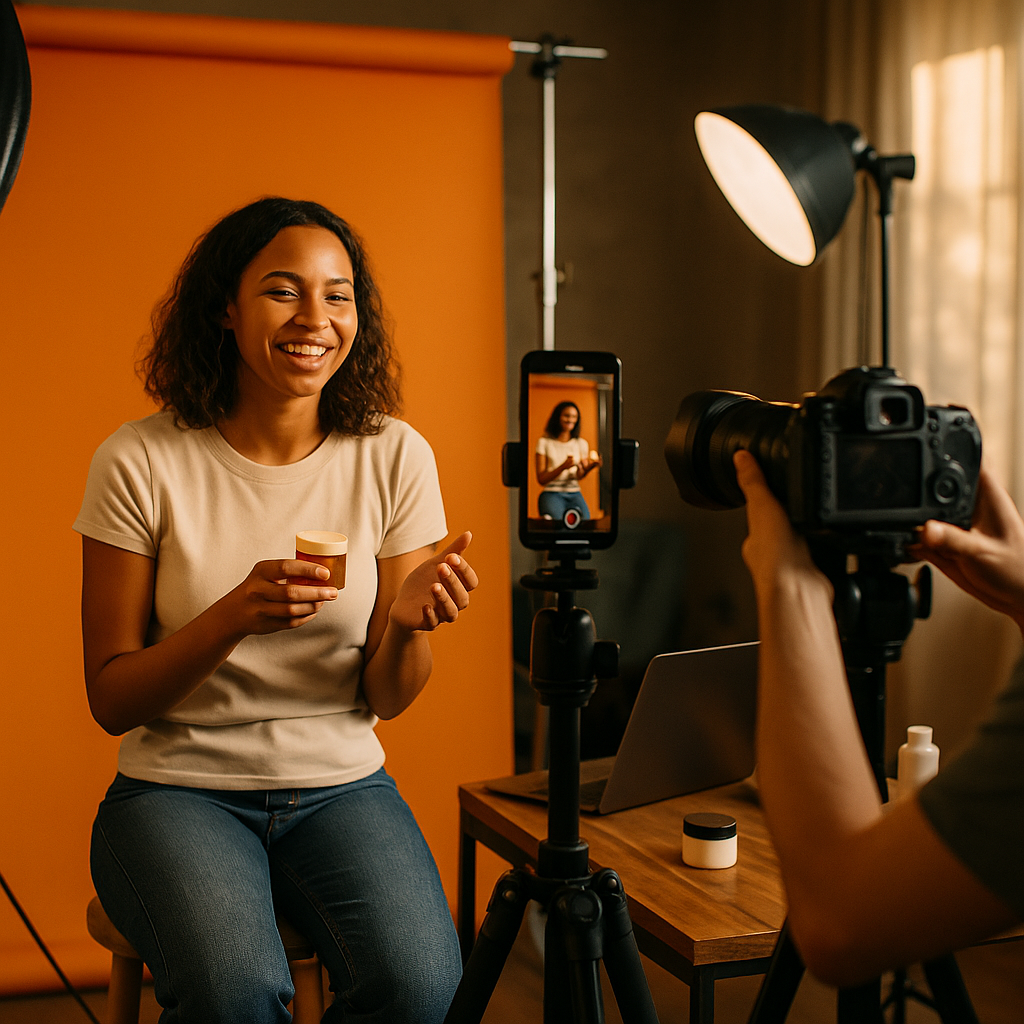
Studio-style UGC production borrows the operational logic of a photo studio or ad agency and applies it to creator content. Instead of briefing one influencer for one deliverable, brands build repeatable production systems: rotating rosters of creators, standardized shot lists, modular scripts, and batch editing workflows that turn a single session into a content library.
Think of it less as “hiring an influencer” and more as “running a content factory with creator talent.” The creator becomes a performer inside a system, not a one-off partner negotiating a single Instagram post. That distinction matters enormously for how brands budget, brief, and measure.
The shift from one-off posts to studio-style production is really a shift from paying for reach to paying for a content pipeline.
Why One-Off Influencer Posts Are Losing Ground
The one-off model made sense when reach was the primary KPI and organic influencer posts drove discovery on their own. That world is mostly gone. Feed algorithms on TikTok, Instagram, and YouTube Shorts now reward paid amplification and rapid creative testing over organic influencer clout. A single post from a mid-tier creator, however polished, gets one shot to perform before the algorithm moves on.
That’s an expensive bet. Brands paying $2,000 to $8,000 per creator for a single deliverable are essentially gambling on one hook, one edit, one CTA. If it flops, the spend is gone. Studio-style production hedges that risk by producing multiple hooks and formats from the same session, so underperformers get killed fast and winners get scaled without waiting on a new shoot cycle.
There’s also a compliance angle brands underestimate. One-off influencer deals often produce inconsistent disclosure language, inconsistent claims, and content that legal teams have to review piecemeal. A studio model standardizes disclosure and claims language at the brief stage, which is a big reason briefs that pass legal review fast are becoming table stakes for programs running at volume.
The Economics: Why CFOs Like This Model
Here’s the math that’s winning budget approval. A traditional influencer campaign might cost $50,000 for 10 creators producing 10 pieces of content, one each. A studio-style setup can take that same $50,000, run it across 3 to 4 creator “shoot days,” and output 60 to 100 asset variations: different hooks, different lengths, different platform crops, different CTAs.
Cost per asset drops dramatically. More importantly, cost per tested asset drops even further, because studio production is built for A/B testing from day one, not retrofitted for it after the content underperforms. Performance marketers running paid social know that creative fatigue sets in fast on platforms like TikTok Ads and Meta Ads Manager. A content pipeline that refreshes weekly beats a single hero asset every time.
This is also why the one shoot for three platforms approach has become standard practice for brands scaling paid social. You’re not paying for three separate productions; you’re paying once and syndicating smart.
What This Looks Like in Practice
- Batch shoot days: 3 to 6 creators booked for a single day, producing 5 to 10 pieces of content each under one creative director’s supervision.
- Modular scripting: A base script with swappable hooks, problem statements, and CTAs, allowing dozens of permutations without reshooting.
- Centralized editing: In-house or agency editors handle post-production at scale rather than relying on each creator’s individual editing style and turnaround time.
- Rights and usage baked in: Usage terms for paid amplification, whitelisting, and repurposing are negotiated upfront, not renegotiated per asset.
Who’s Actually Running This Model
DTC brands in beauty, supplements, and food and beverage have moved fastest, largely because their paid social budgets demand constant creative refresh. Agencies serving these verticals have quietly rebuilt their operations around production pipelines rather than talent management. Some have gone as far as building in-house creator rosters that function almost like a stable of contracted talent, similar to how the zero-warehouse creator model turns UGC directly into ad inventory without the traditional influencer negotiation cycle.
Founder-led brands are also leaning into this, blending studio production values with the authenticity that made founder-led TikTok content outperform polished influencer ads in the first place. The trick is keeping the studio system invisible to the viewer. Nobody wants content that smells like a factory, even when it’s produced like one.
The Trade-Off Nobody Talks About: Authenticity Risk
Studio-style production isn’t free of downside. When you’re running the same creators through repeatable formats week after week, content can start to feel templated. Audiences on TikTok and Instagram are unusually good at spotting formulaic content, and engagement drops fast when it does.
The brands doing this well solve it by varying the creative inputs, not the production system. Same pipeline, different creators, different real scenarios, different unscripted moments preserved in the edit. This is part of why formats like micro community testimonials and messy, unpolished creator content keep beating high-production ads even inside otherwise systemized pipelines. The system handles logistics; the content itself still needs to feel human.
Studio-style production should scale your output, not your polish. The moment content looks manufactured, performance drops.
There’s a legal wrinkle too. Running creators through repeatable formats at high volume increases the odds of inconsistent FTC disclosure if you’re not careful. Brands serious about scaling this model should be building disclosure checks directly into the shoot day workflow, not treating compliance as a post-production afterthought. The FTC’s endorsement guidance hasn’t changed its core principles, but enforcement scrutiny on creator content has intensified as volume has grown industry-wide.
How to Build Your First Studio-Style Pipeline
You don’t need an in-house studio to start. Most brands pilot this with a hybrid model: an agency partner handles production logistics while the brand controls the creative brief and measurement framework. A few operational basics matter more than budget size:
- Standardize your brief template so every shoot day produces consistent, testable variations rather than one-off creative experiments.
- Book creators in batches, not individually, to reduce coordination overhead and unlock studio-day economics.
- Build a tagging and asset library system so content can be retrieved, repurposed, and reported on by hook type, format, and performance.
- Pilot with a small test arc before committing full budget. Running three-episode test arcs lets you derisk the format before scaling spend behind it.
According to eMarketer, creator content spend continues to shift away from single-post sponsorships toward always-on content programs, a trend that tracks directly with the studio model’s rise. Platforms like Sprout Social and HubSpot have both published research pointing to the same pattern: brands that treat creator content as an ongoing production function, not a series of one-off bookings, see stronger long-term engagement and lower creative fatigue.
Measuring What Actually Matters
One-off influencer deals get measured on reach, likes, and maybe a coupon code redemption. Studio-style pipelines demand a different scorecard: cost per tested asset, time from brief to publish, hook-level CTR, and creative fatigue rate across your paid rotation. If your reporting still looks like a single-campaign recap deck, your measurement hasn’t caught up to your production model.
The brands winning right now aren’t the ones with the biggest influencer budgets. They’re the ones who’ve turned creator content into a repeatable production line, then protected it from feeling like one. Start with one modular shoot day, track cost per tested asset instead of cost per post, and scale the format only once you see the efficiency gap for yourself.
Frequently Asked Questions
What is studio-style UGC production?
It’s a content production model where brands run systemized, batch-based creator shoots that generate dozens of content variations from a single session, rather than commissioning one-off posts from individual influencers.
Is studio-style production more expensive than traditional influencer marketing?
Per shoot day, it can cost more upfront, but the cost per usable, tested asset is typically far lower because one session produces many variations instead of a single deliverable.
Does studio-style content lose the authenticity of organic influencer posts?
It can, if brands over-template the format. The most effective programs vary the creators and real scenarios while keeping the production logistics systemized behind the scenes.
What size brand needs studio-style UGC production?
Brands running consistent paid social spend, generally $20,000 a month or more on creative testing, see the clearest ROI, since the model is built around volume and iteration.
How does this affect FTC compliance?
Running content at higher volume increases disclosure risk if it isn’t standardized. Brands should build disclosure checks directly into the production brief rather than reviewing each asset individually after the fact.
Can small brands pilot this model without a full agency partnership?
Yes. A hybrid approach, where a brand controls the brief and measurement while a smaller production partner handles shoot logistics, is a common and lower-risk way to test the format before scaling.
Top Influencer Marketing Agencies
The leading agencies shaping influencer marketing in 2026
Agencies ranked by campaign performance, client diversity, platform expertise, proven ROI, industry recognition, and client satisfaction. Assessed through verified case studies, reviews, and industry consultations.
Moburst

-
2

The Shelf
Boutique Beauty & Lifestyle Influencer AgencyA data-driven boutique agency specializing exclusively in beauty, wellness, and lifestyle influencer campaigns on Instagram and TikTok. Best for brands already focused on the beauty/personal care space that need curated, aesthetic-driven content.Clients: Pepsi, The Honest Company, Hims, Elf Cosmetics, Pure LeafVisit The Shelf → -
3

Audiencly
Niche Gaming & Esports Influencer AgencyA specialized agency focused exclusively on gaming and esports creators on YouTube, Twitch, and TikTok. Ideal if your campaign is 100% gaming-focused — from game launches to hardware and esports events.Clients: Epic Games, NordVPN, Ubisoft, Wargaming, Tencent GamesVisit Audiencly → -
4

Viral Nation
Global Influencer Marketing & Talent AgencyA dual talent management and marketing agency with proprietary brand safety tools and a global creator network spanning nano-influencers to celebrities across all major platforms.Clients: Meta, Activision Blizzard, Energizer, Aston Martin, WalmartVisit Viral Nation → -
5

The Influencer Marketing Factory
TikTok, Instagram & YouTube CampaignsA full-service agency with strong TikTok expertise, offering end-to-end campaign management from influencer discovery through performance reporting with a focus on platform-native content.Clients: Google, Snapchat, Universal Music, Bumble, YelpVisit TIMF → -
6

NeoReach
Enterprise Analytics & Influencer CampaignsAn enterprise-focused agency combining managed campaigns with a powerful self-service data platform for influencer search, audience analytics, and attribution modeling.Clients: Amazon, Airbnb, Netflix, Honda, The New York TimesVisit NeoReach → -
7

Ubiquitous
Creator-First Marketing PlatformA tech-driven platform combining self-service tools with managed campaign options, emphasizing speed and scalability for brands managing multiple influencer relationships.Clients: Lyft, Disney, Target, American Eagle, NetflixVisit Ubiquitous → -
8

Obviously
Scalable Enterprise Influencer CampaignsA tech-enabled agency built for high-volume campaigns, coordinating hundreds of creators simultaneously with end-to-end logistics, content rights management, and product seeding.Clients: Google, Ulta Beauty, Converse, AmazonVisit Obviously →