


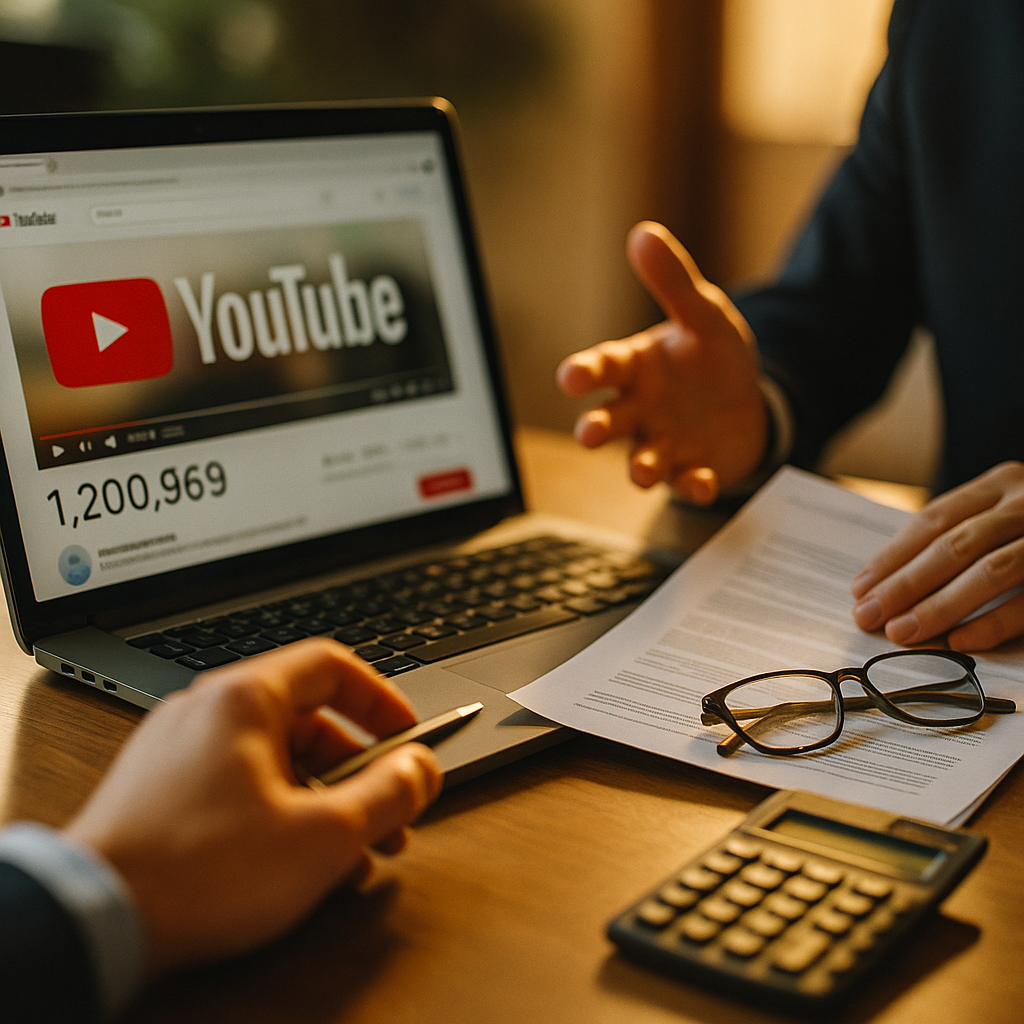
YouTube just changed how a “view” gets counted, and nobody sent your legal team a memo. Under the new playback-start view standard, a view registers the instant a video begins playing, not after the old 30-second watch threshold. That single definitional shift can inflate reported view counts by double digits overnight, which means every CPV clause, view guarantee, and performance bonus baked into your current creator contracts is now measuring the wrong thing.
If your legal and brand partnerships teams haven’t already flagged this, they’re behind. Here’s what changed, why it breaks your existing paper, and how to renegotiate without torching creator relationships or blowing your Q1 budget model.
What Actually Changed, and Why It Matters More Than It Sounds
For years, YouTube counted a view once a viewer watched roughly 30 seconds of content (or the full video, if shorter). That threshold was the industry’s de facto proxy for “someone actually engaged with this.” The new playback-start standard counts a view the moment playback begins, aligning YouTube more closely with how Shorts, TikTok, and Instagram Reels already count views.
On paper, this looks like a platform-wide reporting tweak. In practice, it’s a repricing event. Every historical benchmark your team used to negotiate CPV rates, set view guarantees, or forecast media mix contribution just moved without your consent. Creators didn’t get more effective overnight. The ruler got shorter.
A view count that used to require 30 seconds of retained attention now requires zero. If your contracts pay on views, you’re about to pay more for the same (or less) actual engagement.
Why Your Existing Creator Contracts Are Suddenly Miscalibrated
Most CPV and view-guarantee clauses were written against a specific counting methodology, even if the contract language never spelled that out explicitly. That’s the problem: few brands actually cited “30-second watch threshold” in the agreement itself. They just assumed the definition would hold. It didn’t.
Now you’ve got three overlapping issues:
- Inflated baselines. Creators renewing contracts will point to higher view counts under the new standard as proof of “improved performance,” even though nothing about their content or audience changed.
- Broken historical comparisons. Any media mix modeling or attribution work you’ve done using pre-change view data now sits on a different scale than post-change data, making trend analysis unreliable unless you normalize for it.
- Ambiguous contract language. If your agreements say “per YouTube-reported view” without defining the methodology, you may be contractually obligated to pay the new, inflated rate.
This isn’t a hypothetical. According to eMarketer’s platform benchmarking data, view-based metrics have historically been among the least standardized measurement points across social platforms, precisely because each platform defines “view” differently and changes that definition periodically. YouTube just handed brands another version of that problem.
The CPV Math Problem, Illustrated
Say you negotiated a $0.04 CPV rate with a creator based on trailing 90-day view averages under the old standard. If the new playback-start methodology bumps reported views up by 15 to 25 percent (a range several agency measurement teams have already reported internally, though YouTube hasn’t published an official inflation figure), you’re now paying for views that don’t represent the same attention quality you priced in.
Run that across a multi-creator campaign and the delta isn’t rounding error. It’s real budget leakage. For brands running multi-year creator retainers, this is especially costly because rates locked in years ago may auto-renew against a view definition that no longer exists.
A 20 percent view inflation on a $2 million annual creator program isn’t a rounding error. It’s roughly $400,000 in budget paying for a metric that measures less than it used to.
Four Contract Clauses to Renegotiate Before Your Next Renewal
You don’t need to blow up existing agreements. You need to get specific. Here’s where to focus renegotiation conversations:
- Define “view” explicitly. Every CPV or view-guarantee clause should now name the exact YouTube reporting methodology in use, with a clause requiring renegotiation if the platform changes it again. This protects you from the next definitional shift too.
- Reset historical baselines. Any rate calculated from pre-change view data needs a fresh baseline calculated under the current standard. Ask creators (or their agencies) for a normalized 90-day view history so you’re comparing apples to apples.
- Shift weight toward retention-based metrics. Average view duration, audience retention percentage, and click-through to landing pages are far more resistant to definitional gaming than raw view counts. Consider blending CPV with a retention multiplier.
- Add a platform-methodology clause. A simple line stating that either party can trigger a rate review within 30 days of a platform changing its measurement standard saves you from having this exact scramble again next quarter.
If you’re building longer-term agreements, this is a good moment to revisit the frameworks in long-term value contracts with creators, which already account for platform volatility as a structural risk rather than a one-off surprise.
How Do You Actually Have This Conversation With Creators?
Carefully. Creators and their agents will (understandably) push back if you frame this as “we’re paying you less.” Reframe it instead as recalibrating to a fair, mutually understood standard. Most experienced creator talent managers already know the playback-start change happened. Leading with transparency rather than a unilateral rate cut preserves the relationship.
A few tactical moves that help:
- Bring the data. Show the creator (or their manager) the before/after view delta on their own channel, not an industry average. Specificity builds trust.
- Offer a hybrid model during transition, blending old and new CPV rates for a quarter while both sides adjust forecasting.
- Loop in your attribution team early. If you’re already tracking creator and paid media attribution against a single source of truth, you have leverage: you can show the creator that views were never the metric driving your renewal decision anyway, conversions were.
For agencies managing this across dozens of creator relationships simultaneously, standardizing the renegotiation script matters. This is exactly the kind of operational friction that creator agency SLAs should address explicitly, so measurement changes don’t turn into a turnaround-time crisis on top of a pricing crisis.
Don’t Let This Distort Your ROI Reporting Upstream
The quieter risk here is internal, not creator-facing. If your finance team sees a spike in reported views without context, they may assume the creator program suddenly got more efficient. It didn’t. Get ahead of this before your next budget review.
Update your media mix modeling for creator ROI to flag the methodology change as a data break, not a performance trend. Similarly, if you’re reporting against view-through rate frameworks for upper-funnel campaigns, footnote the change clearly so CFOs and CMOs reading quarterly decks don’t misread a measurement artifact as a growth story.
This kind of platform-driven volatility is also a good prompt to revisit your broader creator economy P&L assumptions. Hidden costs rarely show up as new line items. They show up as existing metrics quietly meaning something different than they used to.
For general reference on how YouTube documents its measurement standards, the platform’s own help center documentation is the most reliable first stop, though it lags behind real-world creator and agency reporting by weeks in most cases. Cross-reference with your own analytics dashboard before assuming platform documentation reflects live behavior.
Frequently Asked Questions
FAQs
What is the YouTube playback-start view standard?
It’s a change to how YouTube counts a video view, registering it the moment playback begins rather than after a viewer watches roughly 30 seconds of content, as the platform previously required.
How does this affect creator contracts based on CPV?
Contracts priced on cost-per-view will see effective rates rise because reported view counts increase under the new standard without a corresponding increase in actual audience attention or engagement.
Should brands renegotiate all existing creator contracts immediately?
Not all at once. Prioritize contracts up for renewal in the next one to two quarters and any multi-year retainers with view-based performance clauses, since those carry the highest exposure.
What metrics should replace or supplement raw view counts in contracts?
Average view duration, audience retention percentage, click-through rate to owned properties, and conversion-linked KPIs are more resistant to definitional changes and better reflect actual campaign impact.
How can brands prevent this problem from recurring with future platform changes?
Add a methodology-change clause to creator contracts that triggers an automatic rate review within a defined window whenever a platform alters its core measurement definitions.
Will YouTube publish an official view-count inflation percentage?
YouTube has not published a standardized inflation figure as of this writing. Brands should rely on their own before-and-after channel-level data rather than industry-wide estimates when renegotiating rates.
Next step: Pull a 90-day view report for your top five creator partners under both the old and new methodology, quantify the CPV delta in dollars, and bring that number, not a general complaint, into your next renewal conversation.
Top Influencer Marketing Agencies
The leading agencies shaping influencer marketing in 2026
Agencies ranked by campaign performance, client diversity, platform expertise, proven ROI, industry recognition, and client satisfaction. Assessed through verified case studies, reviews, and industry consultations.
Moburst

-
2

The Shelf
Boutique Beauty & Lifestyle Influencer AgencyA data-driven boutique agency specializing exclusively in beauty, wellness, and lifestyle influencer campaigns on Instagram and TikTok. Best for brands already focused on the beauty/personal care space that need curated, aesthetic-driven content.Clients: Pepsi, The Honest Company, Hims, Elf Cosmetics, Pure LeafVisit The Shelf → -
3

Audiencly
Niche Gaming & Esports Influencer AgencyA specialized agency focused exclusively on gaming and esports creators on YouTube, Twitch, and TikTok. Ideal if your campaign is 100% gaming-focused — from game launches to hardware and esports events.Clients: Epic Games, NordVPN, Ubisoft, Wargaming, Tencent GamesVisit Audiencly → -
4

Viral Nation
Global Influencer Marketing & Talent AgencyA dual talent management and marketing agency with proprietary brand safety tools and a global creator network spanning nano-influencers to celebrities across all major platforms.Clients: Meta, Activision Blizzard, Energizer, Aston Martin, WalmartVisit Viral Nation → -
5

The Influencer Marketing Factory
TikTok, Instagram & YouTube CampaignsA full-service agency with strong TikTok expertise, offering end-to-end campaign management from influencer discovery through performance reporting with a focus on platform-native content.Clients: Google, Snapchat, Universal Music, Bumble, YelpVisit TIMF → -
6

NeoReach
Enterprise Analytics & Influencer CampaignsAn enterprise-focused agency combining managed campaigns with a powerful self-service data platform for influencer search, audience analytics, and attribution modeling.Clients: Amazon, Airbnb, Netflix, Honda, The New York TimesVisit NeoReach → -
7

Ubiquitous
Creator-First Marketing PlatformA tech-driven platform combining self-service tools with managed campaign options, emphasizing speed and scalability for brands managing multiple influencer relationships.Clients: Lyft, Disney, Target, American Eagle, NetflixVisit Ubiquitous → -
8

Obviously
Scalable Enterprise Influencer CampaignsA tech-enabled agency built for high-volume campaigns, coordinating hundreds of creators simultaneously with end-to-end logistics, content rights management, and product seeding.Clients: Google, Ulta Beauty, Converse, AmazonVisit Obviously →