


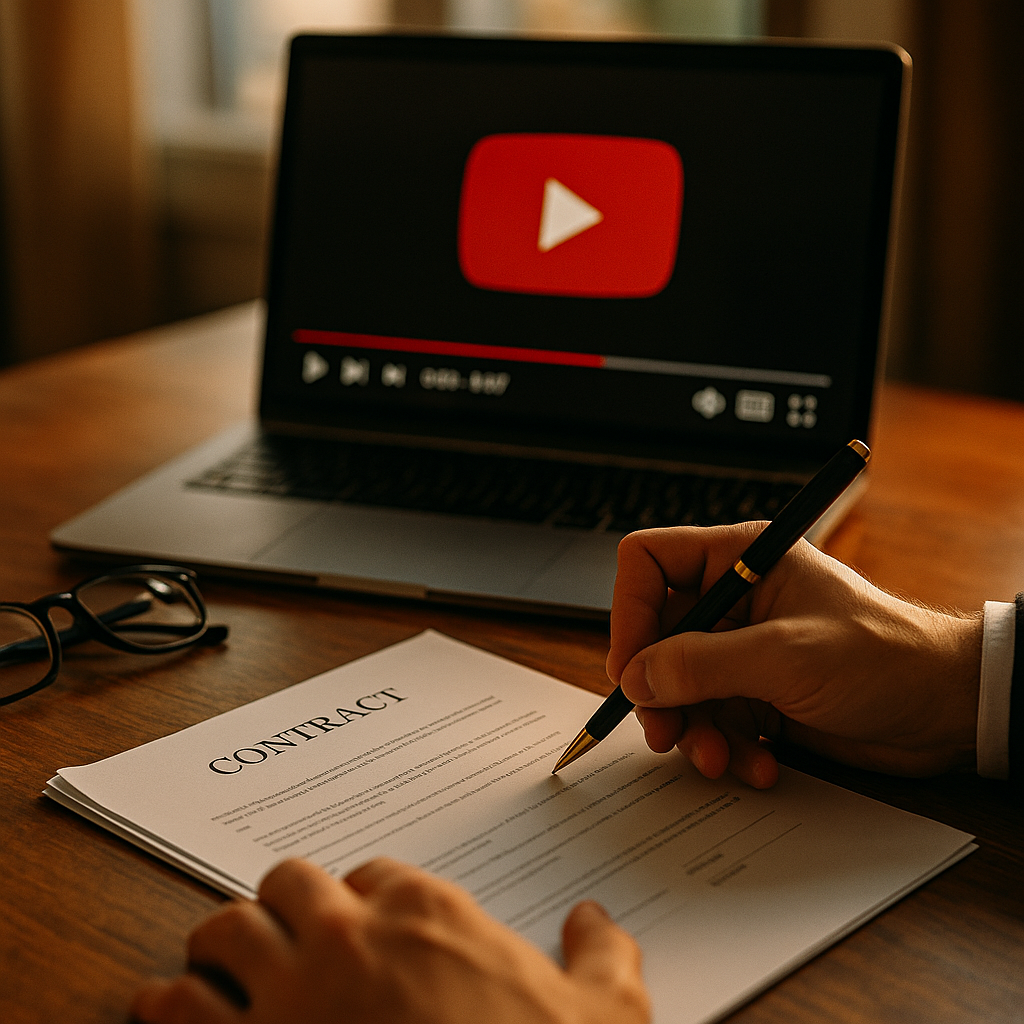
A view isn’t a view anymore. YouTube’s shift to a playback-start view standard, counting a view the moment playback begins rather than after a few seconds of watch time, just quietly rewrote the math behind every influencer contract that pays on CPM or guarantees a view threshold. If your legal team hasn’t touched your creator agreements since this rolled out, you’re likely overpaying, underprotected, or both.
What Actually Changed When YouTube Redefined a View
For years, YouTube counted a view only after a viewer watched roughly 30 seconds of content, or the full video if it ran shorter. That threshold filtered out accidental clicks, autoplay skips, and bounce traffic. The new playback-start standard counts a view as soon as the video begins playing, full stop. No dwell time required.
Google frames this as an alignment move, bringing YouTube’s counting logic closer to industry norms used elsewhere in digital video and closer to how Google’s own ad platforms already measure impressions. From a brand’s chair, it means view counts on sponsored videos are jumping, sometimes dramatically, without any corresponding increase in actual attention or watch time.
A view count that rises 20 to 40 percent overnight isn’t a performance win. It’s a measurement change, and if your contract pays per view, it’s a budget problem hiding as a success metric.
This isn’t the first time a platform has moved the goalposts. We saw a similar recalibration with the broader view count overhaul YouTube pushed through, and TikTok Shop’s shift toward an instant-view metric follows the same pattern. Platforms are converging on faster, looser view definitions across the board, and brands keep getting caught flat-footed because nobody reads the fine print until the invoice arrives.
Why Your Existing Creator Contracts Are Suddenly Obsolete
Most influencer agreements written before this change define deliverables in one of three ways: a flat fee, a CPM tied to “views,” or a bonus structure triggered at view milestones (100K, 500K, one million). None of those clauses specify how a view is counted. They just say “views” and assume everyone agrees on what that word means.
That assumption is now dangerous. A creator who delivers a video hitting 500,000 playback-start views under the new standard might have delivered the attention equivalent of 300,000 views under the old 30-second threshold. If your contract pays a bonus at that milestone, you’re paying full price for a discounted outcome.
Agencies running multi-creator campaigns face a compounding problem. Different creators signed contracts at different times, under different assumptions. Reconciling a slate of ten influencers where five agreements predate the change and five postdate it turns basic campaign reporting into forensic accounting.
- Flat-fee deals are largely insulated, since payment isn’t tied to view count.
- CPM-based deals need immediate renegotiation or a rate adjustment clause.
- Milestone bonus structures need the milestone thresholds rewritten upward to reflect the new, looser counting.
If you’re still briefing based on the old benchmarks, it’s worth reading how briefs across formats are shifting, including the lessons from how brands brief sponsored YouTube formats more broadly. The underlying theme is the same: platform mechanics change faster than internal SOPs do.
The Five Clauses Every Rewritten Contract Needs
Legal and brand teams don’t need to reinvent the wheel here. They need to add specificity where vague language used to be enough. Five clauses matter most.
- Metric definition clause. Explicitly state which YouTube counting standard applies, and reference the platform’s published methodology by name, not just “views per YouTube Analytics.”
- Watch-time floor. Add a secondary metric, average view duration or percentage watched, so payment isn’t solely tethered to a metric that can be inflated by design.
- Rate adjustment trigger. Build in a clause that automatically revisits CPM if the platform changes its counting methodology again during the contract term. Platforms change measurement standards more often than most legal templates account for.
- Audit and reporting rights. Require creators or their management to provide screenshots or exportable analytics reflecting the specific metric being paid against, not a vague performance summary.
- Historical baseline reference. For renewal deals, anchor rate negotiations to pre-change performance data where available, so you’re not negotiating blind against inflated post-change numbers.
None of this requires an adversarial renegotiation. Most creators and their managers understand the platform moved the goalposts, not them. Framing the conversation as “let’s make sure we’re both measuring the same thing” lands a lot better than “we think you’re overcharging us.”
How Do You Benchmark Fair CPMs Under the New Standard?
This is the question every brand marketer is asking right now, and there’s no perfect answer because the industry is still recalibrating. A few practical approaches work.
First, pull historical performance data from creators you’ve worked with before, comparing pre-change and post-change view counts on similarly performing content. That delta gives you a rough inflation percentage specific to that creator’s audience behavior, since autoplay habits and mobile-versus-desktop viewing mix affect the gap differently across niches.
Second, weight your CPM calculations toward watch time or engagement rate rather than raw view count where possible. Industry analysts at eMarketer have flagged watch-time-weighted pricing as the more durable model precisely because it survives platform measurement changes better than raw view counts do.
Third, benchmark against category averages rather than platform-reported view counts alone. Statista’s creator economy data and similar industry trackers can help establish what “normal” performance looks like for a given content category post-change, giving you a sanity check against inflated individual claims.
Negotiation Leverage: Who Wins and Who Loses
Top-tier creators with strong retention and loyal audiences generally benefit from this change, at least in the short term. Their view counts jump, and unless a brand pushes back, they get paid more for the same underlying attention. Mid-tier and smaller creators, whose content often relies more on impulse clicks and algorithmic discovery than deep audience loyalty, may see a proportionally larger inflation in raw view count relative to actual watch time, which sounds like a win but actually exposes weaker retention when brands start scrutinizing the secondary metrics.
Brands hold more leverage than they think here. Creators generally want continued partnerships more than they want to win a single renegotiation. Coming to the table with clear data, showing exactly how the counting change affects the specific metrics tied to payment, tends to produce faster, less contentious agreements than vague requests to “lower your rate.”
The brands that move first on contract language set the new industry norm. The ones that wait get stuck negotiating against a standard everyone else already accepted.
Agencies managing large creator rosters should treat this as a portfolio-level exercise, not a one-off negotiation per creator. Standardize the new clause language, run it past legal once, and roll it out across every active and renewal contract simultaneously. Piecemeal renegotiation wastes time and creates inconsistent terms that are harder to report against later.
Building an Audit Trail Without Burning Creator Relationships
Verification is the part brands tend to skip, mostly because it feels adversarial. It doesn’t have to be. Most creator management platforms and MCNs already have export tools that break out playback-start views, watch time, and audience retention curves. Requesting that export as a standard part of campaign wrap-up, rather than a special ask reserved for suspicious performance, normalizes it across every deal.
Sprout Social and similar reporting tools can help brands centralize this data across a multi-platform roster, which matters because YouTube isn’t the only channel where measurement standards are shifting. Compliance and disclosure norms are moving fast across platforms too, from TikTok’s disclosure requirements to the ongoing scrutiny from the Federal Trade Commission on sponsored content transparency. A contract that’s precise about view definitions but sloppy about disclosure language is still a liability.
Set a quarterly review cadence for creator contract language generally, not just around this specific change. Platforms will keep adjusting measurement standards. The brands with a repeatable review process absorb these shifts as routine maintenance. The ones without it treat every platform update as a crisis.
Rewrite the metric definition clause first, benchmark CPMs against watch time second, and set a recurring contract review cadence so the next platform measurement change doesn’t catch your legal team off guard again.
Frequently Asked Questions
What is YouTube’s playback-start view standard?
It’s a counting methodology where a view registers the moment a video begins playing, rather than requiring a viewer to watch a minimum duration such as the previous 30-second threshold. It generally increases reported view counts without necessarily reflecting increased viewer attention.
Does the playback-start standard affect all YouTube content or just sponsored videos?
It applies platform-wide to all video content, but the financial impact is most acute for sponsored and branded content where contracts pay based on view count, CPM, or view milestone bonuses.
How should brands renegotiate existing CPM-based creator contracts?
Start by comparing a creator’s pre-change and post-change view data on similar content to estimate the inflation percentage. Then propose either an adjusted CPM rate or a shift toward watch-time-weighted pricing, backed by that specific data rather than a general rate cut request.
Should brands stop using view count as a payment metric entirely?
Not necessarily, but view count alone is now a weaker standalone metric. Pairing it with watch time, average view duration, or engagement rate gives a more accurate picture of actual campaign performance and protects against future measurement changes.
What contract language protects brands from future platform measurement changes?
A rate adjustment trigger clause that automatically revisits pricing terms if a platform changes its counting methodology during the contract term. This avoids needing to renegotiate the entire agreement every time a platform updates its metrics.
Top Influencer Marketing Agencies
The leading agencies shaping influencer marketing in 2026
Agencies ranked by campaign performance, client diversity, platform expertise, proven ROI, industry recognition, and client satisfaction. Assessed through verified case studies, reviews, and industry consultations.
Moburst

-
2

The Shelf
Boutique Beauty & Lifestyle Influencer AgencyA data-driven boutique agency specializing exclusively in beauty, wellness, and lifestyle influencer campaigns on Instagram and TikTok. Best for brands already focused on the beauty/personal care space that need curated, aesthetic-driven content.Clients: Pepsi, The Honest Company, Hims, Elf Cosmetics, Pure LeafVisit The Shelf → -
3

Audiencly
Niche Gaming & Esports Influencer AgencyA specialized agency focused exclusively on gaming and esports creators on YouTube, Twitch, and TikTok. Ideal if your campaign is 100% gaming-focused — from game launches to hardware and esports events.Clients: Epic Games, NordVPN, Ubisoft, Wargaming, Tencent GamesVisit Audiencly → -
4

Viral Nation
Global Influencer Marketing & Talent AgencyA dual talent management and marketing agency with proprietary brand safety tools and a global creator network spanning nano-influencers to celebrities across all major platforms.Clients: Meta, Activision Blizzard, Energizer, Aston Martin, WalmartVisit Viral Nation → -
5

The Influencer Marketing Factory
TikTok, Instagram & YouTube CampaignsA full-service agency with strong TikTok expertise, offering end-to-end campaign management from influencer discovery through performance reporting with a focus on platform-native content.Clients: Google, Snapchat, Universal Music, Bumble, YelpVisit TIMF → -
6

NeoReach
Enterprise Analytics & Influencer CampaignsAn enterprise-focused agency combining managed campaigns with a powerful self-service data platform for influencer search, audience analytics, and attribution modeling.Clients: Amazon, Airbnb, Netflix, Honda, The New York TimesVisit NeoReach → -
7

Ubiquitous
Creator-First Marketing PlatformA tech-driven platform combining self-service tools with managed campaign options, emphasizing speed and scalability for brands managing multiple influencer relationships.Clients: Lyft, Disney, Target, American Eagle, NetflixVisit Ubiquitous → -
8

Obviously
Scalable Enterprise Influencer CampaignsA tech-enabled agency built for high-volume campaigns, coordinating hundreds of creators simultaneously with end-to-end logistics, content rights management, and product seeding.Clients: Google, Ulta Beauty, Converse, AmazonVisit Obviously →