


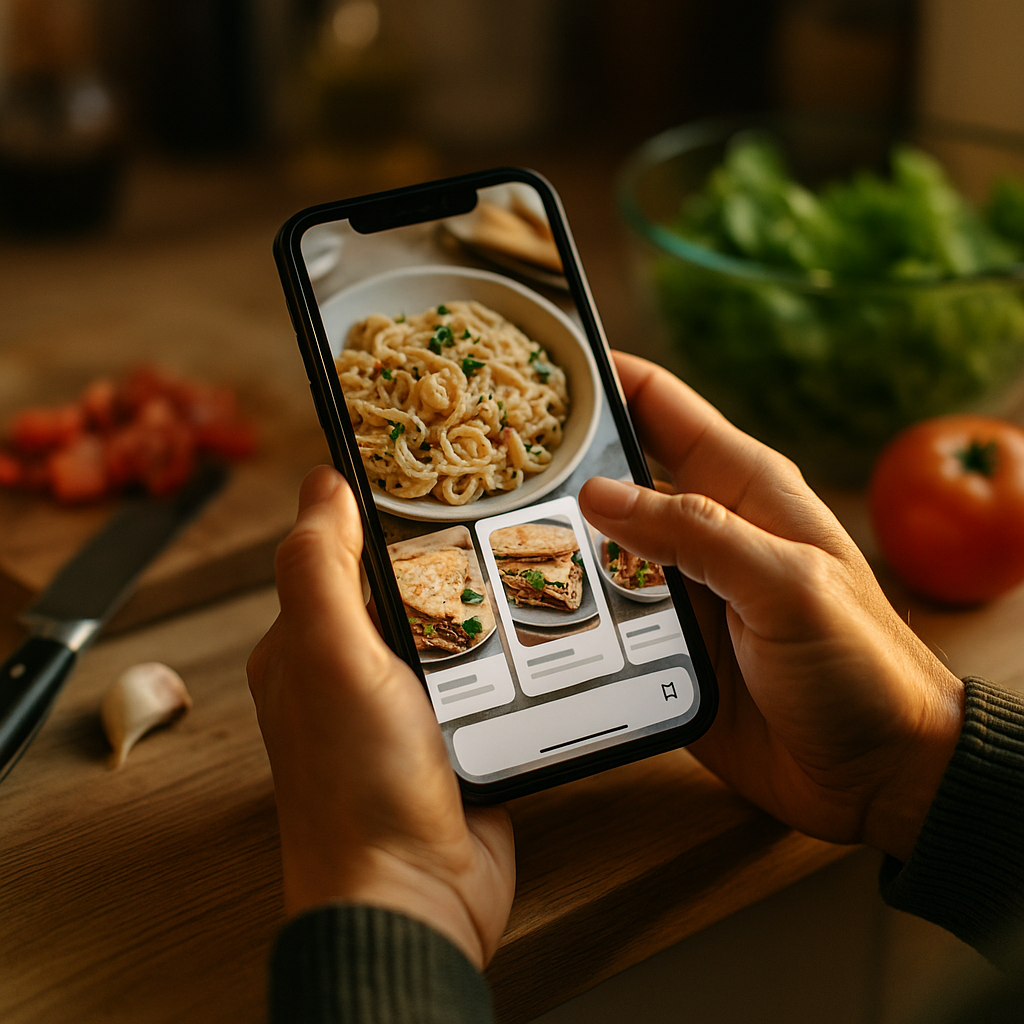
Save rate is the metric nobody brags about on LinkedIn, but it’s the one that actually predicts whether a food brand’s content earns a second look. A recipe-style carousel post can generate saves at three to five times the rate of a standard product photo, according to internal benchmarking shared by agencies like Sprout Social. Why? Because people don’t save ads. They save instructions.
If your food or beverage brand is still leading with hero shots and lifestyle b-roll, you’re leaving the highest-intent engagement signal on the table. Recipe carousels turn a passive scroller into someone who bookmarks your content for later, which is functionally a second touchpoint you didn’t have to pay for twice.
What Makes a Carousel a “Save Magnet”
Saves happen when content promises future utility. A pretty photo of a smoothie bowl gets a like. A step-by-step carousel showing exactly how to build that smoothie bowl, with measurements, gets saved because the viewer knows they’ll want to reference it again on Tuesday when they’re actually standing in their kitchen.
This is the same psychology behind why slideshow formats outperform video on watch time metrics. Carousels reward a slower, more deliberate consumption pattern. Recipes are inherently sequential, which means the format and the content type were built for each other. Slide one is the hook (the finished dish). Slide two is the ingredient list. Slides three through seven are steps. The last slide is a call to action, usually “save this for later” or a link to the full recipe.
A recipe carousel isn’t a menu item with a filter on it. It’s a piece of reference content that happens to feature your product, and that distinction is what separates a save from a scroll-past.
Brands like Ocean Spray, King Arthur Baking, and countless DTC sauce and spice companies have quietly built entire content calendars around this format because it does double duty: it educates and it retains. The recipe becomes the content, and the product becomes the supporting character, not the other way around.
The ROI Case: Saves Are a Leading Indicator, Not a Vanity Metric
Marketing leadership tends to discount saves because they don’t show up cleanly in a media plan the way impressions or clicks do. That’s a mistake. Saved content resurfaces organically in a user’s feed, gets revisited during meal planning, and gets shared in DMs and group chats far more than liked content does. Instagram’s own creator tools treat saves as a strong ranking signal for future distribution, meaning a high save rate can lower your effective cost per impression over time without any additional media spend.
For food and beverage brands running influencer programs, this matters because recipe carousels are relatively cheap to produce compared to video content. A single creator can batch six to ten recipe carousels in one shoot day, using the same kitchen setup, the same product, and minor variations in styling. Compare that cost structure to a video-heavy program requiring multiple locations, editing passes, and voiceover talent, and the per-asset economics tilt heavily in the carousel’s favor.
Track saves alongside completion rate and shares, not in isolation. A carousel with high saves but low completion (people saving slide one and bailing) usually signals your hook is strong but your pacing or ingredient list is too intimidating. Data platforms like eMarketer have flagged recipe and how-to content as one of the few organic categories still growing engagement rates year over year, even as overall feed engagement flattens.
Building the Brief: What to Ask Creators For
The brief is where most brands undercut their own format. A recipe carousel brief needs to specify more than “make a recipe with our product.” Give creators structural guardrails:
- Ingredient slide clarity: require legible, high-contrast text overlays, not tiny handwriting shot at an angle.
- Step count discipline: cap it at 8 to 10 slides. Beyond that, saves drop because the recipe reads as “too much work.”
- Product placement rule: the branded product should appear in at least two slides, ideally the ingredient list and one action shot, not just the final plated image.
- CTA slide language: test “save this for your next grocery run” against generic “save for later” copy. Specificity tends to lift save rate.
This is the same rigor discussed in brief templates for niche micro-content, where the lesson is consistent across formats: loose briefs produce inconsistent output, and inconsistent output makes it impossible to isolate what’s actually driving performance. If you can’t run a clean A/B test on your creative variables, you can’t optimize the format, and you’re stuck guessing why one carousel outperforms another.
Caption Strategy Matters More Than Brands Think
The caption on a recipe carousel does heavy lifting that the visual can’t. It’s where you reinforce the save behavior explicitly (“bookmark this before it disappears from your feed”), where you drop the full written recipe for accessibility, and where you handle any necessary disclosure language for paid partnerships. The FTC’s endorsement guidelines still apply here even though the format feels editorial. If a creator was compensated or gifted product to make the carousel, the disclosure needs to be clear and unavoidable, not buried after three hashtags.
Text-forward strategy connects directly to the caption-heavy approach covered in text-first content performance data, where readable on-screen copy consistently outperforms voiceover-dependent formats for retention. Recipe carousels are arguably the purest expression of that principle: there’s no audio at all, so every ounce of communication rides on text hierarchy and slide sequencing.
Turning Comments Into a Second Content Layer
Recipe carousels generate a specific, predictable comment pattern: substitution questions. “Can I use almond milk instead?” “Does this work with gluten-free flour?” Brands that ignore these comments are wasting free R&D and free content ideas. Smart teams turn frequent substitution questions into the next carousel in the series, closing the loop and signaling to the algorithm that the account drives sustained conversation, not just one-off engagement.
This tactic overlaps with the comment-driven content approach, though recipe carousels have an advantage over generic comment-bait: the engagement is organically useful rather than manufactured. Nobody feels baited into asking if oat milk works in a pancake recipe. They’re asking because they actually want to make it tonight.
The comment section under a recipe carousel is a live focus group. Brands that mine it for the next content idea are running R&D for free.
Where This Format Breaks Down
Recipe carousels aren’t universally safe. A few failure patterns show up repeatedly across brand accounts:
- Over-styled slides that hide the actual steps. If a viewer has to zoom in to read a measurement, they’ll abandon the save.
- Product-first framing that reads as an ad disguised as a recipe. If your product appears in every single slide, including ones where it doesn’t logically belong, the format collapses into the same skippable content it was meant to replace.
- Inconsistent posting cadence. Recipe content builds a following through habit. Sporadic posting resets the algorithm’s confidence in your account as a reliable recipe source.
There’s also a seasonal trap. Brands lean hard into recipe content around major holidays, then go quiet for months. That’s a missed opportunity, since the format performs steadily year round, particularly for weeknight-meal and quick-snack angles that don’t require a holiday hook. Structuring cadence the way you’d structure any short-form series, with a consistent posting rhythm, tends to outperform sporadic bursts. The same discipline that governs short-form retention structuring applies here: consistency beats intensity.
Measuring What Actually Matters
Set up reporting that separates saves, shares, and profile visits from likes and impressions. Tools like HubSpot and native platform analytics can help attribute downstream website traffic when recipe carousels link out to a full recipe page, which also gives you a cleaner conversion path to track against media spend. If your platform supports it, tag each carousel with a unique link or promo code in the bio, so you can trace saves to actual site visits over the following week, not just the first 24 hours.
Benchmark against your own historical data before comparing to industry averages pulled from Statista or similar sources. Food and beverage save rates vary wildly by subcategory. A baking brand’s carousel benchmarks look nothing like a beverage brand’s, since baking content inherently requires more steps and therefore invites more saves.
Give the format at least eight to twelve weeks and a dozen carousels before drawing conclusions. Recipe content compounds. Early posts train the algorithm and the audience on what to expect; later posts benefit from that established pattern.
Start with one recipe series, brief it tightly, track saves against completion rate weekly, and let the comment section tell you what to make next.
FAQs
What is a recipe-style carousel post?
It’s a multi-slide social post, typically on Instagram or Facebook, that walks a viewer through a recipe step by step using images and text overlays instead of video. The format is designed to encourage saves and repeat visits rather than a single quick engagement.
Why do recipe carousels get more saves than other food content formats?
Saves happen when content offers future utility. A finished dish photo is admired once, but a step-by-step recipe is something people bookmark to reference again later, usually right before they go grocery shopping or start cooking.
How many slides should a recipe carousel have?
Most high-performing carousels stay within 8 to 10 slides. Beyond that, save rates tend to drop because the recipe starts to read as too time-consuming or complicated for a casual scroller.
Do influencer disclosure rules apply to recipe carousels?
Yes. If a creator was paid or gifted product to make the carousel, standard endorsement disclosure rules apply, including guidance published by the FTC. Disclosure should be clear in the caption, not buried under hashtags.
How should brands measure recipe carousel performance?
Track saves, shares, and profile visits separately from likes and impressions, and monitor completion rate to see whether viewers make it through the full slide sequence. Give the format several weeks and multiple posts before benchmarking results.
Can recipe carousels work for beverage brands, not just food?
Yes, though the format looks different. Beverage brands often use fewer steps (mocktail or cocktail builds, smoothie ratios) but still benefit from the same save-driving mechanics as long as the steps are clear and specific.
Top Influencer Marketing Agencies
The leading agencies shaping influencer marketing in 2026
Agencies ranked by campaign performance, client diversity, platform expertise, proven ROI, industry recognition, and client satisfaction. Assessed through verified case studies, reviews, and industry consultations.
Moburst

-
2

The Shelf
Boutique Beauty & Lifestyle Influencer AgencyA data-driven boutique agency specializing exclusively in beauty, wellness, and lifestyle influencer campaigns on Instagram and TikTok. Best for brands already focused on the beauty/personal care space that need curated, aesthetic-driven content.Clients: Pepsi, The Honest Company, Hims, Elf Cosmetics, Pure LeafVisit The Shelf → -
3

Audiencly
Niche Gaming & Esports Influencer AgencyA specialized agency focused exclusively on gaming and esports creators on YouTube, Twitch, and TikTok. Ideal if your campaign is 100% gaming-focused — from game launches to hardware and esports events.Clients: Epic Games, NordVPN, Ubisoft, Wargaming, Tencent GamesVisit Audiencly → -
4

Viral Nation
Global Influencer Marketing & Talent AgencyA dual talent management and marketing agency with proprietary brand safety tools and a global creator network spanning nano-influencers to celebrities across all major platforms.Clients: Meta, Activision Blizzard, Energizer, Aston Martin, WalmartVisit Viral Nation → -
5

The Influencer Marketing Factory
TikTok, Instagram & YouTube CampaignsA full-service agency with strong TikTok expertise, offering end-to-end campaign management from influencer discovery through performance reporting with a focus on platform-native content.Clients: Google, Snapchat, Universal Music, Bumble, YelpVisit TIMF → -
6

NeoReach
Enterprise Analytics & Influencer CampaignsAn enterprise-focused agency combining managed campaigns with a powerful self-service data platform for influencer search, audience analytics, and attribution modeling.Clients: Amazon, Airbnb, Netflix, Honda, The New York TimesVisit NeoReach → -
7

Ubiquitous
Creator-First Marketing PlatformA tech-driven platform combining self-service tools with managed campaign options, emphasizing speed and scalability for brands managing multiple influencer relationships.Clients: Lyft, Disney, Target, American Eagle, NetflixVisit Ubiquitous → -
8

Obviously
Scalable Enterprise Influencer CampaignsA tech-enabled agency built for high-volume campaigns, coordinating hundreds of creators simultaneously with end-to-end logistics, content rights management, and product seeding.Clients: Google, Ulta Beauty, Converse, AmazonVisit Obviously →