


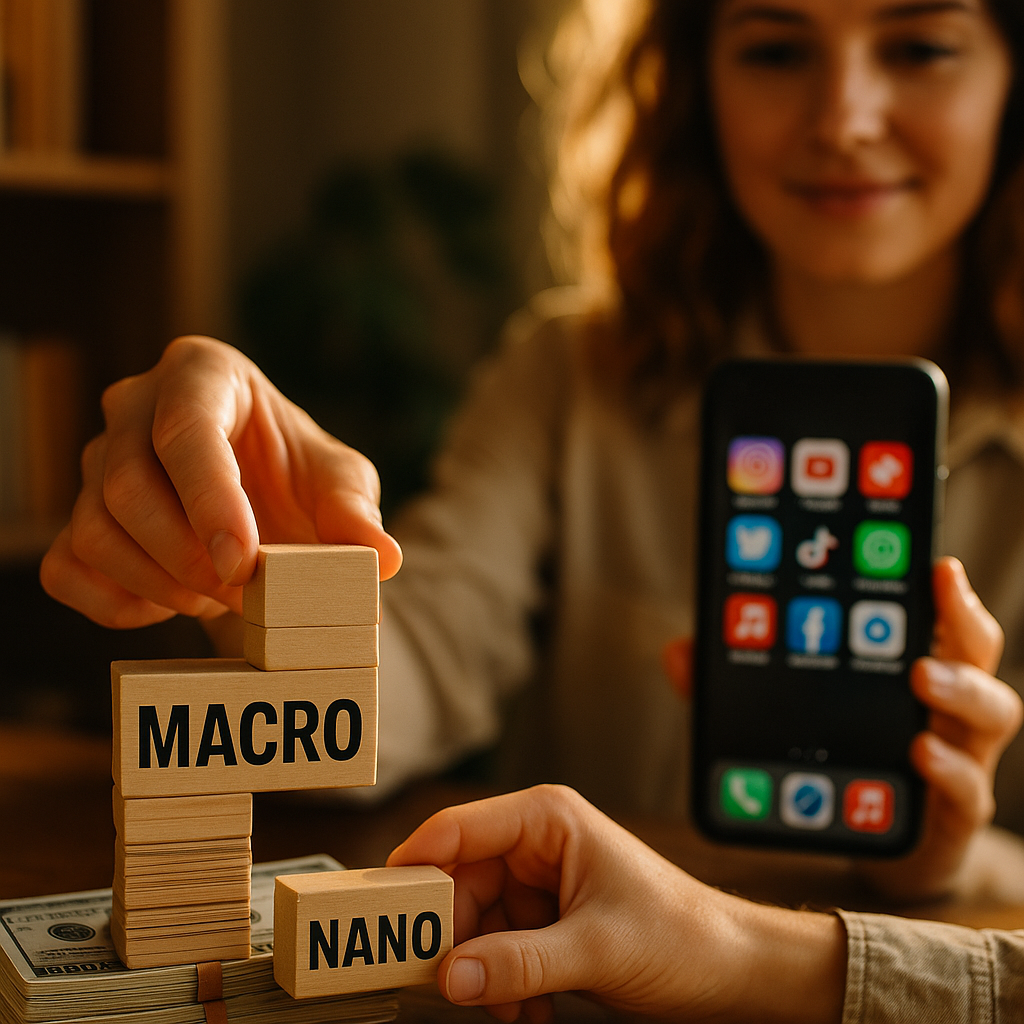
A single macro influencer post now costs more than a month of nano creator content, and delivers a fraction of the engagement per dollar. That gap is why brands are quietly reallocating budget from macro to nano influencers, and why 2026 is shaping up as the year the shift stops being quiet at all. The math finally caught up with the hype.
The Math That Broke the Macro Model
For years, brands paid a premium for reach. A creator with two million followers felt safe. Big numbers looked good in a boardroom deck, even when the engagement rate hovered around 1%. That logic is collapsing under its own cost structure.
Macro influencer rates have climbed steadily even as engagement has flattened, according to benchmarks tracked by eMarketer. Meanwhile nano creators, typically defined as those with 1,000 to 10,000 followers, consistently post engagement rates two to four times higher than accounts with a million-plus following, per data compiled by Sprout Social. Brands doing the spreadsheet math are landing on an uncomfortable conclusion: reach was never the metric that mattered. Engagement, trust, and conversion were.
A brand can fund fifteen nano creator partnerships for the price of one macro post, and often generate more total engagement across a more diverse, more trusted set of audiences.
This isn’t a fringe theory anymore. It’s the reasoning behind a broader pattern our earlier coverage flagged when we reported on the engagement premium nano creators command over mega deals. The premium was already visible. What’s changed is how many procurement teams are now building it into official budget models rather than treating it as an anomaly.
Trust Is the Real Currency Now
Ask yourself why a recommendation from your neighbor carries more weight than one from a billboard. Nano influencers occupy that same psychological space. Their audiences aren’t fans in the celebrity sense. They’re friends, coworkers, people from the same hometown or the same niche hobby group.
That intimacy translates directly into purchase behavior. Younger consumers in particular have grown skeptical of anything that smells like a paid celebrity endorsement. Our reporting on the Gen Z trust gap found that younger buyers actively discount recommendations from creators they perceive as too polished or too distant from their own lives. Nano creators don’t have that problem. They’re not performing authenticity. They’re just posting their actual lives, which happen to include your product.
Brands chasing that credibility aren’t being sentimental. They’re chasing conversion. A believable recommendation converts. A glossy ad read does not, at least not at the same rate.
Operational Efficiency Is Quietly the Bigger Story
Here’s the part that doesn’t make headlines but matters enormously to anyone running a program: nano influencer campaigns are cheaper to manage at scale than most marketers assume, largely because the tooling has caught up.
Five years ago, coordinating hundreds of nano creators meant a logistical nightmare of spreadsheets, manual outreach, and inconsistent contracts. That’s no longer true. Influencer marketing platforms now automate discovery, vetting, contracting, and payment for creator rosters numbering in the thousands. The rise of platforms built specifically for volume-based nano programs has removed the single biggest objection brands used to raise: “we don’t have the headcount to manage this.”
There’s a parallel here to what we covered in UGC production capacity reshaping agency valuations. The agencies winning right now aren’t the ones with the flashiest celebrity rosters. They’re the ones who’ve built infrastructure to manage volume efficiently, turning what used to be a bottleneck into a repeatable, scalable operation.
Content Volume Beats Content Polish
Feed algorithms across TikTok, Instagram, and YouTube Shorts increasingly reward frequency and native-feeling content over cinematic production value. A single glossy macro campaign asset gets one shot at the algorithm. Fifty nano creator posts, each slightly different, each speaking to a slightly different micro-audience, get fifty shots.
This mirrors what we found reporting on how snackable micro content is reshaping ROI expectations industry-wide. Brands are learning that a rougher, more native video from a nano creator frequently outperforms a five-figure production shoot, simply because it doesn’t read as an ad. Consumers have gotten extremely good at pattern-matching “sponsored content” and scrolling past it. Nano creators, by nature of their smaller platforms and closer audience relationships, tend to slip under that filter.
What the Budget Shift Actually Looks Like
This isn’t an all-or-nothing move. Most brands making this shift aren’t abandoning macro or celebrity partnerships entirely. They’re rebalancing the mix. A typical reallocation pattern we’re seeing among mid-market and enterprise brands looks something like this:
- Reducing macro influencer spend by 20 to 35% year over year
- Redirecting that budget into nano and micro creator programs (1,000 to 50,000 followers)
- Keeping a small reserve for top-tier talent tied to major product launches or cultural moments
- Investing the difference in creator management tooling and vetting infrastructure
Discovery itself has also fragmented across platforms, which complicates the picture. Our piece on discovery fragmentation splitting budgets across five channels is worth reading if you’re trying to figure out where nano creator dollars should actually land. It’s not just TikTok anymore. It’s TikTok, Instagram Reels, YouTube Shorts, Pinterest idea pins, and increasingly niche platforms tied to specific verticals.
The Risk Side Nobody Wants to Talk About
Managing 200 nano creators instead of 5 macro creators multiplies your compliance surface area. Every one of those 200 people needs to properly disclose paid partnerships under FTC guidelines, and enforcement has gotten sharper, not softer. A single macro deal is easy to audit. Two hundred scattered nano posts are not, unless you’ve built the vetting and monitoring infrastructure to handle it.
Brand safety questions also multiply. Nano creators are less likely to have professional management, which means more variance in judgment, tone, and off-platform behavior. Smart brands are solving this with tiered vetting systems and standardized contract templates rather than manual review, but it’s a real operational cost that budget spreadsheets sometimes fail to capture. Anyone building a nano program without a compliance layer is building on sand.
There’s also a measurement gap worth acknowledging honestly. Aggregating performance data across hundreds of small accounts is harder than pulling a report on five macro partnerships. Platforms are getting better at rollup reporting, but brands should budget time and tooling for this, not assume it happens automatically. Benchmarking data from Statista shows influencer marketing spend continuing to climb overall, but the composition of that spend, and how it’s measured, is shifting in ways legacy attribution models weren’t built for.
Is This Just a Cost-Cutting Move in Disguise?
It’s fair to ask whether “authenticity” is doing a lot of rhetorical work to cover for what’s really a budget squeeze. Marketing leaders are under pressure everywhere, and cheaper creator deals help stretch shrinking budgets further. That pressure is real and well documented.
But the honest answer is that both things are true at once. Nano creators are cheaper, and the performance data genuinely supports the switch on its own merits. Brands that made the shift purely for cost reasons are staying with it because the engagement numbers hold up. That’s a stronger signal than a trend driven by hype alone. When a resources.hubspot.com style buyer report or HubSpot research aligns with independent platform data on engagement quality, it stops looking like a fad and starts looking like a durable market correction.
Frequently Asked Questions
What counts as a nano influencer versus a macro influencer?
Nano influencers generally have between 1,000 and 10,000 followers. Micro influencers span roughly 10,000 to 100,000. Macro influencers typically range from 100,000 to a million or more followers, with mega and celebrity creators sitting above that.
Why do nano influencers get higher engagement rates than macro influencers?
Smaller audiences tend to have closer, more personal relationships with the creator, often built around shared interests, local communities, or genuine friendship. That closeness drives more comments, shares, and trust in recommendations compared to the broader, more passive audiences that follow macro creators.
Is shifting budget to nano influencers cheaper overall?
Per-post cost is dramatically lower, but managing a large roster of nano creators requires investment in vetting, contracting, and compliance tooling. Total program cost can still be lower than macro campaigns, but brands need to budget for the operational overhead, not just the creator fees.
How do brands manage compliance across hundreds of nano creator partnerships?
Most rely on influencer marketing platforms that automate disclosure requirements, standardize contracts, and flag risky content before it publishes. Manual review at that scale isn’t realistic, so tooling has become a prerequisite for running nano programs responsibly under FTC guidelines.
Are brands abandoning macro and celebrity influencers entirely?
No. Most are rebalancing rather than eliminating. Macro and celebrity partnerships still make sense for major launches or brand awareness moments, but the everyday, always-on portion of influencer budgets is increasingly going to nano and micro creators.
The next move for brand marketing teams isn’t philosophical, it’s operational. Audit your current creator mix against actual engagement and conversion data, not follower counts, and build the vetting infrastructure now so you’re ready to scale a nano program before your competitors lock up the best creators in your category.
Frequently Asked Questions
What counts as a nano influencer versus a macro influencer?
Nano influencers generally have between 1,000 and 10,000 followers. Micro influencers span roughly 10,000 to 100,000. Macro influencers typically range from 100,000 to a million or more followers, with mega and celebrity creators sitting above that.
Why do nano influencers get higher engagement rates than macro influencers?
Smaller audiences tend to have closer, more personal relationships with the creator, often built around shared interests, local communities, or genuine friendship. That closeness drives more comments, shares, and trust in recommendations compared to the broader, more passive audiences that follow macro creators.
Is shifting budget to nano influencers cheaper overall?
Per-post cost is dramatically lower, but managing a large roster of nano creators requires investment in vetting, contracting, and compliance tooling. Total program cost can still be lower than macro campaigns, but brands need to budget for the operational overhead, not just the creator fees.
How do brands manage compliance across hundreds of nano creator partnerships?
Most rely on influencer marketing platforms that automate disclosure requirements, standardize contracts, and flag risky content before it publishes. Manual review at that scale isn’t realistic, so tooling has become a prerequisite for running nano programs responsibly under FTC guidelines.
Are brands abandoning macro and celebrity influencers entirely?
No. Most are rebalancing rather than eliminating. Macro and celebrity partnerships still make sense for major launches or brand awareness moments, but the everyday, always-on portion of influencer budgets is increasingly going to nano and micro creators.
Top Influencer Marketing Agencies
The leading agencies shaping influencer marketing in 2026
Agencies ranked by campaign performance, client diversity, platform expertise, proven ROI, industry recognition, and client satisfaction. Assessed through verified case studies, reviews, and industry consultations.
Moburst

-
2

The Shelf
Boutique Beauty & Lifestyle Influencer AgencyA data-driven boutique agency specializing exclusively in beauty, wellness, and lifestyle influencer campaigns on Instagram and TikTok. Best for brands already focused on the beauty/personal care space that need curated, aesthetic-driven content.Clients: Pepsi, The Honest Company, Hims, Elf Cosmetics, Pure LeafVisit The Shelf → -
3

Audiencly
Niche Gaming & Esports Influencer AgencyA specialized agency focused exclusively on gaming and esports creators on YouTube, Twitch, and TikTok. Ideal if your campaign is 100% gaming-focused — from game launches to hardware and esports events.Clients: Epic Games, NordVPN, Ubisoft, Wargaming, Tencent GamesVisit Audiencly → -
4

Viral Nation
Global Influencer Marketing & Talent AgencyA dual talent management and marketing agency with proprietary brand safety tools and a global creator network spanning nano-influencers to celebrities across all major platforms.Clients: Meta, Activision Blizzard, Energizer, Aston Martin, WalmartVisit Viral Nation → -
5

The Influencer Marketing Factory
TikTok, Instagram & YouTube CampaignsA full-service agency with strong TikTok expertise, offering end-to-end campaign management from influencer discovery through performance reporting with a focus on platform-native content.Clients: Google, Snapchat, Universal Music, Bumble, YelpVisit TIMF → -
6

NeoReach
Enterprise Analytics & Influencer CampaignsAn enterprise-focused agency combining managed campaigns with a powerful self-service data platform for influencer search, audience analytics, and attribution modeling.Clients: Amazon, Airbnb, Netflix, Honda, The New York TimesVisit NeoReach → -
7

Ubiquitous
Creator-First Marketing PlatformA tech-driven platform combining self-service tools with managed campaign options, emphasizing speed and scalability for brands managing multiple influencer relationships.Clients: Lyft, Disney, Target, American Eagle, NetflixVisit Ubiquitous → -
8

Obviously
Scalable Enterprise Influencer CampaignsA tech-enabled agency built for high-volume campaigns, coordinating hundreds of creators simultaneously with end-to-end logistics, content rights management, and product seeding.Clients: Google, Ulta Beauty, Converse, AmazonVisit Obviously →