


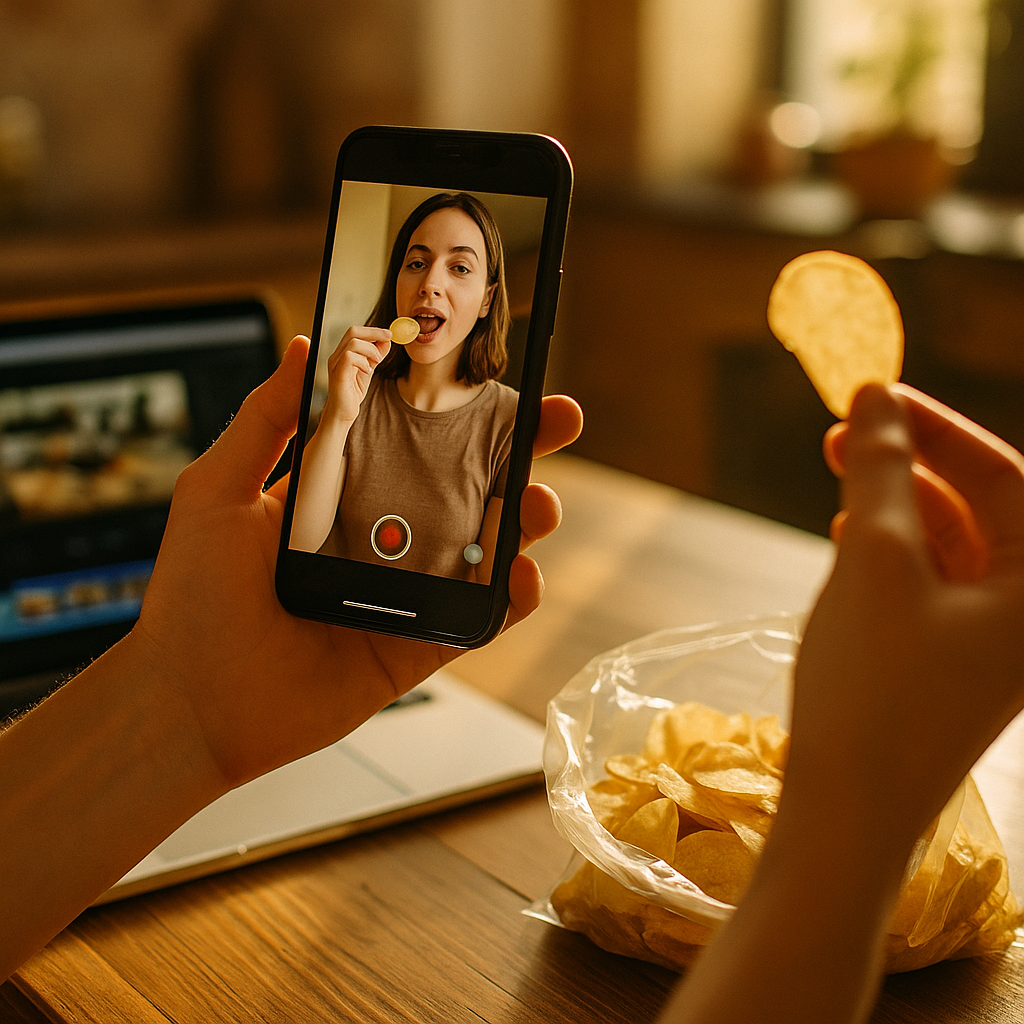
Feeds scroll at roughly 1,000 pixels per second now, and the average TikTok video loses half its viewers within the first three seconds. Against that backdrop, a glossy 30-second brand film with a color grade and a jib shot doesn’t stand a chance against a nine-second clip filmed on a phone propped against a coffee mug. Welcome to the micro-content shift, the moment where “produced” started reading as “suspicious” to the exact audience brands are chasing.
This isn’t a passing aesthetic trend. It’s a structural change in how attention, trust, and algorithmic distribution interact, and it has real consequences for how brands budget, brief, and measure influencer work.
Why “Polished” Now Reads as “Paid”
There’s a psychological tell buried in high-production content: it signals effort, and effort signals money, and money signals a script. Audiences who grew up watching ads have developed a kind of pattern recognition for sponsorship. The second a video has a match cut or a voiceover with studio compression, viewers clock it as an ad before the message even lands.
Compare that to a creator filming a “get ready with me” segment where the product appears almost incidentally, camera shake included. That imperfection reads as unscripted, which reads as honest, which reads as worth trusting. Sprout Social’s ongoing research into social media consumer behavior has repeatedly found that authenticity outranks production value as a driver of purchase consideration, and the gap has only widened as feeds get more saturated with brand content.
The irony brands need to sit with: the more a video looks like an ad, the less it performs like one.
The Data Behind the Shift
Engagement rates on raw, low-fi creator content routinely outperform branded hero videos across TikTok and Instagram Reels, particularly among Gen Z and younger millennial audiences. Part of this is platform mechanics: recommendation algorithms reward completion rate and rewatch behavior, and short, punchy clips are structurally built to be finished. A nine-second video is nearly always watched to the end. A 45-second polished spot rarely is.
Part of it is also fatigue. Consumers have been marketed to their entire scrolling lives, and the defense mechanism against ad-blindness is increasingly a preference for content that doesn’t look like it was made for them at all, just discovered alongside them. That preference is reshaping how discovery itself works, a trend we’ve tracked in how search and AI rewire creator strategy beyond the feed entirely.
There’s also a budget angle nobody wants to say out loud: snackable content is cheaper. A brand can commission twenty micro-clips from ten creators for what a single polished commercial costs to produce. That’s not just a creative preference, it’s an efficiency gain that finance teams notice immediately.
What “Snackable” Actually Means for Briefs
Snackable doesn’t mean lazy, though plenty of brands are treating it that way and getting burned. It means content built for a specific attention window, engineered around a single idea instead of a narrative arc. The brief has to change accordingly.
- One idea, not three. A polished campaign brief often tries to hit awareness, consideration, and conversion in one asset. Micro-content works because it does one job, fast.
- Hook in the first second, not the first five. Platforms have compressed the window for retention, and creators who’ve built audiences already know this instinctively better than most brand teams do.
- Loosen the script, tighten the message. Give creators the core claim and the compliance guardrails, then let them find their own phrasing. Overwritten scripts are the fastest way to kill the format’s credibility.
- Plan for volume, not a single hero asset. Snackable content strategies lean on quantity and iteration. Expect to greenlight batches, not single deliverables.
This shift also changes who gets hired. Nano and micro creators, who’ve never had big production budgets to begin with, are naturally suited to this format. It’s part of why nano influencer growth in emerging markets is reshaping how brands allocate spend away from a handful of expensive mega-creator deals toward wider, cheaper, higher-frequency rosters.
Risk and Compliance Don’t Disappear, They Just Look Different
Here’s the part legal and compliance teams need to hear: “unpolished” is not the same as “unregulated.” The FTC’s endorsement guidance still applies whether a video was shot on a RED camera or an iPhone in a parking lot. Disclosure requirements don’t scale down with production value, and regulators have shown no patience for brands who assume casual content gets a casual pass. Review the FTC’s endorsement guidelines before assuming a lo-fi format changes your obligations.
If anything, the risk surface gets larger. Volume-based micro-content strategies mean more creators, more posts, more variance in how disclosures get applied, and more room for a single off-script comment to spiral. Brands running high-volume programs are increasingly leaning on tools that flag issues before they compound, something covered in depth in how real time risk scoring is becoming standard operating procedure for creator programs at scale.
Measurement gets messier too. A single hero campaign has one clean set of KPIs. Fifty micro-clips across fifteen creators demand aggregated reporting, and most brands’ existing dashboards weren’t built for that granularity. This is one reason discovery and attribution have become such a persistent headache, something we’ve unpacked in discovery fragmentation across five channels.
The Platform Incentive Problem
It’s worth naming the uncomfortable truth: platforms benefit from this shift regardless of whether it benefits brands. Short, native-feeling content keeps users in-app longer, and every algorithm update since roughly the mid-2020s has rewarded exactly that behavior. TikTok’s own creator guidance leans hard into this, and Meta has followed with Reels ranking changes that visibly favor unpolished, high-frequency posting over single big-budget drops. You can see the platform’s own stated priorities in Meta’s business guidance for Reels content strategy.
That doesn’t make the shift a scam, but it does mean brands should be clear-eyed about whose interests the format primarily serves. Snackable content performs well partly because it’s genuinely more engaging, and partly because it’s exactly what the algorithm was tuned to reward. Both things are true at once.
ROI: Cheaper Isn’t Automatically Better
The efficiency argument for micro-content is real, but it can mask a measurement gap if brands aren’t careful. Lower cost per asset doesn’t automatically mean lower cost per outcome. A brand needs to track cost per completed view, cost per engaged follow, and downstream conversion, not just raw production savings.
The brands winning with micro-content aren’t the ones spending least. They’re the ones measuring smallest, tracking outcomes at the individual clip level instead of the campaign level.
This requires a different reporting cadence than agencies are used to delivering. Weekly, not monthly. Clip-level, not campaign-level. Brands who’ve made this transition successfully are typically the ones who’ve also modernized their broader measurement stack, an evolution tied closely to how cross platform ROI gaps get exposed once you look past top-line campaign metrics.
So Should Brands Kill the Polished Campaign?
No, and this is where a lot of trend takes overcorrect. There’s still a role for high-production content: brand launches, premium positioning, retail media placements, anything where craft itself is the message. A luxury automaker isn’t going to sell a six-figure vehicle with a shaky nine-second clip, and a financial services brand still needs polish to signal stability and trust in categories where trust is the whole product.
The mistake isn’t using polished content. It’s using only polished content, or using it in the wrong part of the funnel. Snackable micro-content tends to win at top-of-funnel discovery and mid-funnel trust-building, while polished assets still earn their keep at conversion and retention moments where credibility and craft matter more than relatability.
The smartest brands are running both in parallel, funding a portfolio rather than betting the whole budget on one format. That portfolio thinking mirrors how HubSpot’s marketing research has long recommended content mix strategy: match the format to the funnel stage, not the format to internal preference.
Building the Muscle Internally
The operational challenge here is bigger than creative strategy. Brands need faster approval cycles, since a nine-second trend clip loses relevance if it sits in legal review for two weeks. They need creator relationships built on trust rather than tight scripts, since over-direction is what kills the format’s core appeal. And they need reporting systems that can handle volume without losing signal.
None of that is free. It requires new workflows, new vendor relationships, and often new headcount focused specifically on rapid-turnaround content review. Brands that have consolidated their creator operations under fewer, more capable partners have had an easier time managing this, a pattern visible in how agency consolidation is reshaping UGC and affiliate management at scale.
Get the operating model right, and snackable content becomes a genuine efficiency win. Get it wrong, and it becomes a compliance headache wrapped in a false sense of savings.
Next step: audit your last quarter of influencer output by format, not by campaign, and see what percentage was genuinely built for a sub-ten-second attention window. If it’s under 20%, your content mix is still optimized for a feed that no longer exists.
Frequently Asked Questions
What is snackable micro-content in influencer marketing?
Snackable micro-content refers to short, low-production creator videos, typically under 15 seconds, built around a single idea rather than a full narrative arc. It’s designed for fast consumption and high completion rates on platforms like TikTok and Instagram Reels.
Why is polished content losing engagement compared to raw creator content?
Audiences increasingly associate high production value with paid promotion, which reduces perceived trust. Raw, unscripted content reads as authentic, and platform algorithms also favor short clips because they’re more likely to be watched in full.
Does micro-content still require FTC disclosure compliance?
Yes. Disclosure obligations under FTC endorsement guidelines apply regardless of production quality. Brands running high-volume, low-fi content programs actually face more disclosure risk due to the sheer number of posts and creators involved.
Is snackable content cheaper than traditional influencer campaigns?
Often yes, on a per-asset basis, but brands need to measure cost per outcome, not just cost per asset. Volume-based strategies can hide inefficiencies if clip-level performance isn’t tracked closely.
Should brands abandon polished campaign content entirely?
No. Polished content still performs well for brand launches, premium positioning, and conversion-stage messaging. The most effective strategy blends both formats based on funnel stage rather than replacing one with the other.
Frequently Asked Questions
What is snackable micro-content in influencer marketing?
Snackable micro-content refers to short, low-production creator videos, typically under 15 seconds, built around a single idea rather than a full narrative arc. It’s designed for fast consumption and high completion rates on platforms like TikTok and Instagram Reels.
Why is polished content losing engagement compared to raw creator content?
Audiences increasingly associate high production value with paid promotion, which reduces perceived trust. Raw, unscripted content reads as authentic, and platform algorithms also favor short clips because they’re more likely to be watched in full.
Does micro-content still require FTC disclosure compliance?
Yes. Disclosure obligations under FTC endorsement guidelines apply regardless of production quality. Brands running high-volume, low-fi content programs actually face more disclosure risk due to the sheer number of posts and creators involved.
Is snackable content cheaper than traditional influencer campaigns?
Often yes, on a per-asset basis, but brands need to measure cost per outcome, not just cost per asset. Volume-based strategies can hide inefficiencies if clip-level performance isn’t tracked closely.
Should brands abandon polished campaign content entirely?
No. Polished content still performs well for brand launches, premium positioning, and conversion-stage messaging. The most effective strategy blends both formats based on funnel stage rather than replacing one with the other.
Top Influencer Marketing Agencies
The leading agencies shaping influencer marketing in 2026
Agencies ranked by campaign performance, client diversity, platform expertise, proven ROI, industry recognition, and client satisfaction. Assessed through verified case studies, reviews, and industry consultations.
Moburst

-
2

The Shelf
Boutique Beauty & Lifestyle Influencer AgencyA data-driven boutique agency specializing exclusively in beauty, wellness, and lifestyle influencer campaigns on Instagram and TikTok. Best for brands already focused on the beauty/personal care space that need curated, aesthetic-driven content.Clients: Pepsi, The Honest Company, Hims, Elf Cosmetics, Pure LeafVisit The Shelf → -
3

Audiencly
Niche Gaming & Esports Influencer AgencyA specialized agency focused exclusively on gaming and esports creators on YouTube, Twitch, and TikTok. Ideal if your campaign is 100% gaming-focused — from game launches to hardware and esports events.Clients: Epic Games, NordVPN, Ubisoft, Wargaming, Tencent GamesVisit Audiencly → -
4

Viral Nation
Global Influencer Marketing & Talent AgencyA dual talent management and marketing agency with proprietary brand safety tools and a global creator network spanning nano-influencers to celebrities across all major platforms.Clients: Meta, Activision Blizzard, Energizer, Aston Martin, WalmartVisit Viral Nation → -
5

The Influencer Marketing Factory
TikTok, Instagram & YouTube CampaignsA full-service agency with strong TikTok expertise, offering end-to-end campaign management from influencer discovery through performance reporting with a focus on platform-native content.Clients: Google, Snapchat, Universal Music, Bumble, YelpVisit TIMF → -
6

NeoReach
Enterprise Analytics & Influencer CampaignsAn enterprise-focused agency combining managed campaigns with a powerful self-service data platform for influencer search, audience analytics, and attribution modeling.Clients: Amazon, Airbnb, Netflix, Honda, The New York TimesVisit NeoReach → -
7

Ubiquitous
Creator-First Marketing PlatformA tech-driven platform combining self-service tools with managed campaign options, emphasizing speed and scalability for brands managing multiple influencer relationships.Clients: Lyft, Disney, Target, American Eagle, NetflixVisit Ubiquitous → -
8

Obviously
Scalable Enterprise Influencer CampaignsA tech-enabled agency built for high-volume campaigns, coordinating hundreds of creators simultaneously with end-to-end logistics, content rights management, and product seeding.Clients: Google, Ulta Beauty, Converse, AmazonVisit Obviously →