


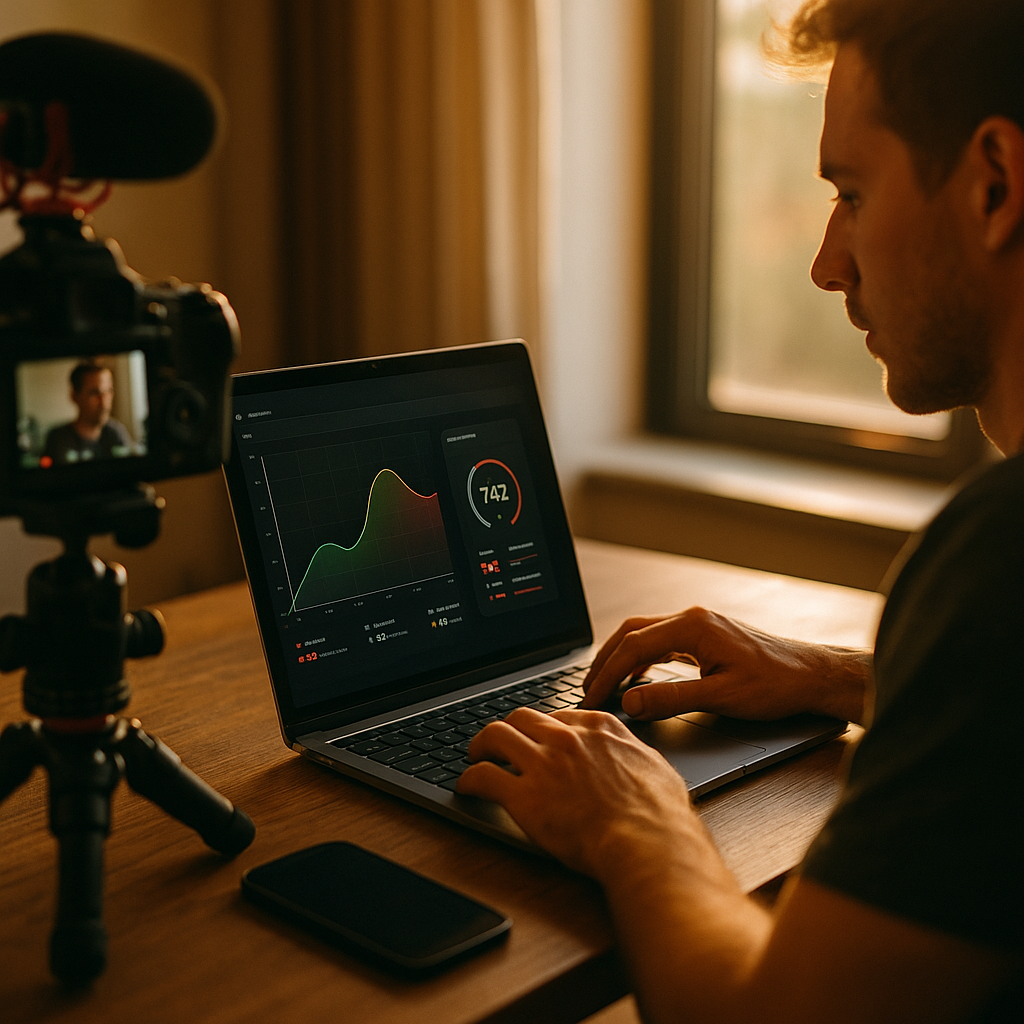
Nine out of ten marketers still can’t tell you, in real time, whether a piece of sponsored content is brand safe, on target, or quietly tanking their engagement rate. That gap is exactly why the launch of AI Squared Insights at IBC landed as more than another vendor demo. It’s a signal that AI media intelligence platforms are moving from nice-to-have dashboards to mandatory infrastructure for anyone managing serious creator budgets.
What Is an AI Media Intelligence Platform, Exactly?
Strip away the marketing language and an AI media intelligence platform does three things: it ingests content across formats and platforms in near real time, it scores that content against brand, safety, and performance criteria, and it surfaces recommendations before a human analyst would even finish loading a spreadsheet.
That’s a meaningful departure from the legacy influencer analytics tools most brands still rely on. Those tools were built to report on what already happened. Reach, impressions, follower growth, delivered a week after a campaign wrapped. AI Squared Insights and its emerging competitors are built to score content as it’s being created or distributed, which changes the entire operating rhythm of a marketing team.
The IBC Signal: Why This Launch Matters Beyond Broadcast
IBC has historically been a broadcast and media tech show, not a marketing conference. So when a platform explicitly targeting brand safety, creator vetting, and content intelligence debuts there, it tells you the underlying technology (large-scale content classification, sentiment scoring, deepfake and synthetic media detection) has matured enough to serve adjacent industries. Broadcasters needed this to manage compliance across thousands of hours of content. Marketers need it for the same reason, just at influencer scale.
The timing isn’t accidental either. eMarketer and Statista have both tracked accelerating influencer spend even as brand safety incidents and disclosure violations climb. Marketers are pouring more budget into a channel they can barely audit. That mismatch is precisely the gap AI media intelligence platforms are built to close.
The real story isn’t the launch itself. It’s that broadcast-grade content intelligence infrastructure is now cheap enough and fast enough to point at influencer marketing, a channel that has run on spreadsheets and gut instinct for a decade.
From Reach Reports to Real-Time Risk Scoring
Here’s the operational shift worth internalizing: measurement is moving upstream, from after-the-fact reporting to pre-publish scoring. Instead of discovering three days after a post goes live that an influencer used an unapproved claim, or that the content triggered a platform demotion, brands using AI media intelligence tools get a risk score before the content is even scheduled.
This matters most in three areas:
- Brand safety. Automated flagging of controversial associations, off-brand language, or context that could damage reputation, before it airs, not after.
- Disclosure compliance. Scanning captions, video audio, and on-screen text for FTC-required disclosure language, which matters enormously given ongoing FTC enforcement around paid partnerships.
- Performance prediction. Scoring content against historical patterns to flag underperformers before spend gets locked in.
None of this is theoretical anymore. It’s the same logic covered in our piece on machine readability compliance, where ops teams are already drowning in manual review work that this class of platform is explicitly designed to automate.
What This Means for Budget Allocation
Every marketer reading this has felt the pressure of proving influencer ROI to a CFO who thinks in retail media terms. AI media intelligence platforms give you a new lever: pre-spend confidence scoring, which lets you shift budget toward creators and content formats with the highest predicted return instead of the highest follower count.
This dovetails with a trend we’ve tracked closely: the move away from reach as the primary KPI. Our coverage of how view-through rate overtakes CTR as the dominant influencer marketing metric shows brands are already hungry for deeper signal beyond vanity numbers. AI scoring platforms are the infrastructure layer that makes those deeper metrics scalable across hundreds of creators simultaneously, not just a handful of top-tier partnerships you can manually review.
It also changes how agencies pitch retainers. If a platform can score content quality and compliance risk automatically, the manual review hours agencies used to bill for shrink. Expect pricing models to shift toward strategy and creator relationships, with the grunt work of content vetting absorbed by software. That’s consistent with what we’ve seen in creator budgets shift from software to managed services, though the direction here cuts the other way: software absorbing labor that used to require a managed service.
Where the Compliance Angle Gets Real
Let’s talk about the part most vendor pitches gloss over. AI media intelligence platforms are only as good as the training data and taxonomy behind them. A model trained primarily on North American content standards will misfire on regional nuance, and brands running global influencer programs need to ask vendors directly how localization is handled.
There’s also a benchmarking problem worth flagging. Our recent analysis found that only 12% of brands pass ACAM’s AI marketing benchmark, which tells you the gap between adopting AI tools and actually operationalizing them responsibly is wide. Buying a platform license is the easy part. Building the governance workflow, escalation paths, and human review checkpoints around it is where most programs stall.
An AI media intelligence platform doesn’t replace human judgment. It replaces the manual scanning work that used to make human judgment too slow to act on at scale.
How Does This Fit With Agent-Based Marketing Tools?
If you’ve been following the shift toward AI agent orchestration in creator amplification, media intelligence platforms are the natural counterpart. Orchestration agents decide what to amplify and where. Intelligence platforms decide what’s safe and effective to amplify in the first place. Together they form a pipeline: scan and score content, then route the winners through automated distribution. Brands adopting one without the other are only solving half the problem, and it shows up as either wasted spend or unmanaged risk.
The measurement gap this closes isn’t new either. Our coverage of the commerce media measurement gap highlighted how fragmented reporting across channels leaves marketers unable to compare performance apples to apples. Standardized AI scoring, applied consistently across platforms and creator tiers, is one of the few realistic paths toward that comparability.
A Practical Checklist Before You Buy
Vendors in this space will all sound similar on a sales call. Before signing anything, push for specifics on:
- Data sources: which platforms does the tool actually monitor, and how fresh is the data (minutes, hours, days)?
- Taxonomy transparency: can you see and customize the criteria used for brand safety and disclosure scoring?
- False positive rates: ask for benchmarked accuracy numbers, not marketing claims.
- Integration: does it plug into your existing creator management or campaign tools, or create another data silo?
- Human-in-the-loop workflow: what happens when the system flags something, and who reviews it?
Resources like Sprout Social and HubSpot publish regular benchmarking data on social content performance that’s worth cross-referencing against any vendor’s accuracy claims. Don’t take a scoring model’s word for it. Validate against your own historical campaign data before rolling it out broadly.
Next Step for Marketing Leaders
Run a 90-day pilot with one AI media intelligence platform against a live campaign segment, compare its risk flags and performance predictions to your actual outcomes, and use that data, not the sales deck, to decide whether it earns a permanent line in next year’s martech budget.
Frequently Asked Questions
What is an AI media intelligence platform?
It’s a software system that automatically scans, classifies, and scores content across media channels for brand safety, compliance, and performance signals, typically in real time or near real time, rather than relying on after-the-fact manual reporting.
Why did AI Squared Insights launch at IBC instead of a marketing conference?
IBC serves the broadcast and media technology industry, where content classification and compliance monitoring at scale have been priorities for years. The launch there signals that this underlying technology has matured enough to be repurposed for influencer and creator marketing use cases.
How is this different from traditional influencer analytics tools?
Traditional tools report on completed campaigns, showing reach, engagement, and impressions after the fact. AI media intelligence platforms score content before or during publication, flagging brand safety and compliance risks in advance rather than after damage is done.
Do these platforms replace human content reviewers?
No. They reduce the manual scanning workload so human reviewers can focus on edge cases and final judgment calls, rather than reading every caption and watching every video manually.
What should marketers evaluate before adopting one of these platforms?
Data freshness, taxonomy transparency, documented accuracy or false positive rates, integration with existing creator management tools, and a clear human-in-the-loop escalation process for flagged content.
Top Influencer Marketing Agencies
The leading agencies shaping influencer marketing in 2026
Agencies ranked by campaign performance, client diversity, platform expertise, proven ROI, industry recognition, and client satisfaction. Assessed through verified case studies, reviews, and industry consultations.
Moburst

-
2

The Shelf
Boutique Beauty & Lifestyle Influencer AgencyA data-driven boutique agency specializing exclusively in beauty, wellness, and lifestyle influencer campaigns on Instagram and TikTok. Best for brands already focused on the beauty/personal care space that need curated, aesthetic-driven content.Clients: Pepsi, The Honest Company, Hims, Elf Cosmetics, Pure LeafVisit The Shelf → -
3

Audiencly
Niche Gaming & Esports Influencer AgencyA specialized agency focused exclusively on gaming and esports creators on YouTube, Twitch, and TikTok. Ideal if your campaign is 100% gaming-focused — from game launches to hardware and esports events.Clients: Epic Games, NordVPN, Ubisoft, Wargaming, Tencent GamesVisit Audiencly → -
4

Viral Nation
Global Influencer Marketing & Talent AgencyA dual talent management and marketing agency with proprietary brand safety tools and a global creator network spanning nano-influencers to celebrities across all major platforms.Clients: Meta, Activision Blizzard, Energizer, Aston Martin, WalmartVisit Viral Nation → -
5

The Influencer Marketing Factory
TikTok, Instagram & YouTube CampaignsA full-service agency with strong TikTok expertise, offering end-to-end campaign management from influencer discovery through performance reporting with a focus on platform-native content.Clients: Google, Snapchat, Universal Music, Bumble, YelpVisit TIMF → -
6

NeoReach
Enterprise Analytics & Influencer CampaignsAn enterprise-focused agency combining managed campaigns with a powerful self-service data platform for influencer search, audience analytics, and attribution modeling.Clients: Amazon, Airbnb, Netflix, Honda, The New York TimesVisit NeoReach → -
7

Ubiquitous
Creator-First Marketing PlatformA tech-driven platform combining self-service tools with managed campaign options, emphasizing speed and scalability for brands managing multiple influencer relationships.Clients: Lyft, Disney, Target, American Eagle, NetflixVisit Ubiquitous → -
8

Obviously
Scalable Enterprise Influencer CampaignsA tech-enabled agency built for high-volume campaigns, coordinating hundreds of creators simultaneously with end-to-end logistics, content rights management, and product seeding.Clients: Google, Ulta Beauty, Converse, AmazonVisit Obviously →