


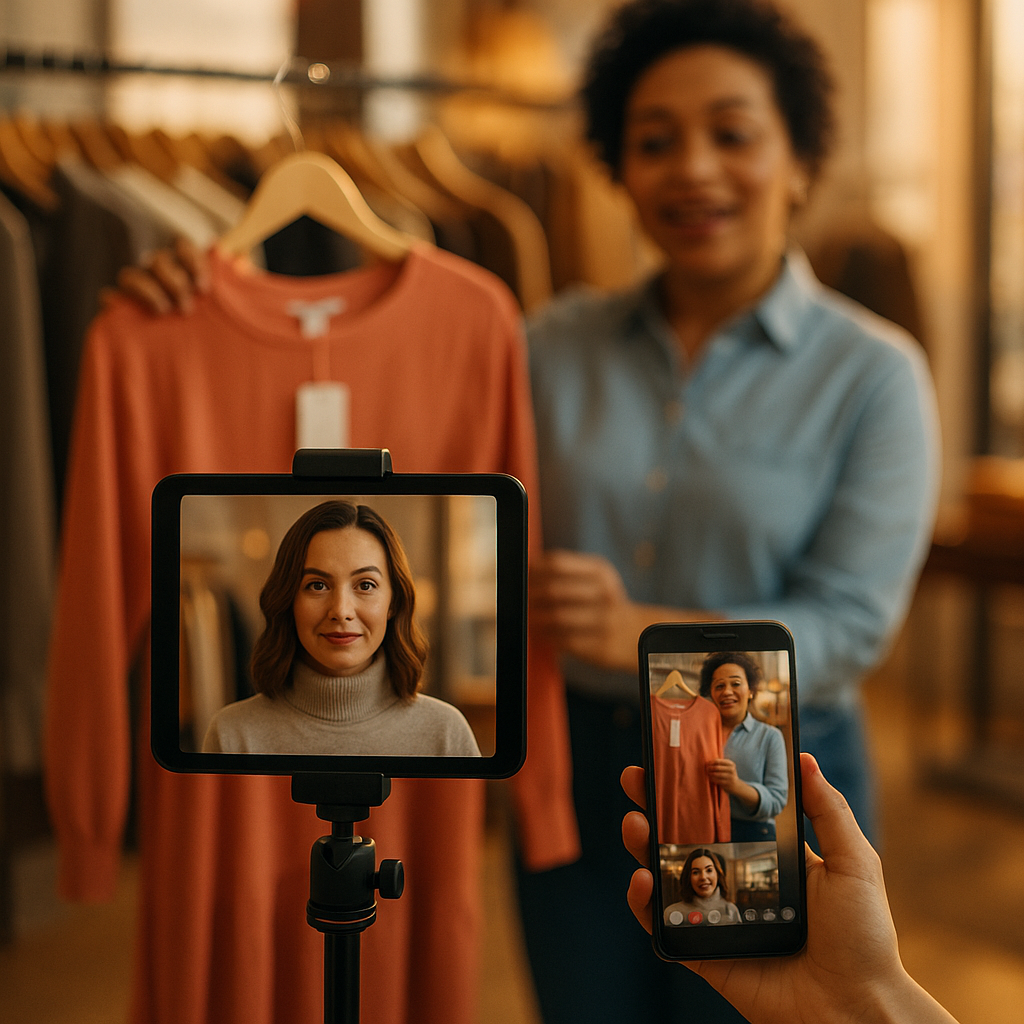
QVC did $8 billion a year at its peak, and Amazon just quietly rebuilt that model with an algorithm instead of a phone bank. Livestream shopping flopped in the US the first time around, dismissed as a China-only phenomenon that never translated. So why are Walmart, Amazon, and a growing list of mid-market retailers pouring budget back into live commerce for 2026? Because the second wave looks nothing like the first.
The First Wave Failed for Boring Reasons
Round one (roughly 2020 to 2022) had the right idea and the wrong infrastructure. Brands hired an influencer, pointed a ring light at a product table, and hoped for a QVC moment. Most got a few hundred viewers and a support ticket queue full of “how do I check out” questions.
The checkout flow was the killer. Viewers had to leave the livestream, open a separate app or browser tab, hunt for the SKU, and pray the size was still in stock. Every extra tap lost buyers. Retailers blamed the format. The format was fine. The plumbing was broken.
There was also a measurement problem. Brands couldn’t tie a livestream view to a purchase without stitching together three different dashboards, and attribution windows were a guessing game. That same measurement gap shows up across the creator economy today, which is part of why view-through metrics are replacing click based KPIs across the board, not just in live commerce.
What Actually Changed by 2026
Three things fixed the plumbing: native checkout, retail media integration, and AI hosting. Together they turned livestream shopping from a marketing stunt into a functioning sales channel.
- In-stream checkout is finally real. TikTok Shop, Amazon Live, and Walmart’s live commerce pilots now let viewers buy without leaving the stream. No app switch, no tab hunting.
- Retail media dollars are funding the format. Retailers are folding livestream slots into their retail media networks, selling sponsored placement inside live shopping events the same way they sell search ads. That shift is well documented in how retail media networks are absorbing creator budgets across the industry.
- AI hosts and co-pilots cut production cost. Retailers can now run near-continuous streams using AI-assisted hosting, translation, and product callouts, which makes the format viable outside of one-off flash events.
Livestream shopping didn’t get more popular because consumers changed. It got more popular because retailers finally removed the friction between “I want that” and “I bought that.”
Show Me the Numbers
eMarketer has tracked steady growth in US live commerce spend for three straight years, and retail media budgets in general have grown fast enough to reshape how brands allocate creator dollars, per eMarketer’s retail media coverage. Statista’s ecommerce data shows a similar pattern: US consumers are far more comfortable buying through video than they were even two years ago, particularly in beauty, home goods, and apparel categories where sizing and demo matter (Statista ecommerce research).
The category split matters here. Livestream shopping isn’t winning everywhere equally. It’s winning where a product benefits from demonstration, texture, fit, or a live Q&A that resolves purchase hesitation on the spot. Furniture retailers use it to show scale in a real room. Beauty brands use it for shade matching. Electronics brands use it to answer the “does this work with my setup” question that usually kills conversion on a static product page.
Retail Media Is the Real Reason Budgets Are Shifting
Here’s the part that gets underreported: livestream shopping’s second wave isn’t primarily a content story. It’s a monetization story for retailers. Amazon, Walmart, and Target all operate retail media networks now, and live shopping slots are becoming inventory those networks sell to brands directly, with built-in attribution because the purchase happens on the retailer’s own platform.
That’s a fundamentally different pitch than “hire an influencer to go live.” It’s “buy a placement in our live shopping calendar and we’ll show you the exact revenue it generated.” For brands used to fuzzy influencer attribution, that clarity is worth a real budget line. It also explains why so much creator budget is migrating toward retailer-owned channels instead of open social platforms, a trend covered in depth in how rising CPMs are pushing video budget toward retail and search.
There’s a compliance upside too. Sales happening inside a retailer’s own checkout are easier to reconcile against FTC disclosure requirements than sponsored content scattered across a dozen creator accounts. Brands running livestream programs should still review current FTC endorsement guidance before scripting host disclosures, since regulators have been active on influencer transparency.
Who’s Hosting These Streams Now?
The influencer-hosted format hasn’t disappeared, it’s evolved into a tiered system. Retailers are running a mix of talent tiers depending on the goal:
- Owned employee hosts for everyday product streams, cheaper and always on brand.
- Nano and micro creators for niche category streams, where nano influencer conversion data shows better trust and lower cost per acquisition than macro talent.
- AI co-hosts that handle repetitive product Q&A, freeing human hosts for the moments that need real personality.
- Celebrity or macro talent reserved for launch events, where reach still matters more than efficiency.
This tiered approach mirrors what’s happening across the broader creator economy, where conversion data is replacing reach as the deciding factor in which creator tier gets the budget. Livestream shopping just applies that logic in real time, with a live sales counter proving it.
Where Brands Get It Wrong
The most common mistake right now is treating livestream shopping as a one-off event instead of a recurring channel. A single quarterly live shopping special generates a spike and then nothing. Retailers seeing real ROI run a consistent cadence, weekly or even daily, so the audience builds a habit the same way TV shopping audiences did decades ago.
The second mistake is skipping rehearsal. A live host fumbling pricing or inventory answers on camera erodes trust fast, and there’s no edit button. Brands that treat livestream hosting with the same prep as a customer service escalation script tend to outperform those winging it.
The third mistake is ignoring machine readability. As AI shopping assistants and recommendation engines increasingly surface product data before a human ever sees a livestream, retailers need their catalog and stream metadata structured for machines, not just for viewers. That’s a growing operational burden, one that’s already straining marketing ops teams tasked with keeping product feeds accurate across channels. It also connects to the wider shift where AI recommendation engines are rewiring product discovery before a shopper ever opens a livestream.
What This Means for Budget Planning
If you’re setting 2026 budgets, livestream shopping deserves its own line item, separate from general influencer spend and separate from paid social. It behaves more like retail media than like content marketing: measurable, inventory-based, and tied directly to a retailer’s platform economics. Treat it like a media buy with a creative layer, not a creative project with a sales afterthought.
Start small with a weekly cadence on your highest-margin, most demo-friendly category. Measure watch-through and add-to-cart rate inside the stream, not just post-event sales. Then scale the format to categories where it’s proven, rather than spreading thin across the whole catalog on day one.
Frequently Asked Questions
Is livestream shopping actually growing in the US, or is this hype?
It’s real growth, driven by retail media integration and native checkout rather than novelty. Retailers are treating it as a measurable sales channel, not a marketing experiment, which is the main difference from the first wave.
Which product categories perform best in livestream shopping?
Beauty, apparel, home goods, and electronics tend to perform best because they benefit from demonstration, fit visualization, or live Q&A that resolves buyer hesitation instantly.
Do brands need influencers to run a livestream shopping program?
No. Many retailers now use a mix of employee hosts, nano and micro creators, and AI co-hosts depending on the stream’s goal and budget, reserving big-name talent for major launches only.
How is livestream shopping measured differently than social content?
It’s measured more like retail media: watch-through rate, in-stream add-to-cart rate, and direct attributed sales, since the purchase typically happens inside the same platform as the stream.
What’s the biggest mistake brands make with livestream shopping?
Treating it as a one-time event instead of a recurring channel. Consistent cadence builds audience habits; sporadic streams generate a short spike and little lasting traction.
The Takeaway
Livestream shopping isn’t back because consumers suddenly love watching product demos. It’s back because retailers fixed checkout, wired it into retail media, and can finally prove ROI in real time. Budget it like media, staff it with tiered talent, and run it weekly before you scale it.
Frequently Asked Questions
Is livestream shopping actually growing in the US, or is this hype?
It’s real growth, driven by retail media integration and native checkout rather than novelty. Retailers are treating it as a measurable sales channel, not a marketing experiment, which is the main difference from the first wave.
Which product categories perform best in livestream shopping?
Beauty, apparel, home goods, and electronics tend to perform best because they benefit from demonstration, fit visualization, or live Q&A that resolves buyer hesitation instantly.
Do brands need influencers to run a livestream shopping program?
No. Many retailers now use a mix of employee hosts, nano and micro creators, and AI co-hosts depending on the stream’s goal and budget, reserving big-name talent for major launches only.
How is livestream shopping measured differently than social content?
It’s measured more like retail media: watch-through rate, in-stream add-to-cart rate, and direct attributed sales, since the purchase typically happens inside the same platform as the stream.
What’s the biggest mistake brands make with livestream shopping?
Treating it as a one-time event instead of a recurring channel. Consistent cadence builds audience habits; sporadic streams generate a short spike and little lasting traction.
Top Influencer Marketing Agencies
The leading agencies shaping influencer marketing in 2026
Agencies ranked by campaign performance, client diversity, platform expertise, proven ROI, industry recognition, and client satisfaction. Assessed through verified case studies, reviews, and industry consultations.
Moburst

-
2

The Shelf
Boutique Beauty & Lifestyle Influencer AgencyA data-driven boutique agency specializing exclusively in beauty, wellness, and lifestyle influencer campaigns on Instagram and TikTok. Best for brands already focused on the beauty/personal care space that need curated, aesthetic-driven content.Clients: Pepsi, The Honest Company, Hims, Elf Cosmetics, Pure LeafVisit The Shelf → -
3

Audiencly
Niche Gaming & Esports Influencer AgencyA specialized agency focused exclusively on gaming and esports creators on YouTube, Twitch, and TikTok. Ideal if your campaign is 100% gaming-focused — from game launches to hardware and esports events.Clients: Epic Games, NordVPN, Ubisoft, Wargaming, Tencent GamesVisit Audiencly → -
4

Viral Nation
Global Influencer Marketing & Talent AgencyA dual talent management and marketing agency with proprietary brand safety tools and a global creator network spanning nano-influencers to celebrities across all major platforms.Clients: Meta, Activision Blizzard, Energizer, Aston Martin, WalmartVisit Viral Nation → -
5

The Influencer Marketing Factory
TikTok, Instagram & YouTube CampaignsA full-service agency with strong TikTok expertise, offering end-to-end campaign management from influencer discovery through performance reporting with a focus on platform-native content.Clients: Google, Snapchat, Universal Music, Bumble, YelpVisit TIMF → -
6

NeoReach
Enterprise Analytics & Influencer CampaignsAn enterprise-focused agency combining managed campaigns with a powerful self-service data platform for influencer search, audience analytics, and attribution modeling.Clients: Amazon, Airbnb, Netflix, Honda, The New York TimesVisit NeoReach → -
7

Ubiquitous
Creator-First Marketing PlatformA tech-driven platform combining self-service tools with managed campaign options, emphasizing speed and scalability for brands managing multiple influencer relationships.Clients: Lyft, Disney, Target, American Eagle, NetflixVisit Ubiquitous → -
8

Obviously
Scalable Enterprise Influencer CampaignsA tech-enabled agency built for high-volume campaigns, coordinating hundreds of creators simultaneously with end-to-end logistics, content rights management, and product seeding.Clients: Google, Ulta Beauty, Converse, AmazonVisit Obviously →