


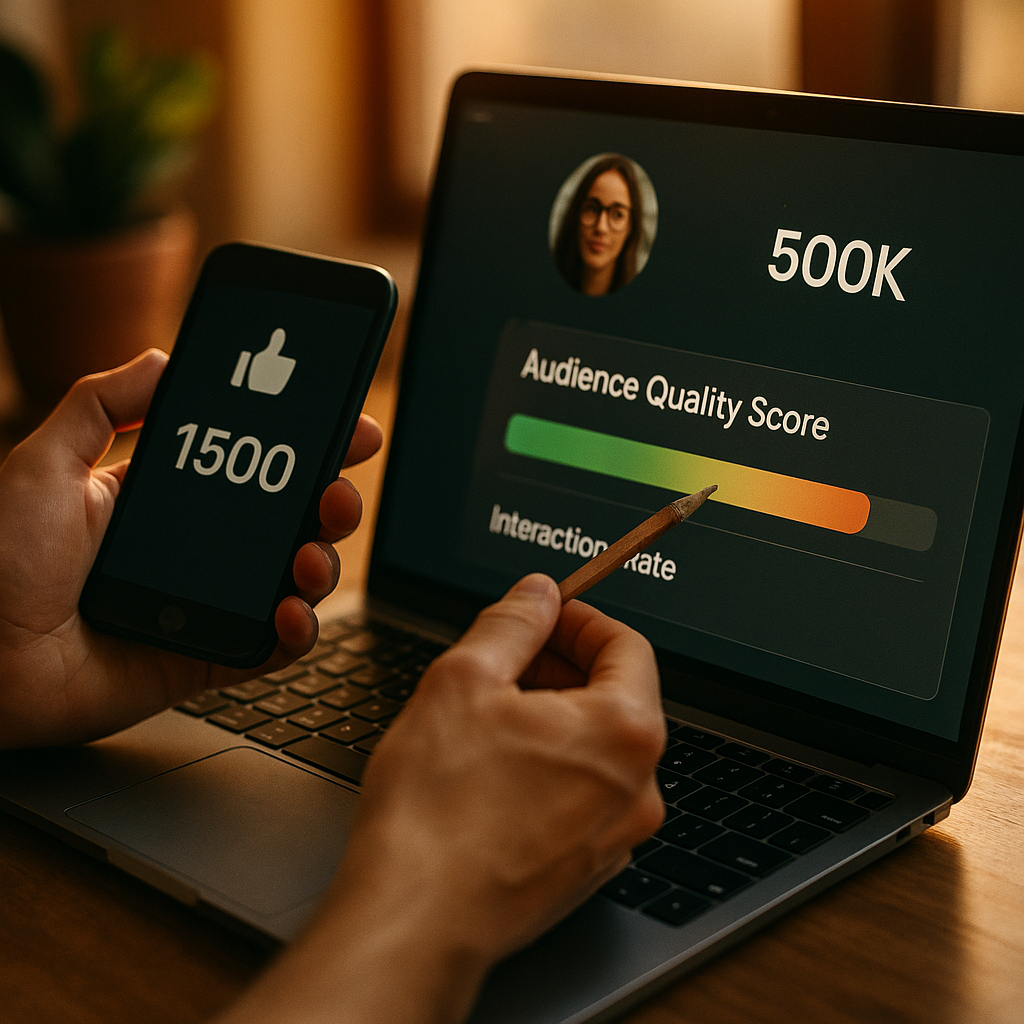
A creator with 800,000 followers can deliver worse ROI than one with 40,000. That single fact has quietly dismantled the follower threshold as a vetting standard. Brands that once set minimums like “50K+ followers required” are now asking a sharper question: how many of those followers are real, reachable, and likely to buy? That question has a name. It’s called an audience quality score, and it’s replacing follower count as the primary gate for influencer vetting programs.
Why Follower Count Stopped Meaning Anything
Follower count was never a great proxy for value. It was just easy to measure. Anyone with a spreadsheet could set a minimum threshold and call it “vetting.” But bot farms, engagement pods, and follow-for-follow schemes made the metric trivially easy to game, and platforms did little to stop it because inflated numbers kept creators posting and kept ad dollars flowing.
Fraud detection firms have estimated that fake or bot-driven engagement costs advertisers billions annually across digital channels. Influencer marketing isn’t exempt. A 2023 Statista analysis of creator fraud found that mid-tier accounts, the 50,000 to 500,000 follower range, carry some of the highest rates of purchased followers because that tier sits right at the threshold most brands use to qualify for paid partnerships. Creators know the number brands are looking for, and some pad their way to it.
Follower count tells you how big an account looks. Audience quality score tells you how real it is, and real is what converts.
Meanwhile, brands kept getting burned. Campaigns with strong reach numbers and flat sales. Engagement rates that looked healthy but came from the same 200 accounts liking every post within sixty seconds. Eventually, someone in the finance department starts asking uncomfortable questions about influencer ROI, and “the follower count was high” stops being a satisfying answer.
What an Audience Quality Score Actually Measures
There’s no single universal formula, but most audience quality scoring models pull from a similar set of inputs:
- Follower authenticity: the ratio of likely-real accounts to bot, dormant, or purchased accounts, usually modeled through account age, posting history, and profile completeness.
- Geographic and demographic alignment: does the audience match the brand’s target market by location, age band, and language, not just in aggregate but at a granular level.
- Engagement authenticity: not just engagement rate, but whether comments are substantive (real sentences, questions, reactions) versus emoji spam or repeated generic phrases.
- Audience overlap and duplication: critical for brands running multi-creator campaigns, since paying five creators to reach the same 30,000 people isn’t five times the reach.
- Growth pattern analysis: sudden follower spikes that don’t correlate with viral content or press coverage are a classic red flag for purchased growth.
Vendors like HypeAuditor, Modash, and Upfluence have built entire product lines around scoring these dimensions, and marketplace platforms increasingly bake quality scores directly into search and filter functions rather than treating them as a separate audit step. If you’re evaluating which platform actually verifies these scores rather than just displaying a number, it’s worth reading how programmatic marketplaces handle score audits before committing spend.
The Vetting Shift, In Practice
Here’s what changed operationally. Instead of a brand brief saying “creators with 100K+ followers only,” briefs now say things like “audience quality score of 75 or higher, US audience concentration above 60%, engagement authenticity rate above 80%.” That’s a meaningfully different filter, and it catches creators who would have been excluded under old rules while flagging plenty who would have sailed through.
A skincare brand running a mid-tier creator program might find that a 25,000-follower nano-influencer with an audience quality score of 88 outperforms a 300,000-follower macro account scoring 52. The macro account has “reach,” technically. But if a third of that reach is bots or disengaged accounts in the wrong country, the actual addressable audience might be smaller than the nano account’s.
This shift also changes how compliance teams operate. Under both FTC disclosure rules and increasing platform-level enforcement, brands are on the hook for the creators they partner with, not just the content those creators produce. A creator with heavily manipulated metrics presents both a performance risk and a reputational one. The Federal Trade Commission has made clear that endorsement guidelines apply regardless of follower size, so vetting for authenticity isn’t just about protecting media spend, it’s about protecting the brand’s legal standing too.
Where This Intersects With AI Discovery Tools
Creator discovery platforms are increasingly built on semantic and vector-based matching rather than simple keyword or category tags, which means audience quality signals get folded into the discovery layer itself instead of being a separate downstream check. That’s a meaningful efficiency gain for teams running high-volume programs. For a deeper look at how matching technology has evolved past basic tagging, see this breakdown of semantic creator discovery methods.
It also changes vetting checklists at the earliest stage of sourcing. Brands running micro-influencer programs at scale, where manual review of every profile isn’t feasible, are leaning on automated quality scoring to pre-filter candidate pools before a human ever looks at a profile. That’s echoed in how programs like the one detailed in this micro-influencer vetting checklist structure their pre-scale review process.
Does a Higher Score Guarantee Better ROI?
No, and this is where marketers need to keep their heads on straight. Audience quality score is a filter, not a prediction. It tells you the audience is real and roughly aligned with your target demographic. It doesn’t tell you whether that audience trusts the creator’s opinion on your specific product category, or whether the creative concept will land.
Think of it like a credit score for media buying. A high score reduces risk. It doesn’t guarantee the campaign works. Brands still need to evaluate content quality, brand fit, category relevance, and past campaign performance alongside the quality score. Treating the score as the only input is just trading one lazy shortcut (follower count) for another.
A quality score reduces the odds of paying for fake reach. It doesn’t replace the judgment call on whether this creator’s audience actually wants what you’re selling.
There’s also a measurement gap worth naming. Quality scores are typically calculated at a point in time, based on a snapshot of follower and engagement data. Audiences shift. A creator’s follower base can degrade in quality over months if they buy a growth push or get caught in a bot-follow wave they didn’t initiate. Brands running long-term ambassador programs need re-vetting cadences, not one-time checks at contract signing. This is closely related to the signal latency problem that shows up across marketing measurement generally, which is covered well in this piece on signal latency and stale data in campaign decisioning.
Building an Audience Quality Framework Into Your Vetting Process
For teams ready to move off follower thresholds, the transition doesn’t need to be a full platform overhaul. A few practical steps:
- Set a minimum quality score, not a minimum follower count. Pick a threshold based on category benchmarks (skincare and beauty audiences behave differently than B2B SaaS audiences, for instance) and adjust as you gather campaign data.
- Require audience geography and demographic breakdowns as a standard line item in creator media kits or vetting reports, not an optional extra.
- Cross-check overlap for multi-creator bundles. If you’re running a roster campaign, audience duplication analysis should be mandatory before budget allocation, not an afterthought.
- Build re-vetting into ongoing ambassador contracts. Quarterly or biannual score checks catch quality degradation before it shows up in flat campaign performance.
- Document your vetting criteria for compliance purposes. Having a documented, consistent standard protects the brand if a partnership is later questioned on disclosure or authenticity grounds.
According to eMarketer, influencer marketing spend continues climbing year over year, which raises the stakes on getting vetting right. More budget flowing through creator channels means more exposure if quality controls are weak. Brands running affiliate or whitelisting programs alongside influencer spend face a compounded version of this risk, and the layered vetting gaps common in those stacks are worth reviewing in this analysis of affiliate whitelisting vetting gaps.
The Bottom Line for Budget Owners
Follower count thresholds made vetting easy and cheap, but easy and cheap isn’t the same as effective. Audience quality scores add friction to the sourcing process, sure, but that friction is exactly what keeps budget away from inflated accounts and pointed toward creators with audiences that actually show up. The brands seeing the strongest influencer ROI right now aren’t necessarily working with bigger names. They’re working with cleaner audiences.
Frequently Asked Questions
What is an audience quality score in influencer marketing?
An audience quality score is a composite metric that evaluates how authentic and relevant a creator’s follower base is, typically factoring in follower authenticity, engagement quality, audience geography, and growth patterns, rather than relying solely on raw follower count.
How is audience quality score different from engagement rate?
Engagement rate measures the volume of likes, comments, and shares relative to followers, but it doesn’t distinguish real interactions from bot activity or engagement pods. Audience quality score goes deeper, analyzing whether the audience and its engagement are genuinely authentic.
What audience quality score should brands look for?
There’s no universal number since benchmarks vary by platform and vendor, but many brands set a minimum threshold in the 70 to 80 range on a 100-point scale, adjusting based on category and campaign goals.
Can a creator with a high follower count have a low quality score?
Yes, and it happens frequently. Follower count and audience quality are only loosely correlated. Large accounts can carry significant bot or inactive follower percentages, especially if they experienced rapid, unnatural growth spikes at any point.
Do audience quality scores replace the need for manual vetting?
No. Quality scores are a filtering tool that reduces manual review workload, but brand fit, content quality, and past campaign performance still require human judgment before finalizing a partnership.
Top Influencer Marketing Agencies
The leading agencies shaping influencer marketing in 2026
Agencies ranked by campaign performance, client diversity, platform expertise, proven ROI, industry recognition, and client satisfaction. Assessed through verified case studies, reviews, and industry consultations.
Moburst

-
2

The Shelf
Boutique Beauty & Lifestyle Influencer AgencyA data-driven boutique agency specializing exclusively in beauty, wellness, and lifestyle influencer campaigns on Instagram and TikTok. Best for brands already focused on the beauty/personal care space that need curated, aesthetic-driven content.Clients: Pepsi, The Honest Company, Hims, Elf Cosmetics, Pure LeafVisit The Shelf → -
3

Audiencly
Niche Gaming & Esports Influencer AgencyA specialized agency focused exclusively on gaming and esports creators on YouTube, Twitch, and TikTok. Ideal if your campaign is 100% gaming-focused — from game launches to hardware and esports events.Clients: Epic Games, NordVPN, Ubisoft, Wargaming, Tencent GamesVisit Audiencly → -
4

Viral Nation
Global Influencer Marketing & Talent AgencyA dual talent management and marketing agency with proprietary brand safety tools and a global creator network spanning nano-influencers to celebrities across all major platforms.Clients: Meta, Activision Blizzard, Energizer, Aston Martin, WalmartVisit Viral Nation → -
5

The Influencer Marketing Factory
TikTok, Instagram & YouTube CampaignsA full-service agency with strong TikTok expertise, offering end-to-end campaign management from influencer discovery through performance reporting with a focus on platform-native content.Clients: Google, Snapchat, Universal Music, Bumble, YelpVisit TIMF → -
6

NeoReach
Enterprise Analytics & Influencer CampaignsAn enterprise-focused agency combining managed campaigns with a powerful self-service data platform for influencer search, audience analytics, and attribution modeling.Clients: Amazon, Airbnb, Netflix, Honda, The New York TimesVisit NeoReach → -
7

Ubiquitous
Creator-First Marketing PlatformA tech-driven platform combining self-service tools with managed campaign options, emphasizing speed and scalability for brands managing multiple influencer relationships.Clients: Lyft, Disney, Target, American Eagle, NetflixVisit Ubiquitous → -
8

Obviously
Scalable Enterprise Influencer CampaignsA tech-enabled agency built for high-volume campaigns, coordinating hundreds of creators simultaneously with end-to-end logistics, content rights management, and product seeding.Clients: Google, Ulta Beauty, Converse, AmazonVisit Obviously →