


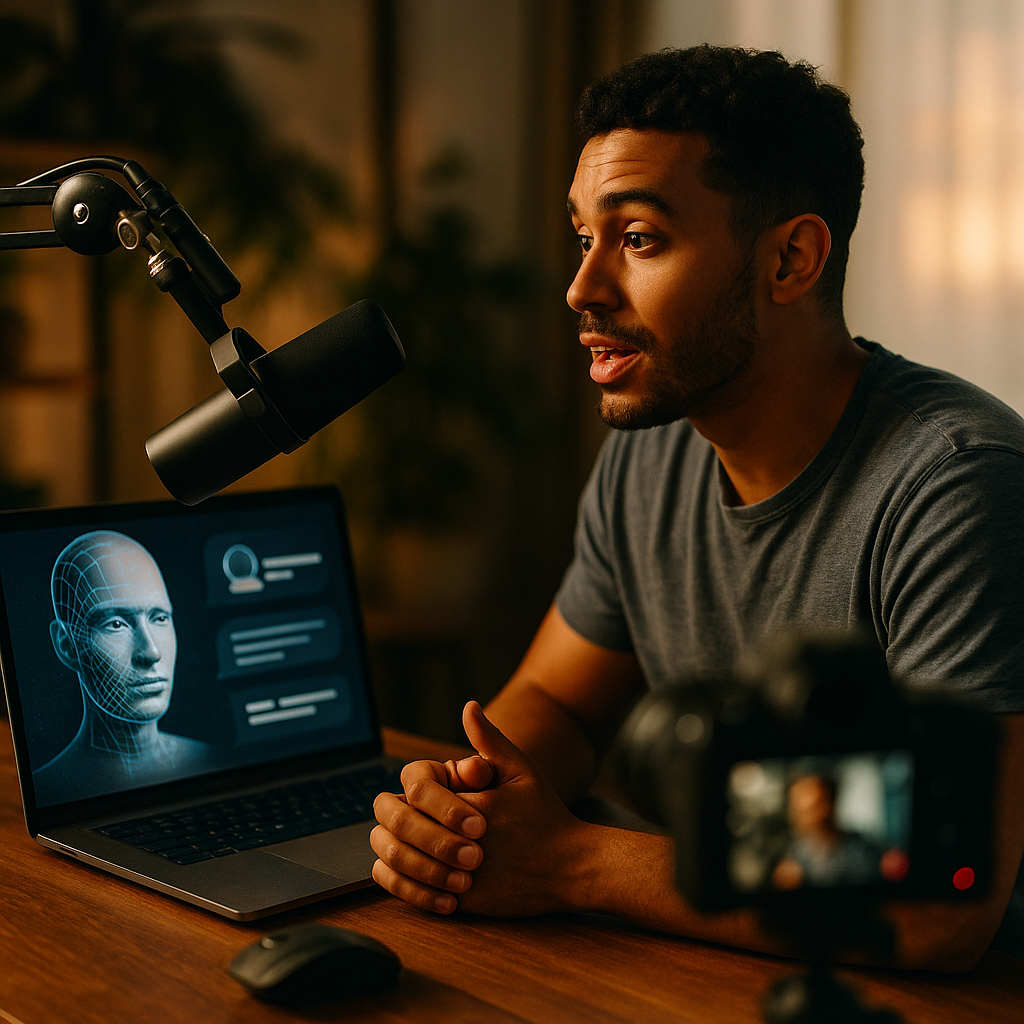
Livestream commerce hit $650 billion globally last year, according to Statista estimates, and brands can’t hire trained hosts fast enough to keep pace. So they’re turning to AI coaching tools for livestream hosts: real-time software that flags pacing issues, script drift, and energy dips mid-broadcast. The question isn’t whether these tools work. It’s whether they quietly sand off the personality that made a host worth booking in the first place.
The Livestream Talent Bottleneck Nobody Talks About
Every brand running a livestream program hits the same wall. You find a host who converts, book them for three shows a week, and then discover you need six more just like them for the holiday push. Except there is no “just like them.” Talent doesn’t scale the way inventory does.
Traditional coaching means a producer sitting in on rehearsals, reviewing VOD replays, and giving notes over Slack the next morning. It works, but it’s slow. A new host might need eight to ten shows before their delivery, product knowledge, and comfort on camera reach a level that actually moves GMV. That ramp time is expensive, and in fast-moving categories like beauty or electronics, it’s often longer than the product cycle itself.
This is exactly the gap brands are trying to close with creator recruitment platforms that source talent faster. But sourcing more hosts only helps if you can train them at the same speed you’re hiring them.
What AI Coaching Tools Actually Do
Strip away the marketing language and most AI coaching tools for livestream hosts do three things well.
- Real-time delivery feedback. Pacing, filler words, energy level, and eye contact tracked via computer vision and sent to a host’s earpiece or screen overlay mid-stream.
- Script and compliance prompts. Automated nudges when a host is about to make an unsubstantiated claim, drifts from FTC-required disclosures, or forgets a promo code.
- Post-stream performance scoring. A dashboard that compares conversion spikes to specific moments in the broadcast, so producers know exactly which 90-second segment sold product and which one lost the room.
Tools in this category range from lightweight browser plugins to full production suites bundled into livestream commerce platforms. Some vendors position themselves as an extension of your creative team, others lean harder into automation, essentially scripting responses for the host to read verbatim. That distinction matters more than most brands realize when they’re evaluating vendors.
The brands seeing the best retention numbers aren’t the ones automating hosts into silence. They’re the ones using AI to protect a host’s voice under pressure, not replace it.
Where the Line Between Coaching and Cloning Gets Blurry
Here’s the uncomfortable part. A lot of “coaching” tools on the market today are really compliance and consistency engines dressed up in friendlier language. They’re optimizing for brand safety and message uniformity, which is a legitimate goal, but it’s a different goal than developing a host’s craft.
Push too hard on script adherence and you get hosts who sound like they’re reading ad copy, because they are. Viewers notice. Livestream commerce converts specifically because it feels unscripted and trustworthy, closer to a friend’s recommendation than a 30-second spot. Sprout Social’s research on creator-audience trust consistently shows authenticity outranks polish as a purchase driver, and that dynamic gets worse, not better, at livestream scale where audiences are watching for tells.
The fix isn’t ditching the tools. It’s setting the coaching parameters correctly from day one. Good implementations flag a compliance risk and let the host phrase the correction in their own words. Bad implementations feed the host a line to repeat. One builds a better talent roster over time. The other builds a roster of interchangeable narrators.
The ROI Case: Faster Ramp Time, Fewer Reshoots
Skepticism aside, the business case for AI coaching tools is genuinely strong when they’re scoped correctly.
Brands running structured AI coaching programs report ramp times dropping from eight or ten shows down to three or four before a new host hits target conversion rates. That’s not a marginal gain. If a mid-tier host generates $8,000 to $12,000 in GMV per show, cutting the ramp period in half can mean tens of thousands in recovered revenue per hire, multiplied across an entire roster.
There’s a second, quieter benefit: fewer post-production reshoots and re-cuts. When a host catches a compliance miss or a pacing dip in real time, producers aren’t scrambling to edit around it after the fact. That operational time savings compounds fast for teams running multiple daily streams, and it pairs well with the kind of real-time monitoring dashboards most livestream operations already lean on for budget tracking.
The measurement question, naturally, is where it gets murky. Attribution across host, script, and coaching tool contribution is genuinely hard to isolate, and it’s a topic worth comparing against broader creator measurement approaches before you commit budget to a specific vendor.
Compliance Isn’t Optional, and AI Makes It Easier to Prove
Livestream is fast, unscripted, and live, which makes it the riskiest format in your influencer mix from a regulatory standpoint. A host who verbally overstates a product claim on a livestream can’t be edited after the fact the way a static post can. The FTC’s endorsement guidelines apply to livestream commerce exactly as they do to static content, and enforcement scrutiny on creator disclosures has only intensified.
This is where AI coaching tools earn their keep from a risk mitigation standpoint. A system that flags a claim in real time and logs the correction creates an audit trail, something legal and compliance teams increasingly want documented rather than assumed. It’s the same instinct driving demand for content governance platforms across the broader influencer stack. Livestream just raises the stakes because there’s no edit window.
If you’re evaluating vendors, ask specifically how compliance flags are logged, whether transcripts are retained, and how long. Some platforms treat this as a bolt-on feature. The stronger ones built it as core infrastructure.
Choosing a Tool Without Losing the Human Element
A few things separate the coaching tools that actually build better talent from the ones that just standardize output.
- Feedback delivery matters more than feedback frequency. A tool whispering “slow down” through an earpiece is coaching. A tool auto-generating the next sentence for the host to read is scripting.
- Host input on the coaching model. The best programs let experienced hosts review and adjust their own AI feedback thresholds. A high-energy host and a low-key, conversational host shouldn’t be graded on identical pacing benchmarks.
- Data ownership and portability. If a host’s performance history lives entirely inside one vendor’s platform, you’ve created lock-in that hurts you at renewal time and hurts the host if they move between agencies.
- Integration with existing recruitment and CRM workflows. Coaching data is most useful when it feeds back into how you staff future shows, which means it needs to talk to whatever creator commerce CRM your ops team already runs.
Run a pilot before rolling a tool out roster-wide. Two or three hosts, four weeks, side-by-side conversion and retention data against a control group of hosts coached the old-fashioned way. If the AI-coached group isn’t outperforming on both revenue and audience retention (not just one), the tool isn’t ready for scale.
What This Means for Agencies and In-House Teams
For agencies managing rosters across multiple brand accounts, standardized AI coaching offers something valuable: a consistent training baseline that doesn’t depend on which producer happens to be staffing a given show. That consistency is worth real money when you’re pitching enterprise retainers and need to demonstrate repeatable quality control, not just individual star talent.
In-house teams face a different calculus. You’re usually working with a smaller, more brand-specific roster, and the risk of over-standardizing personality is higher because your hosts are effectively brand ambassadors, not interchangeable freelance talent. Weight your evaluation criteria accordingly. An agency optimizing for scale across dozens of brands has different tolerance for scripted uniformity than a DTC brand whose entire livestream strategy depends on one or two hosts feeling like trusted insiders.
Either way, treat the rollout as a talent development investment, not a cost-cutting measure. Frame it that way internally too. Finance teams that hear “we’re automating hosts” get nervous about brand risk. Finance teams that hear “we’re cutting host ramp time by 50 percent” approve the budget.
Next step: pilot one AI coaching tool with a small host cohort for a single sales cycle, measure conversion and retention against a non-coached control group, and only expand the rollout if authenticity scores (audience comments, repeat viewer rate) hold steady alongside the efficiency gains.
Frequently Asked Questions
What exactly do AI coaching tools for livestream hosts monitor?
Most tools track pacing, energy level, filler words, script adherence, and compliance triggers like unsubstantiated product claims. Post-stream, they typically correlate these signals against conversion spikes to identify which moments in a broadcast actually drove sales.
Do AI coaching tools make hosts sound scripted?
They can, if implemented poorly. Tools that feed hosts exact phrasing tend to flatten personality. Tools that flag an issue and let the host self-correct in their own words tend to preserve authenticity while still improving compliance and pacing.
How fast is the ROI on AI coaching for livestream teams?
Brands running structured programs commonly see new-host ramp time drop by roughly half, which translates directly into recovered GMV per hire. Most teams see measurable results within one full sales cycle if the pilot is scoped with a proper control group.
Are AI coaching tools useful for compliance, not just performance?
Yes, and increasingly that’s the primary buying driver. Real-time claim flagging combined with logged transcripts gives legal and compliance teams an audit trail that’s difficult to produce with unscripted livestream content otherwise.
Should agencies and in-house brand teams evaluate these tools differently?
Largely yes. Agencies managing large rosters benefit from standardization for quality control across accounts. In-house teams with smaller, brand-specific host rosters should weigh authenticity preservation more heavily, since their hosts often function as core brand ambassadors rather than interchangeable talent.
Top Influencer Marketing Agencies
The leading agencies shaping influencer marketing in 2026
Agencies ranked by campaign performance, client diversity, platform expertise, proven ROI, industry recognition, and client satisfaction. Assessed through verified case studies, reviews, and industry consultations.
Moburst

-
2

The Shelf
Boutique Beauty & Lifestyle Influencer AgencyA data-driven boutique agency specializing exclusively in beauty, wellness, and lifestyle influencer campaigns on Instagram and TikTok. Best for brands already focused on the beauty/personal care space that need curated, aesthetic-driven content.Clients: Pepsi, The Honest Company, Hims, Elf Cosmetics, Pure LeafVisit The Shelf → -
3

Audiencly
Niche Gaming & Esports Influencer AgencyA specialized agency focused exclusively on gaming and esports creators on YouTube, Twitch, and TikTok. Ideal if your campaign is 100% gaming-focused — from game launches to hardware and esports events.Clients: Epic Games, NordVPN, Ubisoft, Wargaming, Tencent GamesVisit Audiencly → -
4

Viral Nation
Global Influencer Marketing & Talent AgencyA dual talent management and marketing agency with proprietary brand safety tools and a global creator network spanning nano-influencers to celebrities across all major platforms.Clients: Meta, Activision Blizzard, Energizer, Aston Martin, WalmartVisit Viral Nation → -
5

The Influencer Marketing Factory
TikTok, Instagram & YouTube CampaignsA full-service agency with strong TikTok expertise, offering end-to-end campaign management from influencer discovery through performance reporting with a focus on platform-native content.Clients: Google, Snapchat, Universal Music, Bumble, YelpVisit TIMF → -
6

NeoReach
Enterprise Analytics & Influencer CampaignsAn enterprise-focused agency combining managed campaigns with a powerful self-service data platform for influencer search, audience analytics, and attribution modeling.Clients: Amazon, Airbnb, Netflix, Honda, The New York TimesVisit NeoReach → -
7

Ubiquitous
Creator-First Marketing PlatformA tech-driven platform combining self-service tools with managed campaign options, emphasizing speed and scalability for brands managing multiple influencer relationships.Clients: Lyft, Disney, Target, American Eagle, NetflixVisit Ubiquitous → -
8

Obviously
Scalable Enterprise Influencer CampaignsA tech-enabled agency built for high-volume campaigns, coordinating hundreds of creators simultaneously with end-to-end logistics, content rights management, and product seeding.Clients: Google, Ulta Beauty, Converse, AmazonVisit Obviously →