


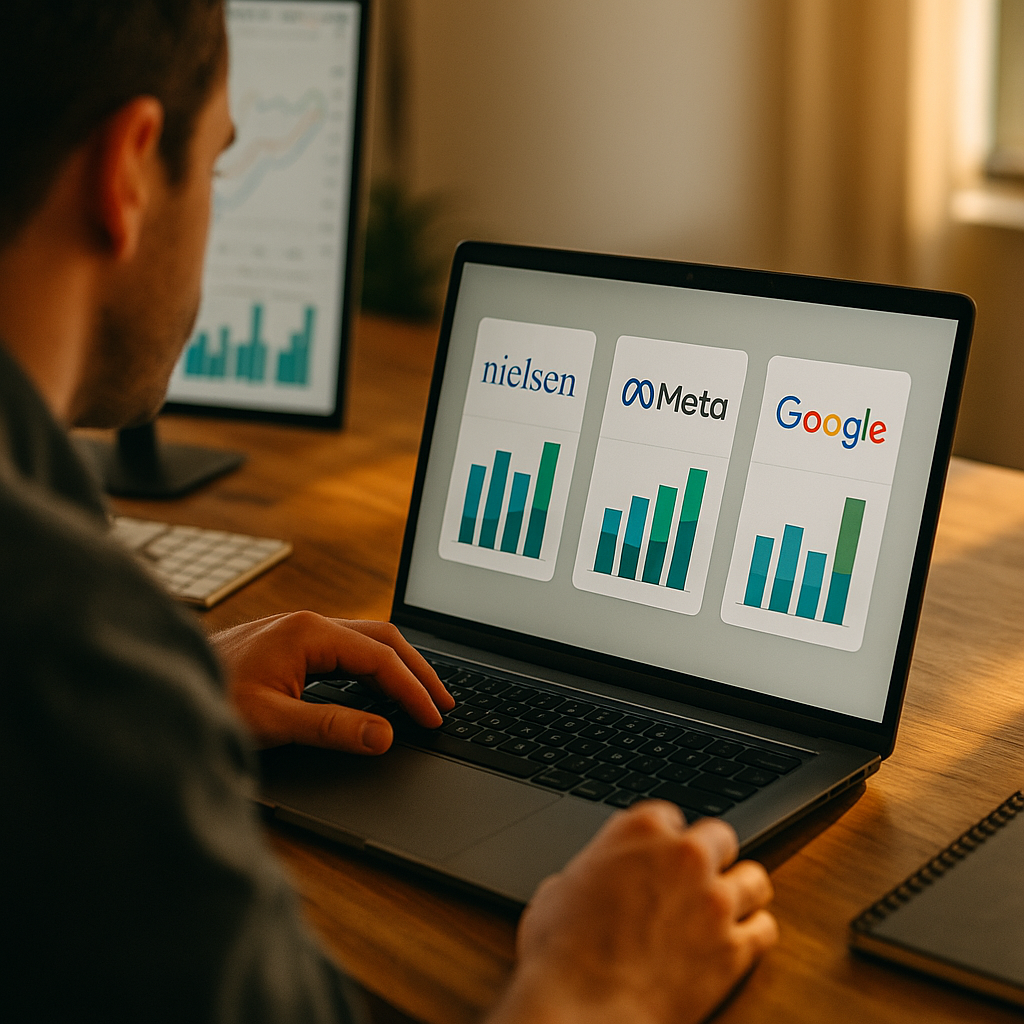
Marketing mix modeling software has quietly become the most contested category in martech. Nielsen, Meta, and Google have all shipped creator-specific attribution modules in the past eighteen months, each claiming to solve the same problem: proving that influencer spend actually moves revenue. So which one should a brand with a seven-figure creator budget actually trust? The honest answer is none of them alone, but the differences matter more than most CMOs realize.
Why Marketing Mix Modeling Is Suddenly Everyone’s Favorite Buzzword Again
MMM isn’t new. It’s been around since the packaged goods era, built on regression analysis that separates the sales impact of TV, radio, and print. What’s new is the pressure. Cookie deprecation, walled-garden data silos, and creator budgets that now rival paid social spend have forced marketers back toward statistical modeling instead of last-click attribution.
According to eMarketer, influencer marketing spend in the US crossed $10 billion in the most recent full year measured, and finance teams are asking for proof that spend correlates with incrementality, not just impressions. MMM answers that question at the channel level. The problem is that Nielsen, Meta, and Google each built their creator attribution layer to protect a different interest: Nielsen protects its measurement neutrality business, Meta protects its ad platform, and Google protects YouTube and its ad exchange.
None of the three major MMM vendors were built to give brands a neutral answer. Each model is optimized to make its own ecosystem look defensible, which is exactly why smart brands triangulate instead of picking one source of truth.
Nielsen’s Approach: Category Rigor, Slower Cycles
Nielsen’s marketing mix modeling suite is the closest thing the industry has to a neutral third party, largely because it doesn’t own the media inventory it’s measuring. Its creator attribution module pulls in social listening data, brand lift surveys, and sales lift panels to estimate the incremental contribution of influencer campaigns alongside traditional channels like TV and paid search.
The upside is credibility. Nielsen’s models are auditable and have decades of methodology behind them, which matters when your CFO wants to see the math before approving next quarter’s creator budget. The downside is speed. Nielsen’s modeling cycles typically run in monthly or quarterly batches, not real time, and that lag can be brutal for brands running always-on TikTok Shop or Reels campaigns where creative rotates weekly.
- Best for: Enterprise brands running multi-channel campaigns that need board-level, audit-ready reporting.
- Weak spot: Granularity at the individual creator level is thin. You get category and channel-level lift, not per-creator ROI.
Brands that need creator-level payout reconciliation alongside Nielsen’s channel modeling often end up bolting on a secondary layer. That’s part of why attribution platforms that reconcile creator payouts with finance have become a parallel category rather than a replacement for MMM.
Meta’s Creator Attribution Module: Convenient, But Grading Its Own Homework
Meta’s version lives inside Business Suite and Advantage+ reporting, layering conversion lift studies on top of its existing ads measurement stack. It’s fast, it’s free if you’re already spending on Meta ads, and it integrates cleanly with branded content ads and creator whitelisting.
Here’s the catch nobody at the upfront presentations mentions: Meta’s model is trained on Meta’s own conversion data. If a customer clicks a creator’s Reel, bounces to Instagram Shop, then completes purchase three days later on desktop, Meta’s attribution window captures that beautifully. But if the same customer saw the Reel, closed the app, and typed the brand name into Google two days later? That path gets undercounted or missed entirely, because Meta has no visibility into the off-platform journey.
Is that disqualifying? Not necessarily. It just means Meta’s MMM output should be treated as a directional signal for in-platform creator performance, not a definitive read on total incrementality. Brands relying heavily on whitelisting and paid amplification of creator content should pair Meta’s numbers with an independent identity layer. That’s where identity resolution contracts with match rate guarantees earn their keep: they force the vendor to prove how much of the customer journey Meta’s model is actually seeing versus guessing at.
Google’s Play: YouTube Creator Lift Meets Search Halo
Google’s creator attribution tooling, built mostly around YouTube’s Brand Lift and Search Lift studies, does something the other two can’t: it measures the search halo effect. When a creator review drives a spike in branded search queries, Google’s model can tie that lift directly to the video that triggered it, using its own search index as the connective tissue.
That’s genuinely useful for consideration-stage campaigns, product launches, and anything where the buying journey involves research before purchase. Skincare, tech, and automotive brands lean on this heavily because their customers Google things before they buy anything.
The limitation is similar to Meta’s: Google’s model is strongest where Google has visibility, meaning YouTube views, Search queries, and Google Shopping clicks. TikTok-driven conversions or purchases completed inside Amazon are effectively invisible to it unless you’re manually stitching in third-party data. According to Statista, YouTube remains one of the top platforms for product research among adults under 35, which is precisely why this halo measurement carries real weight, but it’s not the whole picture.
Putting the Three Head to Head
Strip away the marketing decks and the comparison gets simple fast.
- Nielsen: Best methodology, slowest cycle, weakest creator-level granularity.
- Meta: Fastest reporting, strongest for in-platform whitelisting and Advantage+ campaigns, blind to off-platform conversion paths.
- Google: Best at capturing research-driven halo effect, strong for consideration purchases, blind to non-Google conversion channels.
None of these are drop-in replacements for each other. A mid-market DTC brand running TikTok Shop affiliate programs probably gets more value from a dedicated TikTok Shop GMV dashboard than from any of the three MMM vendors above, since none of them model TikTok commerce natively yet. Enterprise brands with multi-platform creator programs, on the other hand, increasingly run all three in parallel and reconcile the outputs manually, which is expensive but currently unavoidable.
The Real Operational Risk: Data You Don’t Own
Here’s the part procurement teams underweight. When you run your MMM through Meta or Google’s native tooling, the underlying data stays inside their walled garden. You get the output, a lift percentage, a confidence interval, but you don’t get the raw modeling inputs to independently audit the math. Nielsen is more transparent here, but it costs more and moves slower.
This creates a real vendor lock-in risk. Switch your creator program’s ad spend away from Meta, and your historical MMM baseline partially evaporates with it, because the model was trained on Meta’s proprietary signals. Brands considering a platform pivot, say, shifting spend from Instagram to TikTok, should build in a transition period where they run parallel measurement rather than assuming last year’s Meta MMM numbers translate cleanly to a new platform mix.
If your marketing mix model can’t survive a platform migration without losing its historical baseline, you don’t have an attribution system. You have a Meta or Google dashboard wearing an attribution costume.
This is also why real-time data infrastructure matters more than most brands budget for. Reconciling three different vendor outputs on three different reporting cadences requires a pipeline that can normalize the data before it hits a BI dashboard. Teams that skip this step end up debating whose numbers are “right” in quarterly business reviews instead of making decisions. For a deeper look at what that infrastructure actually requires, see this breakdown of real time data pipeline vendors and the latency thresholds that matter for creator campaigns specifically.
So Which One Should You Actually Buy?
If you’re an enterprise brand with a CFO who wants audit-ready numbers and can tolerate a monthly reporting lag, Nielsen is still the safest bet for board-level credibility. If your creator program is heavily whitelisted and running through Meta’s ad stack anyway, its native module is nearly free and fast enough to inform weekly optimization, just don’t mistake it for a total-channel view. If your product category involves research-heavy purchase journeys, Google’s Search Lift layer captures a halo effect the other two miss entirely.
Most sophisticated teams aren’t choosing one. They’re building a stack: Nielsen or a similar neutral MMM for the boardroom story, native platform tools for weekly optimization, and an independent reconciliation layer sitting on top to catch what nobody’s model sees on its own. For teams evaluating that middle layer, tools built for creator audience sync and activation are increasingly filling the gap between raw MMM output and usable, channel-specific decisions.
One more thing worth flagging: HubSpot’s and other CRM vendors’ growing MMM integrations suggest this category is about to get more crowded, not less. Expect Salesforce and Adobe to push harder into creator-specific attribution within the next product cycle, which means today’s comparison won’t hold static for long.
FAQs
Frequently asked questions about marketing mix modeling for creator and influencer campaigns.
Frequently Asked Questions
What is marketing mix modeling software used for in influencer marketing?
Marketing mix modeling software estimates how much of a brand’s revenue lift can be attributed to specific channels, including creator and influencer spend, using statistical regression rather than click-based tracking. It’s the primary tool brands use to justify creator budgets to finance teams without relying on last-click attribution, which underperforms in a cookieless, multi-platform environment.
Is Nielsen’s MMM better than Meta’s or Google’s creator attribution tools?
Nielsen is generally considered more methodologically neutral because it doesn’t own the media inventory it measures, but it moves slower and offers less creator-level granularity. Meta and Google’s native tools are faster and more granular within their own platforms but blind to conversion activity happening outside their ecosystems.
Can I use more than one MMM vendor at the same time?
Yes, and most enterprise brands do. Running Nielsen alongside native Meta or Google modules is common practice, using Nielsen for board-level channel reporting and the platform-native tools for weekly, in-platform optimization decisions.
Does marketing mix modeling replace multi-touch attribution?
Not entirely. MMM is better suited for measuring incrementality and channel-level contribution over time, while multi-touch attribution is more useful for optimizing individual campaign tactics in near real time. Most mature measurement stacks use both together rather than choosing one exclusively.
What happens to my MMM data if I switch platforms, like moving spend from Meta to TikTok?
If your model was trained primarily on one platform’s proprietary conversion data, switching platforms can partially invalidate your historical baseline. Brands planning a significant platform shift should run parallel measurement for a transition period rather than assuming prior MMM outputs will translate cleanly.
How much does enterprise-grade marketing mix modeling software typically cost?
Pricing varies widely by vendor and data scope, but Nielsen’s enterprise MMM contracts typically run into six figures annually for large advertisers, while Meta and Google’s native creator attribution modules are bundled into existing ad spend at no additional licensing cost, though they offer narrower visibility in exchange.
Next step: Before renewing any MMM contract, ask the vendor to show you exactly which conversion paths their model can’t see, then budget for a reconciliation layer to cover that blind spot rather than assuming the number on the dashboard is the whole story.
Top Influencer Marketing Agencies
The leading agencies shaping influencer marketing in 2026
Agencies ranked by campaign performance, client diversity, platform expertise, proven ROI, industry recognition, and client satisfaction. Assessed through verified case studies, reviews, and industry consultations.
Moburst

-
2

The Shelf
Boutique Beauty & Lifestyle Influencer AgencyA data-driven boutique agency specializing exclusively in beauty, wellness, and lifestyle influencer campaigns on Instagram and TikTok. Best for brands already focused on the beauty/personal care space that need curated, aesthetic-driven content.Clients: Pepsi, The Honest Company, Hims, Elf Cosmetics, Pure LeafVisit The Shelf → -
3

Audiencly
Niche Gaming & Esports Influencer AgencyA specialized agency focused exclusively on gaming and esports creators on YouTube, Twitch, and TikTok. Ideal if your campaign is 100% gaming-focused — from game launches to hardware and esports events.Clients: Epic Games, NordVPN, Ubisoft, Wargaming, Tencent GamesVisit Audiencly → -
4

Viral Nation
Global Influencer Marketing & Talent AgencyA dual talent management and marketing agency with proprietary brand safety tools and a global creator network spanning nano-influencers to celebrities across all major platforms.Clients: Meta, Activision Blizzard, Energizer, Aston Martin, WalmartVisit Viral Nation → -
5

The Influencer Marketing Factory
TikTok, Instagram & YouTube CampaignsA full-service agency with strong TikTok expertise, offering end-to-end campaign management from influencer discovery through performance reporting with a focus on platform-native content.Clients: Google, Snapchat, Universal Music, Bumble, YelpVisit TIMF → -
6

NeoReach
Enterprise Analytics & Influencer CampaignsAn enterprise-focused agency combining managed campaigns with a powerful self-service data platform for influencer search, audience analytics, and attribution modeling.Clients: Amazon, Airbnb, Netflix, Honda, The New York TimesVisit NeoReach → -
7

Ubiquitous
Creator-First Marketing PlatformA tech-driven platform combining self-service tools with managed campaign options, emphasizing speed and scalability for brands managing multiple influencer relationships.Clients: Lyft, Disney, Target, American Eagle, NetflixVisit Ubiquitous → -
8

Obviously
Scalable Enterprise Influencer CampaignsA tech-enabled agency built for high-volume campaigns, coordinating hundreds of creators simultaneously with end-to-end logistics, content rights management, and product seeding.Clients: Google, Ulta Beauty, Converse, AmazonVisit Obviously →