


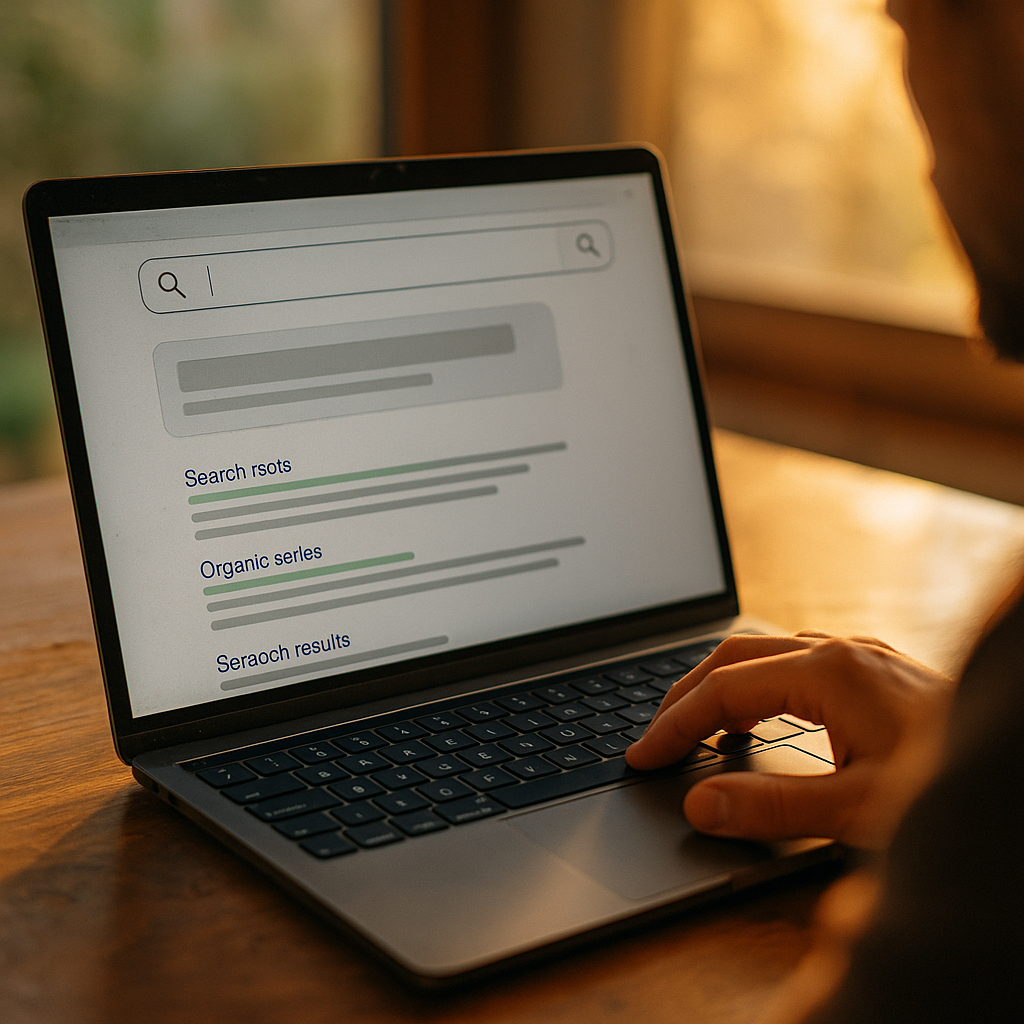
Sixty-eight percent. That’s the share of Google searches now ending without a single click, according to recent Sprout Social and industry search behavior data. No website visit. No landing page. No conversion pixel firing. If your acquisition strategy still hinges on someone clicking through to your site, you’re optimizing for a shrinking minority of searchers. Zero-click search isn’t a fringe trend anymore, it’s the default behavior, and AI answer visibility is quietly becoming the acquisition channel that matters most.
The Funnel Broke and Nobody Sent a Memo
For two decades, the marketing funnel assumed a click somewhere in the middle. Someone searches, sees a list of blue links, clicks one, lands on a page, converts. That model is dying in real time. Google’s AI Overviews, ChatGPT’s browsing mode, Perplexity, and Microsoft Copilot now synthesize answers directly in the results interface. The user gets what they wanted without ever leaving the search environment.
This isn’t just a Google problem. It’s a discovery problem. When eMarketer tracks time spent on AI chat interfaces, the growth curve looks nothing like traditional search’s plateau. People are asking AI assistants for product recommendations, brand comparisons, and “best of” lists the same way they used to type queries into a search bar. The difference is that AI tools answer inline, citing sources without necessarily sending traffic to them.
If 68% of searches end without a click, then ranking on page one no longer guarantees a single visitor, let alone a customer.
Why This Hits Influencer and Brand Marketing Harder Than It Looks
Influencer marketing has always leaned on a simple logic: get a trusted creator to mention your product, drive an audience toward a purchase decision. That logic still works on social platforms. But increasingly, purchase decisions start with a question typed into an AI assistant, not a scroll through Instagram or TikTok. “What’s the best sunscreen for oily skin” or “which project management tool works for small agencies” are queries AI answer engines now handle directly, often citing creator content, review sites, or Reddit threads as source material without ever routing a user to the original creator’s channel.
That means the influencer content itself can be doing acquisition work even when nobody visits the creator’s profile. It also means brands lose visibility into which content is actually driving decisions. We covered this shift in depth in how zero-click search forces brands to redefine influencer ROI, and the core tension hasn’t resolved: attribution models built for clicks simply don’t capture influence that happens inside an AI-generated answer box.
What “AI Answer Visibility” Actually Means for Brands
AI answer visibility is the measure of whether your brand, product, or content gets surfaced (and how favorably) when someone asks an AI system a relevant question. It’s not the same as SEO ranking, though the two are related. A page can rank #1 on Google and still get ignored by an AI Overview that pulls its synthesis from a Reddit thread or a competitor’s comparison chart instead.
- Citation frequency: How often your brand or content gets referenced in AI-generated answers across ChatGPT, Perplexity, Google AI Overviews, and Copilot.
- Sentiment in citation: Whether you’re mentioned as a recommended option or as a cautionary example.
- Source diversity: Whether AI models are pulling from your owned content, third-party reviews, creator posts, or a mix.
- Position in synthesis: Being mentioned first in an AI-generated list carries more weight than being buried at position six.
This is a fundamentally different discipline than traditional SEO, and most marketing teams aren’t staffed for it. Some agencies are already treating it as a paid channel in its own right, as we explored in how AI answer engines quietly became a paid media channel. Vendors are now selling “answer engine optimization” packages the way they once sold link-building services, and early adopters are seeing measurable lift in citation share.
Where the Money Actually Goes Now
Budget reallocation is already happening, even if most CMOs haven’t formalized a line item called “AI visibility.” Marketing teams report AI-related spend now claims a meaningful chunk of overall budgets, a trend detailed in recent budget allocation data showing AI now claims 15% of marketing spend. Much of that is coming from channels that used to own the discovery layer: display, some paid search, and increasingly, generic top-of-funnel content production.
What’s replacing it? Structured, citation-worthy content built specifically to be legible to large language models. Think schema markup, clear entity definitions, FAQ formatting, and original data that AI systems can’t get anywhere else. Brands investing in proprietary research, benchmark studies, and clearly attributed expert commentary are seeing better citation rates than brands publishing generic listicles. This mirrors what happened in traditional SEO a decade ago, except the stakes are higher because there’s no click to fall back on if the citation doesn’t happen.
Compliance and Trust Signals Matter More, Not Less
Here’s a wrinkle a lot of marketers miss: AI systems are increasingly cautious about citing sources that look promotional, undisclosed, or low-trust. That raises the bar on disclosure practices and brand safety work that influencer marketers already deal with under FTC disclosure guidelines. If an AI model is scanning creator content to build an answer, sloppy disclosure or obviously paid placements may get filtered out or flagged as lower-trust sources.
Brand monitoring workloads are already climbing because of this. Marketing teams are spending significantly more time each week tracking how AI describes their brand, a burden quantified in recent research on AI brand monitoring now costing marketers 16.6 hours weekly. That’s not a small operational tax. It’s a new job function that didn’t exist three years ago, and most teams haven’t budgeted headcount for it.
AI systems reward clarity and disclosure. Content that reads as authentic and properly labeled gets cited more often than content optimized purely to game rankings.
Some vendors are moving fast to fill this gap. Real-time risk scoring tools for creator content, for instance, are starting to flag compliance issues before they become citation-blocking problems, a development covered in how AI Squared Insights brings real-time risk scoring to creators. Expect more of this tooling as brands realize compliance now directly affects discoverability, not just legal exposure.
So What Do You Actually Do Monday Morning?
Stop measuring success purely by traffic. That’s the uncomfortable but necessary first step. If two-thirds of searches don’t produce a click, then click-through rate as a north star metric is measuring an increasingly small slice of the actual customer journey. Teams are already shifting toward metrics like view-through rate to capture influence that doesn’t route through a click, a change we detailed in why view-through rate is overtaking CTR as the primary KPI.
Practically, that means:
- Audit whether your brand appears in AI Overviews and chat assistant answers for your top 20 category queries, not just your branded terms.
- Invest in structured, original content (data, benchmarks, expert quotes) that AI models can cite with confidence, rather than repurposed marketing copy.
- Tighten creator disclosure practices, since AI trust signals increasingly overlap with regulatory compliance requirements.
- Reallocate a portion of top-of-funnel budget away from pure impression buys and toward citation-worthy assets and answer engine visibility tracking.
- Build internal reporting that tracks brand mentions and sentiment inside AI answers, not just website analytics.
None of this replaces influencer marketing or paid search. It supplements them with a new layer of visibility work that operates on different rules. The brands treating this as a side project right now will be scrambling to catch up in eighteen months, the same way laggards scrambled when mobile search overtook desktop.
Frequently Asked Questions
What is zero-click search and why is it at 68%?
Zero-click search refers to search queries that get answered directly within the search results page or an AI interface, without the user clicking through to a website. The rise to 68% is driven largely by AI Overviews, featured snippets, and conversational AI assistants like ChatGPT and Perplexity synthesizing answers instead of listing links.
How is AI answer visibility different from traditional SEO?
Traditional SEO optimizes for ranking position on a search results page. AI answer visibility measures whether and how favorably your brand is cited inside AI-generated answers, which can pull from sources beyond top-ranking pages, including Reddit, forums, and creator content.
Does influencer marketing still matter if search is zero-click?
Yes, but its role is shifting. Creator content increasingly serves as source material that AI systems cite when building answers, meaning influencer content can drive brand visibility even without generating direct clicks or profile visits.
How can brands measure success in an AI answer environment?
Brands should track citation frequency, sentiment, and position across major AI platforms, alongside traditional metrics like view-through rate, rather than relying solely on click-through rate and website traffic.
What role does disclosure compliance play in AI visibility?
AI systems tend to favor content that appears authentic and properly disclosed. Poor disclosure practices can reduce trust signals, making content less likely to be cited in AI-generated answers, on top of existing regulatory risk under FTC guidelines.
Next step: Run an AI citation audit on your top 20 category queries this week, not next quarter. If your brand doesn’t show up in the answers, you’re already losing the acquisition channel that matters most.
Top Influencer Marketing Agencies
The leading agencies shaping influencer marketing in 2026
Agencies ranked by campaign performance, client diversity, platform expertise, proven ROI, industry recognition, and client satisfaction. Assessed through verified case studies, reviews, and industry consultations.
Moburst

-
2

The Shelf
Boutique Beauty & Lifestyle Influencer AgencyA data-driven boutique agency specializing exclusively in beauty, wellness, and lifestyle influencer campaigns on Instagram and TikTok. Best for brands already focused on the beauty/personal care space that need curated, aesthetic-driven content.Clients: Pepsi, The Honest Company, Hims, Elf Cosmetics, Pure LeafVisit The Shelf → -
3

Audiencly
Niche Gaming & Esports Influencer AgencyA specialized agency focused exclusively on gaming and esports creators on YouTube, Twitch, and TikTok. Ideal if your campaign is 100% gaming-focused — from game launches to hardware and esports events.Clients: Epic Games, NordVPN, Ubisoft, Wargaming, Tencent GamesVisit Audiencly → -
4

Viral Nation
Global Influencer Marketing & Talent AgencyA dual talent management and marketing agency with proprietary brand safety tools and a global creator network spanning nano-influencers to celebrities across all major platforms.Clients: Meta, Activision Blizzard, Energizer, Aston Martin, WalmartVisit Viral Nation → -
5

The Influencer Marketing Factory
TikTok, Instagram & YouTube CampaignsA full-service agency with strong TikTok expertise, offering end-to-end campaign management from influencer discovery through performance reporting with a focus on platform-native content.Clients: Google, Snapchat, Universal Music, Bumble, YelpVisit TIMF → -
6

NeoReach
Enterprise Analytics & Influencer CampaignsAn enterprise-focused agency combining managed campaigns with a powerful self-service data platform for influencer search, audience analytics, and attribution modeling.Clients: Amazon, Airbnb, Netflix, Honda, The New York TimesVisit NeoReach → -
7

Ubiquitous
Creator-First Marketing PlatformA tech-driven platform combining self-service tools with managed campaign options, emphasizing speed and scalability for brands managing multiple influencer relationships.Clients: Lyft, Disney, Target, American Eagle, NetflixVisit Ubiquitous → -
8

Obviously
Scalable Enterprise Influencer CampaignsA tech-enabled agency built for high-volume campaigns, coordinating hundreds of creators simultaneously with end-to-end logistics, content rights management, and product seeding.Clients: Google, Ulta Beauty, Converse, AmazonVisit Obviously →