


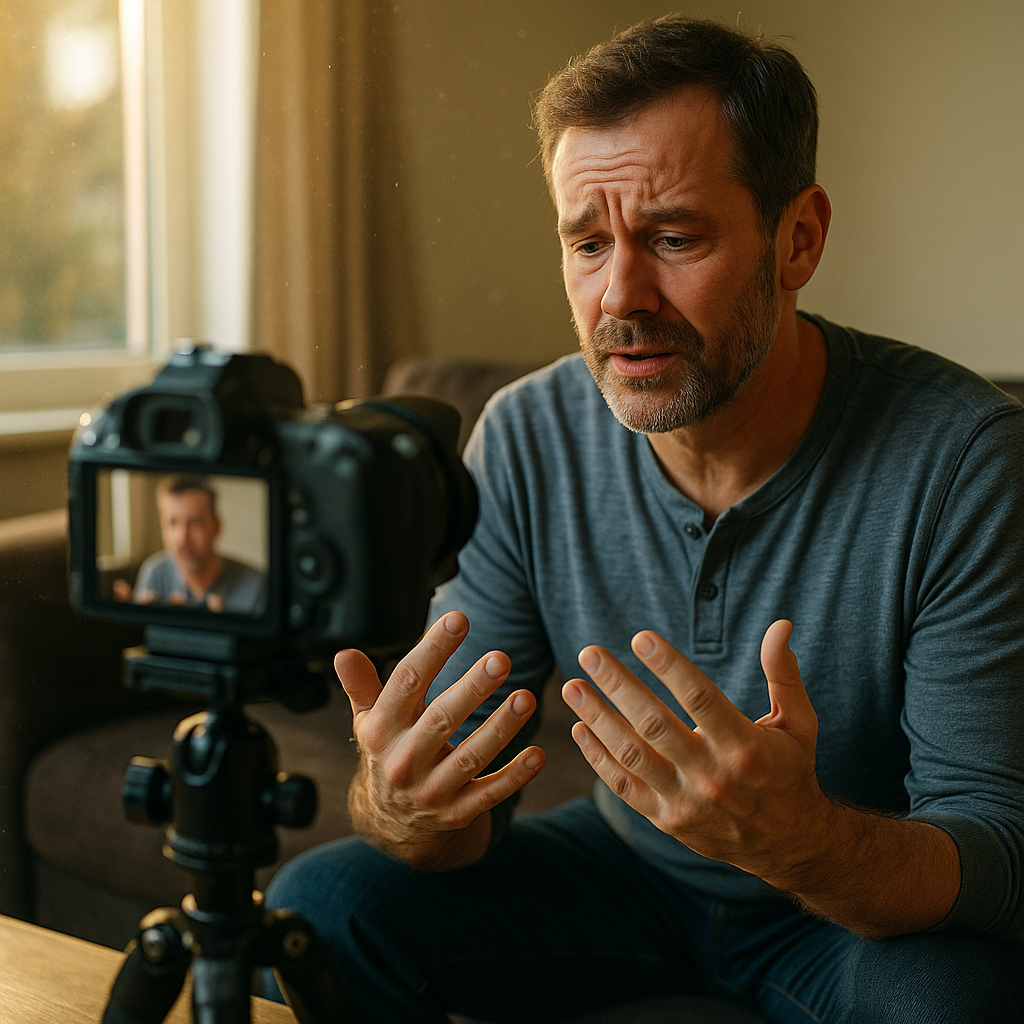
Only 32% of consumers trust brands, according to Edelman’s latest trust research, yet a founder crying about a shipping delay on TikTok can rack up seven figures in views and a measurable sales bump. Founder confessional videos, the raw, unscripted admissions of what went wrong and what the team is doing about it, have become one of the highest-converting trust formats in DTC marketing. This is not a polish problem. It is a permission problem, and founders who confess correctly are solving it.
Why Vulnerability Outperforms the Polished Ad
Consumers have spent a decade getting better at spotting an ad. Skippable pre-rolls, sponsored disclosures, obviously scripted testimonials: the pattern recognition is automatic now. A founder confessional video breaks that pattern because it looks like something a brand’s legal team would never approve. That is precisely the appeal.
When a founder says “we messed up the inventory forecast and 4,000 orders are delayed,” the audience isn’t watching a pitch. They’re watching accountability in real time. That distinction matters because trust is built less by what a brand claims and more by what it admits. Sprout Social’s consumer research consistently shows that transparency after a mistake drives more loyalty than a flawless track record, mostly because flawless is no longer believable.
A founder who admits fault on camera within 48 hours of a problem often generates more goodwill than a brand that stays silent for a week and issues a polished statement.
It’s Not Confession, It’s Positioning
Let’s be honest about the mechanics here. A well-produced confessional video is still a marketing asset. It just uses candor as the creative device instead of a hook or a jump cut. The best DTC founders treat these videos the way a PR team treats a crisis statement: fast, specific, and owned by a real person rather than a brand account. This is the same principle behind founder style talking head videos, where the person, not the production value, carries the message.
What Actually Makes a Confessional Video Work
Not every “sorry, guys” video performs. The ones that convert share a specific structure, even when they look improvised.
- A concrete, named problem. “Some of you had issues” is vague and forgettable. “Our third-party warehouse shipped the wrong size to 1,200 customers” is specific and credible.
- A visible cost to the founder. Audiences trust confessions more when there’s a real stake, refunds issued, a supplier fired, a personal apology rather than a support ticket macro.
- A next step, not just an apology. “Here’s what we’re doing by Friday” turns sympathy into retained customers.
- Minimal editing. Jump cuts and lower thirds signal “marketing department.” A single continuous take signals “this person actually cares.”
That last point trips up a lot of brand teams. The instinct is to make the video look “on brand.” Resist it. The rawness is the brand signal here, in the same way silence works as a creative choice in silent vlogs: the absence of typical production polish is doing the persuasive work.
The Trust Math: What the Data Actually Shows
DTC teams love a format until someone asks for the ROI attribution. Here’s the honest picture. Confessional videos rarely spike immediate conversion the way a discount code does. What they move is retention and repeat purchase rate, the metrics that determine whether a DTC brand survives past its second acquisition-cost crunch.
HubSpot’s ongoing trust research has found that transparency-driven content correlates with longer customer lifetime value, largely because it reduces the perceived risk of a repeat purchase. eMarketer’s creator economy coverage has flagged founder-led video as one of the fastest-growing content categories precisely because algorithms reward watch time on content that feels unscripted, and confessional formats hold attention longer than product demos.
The ROI of a founder confessional video shows up in refund requests that turn into repeat orders, not in the first 48 hours of views.
If your team is only measuring view count and engagement rate on these videos, you’re measuring the wrong thing. Track post-video refund conversion, support ticket sentiment, and 90-day repeat purchase rate among viewers who saw the video before ordering.
Where the Format Breaks: The Overproduced Confession
The fastest way to kill a confessional video is to send it through three rounds of legal review and a brand style guide. Once a founder is reading from a teleprompter, the format collapses. Audiences can tell the difference between someone speaking and someone reciting, and the moment they notice the script, the trust transaction reverses. Now it looks like damage control theater, which is worse than saying nothing.
The second failure mode is timing. A confessional posted three weeks after the problem reads as reactive PR, not proactive accountability. Speed matters more than polish. This is the same lesson brands learned the hard way with product fail content: waiting for the “right” moment usually means missing the trust window entirely.
The third failure mode is overuse. If every product launch comes with a “guys, I need to be honest with you” video, the format stops signaling vulnerability and starts signaling manipulation. Save it for real problems.
Building the Brief: A Practical Framework for Marketing Teams
Founder confessional videos are one of the rare formats where a tight, prescriptive brief actually hurts performance. But that doesn’t mean marketing teams should have no process. Here’s a framework that keeps the format authentic while giving legal and comms enough guardrails to sleep at night.
- Pre-approve the topic categories, not the script. Agree in advance on what kinds of issues warrant a founder video: shipping failures, quality defects, pricing errors, data incidents. Don’t write the words in advance.
- Set a response-time SLA. Ideally under 48 hours from when the problem becomes visible to customers. Speed is the credibility signal.
- Require one take, minimal cuts. If the founder needs six takes to say it comfortably, they need more coaching on the facts, not more editing.
- Loop in legal for facts, not tone. Legal should verify the claims are accurate. They should not be rewriting the emotional register.
- Pair the video with an operational fix customers can see. A confession without a visible remedy just reads as venting.
This same discipline, structure without over-scripting, shows up in micro-documentary formats that trade production value for proof. The brief protects the brand without sanding down the thing that makes the format work.
Disclosure and Compliance: Don’t Skip This Part
Founder confessional videos sit in an interesting legal gray zone. Because the founder is a company officer speaking on behalf of the brand, most disclosure requirements that apply to paid influencer content don’t technically apply here. But that doesn’t mean compliance is irrelevant.
If the video makes specific claims about refunds, timelines, or compensation, those claims need to be accurate and followed through on. The Federal Trade Commission has been increasingly active on deceptive recovery promises, and a founder video that overpromises a fix the company can’t deliver creates real legal exposure, not just a PR headache. If the brand operates in the UK or EU, the same logic applies under guidance from the Information Commissioner’s Office, particularly where the confession touches on data handling or a breach.
Keep a compliance-side checklist that mirrors the brief: verify every number stated on camera, confirm the remedy timeline is realistic, and archive the video alongside the internal incident report. If a regulator or a customer ever disputes what was promised, you want the paper trail to match the video exactly.
How This Fits Into a Broader Creator Content Strategy
Founder confessional videos work best as one tool in a trust-building toolkit, not a standalone tactic. Brands that pair the format with ongoing transparency content, myth-busting explainers that preempt objections, or myth busting carousels that address common skepticism, tend to see the confessional video land better because the audience already has a baseline of trust to draw on. It’s much harder to pull off a convincing confession if the brand has no prior track record of honesty to reference.
Longer-form founder content also gives audiences context for the confession when it happens. Channels that already run vertical mini documentaries about the business, supply chain, or product development have an audience that recognizes the founder’s voice and demeanor, which makes a sudden confessional video feel consistent rather than opportunistic. Consistency, more than any single video, is what actually earns the deeper trust dividend DTC brands are chasing. For teams benchmarking video performance broadly, Statista’s consumer trust data is a useful reference point for tracking how these formats move sentiment over time.
Frequently Asked Questions
FAQs
What is a founder confessional video?
A founder confessional video is an unscripted, on-camera admission from a company’s founder or CEO addressing a mistake, delay, or problem, paired with a specific plan to fix it. The format prioritizes authenticity and speed over production polish.
Do founder confessional videos require FTC disclosure?
Generally no, because the founder is speaking as a company officer rather than a paid endorser. However, any claims made about refunds, timelines, or remedies must be accurate, since deceptive promises can still trigger regulatory scrutiny.
How quickly should a brand post a confessional video after a problem occurs?
Within 48 hours is the general benchmark. Waiting longer makes the video look like reactive PR rather than genuine accountability, which weakens the trust benefit significantly.
How do you measure ROI on this format?
Track post-video refund-to-repeat-purchase conversion, customer support sentiment, and 90-day repeat purchase rate among viewers, rather than relying solely on view count or engagement rate.
Can this format be overused?
Yes. If a brand releases confessional-style videos for minor or manufactured issues, audiences recognize the pattern and the format loses its credibility. Reserve it for genuine, material problems.
Should legal review the script before filming?
Legal should verify factual accuracy and any commitments made, but should avoid rewriting tone or dialogue. Over-scripted confessions read as inauthentic and tend to underperform.
Next step: Before your next product or fulfillment issue lands, draft the response-time SLA and topic-approval list now, so your founder can film the confession within 48 hours instead of scrambling through legal review while customer trust erodes.
FAQs
What is a founder confessional video?
A founder confessional video is an unscripted, on-camera admission from a company’s founder or CEO addressing a mistake, delay, or problem, paired with a specific plan to fix it. The format prioritizes authenticity and speed over production polish.
Do founder confessional videos require FTC disclosure?
Generally no, because the founder is speaking as a company officer rather than a paid endorser. However, any claims made about refunds, timelines, or remedies must be accurate, since deceptive promises can still trigger regulatory scrutiny.
How quickly should a brand post a confessional video after a problem occurs?
Within 48 hours is the general benchmark. Waiting longer makes the video look like reactive PR rather than genuine accountability, which weakens the trust benefit significantly.
How do you measure ROI on this format?
Track post-video refund-to-repeat-purchase conversion, customer support sentiment, and 90-day repeat purchase rate among viewers, rather than relying solely on view count or engagement rate.
Can this format be overused?
Yes. If a brand releases confessional-style videos for minor or manufactured issues, audiences recognize the pattern and the format loses its credibility. Reserve it for genuine, material problems.
Should legal review the script before filming?
Legal should verify factual accuracy and any commitments made, but should avoid rewriting tone or dialogue. Over-scripted confessions read as inauthentic and tend to underperform.
Top Influencer Marketing Agencies
The leading agencies shaping influencer marketing in 2026
Agencies ranked by campaign performance, client diversity, platform expertise, proven ROI, industry recognition, and client satisfaction. Assessed through verified case studies, reviews, and industry consultations.
Moburst

-
2

The Shelf
Boutique Beauty & Lifestyle Influencer AgencyA data-driven boutique agency specializing exclusively in beauty, wellness, and lifestyle influencer campaigns on Instagram and TikTok. Best for brands already focused on the beauty/personal care space that need curated, aesthetic-driven content.Clients: Pepsi, The Honest Company, Hims, Elf Cosmetics, Pure LeafVisit The Shelf → -
3

Audiencly
Niche Gaming & Esports Influencer AgencyA specialized agency focused exclusively on gaming and esports creators on YouTube, Twitch, and TikTok. Ideal if your campaign is 100% gaming-focused — from game launches to hardware and esports events.Clients: Epic Games, NordVPN, Ubisoft, Wargaming, Tencent GamesVisit Audiencly → -
4

Viral Nation
Global Influencer Marketing & Talent AgencyA dual talent management and marketing agency with proprietary brand safety tools and a global creator network spanning nano-influencers to celebrities across all major platforms.Clients: Meta, Activision Blizzard, Energizer, Aston Martin, WalmartVisit Viral Nation → -
5

The Influencer Marketing Factory
TikTok, Instagram & YouTube CampaignsA full-service agency with strong TikTok expertise, offering end-to-end campaign management from influencer discovery through performance reporting with a focus on platform-native content.Clients: Google, Snapchat, Universal Music, Bumble, YelpVisit TIMF → -
6

NeoReach
Enterprise Analytics & Influencer CampaignsAn enterprise-focused agency combining managed campaigns with a powerful self-service data platform for influencer search, audience analytics, and attribution modeling.Clients: Amazon, Airbnb, Netflix, Honda, The New York TimesVisit NeoReach → -
7

Ubiquitous
Creator-First Marketing PlatformA tech-driven platform combining self-service tools with managed campaign options, emphasizing speed and scalability for brands managing multiple influencer relationships.Clients: Lyft, Disney, Target, American Eagle, NetflixVisit Ubiquitous → -
8

Obviously
Scalable Enterprise Influencer CampaignsA tech-enabled agency built for high-volume campaigns, coordinating hundreds of creators simultaneously with end-to-end logistics, content rights management, and product seeding.Clients: Google, Ulta Beauty, Converse, AmazonVisit Obviously →