


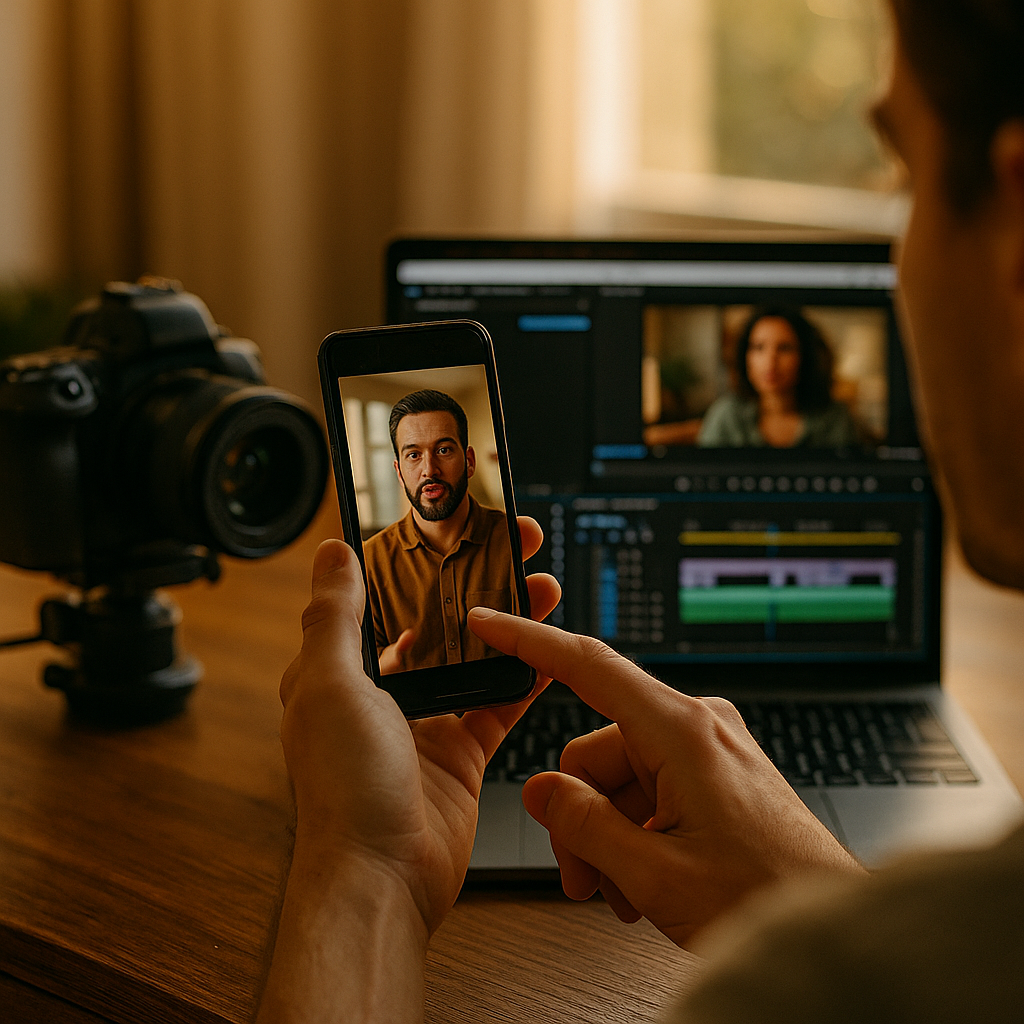
A three minute vertical documentary about a coffee roaster’s supply chain outperformed a brand’s entire quarter of 15 second product drops. Not by a little. By nearly 4x on watch completion and 2.6x on saves, according to internal data the brand shared at a recent creator economy panel. If that sounds backwards, it’s because the industry spent years telling itself that attention spans only shrink. The rise of the vertical mini documentary says otherwise: audiences will sit through longer creator narratives when the payoff is real.
The Short Form Ceiling Nobody Wants to Admit
Fifteen second drops built the influencer economy. Fast to produce, cheap to test, easy to slot into a media plan. But brands are hitting a ceiling. Feeds are saturated with lookalike hooks, jump cuts, and the same three trending sounds. Viewers have developed pattern recognition for ad-shaped content, and they skip it in under two seconds.
Sprout Social’s own research on social media consumer behavior has repeatedly shown that trust, not novelty, drives purchase decisions. A 15 second clip can spark curiosity. It rarely builds trust. That takes context, and context takes time.
Short form got you the scroll stop. It was never built to get you the sale.
Why Longer Creator Narratives Are Winning Watch Time
Vertical mini docs run anywhere from ninety seconds to eight minutes, shot in the same portrait orientation as native short form but structured like a real story: setup, conflict, resolution. Think a founder walking through a factory recall, or a dermatologist explaining why a viral skincare ingredient actually irritates skin. These aren’t polished brand films. They’re raw, creator-led, and stitched together with the pacing tricks of short form (fast cuts, text overlays, cold opens) applied to a longer runway.
The format borrows heavily from what worked in the earlier wave of micro-documentary series content, but pushes further into serialized, multi-part storytelling built specifically for vertical feeds rather than adapted from YouTube.
- Higher average watch time per session, often 3 to 5 minutes versus 8 to 12 seconds for standard drops
- Stronger save and share rates because viewers treat them as reference material, not disposable content
- Lower perceived “ad” signal, which reduces skip rate and improves algorithmic distribution
- Better performance in retargeting, since longer watch segments create richer custom audiences
TikTok and Instagram have both quietly extended native video length limits and rewarded longer watch sessions in their ranking signals. TikTok’s advertising resources now explicitly encourage narrative arcs over pure hook-and-drop structures for certain campaign objectives, a shift that would have been unthinkable three years ago.
What Actually Makes These Docs Work
Not every long video is a mini documentary. Slapping a voiceover over five minutes of B-roll doesn’t count. The format works because it follows a few non-negotiable structural rules.
There’s a real stake. Someone risks something: a reputation, a business decision, a health outcome. Without stakes, length just feels like padding.
The creator is the narrator, not the actor. Audiences trust a creator walking them through a process far more than they trust a scripted testimonial. This is the same trust mechanic behind myth busting carousels, just stretched across a longer runway with motion and voice.
Pacing still matters. A mini doc that opens slowly loses viewers before it earns their patience. The best ones borrow short form’s cold-open instinct: start mid-conflict, then rewind to explain.
For brands rebuilding creative briefs around this format, the operational playbook from vertical documentary shorts briefing is a useful starting point for structuring shot lists, release windows, and creator direction without losing the raw feel that makes the format credible.
The ROI Case Brands Actually Care About
Marketing leads don’t greenlight formats because they’re interesting. They greenlight formats that move a number. So where’s the ROI in vertical mini docs?
First, production efficiency per minute of usable asset. A single eight minute documentary shoot can be cut into six to ten shorter clips for retargeting, testimonial ads, and organic posts. That’s a much better cost-per-asset ratio than commissioning eight separate 15 second drops, each requiring its own briefing, approval, and creator negotiation cycle.
Second, funnel efficiency. Longer narratives tend to pre-qualify viewers. Someone who watches four minutes of a founder explaining manufacturing defects and recall processes is a warmer lead than someone who watched two seconds of a product spin. eMarketer’s research on video advertising engagement has consistently found that completed views correlate more strongly with conversion intent than impressions or reach.
One long, honest video that gets fully watched is worth more to your pipeline than ten short ones that get half a glance.
Third, compliance and disclosure clarity. Longer format gives creators room to properly disclose partnerships, cite sources, and explain claims, which matters more than ever under current FTC endorsement guidance. A rushed 15 second disclosure often reads as an afterthought. A documentary format can build disclosure into the narrative itself.
Where 15 Second Drops Still Win
None of this means short form is dead. It isn’t, and treating vertical mini docs as a full replacement is a mistake. Fifteen second drops still dominate for top-of-funnel awareness, trend participation, and rapid A/B testing of hooks and messaging. If you’re testing which value proposition resonates before investing in a longer asset, the fast iteration cycle documented in structuring short creator drops for retention is still the right tool.
The smartest brands aren’t choosing between formats. They’re sequencing them. Short drops to earn the scroll stop and test hooks. Mini docs to convert curiosity into trust. Retargeting clips cut from the doc to close the loop. It’s a funnel, not a format war.
Building the Production Model Without Blowing the Budget
The objection every brand lead raises first: doesn’t longer content cost more? Not necessarily, if you restructure the brief. A well-scoped mini doc shoot with a single creator, shot on a gimbal-stabilized phone rig with a lav mic, can come in under the cost of a multi-creator 15 second campaign once you account for repurposing.
Practical steps for a first mini doc campaign:
- Pick a story with a genuine tension point (a product failure, a supply chain surprise, a customer objection) rather than a generic “day in the life”
- Brief the creator on narrative beats, not a rigid script, preserving the authenticity that makes the format credible
- Plan the edit for modularity from day one, tagging segments that can stand alone as short clips
- Build disclosure and compliance language into the story rather than bolting it on as a caption
- Track watch-through rate and save rate as primary KPIs, not just view count
Brands already experimenting with format diversification in adjacent categories, like returns content built on failure narratives, will recognize the underlying logic. Imperfection and honesty are the currency now. Polish reads as suspicious.
Frequently Asked Questions
FAQs
What is a vertical mini documentary in creator marketing?
It’s a narrative-driven, portrait-orientation video, typically ninety seconds to eight minutes long, that follows a creator through a real story with stakes and resolution, rather than a scripted product pitch.
Are vertical mini docs replacing 15 second creator drops?
No. They serve different funnel stages. Short drops drive awareness and hook testing, while mini docs build trust and drive conversion. Most effective programs use both in sequence.
How much does a vertical mini documentary cost compared to short form content?
Per-shoot costs can be similar to or lower than commissioning multiple short drops, since a single mini doc shoot typically yields several repurposed short clips, improving the overall cost-per-asset.
What metrics should brands track for mini documentary performance?
Watch-through rate, save rate, and share rate matter more than raw view count. These signals correlate more closely with trust and purchase intent than impressions alone.
Which platforms support longer vertical creator content best?
TikTok and Instagram have both expanded native video length limits and adjusted ranking signals to reward longer watch sessions, making both viable homes for the format alongside YouTube Shorts.
Next step: Pick one existing customer story with real tension, brief a single creator to narrate it honestly, and cut the raw footage into both a full mini doc and three short retargeting clips before you spend another dollar on a standalone 15 second drop.
Top Influencer Marketing Agencies
The leading agencies shaping influencer marketing in 2026
Agencies ranked by campaign performance, client diversity, platform expertise, proven ROI, industry recognition, and client satisfaction. Assessed through verified case studies, reviews, and industry consultations.
Moburst

-
2

The Shelf
Boutique Beauty & Lifestyle Influencer AgencyA data-driven boutique agency specializing exclusively in beauty, wellness, and lifestyle influencer campaigns on Instagram and TikTok. Best for brands already focused on the beauty/personal care space that need curated, aesthetic-driven content.Clients: Pepsi, The Honest Company, Hims, Elf Cosmetics, Pure LeafVisit The Shelf → -
3

Audiencly
Niche Gaming & Esports Influencer AgencyA specialized agency focused exclusively on gaming and esports creators on YouTube, Twitch, and TikTok. Ideal if your campaign is 100% gaming-focused — from game launches to hardware and esports events.Clients: Epic Games, NordVPN, Ubisoft, Wargaming, Tencent GamesVisit Audiencly → -
4

Viral Nation
Global Influencer Marketing & Talent AgencyA dual talent management and marketing agency with proprietary brand safety tools and a global creator network spanning nano-influencers to celebrities across all major platforms.Clients: Meta, Activision Blizzard, Energizer, Aston Martin, WalmartVisit Viral Nation → -
5

The Influencer Marketing Factory
TikTok, Instagram & YouTube CampaignsA full-service agency with strong TikTok expertise, offering end-to-end campaign management from influencer discovery through performance reporting with a focus on platform-native content.Clients: Google, Snapchat, Universal Music, Bumble, YelpVisit TIMF → -
6

NeoReach
Enterprise Analytics & Influencer CampaignsAn enterprise-focused agency combining managed campaigns with a powerful self-service data platform for influencer search, audience analytics, and attribution modeling.Clients: Amazon, Airbnb, Netflix, Honda, The New York TimesVisit NeoReach → -
7

Ubiquitous
Creator-First Marketing PlatformA tech-driven platform combining self-service tools with managed campaign options, emphasizing speed and scalability for brands managing multiple influencer relationships.Clients: Lyft, Disney, Target, American Eagle, NetflixVisit Ubiquitous → -
8

Obviously
Scalable Enterprise Influencer CampaignsA tech-enabled agency built for high-volume campaigns, coordinating hundreds of creators simultaneously with end-to-end logistics, content rights management, and product seeding.Clients: Google, Ulta Beauty, Converse, AmazonVisit Obviously →