


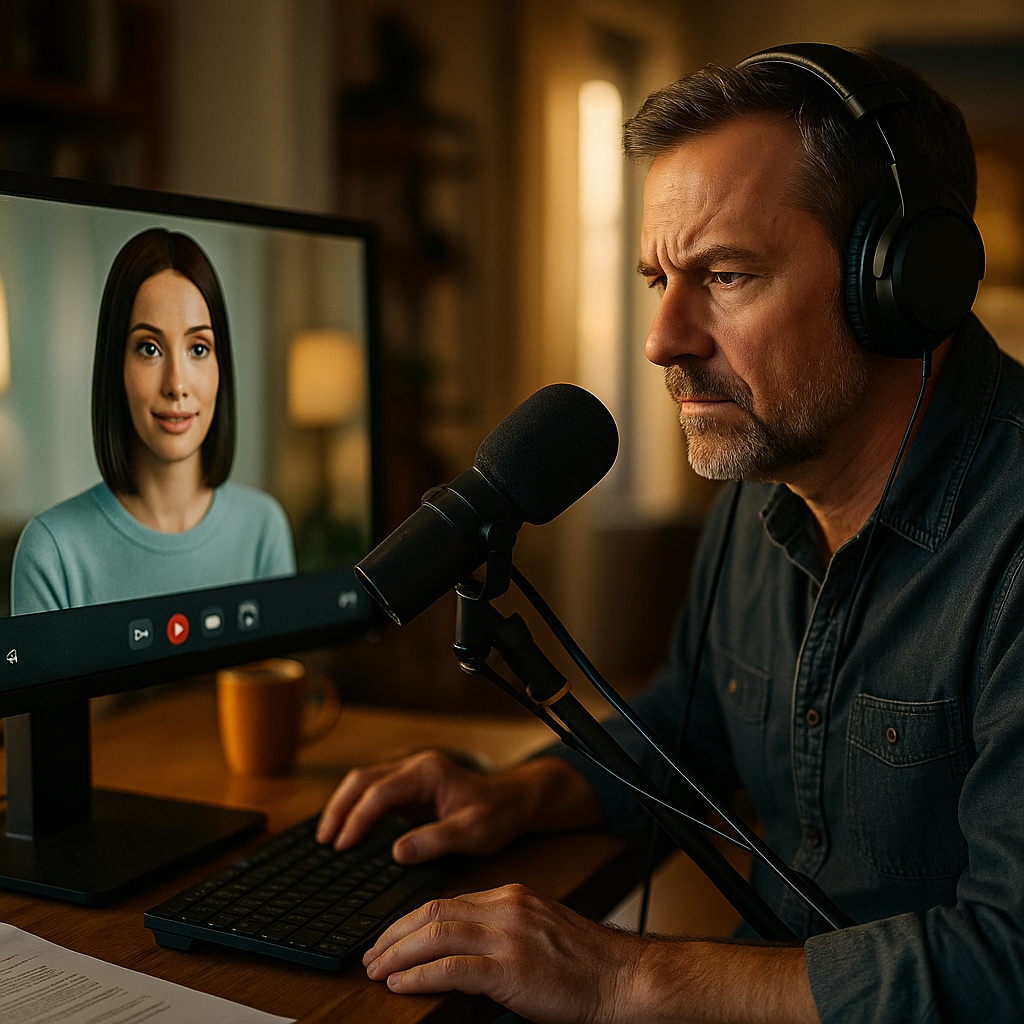
Seventy two percent of Gen Z shoppers have watched a livestream shopping event, yet most brands still can’t staff one past 9 p.m. That gap is exactly what AI livestream co-hosts are built to fill: virtual presenters that never lose their voice, never go off script in ways legal didn’t approve, and never ask for overtime. The pitch sounds irresistible. The reality, once you dig into latency, compliance, and viewer trust, is messier.
What Is an AI Livestream Co-Host, Really?
Strip away the marketing language and an AI livestream co-host is a generative avatar, usually powered by a large language model paired with text-to-speech and a rendered face, that can host or co-host a live shopping stream, product demo, or brand event in real time. Vendors like HeyGen, Synthesia’s live tools, and a growing wave of TikTok Shop-adjacent startups are pitching these as always-on presenters that can answer viewer questions, cross-sell products, and hold a stream open for hours without a human anchor burning out.
Some tools run fully autonomous, responding to live chat with generated speech in near real time. Others are hybrid: a human host feeds the avatar scripted talking points while an AI layer handles overflow questions or translates the stream into other languages on the fly. The distinction matters enormously for risk management, and we’ll get to why.
The ROI Case Brands Are Making
The economics are genuinely compelling on paper. A single human livestream host in a competitive market commands anywhere from $150 to $500+ an hour, plus production costs. An AI co-host, once set up, can run streams around the clock at a fraction of the marginal cost. For brands chasing the livestream commerce boom, particularly in categories like beauty, apparel, and consumer electronics, that math is hard to ignore.
- Extended stream hours: covering overnight or international time zones without hiring a second shift.
- Multilingual reach: some platforms generate near-instant dubbing or lip-synced translation for global audiences.
- Consistency: an AI host reads the approved script every time, no improvisation risk.
- Rapid A/B testing: swap scripts, tone, or even the avatar’s appearance without rebooking talent.
That consistency argument connects to a broader shift happening across influencer operations. Brands are already using harness engineering to constrain what AI systems can and can’t say in creator-facing workflows, and livestream co-hosts need the same guardrails, just applied to a talking face instead of a caption generator.
An AI co-host that never goes off script is also an AI co-host that can’t read the room. Brands need to decide which trade-off matters more for their category before they scale it.
Where the Cracks Show Up
Latency is the first thing that breaks the illusion. Live chat moves fast, and viewers expect near-instant reactions. Most current AI hosting tools introduce a lag of several seconds between a question appearing in chat and the avatar responding, which is enough for viewers to notice something’s off. That delay compounds during high-traffic moments, exactly when a brand most needs its host to feel present and responsive.
Then there’s the uncanny valley problem. Viewers who tune into a livestream expect a human on the other end, even a scripted one. When they realize they’re watching a synthetic presenter, reactions split: some shrug it off, others feel misled. That reaction is a brand safety issue, not just a UX quirk, and it lands squarely in the same territory covered in our piece on AI content governance, where unchecked automation quietly erodes audience trust before anyone in leadership notices.
Product accuracy is the third crack. An AI host improvising an answer about ingredient sourcing, return policy, or safety warnings without a verified knowledge base is a liability nightmare. Unlike a scripted ad, a livestream is public and often archived, meaning a hallucinated claim doesn’t just vanish. It becomes a screenshot.
Disclosure and Compliance: The Part Vendors Gloss Over
Here’s the question most vendor demos skip entirely: does the viewer know they’re watching a synthetic host? The FTC has been increasingly explicit that AI-generated endorsers and hosts fall under existing endorsement guidelines, meaning brands can’t simply deploy a virtual presenter without clear, conspicuous disclosure that it’s not a human. In the UK, the ICO has flagged similar transparency expectations around AI-driven consumer interactions.
This isn’t a minor checkbox. If your AI co-host is making product claims, answering health or safety questions, or implying personal experience with a product (“I tried this last night and my skin felt amazing”), you’re running into the same territory that got human influencers in trouble for undisclosed endorsements, except now there’s the added wrinkle of the “endorser” not being a real person at all.
Practical disclosure steps that hold up under scrutiny:
- Persistent on-screen labeling identifying the host as AI-generated, not a one-time disclaimer buried at stream start.
- Verbal acknowledgment from the avatar itself when directly asked “are you real?”
- A documented script approval workflow so legal has signed off before the stream goes live, not after a complaint comes in.
These compliance questions mirror concerns raised in our coverage of AI negotiation bots, where speed gains came at the cost of creator trust. The same pattern is playing out with virtual hosts: speed and scale up front, trust deficit down the line if disclosure isn’t airtight.
How to Actually Evaluate These Tools
If you’re a brand strategist getting pitched an AI livestream co-host platform, treat it like any other martech procurement decision, not a novelty demo. A few evaluation criteria matter more than the sales deck will emphasize:
- Latency under real traffic: ask for a live demo during a simulated high-volume chat, not a curated one-on-one.
- Knowledge base control: can you lock the avatar to only reference approved product data, or does it pull from general training data that might invent claims?
- Fallback protocols: what happens when the AI hits a question it can’t answer? Does it deflect gracefully or does it guess?
- Disclosure defaults: is AI labeling built into the platform by default, or is it something you have to configure and remember to enable?
- Analytics and attribution: does the tool integrate with your existing CRM and attribution stack, or does it become another data silo?
That last point connects to a persistent industry problem. Brands already struggle to close the loop between creator activity and revenue, a gap covered in depth in our piece on creator ROI attribution. Adding a new content format without solid attribution plumbing just widens that gap. Before signing anything, run the vendor through a structured evaluation like the one outlined in this vendor claims testing framework, which applies broadly to any AI tool making performance promises.
Who Should Actually Use This Right Now?
Not every brand needs an AI co-host, and pretending otherwise wastes budget. The categories where this tech currently earns its keep:
- High-SKU, low-emotional-complexity categories: electronics accessories, home goods, basic apparel, where product Q&A is repetitive and factual.
- Overnight and international coverage: extending a human-hosted stream’s reach into time zones without duplicating headcount.
- High-volume flash sales: events where a human host physically cannot answer the chat volume, and an AI overflow layer reduces missed questions.
Categories that should hold off: anything involving health claims, financial products, or emotionally sensitive purchases (skincare for medical conditions, baby products, anything regulated). The liability exposure of an AI hallucinating a claim in those categories outweighs the labor savings.
Industry data from eMarketer continues to show livestream commerce growing fastest in beauty and fashion, precisely the categories where product nuance and tone matter most, which is exactly why brands in those verticals should treat AI co-hosts as an augmentation tool, not a replacement for trained human hosts. Platforms like Sprout Social and HubSpot have both published guidance on AI transparency in customer-facing content, worth reviewing before you greenlight a stream.
The Bottom Line for Budget Owners
AI livestream co-hosts aren’t a gimmick, but they’re also not a plug-and-play replacement for human hosts in every category. The tools that will earn a permanent line item in the martech budget are the ones that pair convincing real-time responsiveness with airtight disclosure defaults and a locked knowledge base. Everything else is a demo reel waiting to become a compliance headache. Pilot narrow, measure the chat drop-off rate against your human-hosted benchmark, and don’t scale until disclosure and fallback protocols are bulletproof.
Frequently Asked Questions
What exactly is an AI livestream co-host?
It’s a generative AI avatar, powered by text-to-speech and a language model, that hosts or co-hosts a live brand stream, answering viewer questions and presenting products in real time, either fully autonomously or alongside a human host.
Do brands legally have to disclose an AI host?
Yes. Under FTC endorsement guidance and similar frameworks like the ICO’s transparency expectations, viewers must be clearly and persistently informed when they’re interacting with an AI-generated presenter, not a human.
How much latency is acceptable in an AI-hosted livestream?
Anything beyond a couple of seconds becomes noticeable to viewers and disrupts the conversational feel of a stream. Brands should test response times under real, high-volume chat conditions before committing to a platform.
Can an AI co-host make product claims safely?
Only if it’s locked to a verified, brand-approved knowledge base. Without that constraint, the AI risks hallucinating claims about ingredients, safety, or performance, which creates real legal exposure.
Which product categories are best suited to AI livestream hosting?
High-SKU, low-emotional-complexity categories like electronics accessories, home goods, and basic apparel currently see the best results. Health, financial, and other regulated or emotionally sensitive categories should proceed cautiously.
Top Influencer Marketing Agencies
The leading agencies shaping influencer marketing in 2026
Agencies ranked by campaign performance, client diversity, platform expertise, proven ROI, industry recognition, and client satisfaction. Assessed through verified case studies, reviews, and industry consultations.
Moburst

-
2

The Shelf
Boutique Beauty & Lifestyle Influencer AgencyA data-driven boutique agency specializing exclusively in beauty, wellness, and lifestyle influencer campaigns on Instagram and TikTok. Best for brands already focused on the beauty/personal care space that need curated, aesthetic-driven content.Clients: Pepsi, The Honest Company, Hims, Elf Cosmetics, Pure LeafVisit The Shelf → -
3

Audiencly
Niche Gaming & Esports Influencer AgencyA specialized agency focused exclusively on gaming and esports creators on YouTube, Twitch, and TikTok. Ideal if your campaign is 100% gaming-focused — from game launches to hardware and esports events.Clients: Epic Games, NordVPN, Ubisoft, Wargaming, Tencent GamesVisit Audiencly → -
4

Viral Nation
Global Influencer Marketing & Talent AgencyA dual talent management and marketing agency with proprietary brand safety tools and a global creator network spanning nano-influencers to celebrities across all major platforms.Clients: Meta, Activision Blizzard, Energizer, Aston Martin, WalmartVisit Viral Nation → -
5

The Influencer Marketing Factory
TikTok, Instagram & YouTube CampaignsA full-service agency with strong TikTok expertise, offering end-to-end campaign management from influencer discovery through performance reporting with a focus on platform-native content.Clients: Google, Snapchat, Universal Music, Bumble, YelpVisit TIMF → -
6

NeoReach
Enterprise Analytics & Influencer CampaignsAn enterprise-focused agency combining managed campaigns with a powerful self-service data platform for influencer search, audience analytics, and attribution modeling.Clients: Amazon, Airbnb, Netflix, Honda, The New York TimesVisit NeoReach → -
7

Ubiquitous
Creator-First Marketing PlatformA tech-driven platform combining self-service tools with managed campaign options, emphasizing speed and scalability for brands managing multiple influencer relationships.Clients: Lyft, Disney, Target, American Eagle, NetflixVisit Ubiquitous → -
8

Obviously
Scalable Enterprise Influencer CampaignsA tech-enabled agency built for high-volume campaigns, coordinating hundreds of creators simultaneously with end-to-end logistics, content rights management, and product seeding.Clients: Google, Ulta Beauty, Converse, AmazonVisit Obviously →