


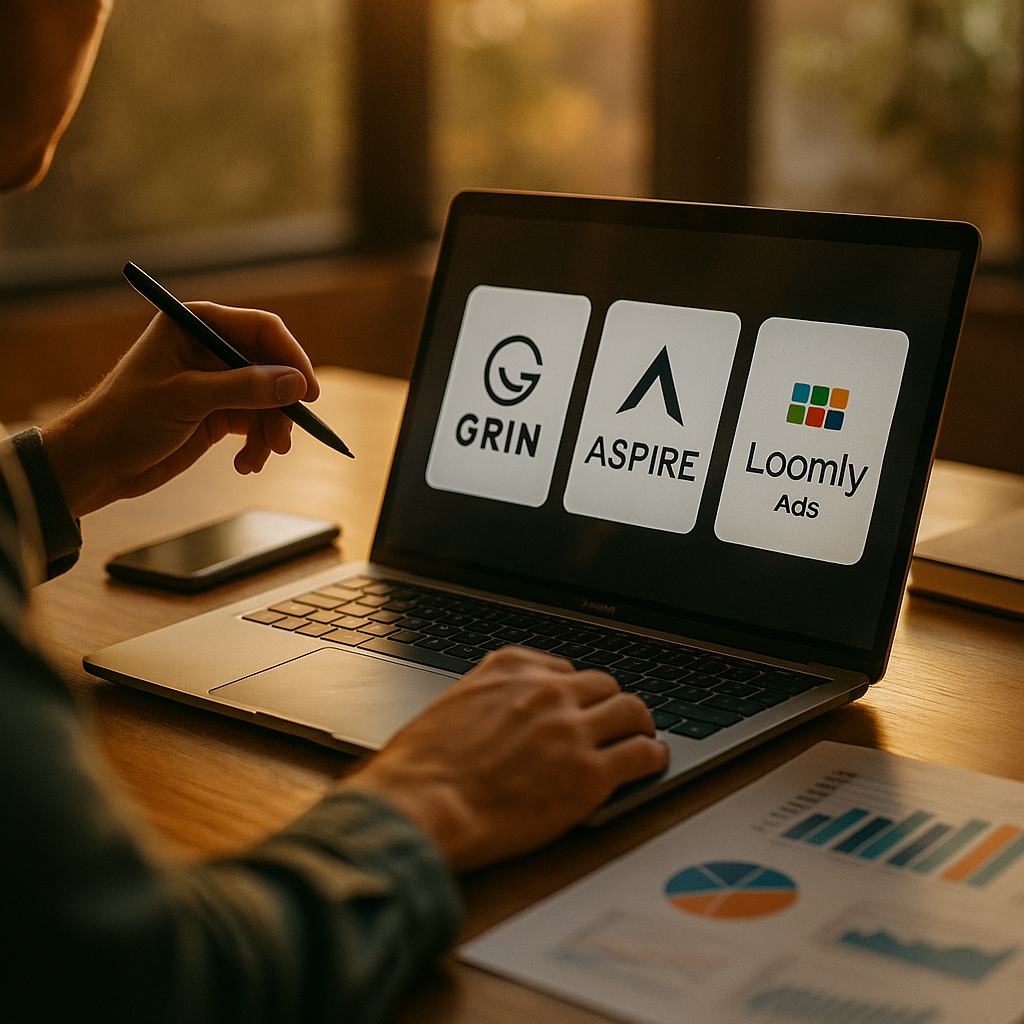
Sixty three percent of brands running paid social amplification of creator content still track usage rights in a spreadsheet, according to recent industry surveys on creator economy spend. That’s a legal exposure problem hiding inside a media efficiency win. Creator licensing and dark posting software exists to close that gap, and three platforms keep coming up in vendor shortlists: Grin, Aspire, and Loomly Ads. They solve overlapping problems in very different ways, and picking wrong means either overpaying for features you won’t use or bolting on a second tool within six months.
Why Licensing and Dark Posting Became a Budget Line Item
Dark posting, running creator content as paid ads without it appearing on the creator’s own feed, has quietly become the highest ROI tactic in a lot of paid social mixes. Meta’s Partnership Ads and TikTok’s Spark Ads both depend on clean rights handoffs between creator and brand accounts. When that handoff breaks, campaigns get pulled, or worse, run without proper authorization and trigger a creator dispute mid flight.
Licensing software emerged to formalize what used to live in email threads and DocuSign attachments: usage windows, paid boost permissions, platform scope, and renewal triggers. The best tools now integrate directly with ad managers so a licensed asset can go from content approval to whitelisted spend without a marketer manually re-uploading files or re-entering ad account IDs.
The real cost of manual licensing tracking isn’t the admin time, it’s the campaigns paused mid flight because nobody caught an expired usage window.
That’s the backdrop for comparing Grin, Aspire, and Loomly Ads. Each one entered this space from a different angle, and that origin story still shapes what they’re good at.
Grin: Relationship-First, Licensing Bolted On
Grin built its reputation as a creator relationship management platform for ecommerce brands, particularly Shopify sellers running high volume seeding programs. Its licensing module reflects that DNA: it’s strong on contract templates and content rights tagging, but dark posting execution requires connecting out to Meta Business Manager or TikTok Ads Manager rather than launching campaigns natively.
For brands whose primary use case is affiliate and gifting programs with occasional paid amplification, Grin’s approach works fine. You get centralized contract storage, automated rights expiration alerts, and a content library that flags which assets are cleared for paid use. What you don’t get is a built in ad buying layer. Teams end up exporting approved creative and rebuilding audience targeting inside the native ad platforms, which adds a manual step that larger dark posting programs can’t tolerate.
Grin also leans heavily on its own creator database for discovery, which is a separate conversation from licensing but worth flagging if you’re evaluating the platform holistically. If audience vetting matters as much as licensing to your team, it’s worth reading how audience quality scoring now factors into creator selection before rights even enter the conversation.
Aspire Adds Marketplace Scale to Rights Management
Aspire (formerly AspireIQ) took a different path. It grew out of influencer marketplace matching and gradually layered in licensing and whitelisting tools as brands demanded end to end workflows. The result is a platform that handles higher volume programs more comfortably than Grin, with rights management tied directly into its content approval and payment workflows.
Aspire’s dark posting integration with Meta is more mature than Grin’s, supporting Partnership Ads setup from inside the platform for many account tiers. That reduces the handoff friction brands complain about elsewhere. The tradeoff is complexity: Aspire’s interface has more surface area, and smaller teams sometimes find themselves paying for marketplace and discovery features they don’t need just to access the licensing tools bundled alongside them.
This bundling pattern isn’t unique to Aspire. It’s a broader trend worth understanding before you sign a contract, because bundled UGC and whitelisting platforms often force buyers to trade flexibility for convenience. If your team already has a discovery process it likes, ask an Aspire rep whether licensing and dark posting modules can be purchased without the full marketplace suite. Some can, some can’t, and the pricing sheet rarely makes that clear upfront.
Loomly Ads: The Dark Posting Specialist
Loomly built its name in social media scheduling, and its ads product takes a narrower, sharper focus than either Grin or Aspire. Rather than trying to be a full creator relationship platform, Loomly Ads concentrates on making the dark posting mechanics fast and clean. That means direct ad account connections, streamlined creative rotation for whitelisted content, and simplified permission requests that don’t require the creator to leave their own dashboard.
The licensing layer is lighter than Grin or Aspire’s. Loomly Ads tracks usage rights well enough to prevent obviously expired content from going live, but it lacks the contract management depth that legal and procurement teams often want for enterprise programs. Brands running dozens of concurrent creator agreements with varied usage terms, exclusivity clauses, and territory restrictions may find Loomly’s rights tracking too thin.
Where it wins is speed to launch. Teams that already have their creator relationships and contracts managed elsewhere, and just need reliable, fast dark posting execution, tend to prefer Loomly Ads over the heavier suites. It’s a specialist tool, not a system of record.
Side by Side: What Each Platform Actually Does Best
- Grin: Strongest for ecommerce brands prioritizing relationship management and gifting programs, with licensing as a supporting feature rather than the core product.
- Aspire: Best for mid to large programs needing integrated discovery, approvals, licensing, and native Meta whitelisting in one workflow, provided you’re comfortable with the fuller platform footprint.
- Loomly Ads: Best for teams that already manage creator contracts elsewhere and want a fast, dedicated dark posting execution layer without extra licensing overhead.
None of the three fully replaces a dedicated rights management system if your program spans dozens of markets with varying usage laws. That’s a niche category on its own, and it’s growing fast as programmatic buying increases the volume of creator assets running through paid channels. The shift toward automated, ad tech style buying of creator inventory is well documented in coverage of the creator ad spend shift, which explains why licensing accuracy now carries real financial stakes rather than just legal ones.
Compliance Isn’t Optional, and Neither Is an Audit Trail
Every dark posting campaign is, functionally, a paid endorsement. The FTC’s endorsement guidelines apply regardless of whether the content lives on the creator’s own feed or runs exclusively as an ad. Brands that can’t produce a clean record of what was licensed, for how long, and under what disclosure terms are exposed if a complaint ever surfaces. This is where all three platforms fall short of a true compliance system, and where brands should build in a manual audit layer regardless of which tool they choose.
A licensing tool that can’t produce a timestamped audit trail on demand isn’t a compliance solution, it’s a filing cabinet with a nicer interface.
Meta’s own Partnership Ads documentation and TikTok’s Spark Ads guidelines both require explicit creator authorization tied to specific ad accounts and date ranges. If your licensing software isn’t syncing that authorization status in near real time, you’re relying on someone remembering to check manually before every campaign push, which is exactly the failure mode this software category was built to eliminate.
Programs that run whitelisted content at real scale should also look at how rights risk is scored across the entire content pipeline, not just at the point of ad launch. The framework laid out in rights risk scorecards for UGC whitelisting is a useful cross check against whatever native reporting Grin, Aspire, or Loomly Ads provide.
Making the Call for Your Program
Start with volume and structure. If you’re running under fifty active creator contracts and your paid amplification is occasional rather than continuous, Grin’s lighter licensing tools paired with manual ad setup will probably suffice. If you’re running hundreds of creator relationships with regular Partnership Ads activity, Aspire’s integrated workflow saves real operational time, even with its steeper learning curve.
If your bottleneck is specifically execution speed on dark posting, and contracts already live in a CRM or legal system elsewhere, Loomly Ads is the leaner choice. Don’t buy a full relationship management suite just to get faster ad launches.
Whichever platform you choose, benchmark it against a governance framework before rollout. Programs that skip this step tend to discover gaps only after a creator dispute or a platform audit flags mismatched authorization records, and by then the fix costs far more than the evaluation would have. For teams scaling whitelisting programs quickly, reviewing content governance platforms alongside your licensing tool choice closes a gap none of these three vendors fully address on their own.
Frequently Asked Questions
What is the difference between creator licensing and dark posting software?
Licensing software manages the legal rights and usage terms for creator content, including contract terms, expiration dates, and platform scope. Dark posting software executes the paid amplification, running that licensed content as ads without it appearing organically on the creator’s feed. Many platforms bundle both functions, but the depth of each varies significantly.
Can Grin, Aspire, and Loomly Ads integrate directly with Meta and TikTok ad accounts?
Aspire and Loomly Ads both offer more direct integration with Meta’s Partnership Ads and TikTok’s Spark Ads systems than Grin, which typically requires exporting approved content and setting up campaigns manually in the native ad managers.
Do I need separate rights management software if I already use one of these platforms?
For programs spanning multiple countries with varying disclosure and usage laws, a dedicated rights management layer or legal audit process on top of any of these three platforms is a smart safeguard, since none offer full compliance documentation out of the box.
How much does dark posting software typically cost compared to licensing tools?
Pricing varies widely by contract volume and ad spend managed, but bundled platforms like Aspire generally cost more than specialist tools like Loomly Ads, since brands pay for discovery and relationship management features alongside the licensing and dark posting functionality.
What happens if a creator’s usage license expires while an ad is still running?
Running an ad with an expired license exposes the brand to both a platform policy violation and a potential legal dispute with the creator. This is exactly the failure point licensing software is designed to prevent through automated expiration alerts, though the quality of those alerts differs across Grin, Aspire, and Loomly Ads.
Pick the platform that matches your program’s actual bottleneck, not the one with the longest feature list. Then run a manual compliance check for the first ninety days regardless of which tool you choose, because no vendor’s audit trail should be trusted blindly until it’s proven itself under a real campaign load.
Top Influencer Marketing Agencies
The leading agencies shaping influencer marketing in 2026
Agencies ranked by campaign performance, client diversity, platform expertise, proven ROI, industry recognition, and client satisfaction. Assessed through verified case studies, reviews, and industry consultations.
Moburst

-
2

The Shelf
Boutique Beauty & Lifestyle Influencer AgencyA data-driven boutique agency specializing exclusively in beauty, wellness, and lifestyle influencer campaigns on Instagram and TikTok. Best for brands already focused on the beauty/personal care space that need curated, aesthetic-driven content.Clients: Pepsi, The Honest Company, Hims, Elf Cosmetics, Pure LeafVisit The Shelf → -
3

Audiencly
Niche Gaming & Esports Influencer AgencyA specialized agency focused exclusively on gaming and esports creators on YouTube, Twitch, and TikTok. Ideal if your campaign is 100% gaming-focused — from game launches to hardware and esports events.Clients: Epic Games, NordVPN, Ubisoft, Wargaming, Tencent GamesVisit Audiencly → -
4

Viral Nation
Global Influencer Marketing & Talent AgencyA dual talent management and marketing agency with proprietary brand safety tools and a global creator network spanning nano-influencers to celebrities across all major platforms.Clients: Meta, Activision Blizzard, Energizer, Aston Martin, WalmartVisit Viral Nation → -
5

The Influencer Marketing Factory
TikTok, Instagram & YouTube CampaignsA full-service agency with strong TikTok expertise, offering end-to-end campaign management from influencer discovery through performance reporting with a focus on platform-native content.Clients: Google, Snapchat, Universal Music, Bumble, YelpVisit TIMF → -
6

NeoReach
Enterprise Analytics & Influencer CampaignsAn enterprise-focused agency combining managed campaigns with a powerful self-service data platform for influencer search, audience analytics, and attribution modeling.Clients: Amazon, Airbnb, Netflix, Honda, The New York TimesVisit NeoReach → -
7

Ubiquitous
Creator-First Marketing PlatformA tech-driven platform combining self-service tools with managed campaign options, emphasizing speed and scalability for brands managing multiple influencer relationships.Clients: Lyft, Disney, Target, American Eagle, NetflixVisit Ubiquitous → -
8

Obviously
Scalable Enterprise Influencer CampaignsA tech-enabled agency built for high-volume campaigns, coordinating hundreds of creators simultaneously with end-to-end logistics, content rights management, and product seeding.Clients: Google, Ulta Beauty, Converse, AmazonVisit Obviously →