


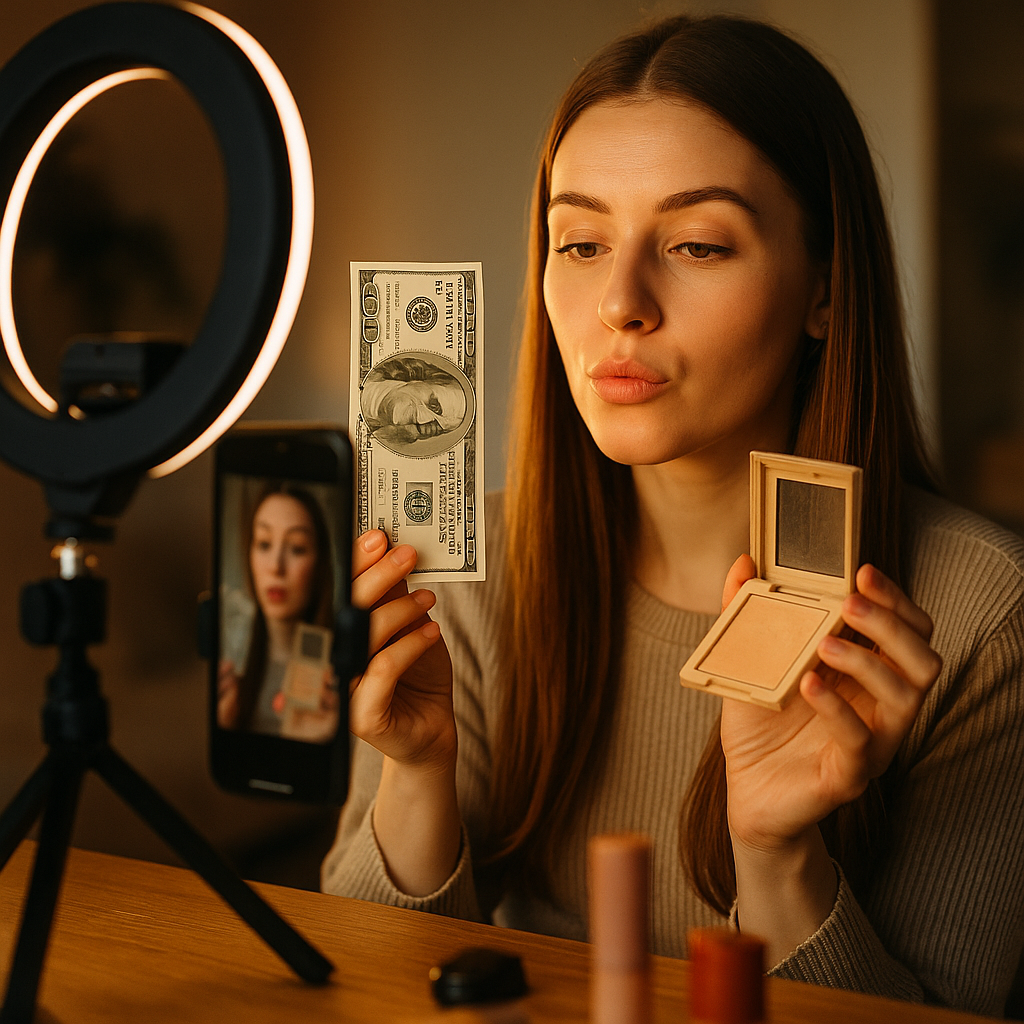
A 15 to 25 percent tariff swing on imported cosmetics can wipe out the entire margin a brand had earmarked for creator partnerships. That is the blunt math playing out across Canadian beauty marketing right now, and it is forcing a rethink of how deals get structured, priced, and paid. Canada’s beauty tariffs are not just a supply chain headache anymore. They are rewriting the influencer contract from top to bottom.
The Tariff Shock Nobody Budgeted For
Most beauty brands built their creator budgets on last year’s cost of goods. Then the tariff schedule changed, and finance teams started clawing back marketing spend to cover the gap. Anyone who has sat in a Q3 budget review knows how fast “we’ll figure it out” turns into “cut 20 percent by Friday.”
The tariffs hit imported formulations, packaging components, and in some cases finished SKUs crossing the border for Canadian fulfillment. Brands that source from the US, the EU, or Asia and then distribute into Canada are eating cost increases at exactly the moment they need creator-driven demand generation the most. It is a brutal squeeze: prices go up, consumer price sensitivity goes up with them, and the marketing budget meant to justify that price increase just got smaller.
When cost of goods moves 20 percent overnight, the influencer line item is usually the first thing finance asks about, not because it is discretionary, but because it is the easiest thing to renegotiate mid-contract.
That renegotiation pressure is exactly what is reshaping deal structures. Brands are not walking away from creators. They cannot afford to, given how dependent beauty conversion has become on creator-led discovery. But they are demanding different terms.
From Flat Fees to Performance-Weighted Contracts
The flat-fee retainer, once the default for mid-tier beauty creators, is losing ground fast. Brands squeezed by tariff-driven cost increases want spend that flexes with sales, not spend that is locked in regardless of outcome. That means a rapid shift toward hybrid models: a smaller guaranteed base fee plus commission or bonus tiers tied to actual conversion, GWV (gross whole value) on platforms like TikTok Shop, or affiliate-linked sales.
This is not entirely new. Performance components have been creeping into creator deals for a couple of years as brands chased measurable ROI, a trend we covered in the 3.5x ROI signal reshaping budgets. What is new is the speed and the reason. Tariffs did not gradually nudge brands toward performance pay. They forced it, almost overnight, as a direct hedge against margin compression.
For creators, this is a mixed bag. Established beauty influencers with strong conversion history can actually earn more under these structures, since brands are willing to pay out generously when a post drives verified sales. Mid-tier and emerging creators without a sales track record are getting squeezed, sometimes offered base fees 30 to 40 percent lower than what they’d have commanded a year ago, with the difference theoretically recoverable through commission they may never fully capture.
Are brands actually paying less, or paying differently?
Both, depending on who you ask. Total influencer marketing spend in Canadian beauty has not collapsed. Brands are reallocating it. Instead of ten mid-tier creators on flat retainers, some are running four or five on hybrid deals with higher upside potential, betting that concentrated spend on proven performers beats spreading dollars thin across an unproven roster.
That consolidation mirrors what we have already documented with US brands facing similar pressure. Our earlier reporting on how tariffs force brands to rewrite creator contracts flagged this exact pattern: fewer creators, bigger bets, tighter performance clauses. Agencies are now building tariff contingency language directly into their retainer deal frameworks, something that would have seemed excessive eighteen months ago.
Currency Clauses and Cross-Border Payment Terms Get Rewritten
Here is a wrinkle most marketers did not see coming: currency exposure clauses are showing up in influencer contracts for the first time. When a Canadian brand pays a US-based creator in USD while its own revenue is compressed by tariffs and a weaker CAD, that exchange rate spread becomes real money. Legal teams are now inserting fixed-rate windows, quarterly repricing triggers, and tariff-contingency clauses that let brands adjust payout terms if import duties shift again.
This is a level of contractual sophistication that beauty influencer deals rarely needed before. Compare it to what is happening in adjacent compliance-heavy corners of the industry, like the scrutiny detailed in YouTube’s alcohol ad policy shift, where platform rules forced faster compliance rewrites. Tariffs are doing something similar to beauty contracts: forcing legal and finance to co-author terms that used to live entirely in the marketing department.
Payment cadence is shifting too. Net-30 terms are stretching to net-45 or net-60 in some agency-negotiated deals, as brands try to hold cash longer while tariff costs work through their supply chain. Creators with strong bargaining power are pushing back, some demanding partial upfront payment specifically because they’ve seen brands delay or renegotiate mid-campaign when costs spiked.
Vetting Gets Stricter as Budgets Get Tighter
When every dollar has to work harder, brands cannot afford a creator partnership that goes sideways. That is pushing beauty marketers toward the kind of formal vetting pipelines we outlined in brand safety vetting practices. It is no longer enough to check follower counts and engagement rate. Brands want audience authenticity audits, historical brand-safety scans, and increasingly, financial due diligence on whether a creator’s audience actually converts in the Canadian market specifically, not just in the US.
This matters because tariff pressure has zero tolerance for wasted spend. A US-based creator with a huge following but minimal Canadian audience overlap used to be an acceptable gamble when budgets were flush. Now that gamble gets flagged in the first vetting pass and cut before a contract is even drafted.
What This Means for Agencies and Brand Teams
Agencies representing beauty creators are adapting their pitch decks in real time. The ones winning renewals are the ones who came to the table with tariff-adjusted pricing models before the client asked for them. That proactive posture is becoming table stakes, not a differentiator.
- Build tariff-contingency clauses into every new contract, even for domestic creators, since supply chain costs ripple through regardless of where the creator is based.
- Shift toward hybrid base-plus-performance pay structures rather than pure flat fees, especially for campaigns tied directly to product launches affected by import costs.
- Tighten vetting on Canadian audience overlap before signing, not after the first underwhelming campaign report.
- Renegotiate payment cadence transparently rather than letting delays surprise creators mid-contract, which damages long-term relationship trust.
None of this is exotic. It is disciplined contract hygiene that beauty brands should arguably have had in place already. Tariffs just made the cost of skipping it painfully visible. As we noted in coverage of martech budget pressure reshaping creator programs, external cost shocks have a way of exposing which brands actually had rigorous operational processes and which were coasting on flush budgets.
Industry data from eMarketer has consistently shown beauty as one of the highest-spending verticals in influencer marketing, which is precisely why tariff shocks land so hard here. There is simply more at stake, and more contract volume to renegotiate, than in categories with lighter creator dependency.
The Longer-Term Shift: Pricing Models Built for Volatility
The smartest brands are not treating this as a one-time fire drill. They are building pricing models designed to absorb the next trade policy shift, whatever it turns out to be. That means scenario-based rate cards where creator pay flexes automatically against defined cost thresholds, rather than requiring a renegotiation every time policy changes.
Some agencies are experimenting with quarterly rate reviews baked into annual creator agreements, essentially treating influencer pricing the way media buyers treat programmatic CPMs: dynamic, market-responsive, and never locked for a full fiscal year. It is a more mature approach, and frankly one the industry should have adopted before tariffs forced the issue.
For brand strategists building next year’s plans, the takeaway is not “wait for policy clarity.” Trade policy in this environment is not going to hold still long enough to justify waiting. The takeaway is: build flexibility into the contract itself, so the next shock does not require rewriting everything from scratch.
FAQs
Frequently Asked Questions
Why are Canada’s beauty tariffs affecting influencer marketing specifically?
Beauty is one of the most creator-dependent marketing categories, so when tariffs compress product margins, brands look to their largest flexible spend line, which is often influencer budgets, to absorb the cost pressure.
Are brands cutting influencer spend entirely because of the tariffs?
Not entirely. Most are reallocating spend toward performance-weighted contracts and consolidating budgets around fewer, higher-converting creators rather than eliminating creator marketing altogether.
What contract changes are becoming standard because of the tariffs?
Hybrid base-plus-commission pay structures, tariff-contingency clauses, currency exposure protections, and stretched payment terms are all becoming more common in Canadian beauty influencer agreements.
How should creators protect themselves in this environment?
Creators should negotiate partial upfront payment, clarify how performance bonuses are calculated, and push for clear renegotiation triggers rather than open-ended tariff-contingency language that favors the brand.
Will this pricing shift spread beyond beauty into other categories?
It is likely. Any category with significant imported goods exposed to shifting trade policy, from fashion to wellness products, could see similar pressure on influencer deal structures.
Bottom line: lock tariff-contingency and performance clauses into every new beauty creator contract now, before the next trade policy shift forces a rushed renegotiation.
Top Influencer Marketing Agencies
The leading agencies shaping influencer marketing in 2026
Agencies ranked by campaign performance, client diversity, platform expertise, proven ROI, industry recognition, and client satisfaction. Assessed through verified case studies, reviews, and industry consultations.
Moburst

-
2

The Shelf
Boutique Beauty & Lifestyle Influencer AgencyA data-driven boutique agency specializing exclusively in beauty, wellness, and lifestyle influencer campaigns on Instagram and TikTok. Best for brands already focused on the beauty/personal care space that need curated, aesthetic-driven content.Clients: Pepsi, The Honest Company, Hims, Elf Cosmetics, Pure LeafVisit The Shelf → -
3

Audiencly
Niche Gaming & Esports Influencer AgencyA specialized agency focused exclusively on gaming and esports creators on YouTube, Twitch, and TikTok. Ideal if your campaign is 100% gaming-focused — from game launches to hardware and esports events.Clients: Epic Games, NordVPN, Ubisoft, Wargaming, Tencent GamesVisit Audiencly → -
4

Viral Nation
Global Influencer Marketing & Talent AgencyA dual talent management and marketing agency with proprietary brand safety tools and a global creator network spanning nano-influencers to celebrities across all major platforms.Clients: Meta, Activision Blizzard, Energizer, Aston Martin, WalmartVisit Viral Nation → -
5

The Influencer Marketing Factory
TikTok, Instagram & YouTube CampaignsA full-service agency with strong TikTok expertise, offering end-to-end campaign management from influencer discovery through performance reporting with a focus on platform-native content.Clients: Google, Snapchat, Universal Music, Bumble, YelpVisit TIMF → -
6

NeoReach
Enterprise Analytics & Influencer CampaignsAn enterprise-focused agency combining managed campaigns with a powerful self-service data platform for influencer search, audience analytics, and attribution modeling.Clients: Amazon, Airbnb, Netflix, Honda, The New York TimesVisit NeoReach → -
7

Ubiquitous
Creator-First Marketing PlatformA tech-driven platform combining self-service tools with managed campaign options, emphasizing speed and scalability for brands managing multiple influencer relationships.Clients: Lyft, Disney, Target, American Eagle, NetflixVisit Ubiquitous → -
8

Obviously
Scalable Enterprise Influencer CampaignsA tech-enabled agency built for high-volume campaigns, coordinating hundreds of creators simultaneously with end-to-end logistics, content rights management, and product seeding.Clients: Google, Ulta Beauty, Converse, AmazonVisit Obviously →