


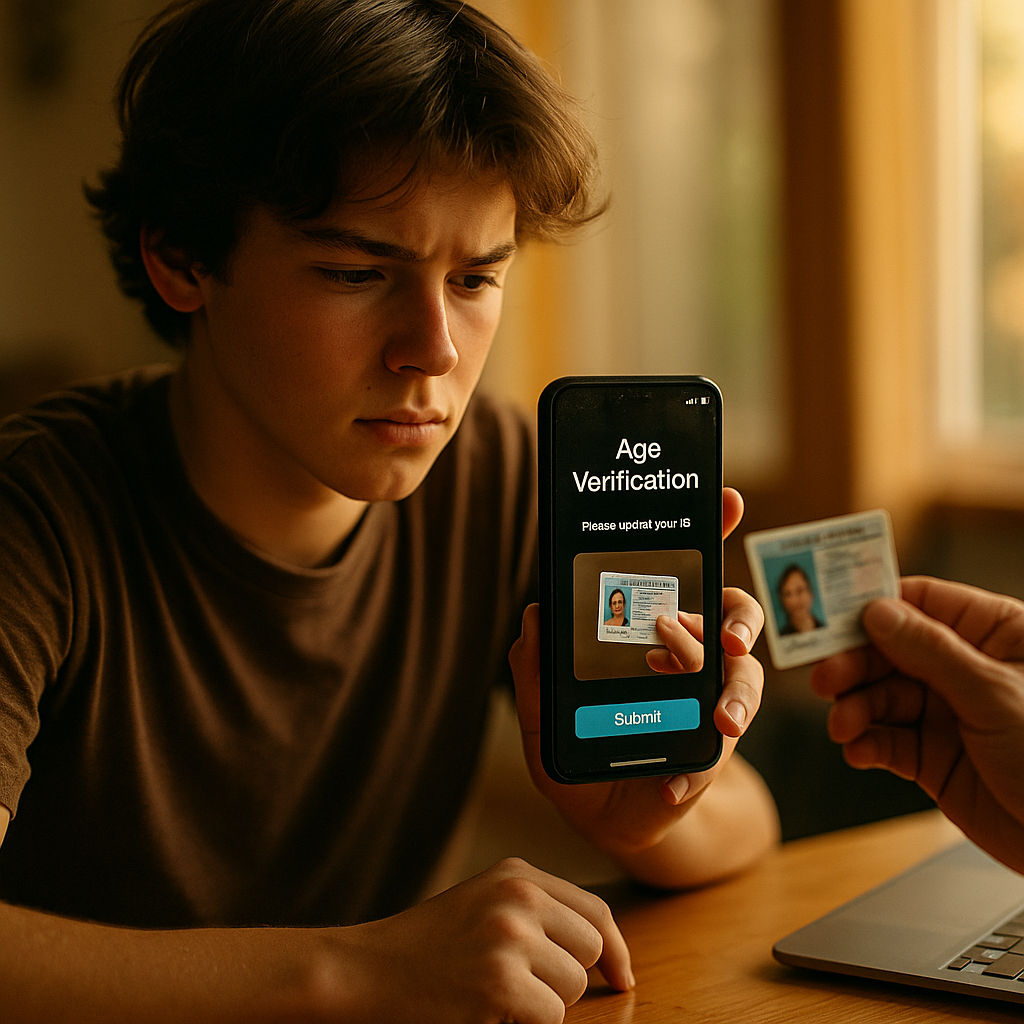
More than a dozen states now require some form of age verification before teens can access social platforms, and at least twenty more have bills moving through committee. If your brand still targets 13 to 17 year olds through influencer campaigns without a documented compliance process, you are one state AG letter away from a very expensive lesson. Age verification laws are no longer a theoretical policy debate. They are an operational reality that touches media buying, creator vetting, and legal review all at once.
What Actually Changed, and Why It Matters to Brands
Utah, Arkansas, Louisiana, Texas, and Florida moved first, each with slightly different thresholds and enforcement mechanisms. Some require platforms to verify age before allowing account creation. Others mandate parental consent for anyone under 16 or 18 depending on the state. A few tie compliance to specific features, like algorithmic feeds or direct messaging, rather than the platform as a whole.
Here is the part that catches marketing teams off guard: these laws regulate platforms directly, but liability for brands shows up through a side door. If a platform restricts minors from seeing targeted ads or algorithmic content, your reach data changes. If a state requires parental consent for account access, your influencer’s teen audience segment may shrink or disappear entirely from measurable analytics. And if your campaign was built assuming a certain teen reach that no longer exists post-verification, your media plan is now inaccurate, which creates its own disclosure and reporting problems for public companies or regulated categories.
Age verification laws do not just change who can see your ad. They change what your platform reporting can prove, which matters the moment a regulator or auditor asks for evidence.
The Compliance Gap Nobody Budgeted For
Most brand safety checklists were written for FTC disclosure rules and platform community guidelines. They were not written for a patchwork of state statutes that define “minor” differently, apply different verification thresholds, and carry different penalty structures. Texas, for instance, has pushed for stricter parental consent requirements tied to its broader online safety statute, while other states lean on softer age assurance standards.
That patchwork means a single national campaign can be compliant in one state and exposed in another. Agencies running influencer programs across all 50 states need a state-by-state matrix, not a single national policy. This is the same operational headache brands have already faced with privacy statutes like the Colorado Privacy Act, where state-specific rules created inconsistent obligations depending on where the consumer lived.
Legal teams that treated age verification as a platform-side problem are now realizing it is a campaign design problem too. Where you place the ad, what platform features you rely on for targeting, and what data you collect from teen audiences all sit inside the compliance perimeter now.
Platform-by-Platform Differences Brands Need to Track
- Instagram and Facebook use a mix of self-declared age and AI-based age estimation, with teen accounts defaulting to restricted settings that limit ad targeting options.
- TikTok has rolled out age assurance tools in several states, which can affect whether branded content even reaches verified teen accounts.
- YouTube ties much of its teen protection to supervised accounts, which changes how creator content and mid-roll ads get served to that audience.
- Snapchat has state-specific parental consent flows in certain jurisdictions, directly affecting influencer takeover campaigns aimed at younger users.
None of this is static. Platforms adjust their verification mechanics as new state laws take effect, and a feature that worked for a Q1 campaign might be restricted by Q3. Brands running always-on ambassador programs targeting teens need a recurring platform audit, not a one-time check.
Where Brand Liability Actually Lives
Age verification laws primarily regulate platforms, but three areas expose brands and their agencies directly.
Data collection from minors. If your campaign collects emails, addresses, or engagement data from users under a state’s defined age threshold, and that data collection happens through a creator’s owned channel rather than the platform itself, your brand may be the responsible party, not the platform. This is especially relevant for giveaways and contests run through influencer accounts, an area already flagged in our coverage of giveaway rules and lottery law risk.
Creator vetting. If you are working with creators whose audience skews heavily teen, and that creator’s content sits on a platform now subject to age verification, your brand needs documentation showing you understood the audience composition and adjusted targeting accordingly. Skipping this step is how brands end up named in state AG inquiries even when the platform, not the brand, technically violated the statute.
Disclosure accuracy. A campaign that assumed broad teen reach, then discovered post-verification that reach was actually much smaller among verified minors, may have overstated performance to internal stakeholders or clients. That is a reporting integrity issue as much as a legal one.
Building a Teen-Safe Campaign Process That Survives Audit
The brands handling this well are not avoiding teen-targeted campaigns altogether. They are building process around them. A few practices worth adopting now:
- Map your target states before you brief creators. Build a simple matrix of which states have active age verification statutes, what age threshold applies, and what platform features are affected.
- Document creator audience composition. Pull audience age breakdowns before campaign launch and retain that documentation. If a state regulator asks how you assessed minor exposure, “we checked the creator’s analytics dashboard on this date” is a real answer.
- Separate teen-facing creative from adult-facing creative. Running one unified asset across all age segments makes it harder to prove you tailored messaging or data collection appropriately for minors.
- Review your creator contracts for age-related warranties. Contracts should specify that creators disclose known audience demographics and cooperate with brand compliance requests related to minor exposure.
- Loop in legal before, not after, campaign launch. This mirrors the same lesson from our pre-launch creator ad review checklist: catching a compliance gap before launch costs a fraction of what fixing it post-launch does.
If your compliance process cannot answer “how did we verify this audience wasn’t primarily minors” within five minutes, you don’t have a process. You have a hope.
Should Brands Just Avoid Teen Audiences Entirely?
Some brand safety leads have floated the idea of simply excluding known teen-heavy creators or platforms altogether. It is tempting, and for highly regulated categories like alcohol, gambling, or financial products, it might be the right call. Regulatory scrutiny in those categories is already intense, and the SEC touting rules for finance creators show how quickly a narrow compliance gap becomes a full enforcement action.
But for consumer brands with a legitimate teen audience (apparel, gaming, beauty, snacks), avoidance is not realistic and probably not necessary. The smarter move is building the documentation trail described above and treating teen-targeted campaigns as a distinct compliance category with its own review checklist, similar to how brands already handle age and location gated disclosures for other regulated content types.
According to eMarketer, teen social media engagement remains a significant driver of purchase intent in categories like fashion and beauty, so brands that build compliant processes now will keep access to that audience while slower-moving competitors get boxed out by their own legal caution.
A Note on Platform Reporting Gaps
One underappreciated wrinkle: as platforms restrict data available on verified minor accounts, your campaign analytics will show gaps that did not exist before. Engagement numbers may look artificially low if a meaningful share of your teen audience is now on restricted, unverified, or supervised accounts with limited tracking. Do not assume a drop in reported teen engagement means the campaign underperformed. It may simply mean the platform stopped reporting it. Build this caveat into your post-campaign reporting to internal stakeholders so nobody draws the wrong conclusion from a dataset that changed underneath them.
This is the same kind of measurement blind spot brands have run into with pixel-based tracking restrictions, covered in our piece on TikTok pixel data flows. Platform-side privacy and safety changes rarely announce themselves clearly in your dashboard. They just quietly shrink the denominator.
The Bottom Line
Age verification laws are not going away, and more states will pass their own versions within the next reporting cycle. Brands that build a documented, state-aware compliance process for teen-targeted campaigns now will have a real advantage: they will keep running these campaigns confidently while competitors scramble every time a new state statute takes effect. Start with a platform-by-state matrix, formalize creator audience documentation, and get legal in the room before the brief goes out, not after the campaign draws attention.
FAQs
Do state age verification laws apply directly to brands, or only to social platforms?
The statutes primarily regulate platforms, requiring them to verify user age or obtain parental consent. Brands become exposed indirectly, through data collection practices, creator partnerships, and inaccurate reporting that assumes reach or targeting capabilities the platform no longer provides.
Which states currently have the strictest age verification requirements for social platforms?
Utah, Arkansas, Louisiana, Texas, and Florida have among the most active statutes, though requirements vary by age threshold, feature scope, and enforcement mechanism. Brands running multi-state campaigns should treat this as a shifting patchwork rather than a single national standard.
How does age verification affect influencer campaign targeting for teen audiences?
Verified minor accounts often default to restricted settings that limit algorithmic targeting, direct messaging, and certain ad formats. This can shrink measurable reach and change how campaign performance data should be interpreted.
What documentation should brands keep to show compliance with teen-targeting rules?
Retain creator audience age breakdowns pulled before campaign launch, a state-by-state matrix of applicable laws, contract language addressing creator audience disclosure, and legal sign-off records completed prior to launch.
Should brands stop targeting teen audiences altogether to avoid compliance risk?
For highly regulated categories like alcohol, gambling, or financial products, limiting teen exposure is often the safer strategy. For consumer categories with legitimate teen audiences, building a documented compliance process is more practical than full avoidance.
Top Influencer Marketing Agencies
The leading agencies shaping influencer marketing in 2026
Agencies ranked by campaign performance, client diversity, platform expertise, proven ROI, industry recognition, and client satisfaction. Assessed through verified case studies, reviews, and industry consultations.
Moburst

-
2

The Shelf
Boutique Beauty & Lifestyle Influencer AgencyA data-driven boutique agency specializing exclusively in beauty, wellness, and lifestyle influencer campaigns on Instagram and TikTok. Best for brands already focused on the beauty/personal care space that need curated, aesthetic-driven content.Clients: Pepsi, The Honest Company, Hims, Elf Cosmetics, Pure LeafVisit The Shelf → -
3

Audiencly
Niche Gaming & Esports Influencer AgencyA specialized agency focused exclusively on gaming and esports creators on YouTube, Twitch, and TikTok. Ideal if your campaign is 100% gaming-focused — from game launches to hardware and esports events.Clients: Epic Games, NordVPN, Ubisoft, Wargaming, Tencent GamesVisit Audiencly → -
4

Viral Nation
Global Influencer Marketing & Talent AgencyA dual talent management and marketing agency with proprietary brand safety tools and a global creator network spanning nano-influencers to celebrities across all major platforms.Clients: Meta, Activision Blizzard, Energizer, Aston Martin, WalmartVisit Viral Nation → -
5

The Influencer Marketing Factory
TikTok, Instagram & YouTube CampaignsA full-service agency with strong TikTok expertise, offering end-to-end campaign management from influencer discovery through performance reporting with a focus on platform-native content.Clients: Google, Snapchat, Universal Music, Bumble, YelpVisit TIMF → -
6

NeoReach
Enterprise Analytics & Influencer CampaignsAn enterprise-focused agency combining managed campaigns with a powerful self-service data platform for influencer search, audience analytics, and attribution modeling.Clients: Amazon, Airbnb, Netflix, Honda, The New York TimesVisit NeoReach → -
7

Ubiquitous
Creator-First Marketing PlatformA tech-driven platform combining self-service tools with managed campaign options, emphasizing speed and scalability for brands managing multiple influencer relationships.Clients: Lyft, Disney, Target, American Eagle, NetflixVisit Ubiquitous → -
8

Obviously
Scalable Enterprise Influencer CampaignsA tech-enabled agency built for high-volume campaigns, coordinating hundreds of creators simultaneously with end-to-end logistics, content rights management, and product seeding.Clients: Google, Ulta Beauty, Converse, AmazonVisit Obviously →