


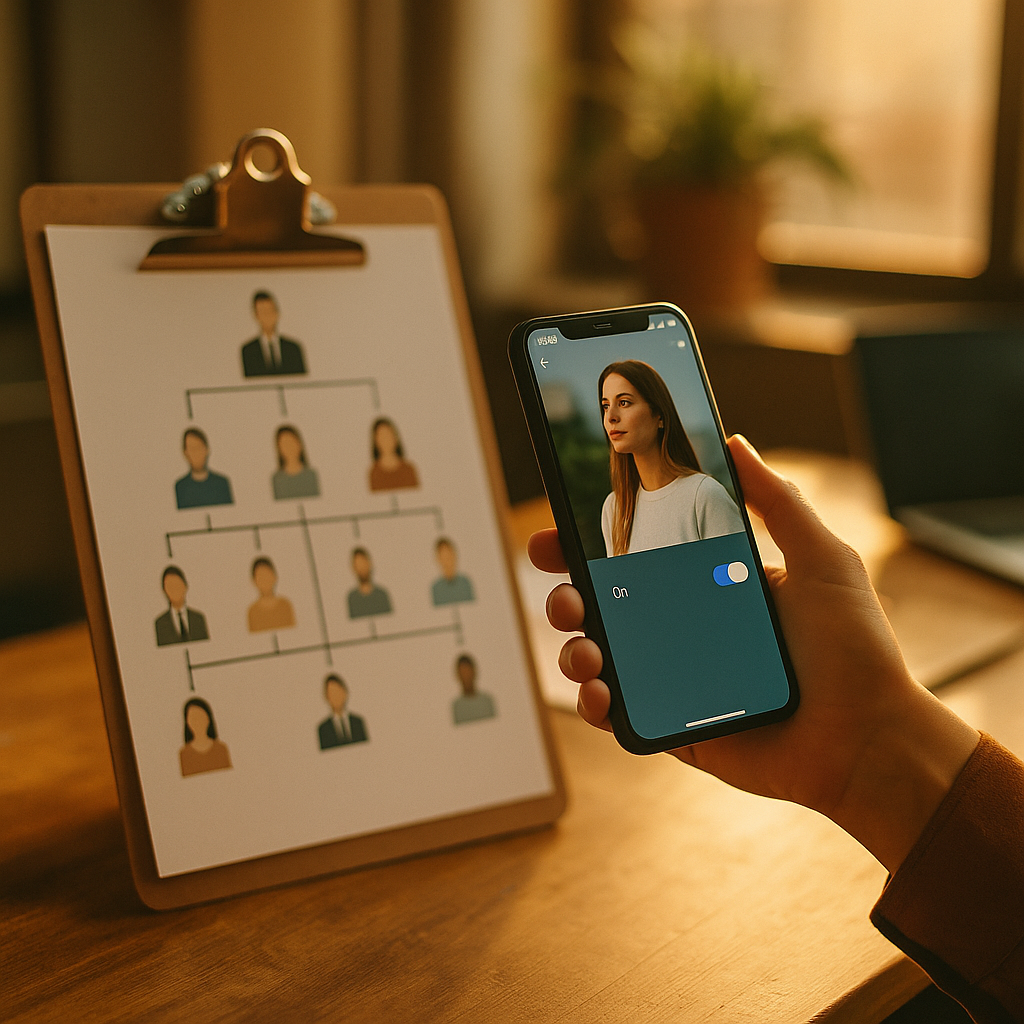
Here’s an uncomfortable number: most enterprise brands running whitelisting campaigns can’t tell you, on demand, which creator content is still under active usage rights. Ask legal, ask the media team, ask the agency of record, and you’ll get three different answers. That gap between “we ran the campaign” and “we can prove we’re legally allowed to keep running it” is where creator licensing and whitelisting programs quietly turn into liability. Fixing it isn’t a legal problem or a media problem. It’s an organizational design problem.
The Real Cost of Ad Hoc Licensing
Whitelisting (running paid media through a creator’s handle) and content licensing (repurposing creator assets across owned channels) both hinge on one thing: a usage rights clock that someone is actually watching. When that clock lives in a spreadsheet owned by whoever happened to run last quarter’s campaign, expired rights don’t get flagged. They get discovered, usually by a creator’s manager, usually after the content has run for months past its license window.
The financial exposure is real. Extended usage without a renewed agreement can trigger retroactive fee demands, takedown requests mid-flight, or worse, a breach of contract claim that lands in front of the brand’s general counsel. None of that is hypothetical. It’s the predictable result of treating licensing as a task instead of a system.
A whitelisting program without centralized rights tracking isn’t a media strategy. It’s a liability accumulating in the dark, one expired contract at a time.
Who Should Own Whitelisting Rights? A Cross-Functional Model
The single biggest structural mistake enterprise teams make is assigning licensing ownership to whichever function touched the contract first. Usually that’s media buying, since they’re the ones requesting spark codes or partnership ad access. But media buying has no visibility into legal’s contract language, and legal has no visibility into which ads are actually live.
The fix is a three-seat model, not a single owner:
- Legal/contracts: owns the licensing terms, negotiates renewal clauses, and defines what “usage” actually means in the agreement (organic repost, paid whitelisting, out-of-home, all of the above).
- Media operations: owns the live campaign calendar and is responsible for pulling any asset the moment its license lapses.
- Rights administration (new or reassigned role): owns the master tracking system and sends renewal alerts to both legal and media before expiration, not after.
That third seat is the one most orgs skip, and it’s the one that actually prevents the fire drills. If you’re already restructuring headcount around AI-assisted workflows, this is a natural moment to fold rights administration into the plan. See our breakdown of which creator roles survive automation for how to think about that staffing decision.
Why Revenue Share and IP Ownership Complicate the Picture
Licensing gets messier when creators are compensated on revenue share terms rather than flat fees, because usage rights and payout terms often get negotiated in the same document but expire on different timelines. A creator might retain content IP indefinitely while granting only a 90-day whitelisting window, or vice versa. Our deeper look at IP ownership rules under revenue share models is worth reading before you standardize a contract template across your program.
Building the Licensing Matrix: Usage Rights, Duration, and Channels
Every enterprise licensing program needs a single source of truth: a matrix that maps creator, content asset, usage type, channel, geography, and expiration date in one place. This isn’t optional infrastructure. It’s the difference between a program that scales and one that generates legal exposure every time headcount turns over.
At minimum, the matrix should capture:
- Content asset ID and creator name
- Approved channels (organic social, paid whitelisting, website, email, out-of-home, connected TV)
- Usage start and end dates, with automated 30-day and 7-day renewal alerts
- Geographic restrictions, since a license valid in one market may not extend globally
- Compensation trigger, flat fee versus royalty versus performance-based renewal fee
Geography matters more than most teams assume. A whitelisting agreement signed under U.S. disclosure norms doesn’t automatically satisfy UK or EU requirements. If your program runs across regions, pair your licensing matrix with the guidance in regional compliance requirements so legal isn’t reverse-engineering local rules mid-campaign. The FTC’s endorsement guidance and the ICO’s advertising rules are useful baselines, but they’re not interchangeable with each other or with platform-specific policies from Meta or TikTok.
Contract Templates That Scale Without Legal Bottlenecks
Legal teams at enterprise brands are already stretched thin. If every whitelisting deal requires a bespoke contract review, your program will bottleneck at exactly the volume where it needs to move fastest. The answer is tiered templates, not case-by-case negotiation.
Build three standard agreements: a short-form organic usage license for low-stakes reposting, a mid-tier whitelisting agreement covering paid spark ads and partnership ads with a fixed renewal cadence, and a long-form multi-channel license for ambassador-level creators whose content runs across paid, owned, and out-of-home simultaneously. Route only the long-form agreements through full legal review. The other two can move through a pre-approved template with a checkbox for duration and channel scope.
This tiering approach pairs naturally with how many brands are already restructuring creator pay. If you’re shifting toward blended rate cards to manage risk, build the licensing tier directly into that same rate card logic so finance, legal, and media are working from one document instead of three.
For creators on longer commitments, licensing terms should be negotiated once at the retainer level rather than renewed campaign by campaign. Our framework on multi-year creator retainers covers how to structure usage rights so they survive platform algorithm shifts and format changes without triggering a full renegotiation every time a new ad unit launches.
Technology Stack for Rights Tracking and Renewal Alerts
Manual tracking fails at scale, full stop. Once a brand is running more than roughly fifty active creator licenses at a time (a threshold most enterprise programs cross within a year of scaling paid whitelisting), spreadsheet tracking becomes a liability generator rather than a control mechanism.
Platforms like Meta’s Partnership Ads Hub and TikTok’s Spark Ads system now include native permission tracking, which is a meaningful improvement over the manual toggle systems brands relied on a few years back. But native platform tools only track platform-level access. They don’t track the underlying contract terms, payment triggers, or geographic restrictions sitting in your legal system. You still need a rights management layer that sits above the platform tools and reconciles them against the master licensing matrix.
This is also where vendor sprawl becomes its own risk. Many enterprise teams end up running one tool for contract management, another for whitelisting toggles, and a third for creator payments, with no single dashboard connecting them. If that sounds familiar, the audit sequence in vendor consolidation planning is a reasonable next step before adding another point solution to the stack.
Platform-native permission toggles tell you what’s technically running. They don’t tell you what you’re legally allowed to keep running. Those are two different systems, and conflating them is how licenses quietly expire in plain sight.
When Whitelisting Goes Wrong: Risk Mitigation Checklist
Even well-structured programs fail without a clear escalation path. Build these checkpoints into the operational calendar, not just the contract:
- Quarterly rights audit: reconcile every live whitelisting ad against the licensing matrix, not just the campaigns launched that quarter.
- Renewal buffer: negotiate a 15-day grace period into every contract so a lapsed date doesn’t mean an automatic legal violation.
- Kill switch protocol: designate who has authority to pull an ad the moment a license question arises, and make sure that person isn’t waiting on legal sign-off to act.
- Payment-license linkage: confirm renewal payments are triggered automatically when usage windows extend, since late payment disputes are a leading cause of creators revoking access mid-campaign.
That last point connects directly to payment operations. A licensing program is only as reliable as the payment infrastructure behind it, and payment SLA failures are one of the most common triggers for creators pulling whitelisting permissions without warning. According to recent industry benchmarking from eMarketer, brands running formalized creator licensing governance report meaningfully fewer compliance incidents than those managing rights informally, which tracks with what most operations leads already suspect from experience.
What About AI-Generated Derivative Content?
One emerging wrinkle: brands increasingly use AI tools to repurpose licensed creator content into new formats, resized clips, translated versions, or AI voiceovers layered over original footage. Standard licensing agreements written even a couple of years ago rarely anticipated this. If your contracts don’t explicitly address derivative AI use, assume they don’t permit it, and get an addendum in place before your creative team starts remixing assets at scale.
Build the licensing matrix first, assign the three-seat ownership model second, and only then invest in tooling. Programs that reverse this order end up automating chaos instead of preventing it.
Frequently Asked Questions
What’s the difference between creator licensing and whitelisting?
Licensing grants a brand the right to reuse creator content across specified channels for a defined period, such as reposting an Instagram Reel on the brand’s owned website. Whitelisting specifically refers to running paid media through a creator’s own social handle, giving the ad the appearance of organic creator content while the brand controls targeting and spend.
How long should a standard whitelisting license run?
Most enterprise programs settle on 60 to 120 day windows for standard paid whitelisting, with renewal built in as a separate negotiated step rather than an automatic extension. Longer windows increase risk if the creator relationship changes or if content becomes reputationally sensitive.
Who should approve licensing renewals at an enterprise brand?
Renewal approval should sit with the rights administration function, not media buying alone, since media teams are focused on campaign performance rather than contract compliance. Legal should be looped in automatically for any renewal involving a fee or scope change.
What happens if a brand runs whitelisted content past the license expiration?
Running paid media on expired usage rights is a contract breach and can expose the brand to retroactive licensing fees, forced takedowns mid-campaign, or reputational damage if the creator or their representation goes public with the dispute.
Do platform tools like Meta’s Partnership Ads Hub track licensing compliance automatically?
No. Platform tools track technical access permissions, meaning whether a creator has granted a brand handle the ability to run ads through their account. They don’t track the underlying legal terms, payment obligations, or geographic restrictions defined in the actual contract, so a separate rights management layer is still necessary.
Top Influencer Marketing Agencies
The leading agencies shaping influencer marketing in 2026
Agencies ranked by campaign performance, client diversity, platform expertise, proven ROI, industry recognition, and client satisfaction. Assessed through verified case studies, reviews, and industry consultations.
Moburst

-
2

The Shelf
Boutique Beauty & Lifestyle Influencer AgencyA data-driven boutique agency specializing exclusively in beauty, wellness, and lifestyle influencer campaigns on Instagram and TikTok. Best for brands already focused on the beauty/personal care space that need curated, aesthetic-driven content.Clients: Pepsi, The Honest Company, Hims, Elf Cosmetics, Pure LeafVisit The Shelf → -
3

Audiencly
Niche Gaming & Esports Influencer AgencyA specialized agency focused exclusively on gaming and esports creators on YouTube, Twitch, and TikTok. Ideal if your campaign is 100% gaming-focused — from game launches to hardware and esports events.Clients: Epic Games, NordVPN, Ubisoft, Wargaming, Tencent GamesVisit Audiencly → -
4

Viral Nation
Global Influencer Marketing & Talent AgencyA dual talent management and marketing agency with proprietary brand safety tools and a global creator network spanning nano-influencers to celebrities across all major platforms.Clients: Meta, Activision Blizzard, Energizer, Aston Martin, WalmartVisit Viral Nation → -
5

The Influencer Marketing Factory
TikTok, Instagram & YouTube CampaignsA full-service agency with strong TikTok expertise, offering end-to-end campaign management from influencer discovery through performance reporting with a focus on platform-native content.Clients: Google, Snapchat, Universal Music, Bumble, YelpVisit TIMF → -
6

NeoReach
Enterprise Analytics & Influencer CampaignsAn enterprise-focused agency combining managed campaigns with a powerful self-service data platform for influencer search, audience analytics, and attribution modeling.Clients: Amazon, Airbnb, Netflix, Honda, The New York TimesVisit NeoReach → -
7

Ubiquitous
Creator-First Marketing PlatformA tech-driven platform combining self-service tools with managed campaign options, emphasizing speed and scalability for brands managing multiple influencer relationships.Clients: Lyft, Disney, Target, American Eagle, NetflixVisit Ubiquitous → -
8

Obviously
Scalable Enterprise Influencer CampaignsA tech-enabled agency built for high-volume campaigns, coordinating hundreds of creators simultaneously with end-to-end logistics, content rights management, and product seeding.Clients: Google, Ulta Beauty, Converse, AmazonVisit Obviously →