


Ninety percent of U.S. households now have access to free ad-supported streaming, and a growing share of the commercials filling those breaks were shot by creators, not agencies. Yet most brands still treat FTC disclosure rules as an Instagram problem. That gap is about to get expensive.
The FAST and AVOD Boom Nobody Built Disclosure For
FAST (free ad-supported streaming TV) and AVOD (ad-supported video on demand) channels like Tubi, Pluto TV, The Roku Channel, and Freevee have quietly become some of the most efficient ad inventory in the business. eMarketer has repeatedly flagged FAST as one of the fastest-growing segments of connected TV ad spend, and brands have responded by shifting creator-made spots, the same UGC-style ads that perform on TikTok and Meta, straight onto these platforms.
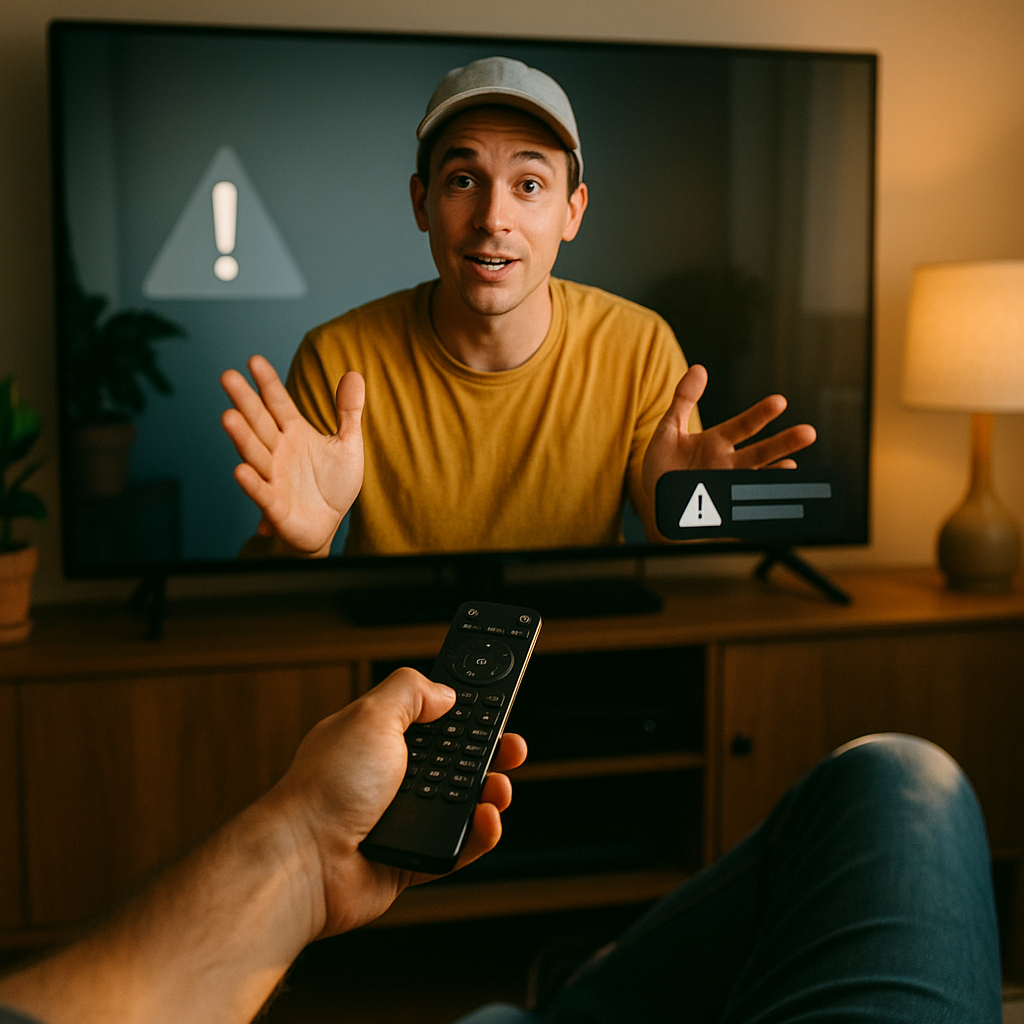
It’s a smart media buy. Lower production costs, authentic delivery, proven creative that already tested well on social. But here’s the catch nobody flagged in the media plan: a 30-second spot that ran with a clean “#ad” caption on TikTok loses that disclosure entirely when it’s repackaged for a FAST channel pre-roll slot. The caption disappears. The platform-native sponsorship tag disappears. What’s left is a creator talking to camera about a product, with zero on-screen indication that money changed hands.
A disclosure that worked perfectly on the platform it was built for can become legally invisible the moment it airs somewhere else.
Why Streaming TV Breaks the Old Disclosure Playbook
Social platforms give you built-in disclosure tools: branded content labels, paid partnership tags, algorithmic sponsorship flags. FAST and AVOD environments give you none of that. There’s no metadata layer that tells a viewer “this is sponsored.” There’s no clickable label. The commercial is just… a commercial, sitting in the same break as a Toyota ad and a local plumber spot.
That means the burden shifts entirely onto the creative itself. If the disclosure isn’t burned into the video, permanently and visibly, it doesn’t exist for that viewer. This is the exact problem we unpacked in our look at the linear disclosure gap: creator content built for scrollable, clickable feeds simply wasn’t designed for a broadcast-style viewing experience where the audience can’t tap anything.
Add to that the fact that FAST and AVOD sit in a weird regulatory middle ground. They’re not quite linear broadcast, so FCC content rules don’t fully apply the way they do to over-the-air TV. But they’re also not social media, so the FTC’s platform-specific guidance (built with feeds and stories in mind) doesn’t map cleanly either. Brands running creator ads across both CTV and social have to satisfy two different regulatory postures at once, a challenge we broke down in our dual agency analysis of CTV creator ads.
What the FTC Actually Requires, Regardless of Screen
Strip away the platform confusion and the FTC’s core standard hasn’t changed: any material connection between a brand and an endorser must be disclosed clearly and conspicuously, in a way an average consumer would notice and understand, without having to look for it. The FTC’s Endorsement Guides apply to video regardless of where it airs. A Roku pre-roll is not exempt because it’s “just TV.”
In practice, “clear and conspicuous” for a FAST/AVOD spot means:
- A visible on-screen disclosure (text overlay, not just spoken audio buried under music) that appears for the duration of the sponsored claim, not a flash frame at the start.
- Language that’s unambiguous. “Thanks to BrandName” doesn’t cut it. “Paid partnership with BrandName” or “Ad: BrandName” does.
- Disclosure that survives every re-edit. If the commercial gets trimmed to a 15-second cutdown for a different ad break, the disclosure has to travel with it.
- No reliance on platform-level sponsorship tags, because most FAST/AVOD environments don’t offer them.
The FTC has also made clear it doesn’t care whether the disclosure originated on social media and was simply “repurposed.” Repurposing is a production decision. Compliance is a legal requirement that resets every time the placement changes.
Does a Verbal Mention Count as Disclosure?
This comes up constantly from media buyers: “The creator says ‘this is sponsored by’ in the first five seconds, isn’t that enough?” Legally, spoken disclosure can satisfy the FTC’s standard, but only if it’s delivered in a way viewers can actually process. That’s a high bar in a 15 or 30 second spot competing with autoplay video, background noise, and viewers who tuned in mid-scene.
The FTC’s own guidance leans toward layered disclosure: visual plus verbal, not either/or, especially for anything running in an environment without user controls to rewind or re-read. Audio-only disclosure is also a problem for accessibility. Deaf and hard-of-hearing viewers get nothing. That’s a compliance and inclusion issue rolled into one, and it’s the same territory we mapped out in our review of connected TV ad disclosure gaps.
The AI Wrinkle Nobody’s Pricing In
A growing number of FAST and AVOD spots now use AI-cloned voiceovers or synthetic dubbing to localize creator ads for different markets without re-shooting. That introduces a second disclosure obligation most legal teams miss: not just “this is an ad” but “this voice or likeness may be synthetic.” Voice cloning disclosure requirements stack directly on top of standard sponsorship disclosure. Skip either one, and you’ve got two separate exposure points in a single 30-second spot.
Building a Compliance Workflow for FAST/AVOD Creator Commercials
Most brands don’t have a broken process, they have no process. Social disclosure gets reviewed by the influencer marketing team. Streaming media buys get handled by the programmatic or CTV team. Nobody owns the handoff.
Fix it with a simple pre-flight checklist before any creator asset leaves social and enters a FAST/AVOD media plan:
- Re-audit every asset at the point of repurposing. Treat cross-platform reuse as a new compliance event, not a format export.
- Burn disclosures into the video file itself. Text overlays baked into the master, not relying on platform metadata.
- Confirm licensing covers CTV/streaming placement. Creator contracts often license usage for “social” only. Running the same spot on Tubi without expanded usage rights is a separate legal problem, one worth catching with a pre-flight licensing audit.
- Document review sign-off. Keep a record of who approved the disclosure language and when, in case of a post-air complaint.
- Test playback on the actual target device. Text that’s readable on a phone can shrink to unreadable on some smart TV interfaces at certain aspect ratios.
If your compliance checklist stops at “does it have a hashtag,” it wasn’t built for a screen that doesn’t scroll.
Enforcement Risk Is Real, Not Theoretical
The FTC has shown, repeatedly, that it will pursue endorsement violations regardless of format or platform sophistication. Brands running national CTV buys carry more exposure than a single creator post precisely because the reach is larger, the spend is higher, and the paper trail (media buy invoices, insertion orders, production files) is easier for regulators to pull. A single undisclosed spot running across multiple FAST channels for a full flight isn’t a minor infraction, it’s a pattern, and patterns are what invite formal investigation rather than a warning letter.
Industry compliance frameworks are starting to catch up too. Groups reviewing creator campaign standards, including the guidance covered in BBB National Programs’ creator campaign review, increasingly expect brands to show proactive disclosure planning, not just reactive fixes after a complaint. Regulators and self-regulatory bodies both want evidence of process, not just good intentions.
For media teams tracking performance benchmarks across streaming, Statista’s streaming ad data and Sprout Social’s platform research are useful for gauging where FAST/AVOD inventory is heading next, and how fast creator-made ad formats are scaling into it.
What This Means for Budget Planning
Compliance costs money, but it’s cheaper than the alternative. Building disclosure review into the media planning cycle (not bolting it on after creative is locked) adds maybe a day to the timeline. A formal FTC inquiry adds months, legal fees, and a reputational hit that outlasts the campaign flight by years. Brands that treat disclosure as a line item in the production budget, rather than an afterthought handled by whoever’s free that week, consistently move faster through legal review and avoid last-minute reshoots.
Frequently Asked Questions
FAQs
Do FTC disclosure rules apply to ads on FAST and AVOD channels like Tubi or Pluto TV?
Yes. The FTC’s Endorsement Guides apply based on the presence of a material connection between a brand and an endorser, not based on which platform or device the ad runs on. FAST and AVOD channels are covered the same as social media or broadcast TV.
Can a brand reuse a disclosed TikTok ad on a FAST channel without changes?
Not safely. Platform-native disclosure elements, like a paid partnership label, typically don’t transfer when the video is repurposed for streaming TV. The disclosure needs to be burned into the video itself to remain visible and compliant.
Is a verbal disclosure enough for a creator-made TV commercial?
It can satisfy the FTC’s standard if it’s clear, prominent, and not buried under music or fast cuts, but regulators generally favor layered disclosure that combines an on-screen text overlay with spoken acknowledgment, especially in environments where viewers can’t rewind or tap for more information.
Who is liable if a creator ad airs on a streaming platform without proper disclosure?
Both the brand and the creator can face liability, but the FTC has historically focused enforcement on brands and advertisers, since they control the media buy and have the resources to ensure compliance across every placement.
Does licensing a creator’s social content for streaming TV require a new agreement?
Usually yes. Most creator contracts license usage rights for specific platforms or purposes. Running the same asset on a FAST or AVOD channel typically requires expanded usage rights, which should be confirmed before the media buy locks.
How often should brands audit their FAST/AVOD creator ad library for disclosure compliance?
Best practice is to audit every time an asset moves to a new placement or format, plus a recurring quarterly review of anything still running, since FTC guidance and platform requirements continue to evolve.
The fix isn’t complicated: audit every creator asset at the point it crosses from social into streaming, burn the disclosure into the file, and confirm your licensing actually covers the placement before the media buy goes live.
Top Influencer Marketing Agencies
The leading agencies shaping influencer marketing in 2026
Agencies ranked by campaign performance, client diversity, platform expertise, proven ROI, industry recognition, and client satisfaction. Assessed through verified case studies, reviews, and industry consultations.
Moburst

-
2

The Shelf
Boutique Beauty & Lifestyle Influencer AgencyA data-driven boutique agency specializing exclusively in beauty, wellness, and lifestyle influencer campaigns on Instagram and TikTok. Best for brands already focused on the beauty/personal care space that need curated, aesthetic-driven content.Clients: Pepsi, The Honest Company, Hims, Elf Cosmetics, Pure LeafVisit The Shelf → -
3

Audiencly
Niche Gaming & Esports Influencer AgencyA specialized agency focused exclusively on gaming and esports creators on YouTube, Twitch, and TikTok. Ideal if your campaign is 100% gaming-focused — from game launches to hardware and esports events.Clients: Epic Games, NordVPN, Ubisoft, Wargaming, Tencent GamesVisit Audiencly → -
4

Viral Nation
Global Influencer Marketing & Talent AgencyA dual talent management and marketing agency with proprietary brand safety tools and a global creator network spanning nano-influencers to celebrities across all major platforms.Clients: Meta, Activision Blizzard, Energizer, Aston Martin, WalmartVisit Viral Nation → -
5

The Influencer Marketing Factory
TikTok, Instagram & YouTube CampaignsA full-service agency with strong TikTok expertise, offering end-to-end campaign management from influencer discovery through performance reporting with a focus on platform-native content.Clients: Google, Snapchat, Universal Music, Bumble, YelpVisit TIMF → -
6

NeoReach
Enterprise Analytics & Influencer CampaignsAn enterprise-focused agency combining managed campaigns with a powerful self-service data platform for influencer search, audience analytics, and attribution modeling.Clients: Amazon, Airbnb, Netflix, Honda, The New York TimesVisit NeoReach → -
7

Ubiquitous
Creator-First Marketing PlatformA tech-driven platform combining self-service tools with managed campaign options, emphasizing speed and scalability for brands managing multiple influencer relationships.Clients: Lyft, Disney, Target, American Eagle, NetflixVisit Ubiquitous → -
8

Obviously
Scalable Enterprise Influencer CampaignsA tech-enabled agency built for high-volume campaigns, coordinating hundreds of creators simultaneously with end-to-end logistics, content rights management, and product seeding.Clients: Google, Ulta Beauty, Converse, AmazonVisit Obviously →