


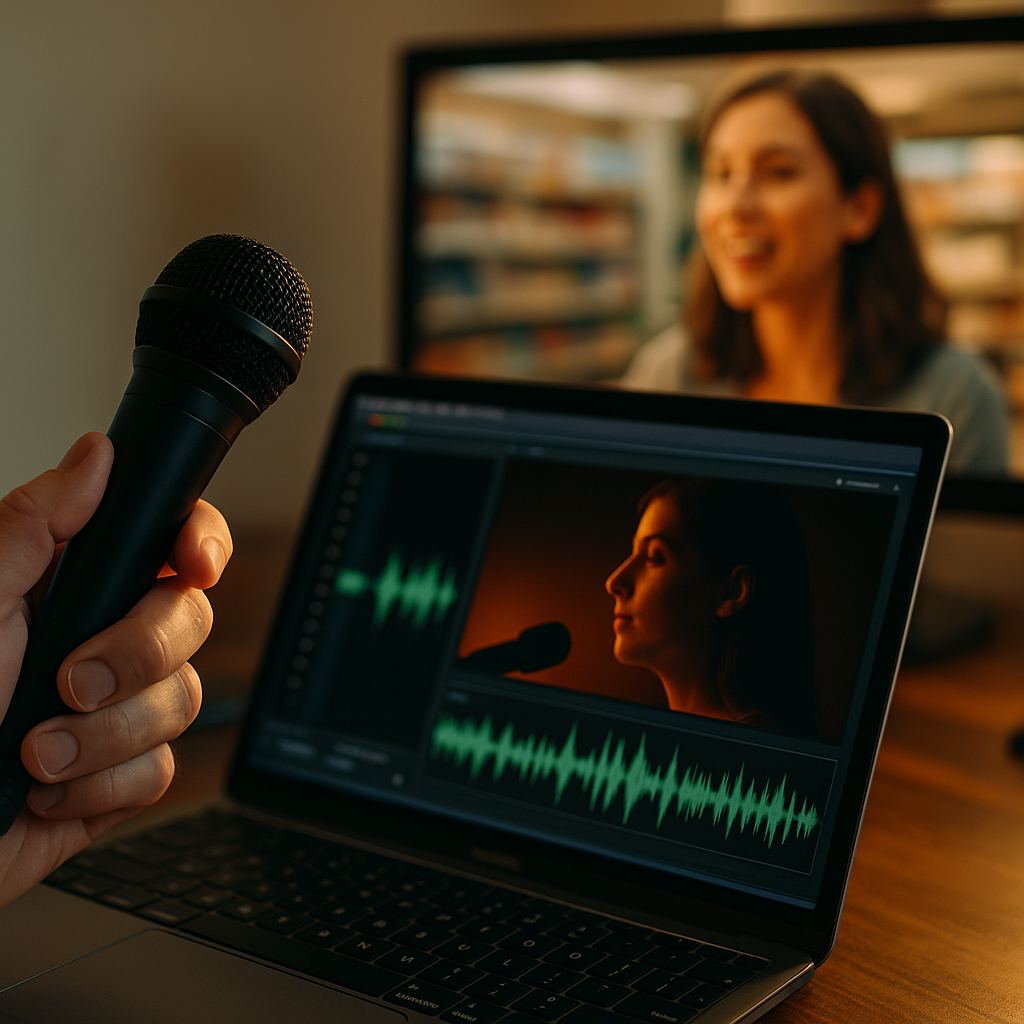
Nearly 30% of marketers say they’ve already tested AI voice cloning in some form of ad production, according to eMarketer survey data on generative AI adoption. Here’s the uncomfortable question nobody in procurement wants to ask: if a creator’s voice was cloned to say something they never recorded, who’s liable when the disclosure doesn’t match reality? Voice cloning AI is quietly becoming one of the messiest compliance gaps in creator marketing, and most brand safety checklists haven’t caught up.
The Problem Isn’t the Technology, It’s the Assumption
Voice cloning tools like ElevenLabs, Resemble AI, and Descript’s Overdub have made synthetic voice generation fast, cheap, and shockingly convincing. Brands love this for obvious reasons: dub a creator’s original ad into twelve languages without booking a single recording session, fix a flubbed line without a reshoot, or extend a campaign’s shelf life by generating new variations of a voiceover the creator recorded months ago.
The assumption baked into most workflows is that if the creator originally consented to the ad, any AI-generated variation of their voice is just a production detail. That assumption is wrong, and it’s wrong in ways that touch both publicity rights and advertising disclosure law simultaneously.
A cloned voice reading a script the creator never approved isn’t a dubbing shortcut. It’s a new endorsement, and it needs its own disclosure logic.
Why “Sounds Like Them” Isn’t the Same as “Disclosed by Them”
The FTC’s endorsement guides require that a material connection between a brand and an endorser be clearly and conspicuously disclosed. That standard was written assuming the endorser is a real person making a real statement. Voice cloning breaks that chain in a specific way: the audience hears a familiar voice, assumes the person behind it actually said those words, and forms trust based on that assumption.
When the voice is synthetic, even if it’s licensed and contractually approved, the audience still doesn’t know they’re hearing a generated version of a real person’s voice reading a script assembled after the fact. That’s a disclosure problem layered on top of a consent problem. Regulators haven’t issued cloned voice specific guidance yet, but the existing endorsement framework already covers “any statement the substance of which consumers are likely to believe reflects the opinions, beliefs, or experiences” of the endorser. A cloned voice reading brand copy the creator never personally delivered arguably fails that test on its face.
For a deeper look at how this connects to likeness rights more broadly, our earlier coverage of AI cloned creator likenesses walks through the publicity rights exposure brands are sitting on right now.
Where the Risk Actually Shows Up in Campaigns
This isn’t theoretical. Three specific production workflows are creating exposure right now, and most legal and compliance teams haven’t flagged them because they look like routine post production.
- Multilingual dubbing. A creator records an ad in English, and the brand uses voice cloning to generate Spanish, French, and Portuguese versions without the creator ever reviewing or approving the translated script. If the translated copy makes claims the creator wouldn’t have made, that’s a liability gap wrapped in a language barrier.
- Evergreen extension. A creator’s voice, cloned from an old recording, gets used to generate new ad copy for a product line launched after the original contract ended. The creator may not even know their voice is still working for the brand.
- Podcast and CTV read throughs. Audio-first placements are especially vulnerable because there’s no visual cue to layer a disclosure label over. If the voice is cloned and the read is dynamically inserted, tracking who approved what becomes a paperwork nightmare. This overlaps heavily with the challenges we covered in connected TV ad disclosures, where the living room format already strains traditional labeling norms.
Add in the fact that platforms are getting more aggressive about flagging undisclosed sponsorships algorithmically, and the exposure compounds. YouTube’s detection systems, for instance, are increasingly good at catching sponsorship mismatches, a trend we broke down in YouTube flags sponsorships. A cloned voice reading undisclosed brand copy is exactly the kind of mismatch those systems are built to catch.
What “Clear and Conspicuous” Means When the Voice Isn’t Real
Disclosure language has to evolve to keep pace. “Sponsored by” or “#ad” tags were designed for a world where the person speaking is the person who agreed to the deal. Voice cloning introduces a second layer: is the audience aware the voice itself is AI generated, separate from whether the endorsement is paid?
Some brands are starting to solve this with dual disclosure, labeling both the paid relationship and the synthetic voice production method. That’s more conservative than current law strictly requires, but it’s the direction regulators are likely headed given how aggressively the FTC has pursued AI-related deceptive practices enforcement in adjacent categories like chatbots and deepfake imagery.
If your legal team wouldn’t sign off on a deepfake video ad without a synthetic media disclosure, there’s no principled reason to treat a cloned voice ad differently.
This is also where dark posting adds a second layer of risk. When cloned voice ads run as unlisted paid media rather than organic posts, the usual disclosure label can get stripped entirely in the ad manager pipeline. We’ve documented this exact failure mode in dark posting strips disclosure labels, and the pattern applies just as directly to synthetic audio as it does to video creative.
Contracts Haven’t Caught Up Either
Most creator agreements written even a couple of years ago say nothing about voice cloning rights. They might cover usage rights for the recorded content, but “usage” assumed the original recording, not a synthetic derivative generated from a voice model trained on that recording.
Brands running multi-market campaigns need contract language that explicitly addresses:
- Whether the creator’s voice can be cloned at all, and for what specific uses.
- Script approval rights for any AI-generated dub or variation, not just the original recording.
- A hard expiration date on cloned voice usage, tied to the same term limits as the underlying contract.
- Disclosure obligations that travel with the cloned asset across every market it runs in.
This is really an extension of the licensing audit discipline brands should already be running. Our piece on pre flight licensing audits covers how usage rights gaps show up before a campaign even launches, and voice cloning rights belong on that same checklist now, not as an afterthought bolted on during a post-launch scramble.
There’s also a growing overlap with AI misattribution risk more broadly. As brand mentions get surfaced by AI answer engines and summarization tools, a cloned voice ad that misrepresents a creator’s actual statement can get picked up and repeated as fact. We explored a related version of this problem in AI answer engine misattribution, and the compounding effect is worth taking seriously: a disclosure failure at the ad level can turn into a misinformation problem two steps downstream.
A Practical Checklist Before the Next Cloned Voice Ad Goes Live
Compliance teams don’t need a new legal framework to start managing this risk today. They need a checklist that treats cloned voice the same way they’d treat any other synthetic media disclosure.
- Confirm the creator’s contract explicitly grants voice cloning rights, not just general usage rights.
- Require script sign off for every language or market variation generated from a cloned voice model.
- Add a synthetic voice disclosure alongside the standard paid partnership label, especially in audio-only formats.
- Set an expiration date on cloned voice assets tied to the original contract term.
- Audit dark posted and paid media versions separately, since disclosure labels frequently drop out during that handoff.
None of this is complicated. It just requires treating voice cloning as a disclosure decision, not a production convenience. Teams that already run tight influencer compliance programs, the kind referenced in general creator marketing benchmarking from Sprout Social and HubSpot, will find this is a small addition to existing workflows rather than a rebuild.
Frequently Asked Questions
Does the FTC have specific rules for AI cloned voice ads?
Not yet, in the sense of a dedicated regulation. The existing endorsement guides already require clear disclosure of material connections and prohibit misleading impressions about who is actually speaking, which covers cloned voice scenarios under current interpretation even without new rulemaking.
Who is liable if a cloned voice ad misrepresents what a creator said?
Liability typically falls on the brand and its agency as the parties responsible for the ad’s claims, but creators can also face reputational and contractual exposure if their voice was used outside the scope of what they approved.
Can brands clone a creator’s voice without new consent if they already have a usage license?
Generally no. Most existing usage licenses were written before voice cloning was common and don’t explicitly cover synthetic derivatives, so brands should treat cloning rights as a separate, specific contract term rather than assuming broad usage language covers it.
Should cloned voice ads carry a different disclosure than standard sponsored content?
Best practice is to layer a synthetic voice notice alongside the standard sponsorship disclosure, particularly in audio-only formats like podcasts and connected TV where there’s no visual label to rely on.
How long should a brand be allowed to use a creator’s cloned voice?
Usage should be tied to a defined expiration date matching the original contract term, not left open-ended, since indefinite cloned voice rights create long-term liability that’s difficult to unwind later.
The brands that get ahead of this won’t wait for a cloned voice enforcement case to make headlines. Update contract templates now, add synthetic voice disclosure to your creative review checklist, and treat every cloned voice asset with the same scrutiny you’d apply to a deepfake video ad.
Top Influencer Marketing Agencies
The leading agencies shaping influencer marketing in 2026
Agencies ranked by campaign performance, client diversity, platform expertise, proven ROI, industry recognition, and client satisfaction. Assessed through verified case studies, reviews, and industry consultations.
Moburst

-
2

The Shelf
Boutique Beauty & Lifestyle Influencer AgencyA data-driven boutique agency specializing exclusively in beauty, wellness, and lifestyle influencer campaigns on Instagram and TikTok. Best for brands already focused on the beauty/personal care space that need curated, aesthetic-driven content.Clients: Pepsi, The Honest Company, Hims, Elf Cosmetics, Pure LeafVisit The Shelf → -
3

Audiencly
Niche Gaming & Esports Influencer AgencyA specialized agency focused exclusively on gaming and esports creators on YouTube, Twitch, and TikTok. Ideal if your campaign is 100% gaming-focused — from game launches to hardware and esports events.Clients: Epic Games, NordVPN, Ubisoft, Wargaming, Tencent GamesVisit Audiencly → -
4

Viral Nation
Global Influencer Marketing & Talent AgencyA dual talent management and marketing agency with proprietary brand safety tools and a global creator network spanning nano-influencers to celebrities across all major platforms.Clients: Meta, Activision Blizzard, Energizer, Aston Martin, WalmartVisit Viral Nation → -
5

The Influencer Marketing Factory
TikTok, Instagram & YouTube CampaignsA full-service agency with strong TikTok expertise, offering end-to-end campaign management from influencer discovery through performance reporting with a focus on platform-native content.Clients: Google, Snapchat, Universal Music, Bumble, YelpVisit TIMF → -
6

NeoReach
Enterprise Analytics & Influencer CampaignsAn enterprise-focused agency combining managed campaigns with a powerful self-service data platform for influencer search, audience analytics, and attribution modeling.Clients: Amazon, Airbnb, Netflix, Honda, The New York TimesVisit NeoReach → -
7

Ubiquitous
Creator-First Marketing PlatformA tech-driven platform combining self-service tools with managed campaign options, emphasizing speed and scalability for brands managing multiple influencer relationships.Clients: Lyft, Disney, Target, American Eagle, NetflixVisit Ubiquitous → -
8

Obviously
Scalable Enterprise Influencer CampaignsA tech-enabled agency built for high-volume campaigns, coordinating hundreds of creators simultaneously with end-to-end logistics, content rights management, and product seeding.Clients: Google, Ulta Beauty, Converse, AmazonVisit Obviously →