


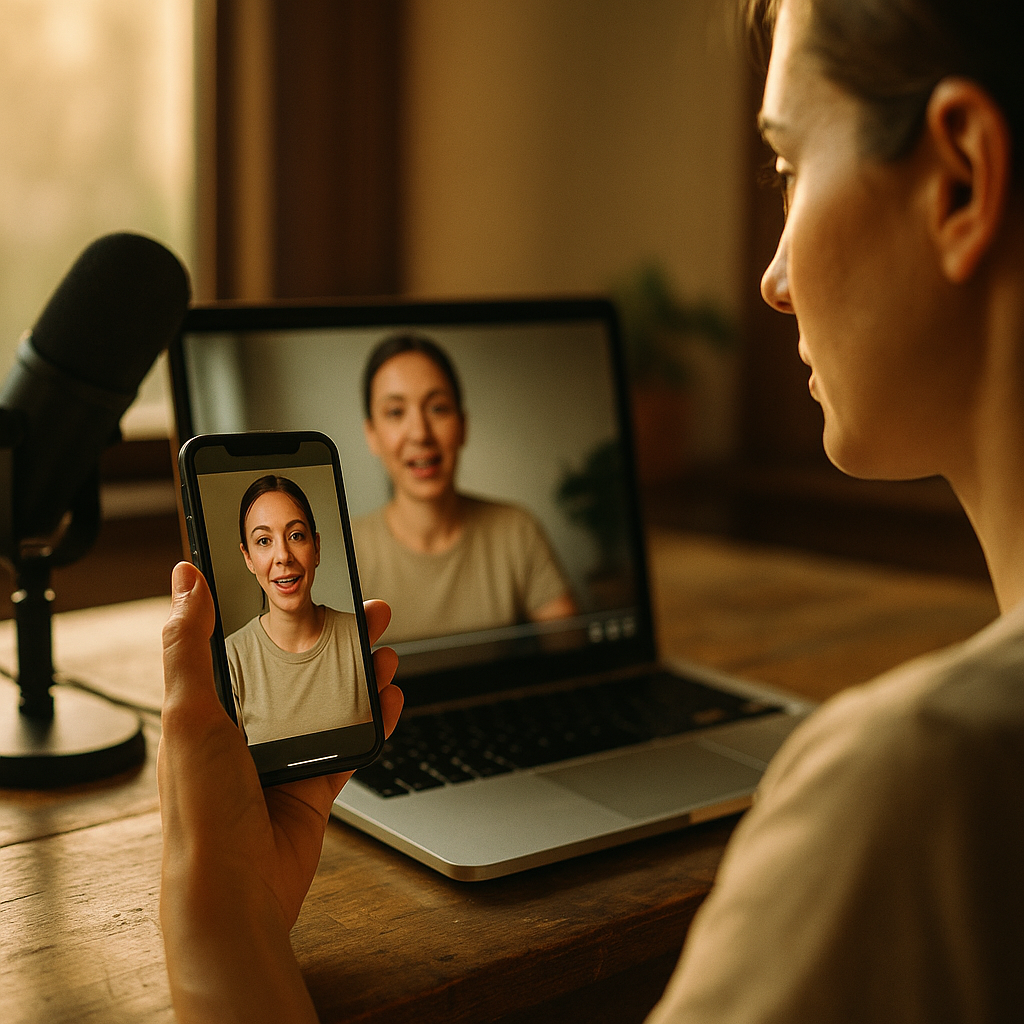
One unauthorized AI clip of a creator’s face can cost a brand more than the entire campaign budget. Right of publicity risk is no longer a niche legal footnote, it’s the single biggest exposure hiding inside every AI-generated influencer campaign running today. If your team can synthesize a creator’s voice, face, or mannerisms without a fresh, specific license, you’re not innovating. You’re litigating in slow motion.
What Right of Publicity Actually Covers
Right of publicity is the legal claim a person has over the commercial use of their identity: name, face, voice, signature gesture, even a distinctive catchphrase. It’s separate from copyright. Copyright protects the video file a creator posted. Right of publicity protects the person inside that video, regardless of who owns the footage.
This matters enormously once AI enters the picture. A brand can legally own the rights to a piece of sponsored content and still have zero right to feed that footage into a model and generate new, synthetic performances of that creator saying things they never said. Ownership of the asset and ownership of the identity are two entirely different licenses, and marketing teams routinely confuse them.
Owning the footage is not the same as owning the face. Brands that treat AI likeness rights as an extension of a standard content license are the ones getting sued first.
Why AI Cloning Changes the Risk Calculus
Traditional right of publicity disputes were slow and expensive to bring. You needed evidence of a specific unauthorized ad, a specific market, a specific harm. Generative AI collapses that timeline. A brand can now clone a creator’s likeness, generate dozens of localized variants, and push them across paid social in a single afternoon. The scale of infringement multiplied by the speed of distribution turns a manageable legal risk into a mass liability event.
Consider what happened when Scarlett Johansson publicly objected to a voice assistant she said sounded uncannily like her, despite never licensing her voice for that use. The company denied intentional cloning, but the reputational damage landed instantly and the legal ambiguity dragged on for months. That’s the pattern brands should expect: even a disputed likeness claim generates real commercial fallout before a court ever rules on anything.
Now layer in AI dubbing, face-swap ad variants, and synthetic UGC tools that let a single creator’s face “star” in a hundred localized versions of an ad. Each variant is a separate potential claim if the underlying license didn’t explicitly authorize AI-generated derivatives. Brands running these tools at scale without airtight consent language are stacking risk exponentially, not linearly.
The Consent Gap: Why “They Signed a Contract” Isn’t Enough
Most legacy influencer contracts were written before generative AI existed as a production tool. They authorize “use of the content” or “use of creator’s image in connection with the campaign.” That language does not clearly cover training a model on a creator’s face, generating novel synthetic footage, or deploying an AI clone in markets or contexts the creator never agreed to.
Courts and regulators are increasingly skeptical of broad, ambiguous consent clauses when AI is involved. The reasoning is simple: a creator who agreed to appear in one branded video did not necessarily agree to have their likeness become a reusable digital asset the brand can regenerate indefinitely. Consent for AI cloning has to be explicit, scoped, and separately negotiated. Silence in the contract is not permission.
This is the same operational failure mode we’ve flagged around synthetic avatar contracts, where whitelisting rights and AI generation rights get bundled into vague clauses that neither party fully understands at signing. If your legal team can’t point to the exact paragraph authorizing AI cloning, assume you don’t have it.
What a Defensible AI Likeness License Actually Includes
- Explicit language naming “AI-generated,” “synthetic,” or “machine-generated derivative content” as a licensed use category.
- A defined duration and geographic scope for the AI-generated variants, not an open-ended “in perpetuity, worldwide” grab.
- Creator approval rights over specific outputs before publication, not just approval of the original source footage.
- Compensation terms tied to the volume or reach of AI-generated variants, since one shoot can now produce dozens of derivative ads.
- A termination or revocation clause allowing the creator to pull consent for future generations, even if past use remains licensed.
State by State: A Patchwork That Punishes Assumptions
Right of publicity law in the US isn’t federal. It’s a messy quilt of state statutes and common law, and the differences are wide enough to trip up national campaigns. Tennessee’s ELVIS Act, passed specifically to address AI voice cloning, gives performers strong protection against unauthorized synthetic replication of their voice. California’s publicity statute already covered likeness broadly and has been extended through AB 1836 to address digital replicas in entertainment contexts. New York recognizes post-mortem rights for deceased performers’ digital likenesses, which matters if your campaign ever references a legacy figure or estate-licensed persona.
Some states require a written, signed consent specifically for commercial use of likeness. Others allow implied consent through course of dealing. A brand running the same AI-generated creator campaign nationally is effectively operating under the strictest applicable state law whether it planned to or not, because plaintiffs will file where the law favors them.
This is structurally similar to the compliance sprawl we’ve covered in age and location gated disclosure rules: national campaigns need a single policy calibrated to the strictest jurisdiction, not a patchwork of assumptions.
Building a Licensing Framework That Survives Scrutiny
The brands handling this well aren’t avoiding AI likeness tools. They’re building governance around them before production starts, not after a creator’s lawyer sends a cease and desist. A workable framework looks like this in practice.
First, separate “content license” from “likeness license” in every creator agreement, even when the same document covers both. Treat them as distinct grants with distinct terms, because they answer different legal questions and get challenged under different legal theories.
Second, build an internal approval gate specifically for AI-generated variants. If your ad ops team can push a synthetic clip live without legal or the creator ever seeing it, you have no control point. That’s the same structural gap we flagged in AI agent contract errors, where automation outpaces the review process meant to catch it.
Third, document provenance. Keep a record of exactly which source footage trained or generated each AI clip, tied back to the specific license that authorized it. If a dispute arises, you need to show the chain of consent, not just claim it existed. This is the same audit logic behind governance frameworks like the one detailed in AI content governance coverage: traceability is your best defense.
Fourth, budget for it. SAG-AFTRA’s negotiated AI provisions set a real market expectation: performers expect separate, meaningful compensation when their likeness is used to generate new synthetic performances. Trying to cover AI cloning rights inside a flat sponsorship fee is a negotiating tactic that will eventually blow up in a renegotiation or a lawsuit.
If your AI licensing budget line reads zero, you don’t have a licensing strategy. You have exposure waiting for a plaintiff’s attorney to find it.
What Happens When You Get It Wrong
The downside isn’t hypothetical. Statutory damages under several state right of publicity laws can run into six figures per violation, and that’s before accounting for injunctive relief that can force a brand to pull an entire campaign mid-flight. Add reputational damage: creators talk, and a brand known for cloning likenesses without proper consent becomes radioactive to future talent partnerships. According to Statista research on marketing spend, influencer budgets keep climbing year over year, which means the talent pool available to brands with a bad reputation on AI usage keeps shrinking in relative terms.
There’s also a platform risk layer. Meta and TikTok have both tightened enforcement around synthetic media disclosure, and unauthorized likeness use can trigger account-level penalties independent of any lawsuit, per guidance available through Meta’s business policies. Losing ad account standing over a preventable licensing gap is an operational failure, not just a legal one.
Compare this to the disclosure enforcement patterns we’ve tracked in YouTube’s auto disclosure detection coverage: platforms are building automated systems to catch what brands don’t self-report, and that trend applies to synthetic likeness content just as much as sponsored content.
Quick Compliance Checklist Before Any AI Clone Goes Live
- Confirm the license explicitly names AI-generated or synthetic derivative use.
- Verify scope (duration, geography, platform) matches where the content will actually run.
- Check state-specific requirements for the creator’s residency and the campaign’s target markets.
- Route every AI variant through the same approval gate as original creator content.
- Keep provenance records tying each output back to a signed consent document.
Practical benchmarking data from Sprout Social and HubSpot on creator program structures consistently shows that brands with formal legal review steps built into their influencer workflows report fewer disputes and faster campaign approvals overall. Governance isn’t slower. It’s cheaper than the alternative.
FAQs
Does a standard influencer contract automatically cover AI cloning rights?
No. Standard contracts typically license the specific content produced, not the broader right to generate new AI-derived performances of the creator’s likeness. AI cloning requires separate, explicit consent language.
Can a brand use AI to generate new content from footage it already licensed?
Only if the original license specifically authorized AI-generated derivative use. Owning the footage does not automatically grant the right to synthesize new performances from it.
Which states have the strictest right of publicity laws for AI likeness use?
Tennessee’s ELVIS Act specifically targets unauthorized AI voice cloning, and California’s publicity statutes, extended through AB 1836, cover digital replicas broadly. Brands running national campaigns should design consent around the strictest applicable state.
What should brands pay creators for AI likeness rights beyond a standard sponsorship fee?
Compensation should scale with the volume and reach of AI-generated variants, not just the original shoot. Industry norms set by agreements like SAG-AFTRA’s AI provisions treat synthetic derivative use as a separately compensable right.
What’s the biggest operational mistake brands make with AI likeness cloning?
Letting AI-generated variants bypass the same legal and creator approval process used for original content. Without a consistent review gate, brands lose visibility into what’s actually being published under their name.
Next step: Audit every active creator contract this quarter for explicit AI derivative language before greenlighting another synthetic variant. If the license doesn’t name it, don’t generate it.
FAQs
Does a standard influencer contract automatically cover AI cloning rights?
No. Standard contracts typically license the specific content produced, not the broader right to generate new AI-derived performances of the creator’s likeness. AI cloning requires separate, explicit consent language.
Can a brand use AI to generate new content from footage it already licensed?
Only if the original license specifically authorized AI-generated derivative use. Owning the footage does not automatically grant the right to synthesize new performances from it.
Which states have the strictest right of publicity laws for AI likeness use?
Tennessee’s ELVIS Act specifically targets unauthorized AI voice cloning, and California’s publicity statutes, extended through AB 1836, cover digital replicas broadly. Brands running national campaigns should design consent around the strictest applicable state.
What should brands pay creators for AI likeness rights beyond a standard sponsorship fee?
Compensation should scale with the volume and reach of AI-generated variants, not just the original shoot. Industry norms set by agreements like SAG-AFTRA’s AI provisions treat synthetic derivative use as a separately compensable right.
What’s the biggest operational mistake brands make with AI likeness cloning?
Letting AI-generated variants bypass the same legal and creator approval process used for original content. Without a consistent review gate, brands lose visibility into what’s actually being published under their name.
Top Influencer Marketing Agencies
The leading agencies shaping influencer marketing in 2026
Agencies ranked by campaign performance, client diversity, platform expertise, proven ROI, industry recognition, and client satisfaction. Assessed through verified case studies, reviews, and industry consultations.
Moburst

-
2

The Shelf
Boutique Beauty & Lifestyle Influencer AgencyA data-driven boutique agency specializing exclusively in beauty, wellness, and lifestyle influencer campaigns on Instagram and TikTok. Best for brands already focused on the beauty/personal care space that need curated, aesthetic-driven content.Clients: Pepsi, The Honest Company, Hims, Elf Cosmetics, Pure LeafVisit The Shelf → -
3

Audiencly
Niche Gaming & Esports Influencer AgencyA specialized agency focused exclusively on gaming and esports creators on YouTube, Twitch, and TikTok. Ideal if your campaign is 100% gaming-focused — from game launches to hardware and esports events.Clients: Epic Games, NordVPN, Ubisoft, Wargaming, Tencent GamesVisit Audiencly → -
4

Viral Nation
Global Influencer Marketing & Talent AgencyA dual talent management and marketing agency with proprietary brand safety tools and a global creator network spanning nano-influencers to celebrities across all major platforms.Clients: Meta, Activision Blizzard, Energizer, Aston Martin, WalmartVisit Viral Nation → -
5

The Influencer Marketing Factory
TikTok, Instagram & YouTube CampaignsA full-service agency with strong TikTok expertise, offering end-to-end campaign management from influencer discovery through performance reporting with a focus on platform-native content.Clients: Google, Snapchat, Universal Music, Bumble, YelpVisit TIMF → -
6

NeoReach
Enterprise Analytics & Influencer CampaignsAn enterprise-focused agency combining managed campaigns with a powerful self-service data platform for influencer search, audience analytics, and attribution modeling.Clients: Amazon, Airbnb, Netflix, Honda, The New York TimesVisit NeoReach → -
7

Ubiquitous
Creator-First Marketing PlatformA tech-driven platform combining self-service tools with managed campaign options, emphasizing speed and scalability for brands managing multiple influencer relationships.Clients: Lyft, Disney, Target, American Eagle, NetflixVisit Ubiquitous → -
8

Obviously
Scalable Enterprise Influencer CampaignsA tech-enabled agency built for high-volume campaigns, coordinating hundreds of creators simultaneously with end-to-end logistics, content rights management, and product seeding.Clients: Google, Ulta Beauty, Converse, AmazonVisit Obviously →