


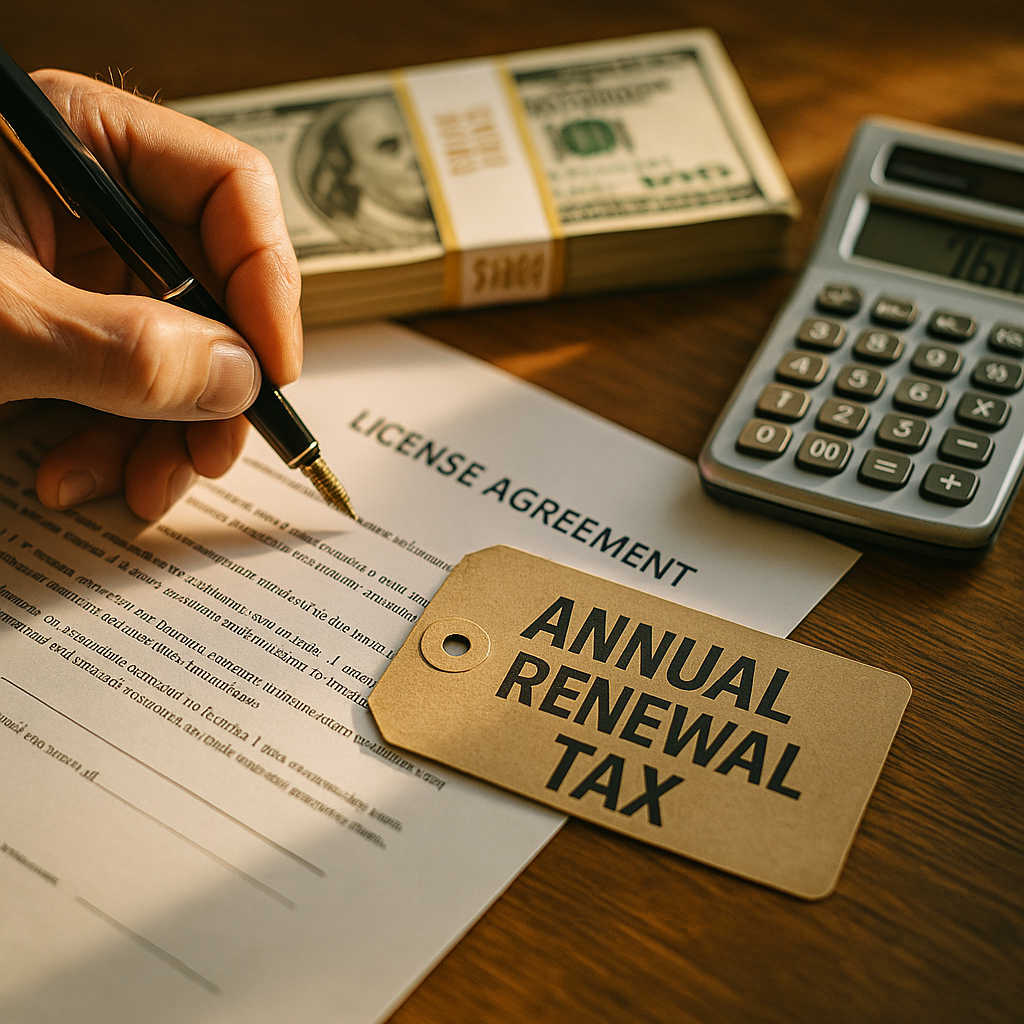
Brands are paying up to three times a single campaign fee just to keep using a creator’s face past ninety days. That’s the usage rights pricing hurdle nobody budgets for correctly, and it’s quietly eating margin across the industry. The fix isn’t a smarter negotiation tactic. It’s a structural one: locking in long term ambassador deals that price usage rights once, amortize them over years, and kill the renewal renegotiation cycle entirely.
Why Usage Rights Became the Line Item Everyone Underestimates
Usage rights pricing used to be an afterthought, a clause buried on page four of a contract. Not anymore. As paid amplification and whitelisting have become standard practice rather than exception, creators (and their agents) have caught on to how much value brands extract from a single piece of content when it’s running as a paid ad for months.
A single-campaign deal typically bundles a modest usage window, say 30 to 90 days of organic and limited paid use. Once that window closes, brands either stop running the asset or go back to the creator for a rights extension. That extension negotiation almost never favors the brand. The creator now has performance data proving the content works, leverage they didn’t have during the original negotiation, and zero incentive to price the renewal cheaply.
Every renewal cycle is a leverage transfer from brand to creator. The content that performs best becomes the most expensive to keep using, exactly when you need it most.
This is the trap: your best-performing assets become your most fragile ones. Pull a top performer from rotation because the rights lapsed, and you’re not just losing a piece of content, you’re losing a proven conversion driver mid-flight.
The Long Term Ambassador Model, Explained Simply
A long term ambassador deal flips the pricing logic. Instead of buying a content piece plus a short usage license, you’re buying a relationship with usage rights baked in for the full term, usually 12 to 36 months. The creator gets a retainer (often with performance kickers), and the brand gets continuous content production plus a standing license to use, edit, and whitelist that content for the life of the contract.
The math works because usage rights get amortized. A single-campaign deal might charge $8,000 for content plus $6,000 for a 90-day paid usage license. Over a year, if you need four refreshes, you’re paying that usage fee four times, roughly $24,000 just for rights. A one-year ambassador retainer with usage rights included might run $60,000 to $80,000 total, but it covers unlimited content refreshes and continuous rights, not four separate rights negotiations with four separate leverage points working against you.
This isn’t a new idea in principle. It’s closer to how brands have always thought about long-term media buys or annual sponsorship deals: you pay a premium for predictability and volume, but you avoid the transactional tax that comes with negotiating from scratch every quarter.
What Actually Gets Locked In
- Usage duration: perpetual or multi-year use rights instead of 30 to 90 day windows.
- Channel scope: organic, paid social, website, email, and sometimes out-of-home, defined up front rather than negotiated per asset.
- Content volume: a set cadence of deliverables (monthly or quarterly) so both sides know what “included” actually means.
- Edit and repurpose rights: the ability to cut, caption, and reformat content without going back for sign-off on every version.
- Exclusivity terms: category exclusivity in exchange for the longer commitment, which is often the real reason creators say yes.
Is a Multi-Year Deal Actually Cheaper? Do the Math First
Not always, and pretending otherwise is how finance teams lose trust in marketing’s numbers. A long term deal is cheaper when three things are true: you plan to use the content repeatedly across paid channels, the creator’s audience and pricing power are likely to hold or grow, and you have the internal process to actually brief and produce content at the agreed cadence.
If any of those three break down, a long term deal can become dead weight. Locking in a creator whose relevance fades, or whose audience shifts platforms, means you’re stuck paying a retainer for content that no longer moves the needle. This is why the usage rights conversation can’t happen in isolation. It has to sit inside a broader retainer strategy discussion, the kind laid out in multi-year creator retainer planning, where platform risk and creator durability get modeled before the contract gets signed.
Run the comparison the same way you’d model a build versus buy decision on infrastructure. Total cost of ownership matters more than the quoted rate. The same logic that applies when brands weigh total cost of ownership for platform investments applies here: a lower sticker price with hidden renewal costs almost always loses to a higher upfront number with predictable terms.
Structuring the Deal So Usage Rights Don’t Become a Fight Later
Ambiguity is where these contracts fail. “Ongoing usage rights” means nothing without specifics. Here’s what needs to be in writing before anyone signs:
- Define the usage universe up front. List every channel and format you might reasonably use in year one and year two, including formats that don’t exist yet (this is where a general “future platforms” clause earns its keep).
- Separate content creation fees from usage fees explicitly. Even in a bundled retainer, break out the line items internally. It protects you when renegotiating and gives finance a clean way to model the retainer versus one-off fee tradeoff for future deals.
- Build in a performance review checkpoint, not just a renewal date. Annual reviews let both sides adjust scope without tearing up the whole agreement.
- Address AI-generated derivatives. If you plan to use AI tools to repurpose creator content into new formats, that needs explicit sign-off, following the same governance discipline covered in AI creator tool governance.
- Assign internal ownership of the whitelisting relationship. Someone on your team needs to own the ad account access and usage tracking, mirroring the structure described in creator whitelisting rights frameworks.
The Exclusivity Trade That Makes Long Term Deals Work
Creators rarely agree to broad, multi-year usage rights for free. What they want in exchange is exclusivity, meaning you’re locking out their willingness to work with direct competitors for the contract term. This is the real currency of the negotiation.
Frame the deal that way internally too. You’re not just buying content and usage rights, you’re buying category lockout. For competitive verticals (beauty, fitness apps, fintech), that lockout alone can justify the higher retainer cost, independent of the usage rights savings.
Where This Fits Inside a Broader Budget Strategy
Locking in ambassador deals shouldn’t happen in a vacuum. It works best as one lever inside a larger retention and budget strategy, not a one-off fix applied to your most expensive creator relationship. Programs that plan retention milestones years in advance, the way outlined in three-year ambassador retention roadmaps, tend to negotiate usage rights far more favorably because the creator already sees the relationship as long-term rather than transactional.
There’s also a compliance angle worth flagging. Long-term whitelisting arrangements increase the surface area for disclosure and amplification risk, since content stays live and gets reused across more campaigns over more time. Any brand locking in multi-year usage rights should pair that contract with the kind of governance structure detailed in creator licensing governance reviews, so legal and compliance aren’t discovering stale disclosures eighteen months into a deal.
Regulatory scrutiny on endorsement disclosures has only tightened. The Federal Trade Commission continues to enforce clear and conspicuous disclosure rules regardless of how old the content is or how it’s being repurposed, and platforms like Meta for Business have their own branded content policies that apply every time an asset gets reused in paid placements. A multi-year usage license doesn’t grandfather you out of any of that.
What About Renegotiation Risk (Market Rates, Tariffs, Platform Shifts)?
The obvious objection: what if you lock in a rate and the market moves against you, or a platform shift changes what the content is even worth? Fair concern. This is why smart long term contracts include rate adjustment clauses tied to defined triggers rather than open renegotiation.
Brands dealing with cost volatility elsewhere in their supply chain have already built this muscle. The same renegotiation logic used in tariff-proof creator contracts, building in scheduled adjustment windows instead of leaving pricing static for three years straight, applies directly to usage rights terms. You’re not avoiding renegotiation altogether. You’re scheduling it on your terms instead of the creator’s.
Data on creator rate benchmarks helps here too. According to industry surveys tracked by eMarketer, sponsored content rates have continued climbing across most tiers, which means locking a rate today without any adjustment mechanism is its own kind of risk. Build flexibility into the contract, just define its boundaries clearly rather than leaving it open-ended.
A Quick Gut Check Before You Sign
Before committing to a multi-year ambassador structure, run through this short list:
- Have you modeled total usage rights cost under the current renewal model for at least 18 months?
- Does the creator’s audience and content style show durability, or is it trend-dependent?
- Is there internal bandwidth to brief and produce at the agreed content cadence?
- Are compliance and legal reviewing the whitelisting and disclosure terms, not just marketing?
- Does the contract include a defined rate adjustment window, not just a renewal date?
If you can’t answer yes to at least four of these, the long term deal probably needs more structuring work before it goes to signature.
Frequently Asked Questions
FAQs
How long should a long term ambassador usage rights deal run?
Most brands land on 12 to 24 months as the sweet spot. It’s long enough to amortize usage rights costs and build creative consistency, but short enough to avoid being locked into a creator relationship that no longer fits the brand after a platform shift or audience decline.
Does a multi-year deal always cost less than repeated single-campaign licenses?
Not automatically. It’s cheaper when the content gets reused repeatedly across paid channels and the creator’s relevance holds steady. Run a total cost comparison over 18 to 24 months before assuming the retainer model wins on price alone.
What usage rights should be included in a long term ambassador contract?
At minimum: organic and paid social usage, website and email use, edit and repurposing rights, and a defined channel list that includes reasonable future platforms. Vague language like “ongoing digital use” creates disputes later.
How do compliance obligations change with long term usage rights?
Disclosure rules apply every time content runs, regardless of contract length. Brands need a recurring review process to confirm disclosures stay accurate as content gets reused across new campaigns over the life of the deal.
Should rate adjustments be built into a multi-year usage rights contract?
Yes. Static pricing over two or three years exposes both sides to market risk. Scheduled adjustment windows tied to performance or market benchmarks protect the brand from overpaying and the creator from underpricing their own growth.
Stop negotiating usage rights one renewal at a time. Pull your last 18 months of extension fees, run the total against a multi-year retainer quote, and bring finance a real number before your next contract renewal deadline forces a rushed decision.
Top Influencer Marketing Agencies
The leading agencies shaping influencer marketing in 2026
Agencies ranked by campaign performance, client diversity, platform expertise, proven ROI, industry recognition, and client satisfaction. Assessed through verified case studies, reviews, and industry consultations.
Moburst

-
2

The Shelf
Boutique Beauty & Lifestyle Influencer AgencyA data-driven boutique agency specializing exclusively in beauty, wellness, and lifestyle influencer campaigns on Instagram and TikTok. Best for brands already focused on the beauty/personal care space that need curated, aesthetic-driven content.Clients: Pepsi, The Honest Company, Hims, Elf Cosmetics, Pure LeafVisit The Shelf → -
3

Audiencly
Niche Gaming & Esports Influencer AgencyA specialized agency focused exclusively on gaming and esports creators on YouTube, Twitch, and TikTok. Ideal if your campaign is 100% gaming-focused — from game launches to hardware and esports events.Clients: Epic Games, NordVPN, Ubisoft, Wargaming, Tencent GamesVisit Audiencly → -
4

Viral Nation
Global Influencer Marketing & Talent AgencyA dual talent management and marketing agency with proprietary brand safety tools and a global creator network spanning nano-influencers to celebrities across all major platforms.Clients: Meta, Activision Blizzard, Energizer, Aston Martin, WalmartVisit Viral Nation → -
5

The Influencer Marketing Factory
TikTok, Instagram & YouTube CampaignsA full-service agency with strong TikTok expertise, offering end-to-end campaign management from influencer discovery through performance reporting with a focus on platform-native content.Clients: Google, Snapchat, Universal Music, Bumble, YelpVisit TIMF → -
6

NeoReach
Enterprise Analytics & Influencer CampaignsAn enterprise-focused agency combining managed campaigns with a powerful self-service data platform for influencer search, audience analytics, and attribution modeling.Clients: Amazon, Airbnb, Netflix, Honda, The New York TimesVisit NeoReach → -
7

Ubiquitous
Creator-First Marketing PlatformA tech-driven platform combining self-service tools with managed campaign options, emphasizing speed and scalability for brands managing multiple influencer relationships.Clients: Lyft, Disney, Target, American Eagle, NetflixVisit Ubiquitous → -
8

Obviously
Scalable Enterprise Influencer CampaignsA tech-enabled agency built for high-volume campaigns, coordinating hundreds of creators simultaneously with end-to-end logistics, content rights management, and product seeding.Clients: Google, Ulta Beauty, Converse, AmazonVisit Obviously →