


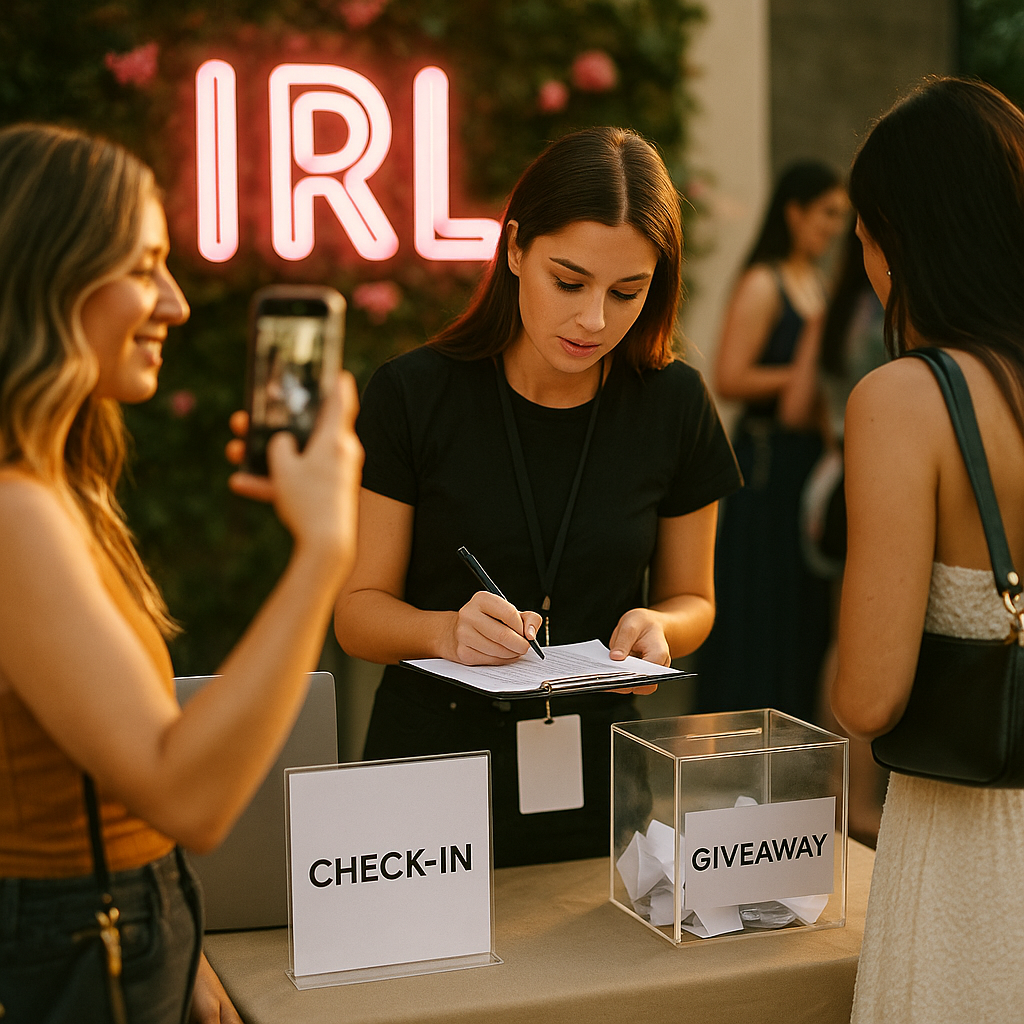
One unpermitted giveaway at a single IRL activation can trigger fines in all fifty states simultaneously. That’s the reality of sweepstakes law for brands running influencer-driven events, and most marketing teams still treat it as an afterthought. As IRL activations reclaim budget from purely digital campaigns, in-person influencer event risk has quietly become one of the most expensive blind spots in the influencer marketing playbook.
Why IRL Is Back, and Why the Legal Stakes Are Higher
Brands are pouring money back into physical experiences. Pop-up shops, creator meet-and-greets, brand houses at festivals, product launch parties with a dozen creators live-streaming from the floor. It’s a good instinct. Audiences are fatigued by feeds, and nothing converts trust like a creator physically standing next to a product, telling their followers to come touch it.
But digital campaigns and physical events carry entirely different risk profiles. When a sponsored post goes wrong, you can delete it, issue a correction, or negotiate a takedown with the platform. When a physical event goes wrong, someone might have gotten hurt, a state attorney general might be asking questions, or a venue might be suing you for damages. There’s no undo button on a bodily injury claim or an unregistered sweepstakes.
Brands that treat event legal review as a formality, rather than a line item with its own budget and timeline, are the ones showing up in state AG enforcement letters six months later.
Sweepstakes Law: The Trap Hiding in Plain Sight
Here’s the part that catches marketing teams off guard: any promotion where a creator says “tag three friends and show up Saturday to win,” combined with a prize of meaningful value, can legally qualify as a sweepstakes or lottery. And sweepstakes law is regulated state by state, not federally, which means a single national activation with a giveaway component might need registration and bonding in states like New York and Florida, where prize thresholds trigger formal filing requirements.
The core legal test most states apply involves three elements: prize, chance, and consideration. Remove any one of them and you’re usually clear. That’s why compliant giveaways almost always include a “no purchase necessary” alternate entry method and avoid tying entry strictly to attendance or purchase. If your creator’s talking points at the event blur that line (and creators improvise, that’s their job), you’ve got exposure.
- Registration thresholds: New York and Florida require registration and bond for prizes over certain dollar amounts, generally in the $5,000 range, though thresholds and rules shift, so confirm current figures before launch.
- Official rules matter: A sweepstakes without published official rules, eligibility, odds, prize value, and entry period, isn’t just sloppy. It’s the first thing a state regulator or plaintiff’s attorney asks for.
- Creator ad-libbing is a liability multiplier: Brief your talent on exact giveaway mechanics in writing. Never let them freestyle prize terms on a livestream.
This isn’t paranoia. The FTC has made clear it views promotional mechanics and disclosure as connected issues, and state consumer protection offices have historically been aggressive with brands that run national contests without local registration. If your team already handles FTC disclosure reviews for digital posts, treat sweepstakes registration as the IRL equivalent, just as unglamorous, just as necessary. For background on how regulators are tightening disclosure expectations more broadly, see this breakdown of recent FTC enforcement rulings.
Liability Waivers: Your Insurance Policy’s First Line of Defense
Ask your event team a simple question: do we have a signed waiver from every attendee, every creator, and every crew member on site? If the answer is “the venue handles that,” you have a problem.
Liability waivers exist to shift risk before an incident, not to negotiate it afterward. A well-drafted waiver, reviewed by counsel familiar with your event’s home state (enforceability varies significantly, some states scrutinize waivers heavily, particularly where gross negligence is alleged), should cover:
- Assumption of risk for physical activities, sampling, or product interaction at the event
- Photo, video, and likeness release for content the brand or creators may capture and repost
- Indemnification language protecting the brand if a third-party vendor causes harm
- Clear identification of who is actually running the event (brand, agency, or creator’s own production team) since ambiguity here creates coverage gaps
Don’t forget the creators themselves. Talent showing up to host or perform needs their own rider addressing safety, security, and liability separate from the general attendee waiver. Agencies that skip this step often discover, after an incident, that their contract with the creator never actually addressed on-site conduct or injury at all. That’s the same kind of gap we’ve flagged in ambassador contract reviews, where usage rights get detailed attention but physical safety and conduct terms get ignored.
Venue Contracts Are Where Risk Actually Lives
Marketing teams negotiate creator fees down to the dollar and then sign a venue contract without reading the indemnification clause. That’s backwards. The venue agreement is usually where the real financial exposure sits, because it dictates who pays if something goes wrong on someone else’s property.
Key clauses to scrutinize before signing anything:
- Certificate of insurance requirements: Most venues require the renting brand to carry general liability coverage and often name the venue as an additional insured. Confirm your policy limits actually match what the venue demands, some require $1 million per occurrence or more.
- Indemnification mutuality: One-sided indemnification clauses that put all risk on the brand are common in venue paperwork. Push back. If the venue’s own negligence (a broken staircase, faulty wiring) causes an injury, the venue should carry that risk, not you.
- Cancellation and force majeure terms: What happens if a creator no-shows, weather forces a cancellation, or a permit falls through? Vague force majeure language leaves brands holding nonrefundable deposits with no recourse.
- Capacity and permit compliance: Fire code capacity limits are not suggestions. An oversold event with a viral RSVP list is a liability event waiting to happen, and it’s the brand’s name on the permit application, not the creator’s.
A venue contract signed by someone in event operations, without legal review, is often the single riskiest document in an entire IRL activation.
It also helps to think about venue risk the way you’d think about vendor risk anywhere else in your marketing stack. Just as brands now run audits on creator contracts to close revenue and rights gaps, as covered in this piece on creator contract audits, venue agreements deserve the same structured review cycle rather than a rushed signature two weeks before the event.
The Content Layer: What Happens After the Event Isn’t Separate Risk
IRL events don’t end when attendees go home. Creators post recap content, brands repurpose footage into ads, and suddenly your physical event has become a digital asset with its own disclosure and licensing questions. If a creator captured content at your activation and it ends up in paid social or CTV spots later, you need usage rights locked in before the event, not negotiated after a video goes viral.
This is where event legal review should intersect with your broader content compliance process. If footage from the activation gets pushed into paid media, the same pre-flight licensing checks that apply to any paid creator content should apply here too. And if any giveaway or sponsored mention happened on a livestream during the event, your disclosure obligations don’t disappear just because the audience was standing in a room instead of scrolling a feed, a nuance explored in coverage of live selling disclosure requirements.
Insurance carriers and legal teams increasingly expect a documented chain of consent, who agreed to what, when, and how it was recorded. Building that audit trail during the event, not reconstructing it after a dispute, is the difference between a five-minute resolution and a six-month legal headache. That’s the same principle behind consent logging practices brands now apply to digital content.
Building an Event Risk Checklist That Actually Gets Used
None of this matters if it lives in a legal memo nobody reads before the event date. The teams that manage IRL activation risk well build a short, mandatory checklist that sits alongside the run of show, not buried in a shared drive folder.
- Sweepstakes mechanics reviewed and, if needed, registered in applicable states at least 30 days out
- Signed waivers collected from all attendees, creators, and crew before entry, digital intake tools make this fast
- Venue contract reviewed by legal, with indemnification and insurance clauses flagged and negotiated
- Creator briefing document covering exact promotional language, giveaway rules, and on-site conduct expectations
- Content usage rights confirmed for any footage intended for post-event advertising or CTV placement
Marketing operations teams often benchmark event readiness the way HubSpot and Sprout Social recommend benchmarking campaign readiness generally: a pre-launch checklist that’s boring, repeatable, and non-negotiable. Event risk deserves the same discipline, arguably more, because the cost of skipping a step shows up as a lawsuit rather than a missed KPI.
Frequently Asked Questions
FAQs
Do all influencer giveaways at events count as sweepstakes under the law?
Not automatically. A promotion becomes a regulated sweepstakes when it combines prize, chance, and consideration. Removing consideration, typically by offering a free alternate entry method not tied to purchase or attendance, can keep a giveaway outside strict sweepstakes regulation, but the specifics depend on state law and should be confirmed with counsel before launch.
Who is liable if a creator gets injured at a brand-sponsored event?
It depends on the contract structure and the cause of injury. A properly drafted waiver and creator agreement can shift some risk to the individual, but venue negligence, faulty equipment, or inadequate security can still expose the brand, especially if indemnification language in the venue contract is one-sided or unclear.
Does a signed liability waiver fully protect a brand from lawsuits?
No. Waivers reduce risk but rarely eliminate it entirely. Many states limit enforceability of waivers in cases involving gross negligence or reckless conduct, so waivers should be paired with adequate insurance coverage and careful venue vetting, not treated as a standalone shield.
What insurance should a brand require before signing a venue contract?
Most venues require general liability coverage with the venue named as an additional insured, often with minimum limits around $1 million per occurrence. Brands running larger activations should also consider event cancellation insurance and confirm coverage extends to any third-party vendors or contractors on site.
How far in advance should sweepstakes registration happen before an event?
As a general guideline, teams should start the registration and bonding process at least 30 days before launch in states that require it, since processing times vary and rushed filings increase the risk of errors or missed deadlines.
Frequently Asked Questions
Do all influencer giveaways at events count as sweepstakes under the law?
Not automatically. A promotion becomes a regulated sweepstakes when it combines prize, chance, and consideration. Removing consideration, typically by offering a free alternate entry method not tied to purchase or attendance, can keep a giveaway outside strict sweepstakes regulation, but the specifics depend on state law and should be confirmed with counsel before launch.
Who is liable if a creator gets injured at a brand-sponsored event?
It depends on the contract structure and the cause of injury. A properly drafted waiver and creator agreement can shift some risk to the individual, but venue negligence, faulty equipment, or inadequate security can still expose the brand, especially if indemnification language in the venue contract is one-sided or unclear.
Does a signed liability waiver fully protect a brand from lawsuits?
No. Waivers reduce risk but rarely eliminate it entirely. Many states limit enforceability of waivers in cases involving gross negligence or reckless conduct, so waivers should be paired with adequate insurance coverage and careful venue vetting, not treated as a standalone shield.
What insurance should a brand require before signing a venue contract?
Most venues require general liability coverage with the venue named as an additional insured, often with minimum limits around $1 million per occurrence. Brands running larger activations should also consider event cancellation insurance and confirm coverage extends to any third-party vendors or contractors on site.
How far in advance should sweepstakes registration happen before an event?
As a general guideline, teams should start the registration and bonding process at least 30 days before launch in states that require it, since processing times vary and rushed filings increase the risk of errors or missed deadlines.
The brands winning at IRL activations aren’t the ones with the biggest budgets. They’re the ones who built a legal checklist before booking the venue, and treated it as non-negotiable as the run of show itself.
Top Influencer Marketing Agencies
The leading agencies shaping influencer marketing in 2026
Agencies ranked by campaign performance, client diversity, platform expertise, proven ROI, industry recognition, and client satisfaction. Assessed through verified case studies, reviews, and industry consultations.
Moburst

-
2

The Shelf
Boutique Beauty & Lifestyle Influencer AgencyA data-driven boutique agency specializing exclusively in beauty, wellness, and lifestyle influencer campaigns on Instagram and TikTok. Best for brands already focused on the beauty/personal care space that need curated, aesthetic-driven content.Clients: Pepsi, The Honest Company, Hims, Elf Cosmetics, Pure LeafVisit The Shelf → -
3

Audiencly
Niche Gaming & Esports Influencer AgencyA specialized agency focused exclusively on gaming and esports creators on YouTube, Twitch, and TikTok. Ideal if your campaign is 100% gaming-focused — from game launches to hardware and esports events.Clients: Epic Games, NordVPN, Ubisoft, Wargaming, Tencent GamesVisit Audiencly → -
4

Viral Nation
Global Influencer Marketing & Talent AgencyA dual talent management and marketing agency with proprietary brand safety tools and a global creator network spanning nano-influencers to celebrities across all major platforms.Clients: Meta, Activision Blizzard, Energizer, Aston Martin, WalmartVisit Viral Nation → -
5

The Influencer Marketing Factory
TikTok, Instagram & YouTube CampaignsA full-service agency with strong TikTok expertise, offering end-to-end campaign management from influencer discovery through performance reporting with a focus on platform-native content.Clients: Google, Snapchat, Universal Music, Bumble, YelpVisit TIMF → -
6

NeoReach
Enterprise Analytics & Influencer CampaignsAn enterprise-focused agency combining managed campaigns with a powerful self-service data platform for influencer search, audience analytics, and attribution modeling.Clients: Amazon, Airbnb, Netflix, Honda, The New York TimesVisit NeoReach → -
7

Ubiquitous
Creator-First Marketing PlatformA tech-driven platform combining self-service tools with managed campaign options, emphasizing speed and scalability for brands managing multiple influencer relationships.Clients: Lyft, Disney, Target, American Eagle, NetflixVisit Ubiquitous → -
8

Obviously
Scalable Enterprise Influencer CampaignsA tech-enabled agency built for high-volume campaigns, coordinating hundreds of creators simultaneously with end-to-end logistics, content rights management, and product seeding.Clients: Google, Ulta Beauty, Converse, AmazonVisit Obviously →