


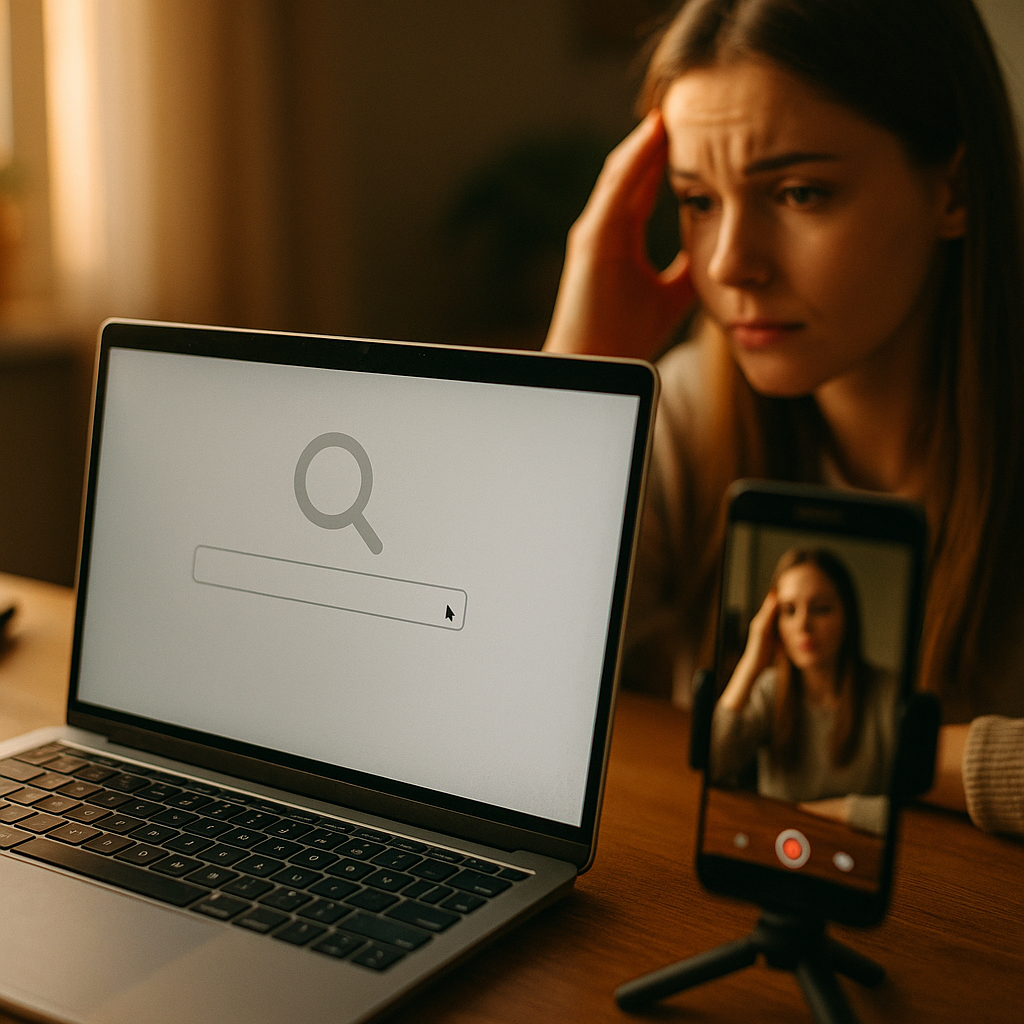
Nearly 60% of Google searches in the US now end without a click, according to data cited by eMarketer. If that stat doesn’t unsettle your influencer strategy, it should. Generative search is quietly rerouting how consumers find creator recommendations, and the brands still optimizing for blue links are already behind.
The Search Box Is Disappearing
For two decades, “discoverability” meant one thing: rank on page one of Google. That model is cracking. ChatGPT, Perplexity, Google’s AI Overviews, and even TikTok’s own search assistant are now answering questions directly, often pulling from creator content without ever sending a visitor to the original post.
This isn’t a niche behavior shift. It’s structural. When someone asks an AI assistant “what’s the best budget skincare routine for oily skin,” the answer often synthesizes claims from creator reviews, comment threads, and UGC videos, then presents a summary with maybe one or two citations. The creator whose content got quoted wins visibility. Everyone else, no matter how good their content was, becomes invisible.
Ranking well in Google no longer guarantees your content ever reaches a human eyeball. Getting cited inside an AI answer does.
Where Creator Content Actually Shows Up Now
Discovery has fragmented into at least four distinct surfaces, and brands need a presence strategy for each:
- Traditional search results, still relevant for high-intent queries but shrinking in share of total traffic.
- AI Overviews and chat assistants, which synthesize creator content into direct answers.
- Platform-native search (TikTok, Instagram, YouTube), where the algorithm itself acts as a mini generative engine surfacing relevant creator clips.
- Retail and shopping AI agents, increasingly used to compare products based on creator reviews before a purchase decision.
The common thread across all four: structure and specificity win. A vague, aesthetically pleasing video with no transcript, no clear claims, and no schema markup is functionally invisible to a generative engine, even if it performed well on the platform’s native feed. We covered this in depth in our piece on how structured UGC transcripts increase the odds of being cited by AI engines.
Why Citations Beat Rankings
Marketers spent years chasing keyword rankings. That playbook is only half relevant now. Generative engines don’t rank pages, they select sources to cite in a synthesized answer, and the selection criteria are different: clarity, specificity, structured data, and topical authority signals matter more than backlink count or keyword density.
This is the core argument behind the shift toward what our team has called generative engine optimization. As we explained in generative search optimization rewards citations, not keywords, the brands winning visibility inside AI answers are the ones treating every piece of creator content like a structured data asset, not just a video for the feed.
Think about it from the model’s perspective. An AI engine scanning thousands of creator posts about a skincare ingredient is looking for content it can extract a clean, confident claim from. “This serum changed my skin” gives it nothing to cite. “This serum reduced visible redness within two weeks, per my dermatologist-reviewed routine” gives it something concrete. One is content. The other is a source.
What This Means for Brief Writing and Creator Vetting
If discovery now runs through AI synthesis layers, your creator briefs need to change. Most briefs still optimize for engagement metrics: watch time, saves, comments. Those still matter for platform algorithms, but they say nothing about whether a piece of content will ever get pulled into a generative answer.
Brands should start asking creators to:
- Make specific, factual claims rather than vague sentiment (“cleared my breakout in 10 days” instead of “love this”).
- Include captions and on-screen text that mirror likely search queries, since transcripts are what most engines actually parse.
- Structure product mentions with consistent naming, so an AI system can confidently attribute a claim to a specific SKU.
This is also changing how brands vet creators before signing them. Reach and engagement rate used to be the primary filters. Now, some teams are adding a “citability” check, essentially asking whether a creator’s past content has ever surfaced inside an AI Overview or chatbot answer. Tools built for AI visibility tracking, the kind compared in our breakdown of AI visibility tools, are increasingly used for exactly this kind of due diligence.
Creator discovery workflows themselves are shifting too. Manual scouting based on follower count and past brand fit is giving way to matching systems that weigh AI discoverability alongside audience alignment, a trend we detailed in AI-matched creator discovery.
Measuring Discovery When There’s No Click
Here’s the uncomfortable part for anyone running attribution models: if a consumer discovers your product through a summarized AI answer that cites a creator’s review, there’s often no click, no UTM, no session. Traditional last-touch attribution simply doesn’t see it.
You can’t optimize for a discovery channel your analytics stack refuses to acknowledge exists.
This is pushing brands toward citation tracking as a parallel KPI to traffic. Instead of asking “how many clicks did this creator drive,” teams are starting to ask “how often does this creator’s content get cited when relevant queries are run through major AI engines.” Platforms built specifically for this, like the ones behind the citation-share model described in citation share tracking, are early but growing fast. HubSpot and Sprout Social have both started integrating share-of-voice metrics that account for AI-generated summaries, a sign this is moving from experimental to mainstream.
None of this replaces platform-native analytics. TikTok Search Insights and YouTube’s discovery reporting still matter enormously, since a huge share of creator content discovery happens inside the platforms themselves, not through third-party AI tools. But treating generative engines as a blind spot is no longer defensible when a growing share of product research queries route through them.
Compliance Doesn’t Disappear, It Gets Harder
One risk that’s easy to overlook: when an AI engine synthesizes a creator’s disclosed sponsored content into a generic-sounding answer, the disclosure context can get stripped out. A branded claim that was properly flagged with #ad in the original post might surface in a chatbot response with no indication it was paid content at all.
This creates a genuine compliance gray zone. The FTC’s endorsement guidelines govern the creator’s original post, not how a third-party AI tool chooses to summarize it. Brands should treat this as an emerging legal risk area, not a hypothetical one, especially as generative engines become a primary discovery layer for regulated categories like health, finance, and beauty claims.
What to Do About It Now
Waiting for the dust to settle isn’t a strategy, it’s a delay tactic. A few practical moves make sense for most brands right now:
- Audit your top-performing creator content for citability: does it make specific, structured claims an AI engine could reasonably extract?
- Add a citation-tracking layer to your reporting, even if it’s manual spot-checking of common queries in ChatGPT and Perplexity.
- Update creator briefs to prioritize clarity and specificity over pure engagement bait.
- Revisit disclosure language with legal counsel, accounting for the possibility that AI summaries strip sponsorship context.
Search behavior didn’t just shift, it fractured across surfaces that reward completely different content signals. Brands that keep optimizing purely for the old SERP will keep losing visibility they don’t even realize they’ve lost.
The Next Move
Start with an honest audit: pull your ten best-performing creator posts from the last quarter and check whether any of them show up when you run relevant questions through ChatGPT or Perplexity. If none do, that’s your starting brief for next quarter, not your engagement report.
Frequently Asked Questions
What is generative search, and how is it different from traditional search?
Generative search refers to AI-powered tools like ChatGPT, Perplexity, and Google’s AI Overviews that synthesize answers directly from multiple sources instead of returning a ranked list of links. Traditional search sends users to a webpage, generative search often answers the question itself, citing sources selectively.
How does generative search affect influencer marketing specifically?
It changes how creator content gets discovered after it’s published. A well-performing video on a platform’s native feed may never get cited in an AI answer if it lacks specific claims, clear transcripts, or structured information, which means the metrics brands used to judge success no longer fully predict long-term discoverability.
Can brands track whether their creator content is being cited in AI tools?
Yes, though the tooling is still maturing. Some brands manually spot-check common customer queries in tools like ChatGPT and Perplexity, while dedicated platforms are emerging to track citation share the way SEO tools once tracked keyword rankings.
Does this mean traditional SEO for creator content is no longer relevant?
No, traditional search still drives meaningful traffic, and platform-native search on TikTok, Instagram, and YouTube remains critical. Generative search is an additional discovery layer brands need to account for, not a full replacement for existing search strategy.
What should brands change first in their creator content strategy?
Start by tightening creator briefs to require specific, factual claims rather than vague sentiment, and make sure captions or on-screen text mirror the kinds of questions consumers actually ask, since that’s the language AI engines are most likely to extract and cite.
Top Influencer Marketing Agencies
The leading agencies shaping influencer marketing in 2026
Agencies ranked by campaign performance, client diversity, platform expertise, proven ROI, industry recognition, and client satisfaction. Assessed through verified case studies, reviews, and industry consultations.
Moburst

-
2

The Shelf
Boutique Beauty & Lifestyle Influencer AgencyA data-driven boutique agency specializing exclusively in beauty, wellness, and lifestyle influencer campaigns on Instagram and TikTok. Best for brands already focused on the beauty/personal care space that need curated, aesthetic-driven content.Clients: Pepsi, The Honest Company, Hims, Elf Cosmetics, Pure LeafVisit The Shelf → -
3

Audiencly
Niche Gaming & Esports Influencer AgencyA specialized agency focused exclusively on gaming and esports creators on YouTube, Twitch, and TikTok. Ideal if your campaign is 100% gaming-focused — from game launches to hardware and esports events.Clients: Epic Games, NordVPN, Ubisoft, Wargaming, Tencent GamesVisit Audiencly → -
4

Viral Nation
Global Influencer Marketing & Talent AgencyA dual talent management and marketing agency with proprietary brand safety tools and a global creator network spanning nano-influencers to celebrities across all major platforms.Clients: Meta, Activision Blizzard, Energizer, Aston Martin, WalmartVisit Viral Nation → -
5

The Influencer Marketing Factory
TikTok, Instagram & YouTube CampaignsA full-service agency with strong TikTok expertise, offering end-to-end campaign management from influencer discovery through performance reporting with a focus on platform-native content.Clients: Google, Snapchat, Universal Music, Bumble, YelpVisit TIMF → -
6

NeoReach
Enterprise Analytics & Influencer CampaignsAn enterprise-focused agency combining managed campaigns with a powerful self-service data platform for influencer search, audience analytics, and attribution modeling.Clients: Amazon, Airbnb, Netflix, Honda, The New York TimesVisit NeoReach → -
7

Ubiquitous
Creator-First Marketing PlatformA tech-driven platform combining self-service tools with managed campaign options, emphasizing speed and scalability for brands managing multiple influencer relationships.Clients: Lyft, Disney, Target, American Eagle, NetflixVisit Ubiquitous → -
8

Obviously
Scalable Enterprise Influencer CampaignsA tech-enabled agency built for high-volume campaigns, coordinating hundreds of creators simultaneously with end-to-end logistics, content rights management, and product seeding.Clients: Google, Ulta Beauty, Converse, AmazonVisit Obviously →