


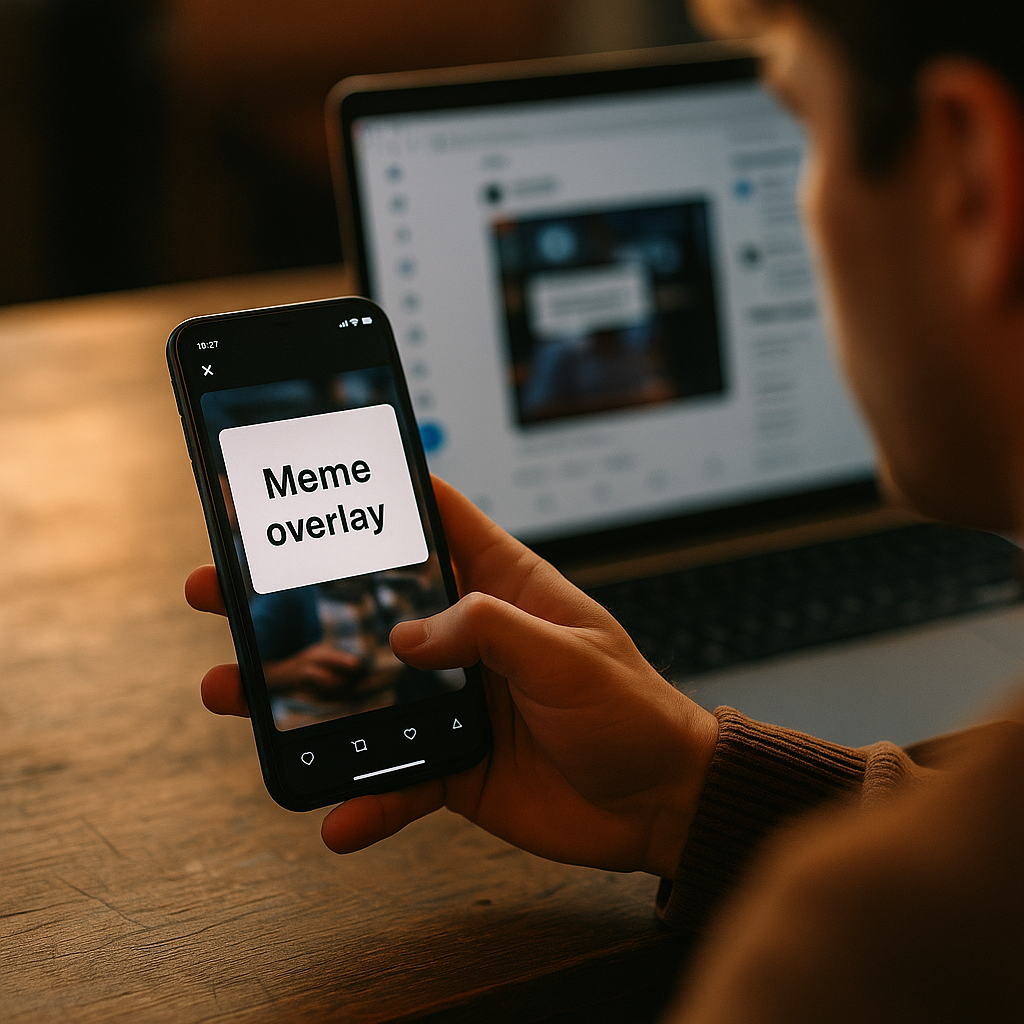
A screenshot with white Impact-style text slapped on top is now beating five-figure video production on X. If your team is still storyboarding polished pre-rolls for a platform where the top-performing posts look like they were made in Canva during a coffee break, you’re burning budget in the wrong direction. The text meme overlay format has quietly become the highest-engagement, lowest-cost content type on the platform, and most brand social teams haven’t caught up.
Why Polish Is Losing on X
X’s culture rewards speed and recognizability over craft. Users scroll a feed dominated by screenshots, quote-tweets, and reaction memes, and a hyper-produced 30-second brand video sticks out like a billboard in a group chat. It reads as an ad before anyone even processes the message. The text overlay format, by contrast, mimics the exact visual language of the organic content surrounding it: a static image, bold caption text, minimal design, often intentionally rough around the edges.
This isn’t a new phenomenon in creator content generally. It’s the same logic that made photo dump format outperform curated grids on Instagram. Audiences have gotten extremely good at pattern-matching “ad” versus “post,” and platform-native imperfection is now a trust signal, not a liability.
On X specifically, the format works because the platform’s entire interface trains users to expect text-first, low-fidelity visuals. A brand fighting that expectation with cinematic video is fighting the algorithm and the audience at the same time.
What the Format Actually Looks Like
Strip it down and the anatomy is simple: a single static image (product shot, reaction face, stock photo, or a cropped frame from existing video) with a short, punchy line of text overlaid in a recognizable meme font. No animation required. No voiceover. No editing timeline. The entire asset can be built in a design tool in under ten minutes.
- The setup line: a relatable statement or observation that primes the joke or insight.
- The payoff line: the twist, brand tie-in, or punchline, often in a contrasting text style.
- The visual anchor: an image that reinforces the emotional tone rather than literally illustrating the product.
Brands that treat this as a lightweight creative sandbox tend to outperform those that try to over-engineer it. The format’s entire appeal is that it looks unbothered. The moment a brand adds a logo watermark, a CTA button, or three lines of legal disclosure text, it stops reading as native and starts reading as marketing collateral again.
The ROI Case: Cheap to Make, Expensive to Ignore
From a budget standpoint, this format is close to a cheat code. A single video asset for X can run anywhere from a few hundred to several thousand dollars depending on production complexity, talent fees, and revisions. A meme overlay asset costs a fraction of that, and teams can produce a dozen variations to test hooks in the time it takes to storyboard one video.
That volume matters. According to HubSpot’s ongoing social media benchmarking research, brands that test more creative variations per campaign consistently see better cost-per-engagement outcomes than those running fewer, higher-production assets. Meme overlays make high-volume testing operationally realistic in a way video simply doesn’t, because the iteration cost is nearly zero.
There’s also a distribution advantage. X’s algorithm has historically favored replies, quote-tweets, and reposts over passive views, and text-driven memes generate disproportionately more of that behavior than video does. A funny or sharp overlay gets quote-tweeted with commentary; a polished video gets a passive like and scroll-past. If your KPI is reach efficiency rather than watch time, this format is doing more per dollar spent.
Where It Fits Alongside Other Formats
This doesn’t mean video is dead on X, or anywhere else. It means format selection should match platform behavior instead of being dictated by whatever your team already has in production. Split screen reaction briefs still work well on TikTok and Reels because those platforms reward motion and pacing. Text overlays work on X because the platform rewards wit and speed. Treating every platform as a video-first channel is the operational mistake, not the video itself.
How Brands Are Briefing Creators for This Format
The teams getting this right aren’t briefing creators to “make a meme.” That’s too vague and produces inconsistent output. Instead, the strongest briefs include:
- A tone reference bank: three to five examples of memes in the brand’s voice (not competitors’ ads, actual organic memes performing well on X right now).
- A banned-topic list: political references, unrelated controversies, or anything that could be misread as commentary on current events unrelated to the brand.
- A punchline constraint: the joke or insight has to connect back to a product truth within one beat, or it’s just noise with no brand lift.
- Approval speed targets: because the whole value of this format is speed, a brief that requires five rounds of legal review defeats the purpose.
This connects directly to the discipline covered in meme jacking framework guidance: most brands fail not because they lack creative talent, but because their approval chain can’t move at meme speed. If a trending format has a shelf life of 48 hours and your legal review takes five business days, you’ve already lost the window.
The Compliance Conversation Nobody Wants to Have
Here’s where marketing leadership needs to slow down, even while the creative team moves fast. Text overlay memes on X sit closer to organic-looking commentary than obvious advertising, which raises real disclosure questions. The FTC’s endorsement guidance applies regardless of format: if a creator is compensated to post brand-related content, that relationship needs to be clear to the audience, even if the post looks like a joke someone made for free.
This is not a reason to avoid the format. It’s a reason to build disclosure into the creative concept rather than bolting it on afterward. A well-placed #ad or “partner” tag doesn’t have to break the joke if it’s planned into the visual layout from the start. Brands that treat disclosure as an afterthought are the ones who end up with awkward, bolted-on labels that kill the native feel the format depends on.
There’s a parallel here to the disclosure discipline required for AI avatar brand hosts, where the format’s novelty made some teams sloppy about clear labeling. Same risk, different creative vehicle.
Measuring What Actually Matters
Standard video metrics don’t map cleanly onto this format. Watch time is irrelevant when there’s nothing to watch. Instead, brands should track:
- Quote-tweet-to-like ratio: a high ratio signals the content is generating commentary, not just passive approval.
- Repost velocity in the first two hours: memes have a short half-life; early momentum predicts total reach far more than it does for video.
- Screenshot behavior off-platform: if the meme is getting screenshotted and shared into Slack channels, group chats, or other platforms, that’s the strongest possible signal of resonance and one video rarely achieves at the same rate.
Sprout Social’s platform benchmarking tools can help teams separate reach inflation (impressions padded by autoplay) from genuine engagement signals, which matters more on X than almost any other network given how easily impression counts can be misleading for static image posts.
Worth noting too that this format pairs well with the broader shift toward text meme overlays as a share-driving mechanic across younger audiences generally, not just on X. The behavioral logic (recognition, relatability, low friction to repost) is platform-agnostic even if the execution details vary.
Where This Breaks Down
The format isn’t universally applicable, and pretending otherwise is how brands end up with tone-deaf posts. It works for consumer brands with a personality, DTC products with a built-in irony to lean into, media companies, and B2C services with everyday pain points worth joking about. It works less well for regulated industries, enterprise B2B, and any brand where a joke landing wrong carries outsized reputational risk. If your legal and compliance teams need three sign-offs before a tweet goes out, this format’s speed advantage evaporates anyway.
It’s also worth being honest that meme fatigue is real. A brand that posts nothing but text overlay memes for months will eventually see engagement decay as the format loses novelty within its own feed presence. The strongest performers treat it as one tool in a rotation, not a full content strategy replacement.
FAQs
What is the text meme overlay format on X?
It’s a static image with bold, meme-style text layered on top, designed to look like organic user content rather than produced brand video. It typically pairs a setup line with a punchline and a simple visual anchor.
Why does this format outperform video on X specifically?
X’s culture and interface favor text-first, low-fidelity content. Users are conditioned to expect screenshots and reaction memes, so polished video reads as an ad and gets scrolled past, while a native-looking meme blends into the feed and earns quote-tweets and reposts.
How much does it cost to produce compared to video?
Meme overlay assets typically cost a small fraction of video production since they require no filming, editing timeline, or talent shoot. Most can be built in a design tool in minutes, allowing brands to test many variations for the cost of a single video asset.
Do sponsored meme posts still need FTC disclosure?
Yes. If a creator or brand account is compensated for the post, disclosure requirements apply regardless of how informal or joke-like the content looks. Disclosure should be designed into the visual concept from the start rather than added afterward.
What metrics should brands track for this format?
Focus on quote-tweet-to-like ratio, repost velocity in the first few hours, and off-platform screenshot sharing rather than traditional watch-time metrics, which don’t apply to static content.
Does this format work outside of X?
The core mechanic (recognizable, low-friction, screenshot-style content) translates to other platforms, but execution should be adapted to each platform’s native visual language rather than copy-pasted directly.
The next time your team drafts an X content calendar, cut the video budget line in half and redirect it toward rapid meme variant testing with a same-day approval path. Ship five overlay concepts before you’d normally finish one video brief, and let the quote-tweet ratio tell you which voice actually belongs on the platform.
Top Influencer Marketing Agencies
The leading agencies shaping influencer marketing in 2026
Agencies ranked by campaign performance, client diversity, platform expertise, proven ROI, industry recognition, and client satisfaction. Assessed through verified case studies, reviews, and industry consultations.
Moburst

-
2

The Shelf
Boutique Beauty & Lifestyle Influencer AgencyA data-driven boutique agency specializing exclusively in beauty, wellness, and lifestyle influencer campaigns on Instagram and TikTok. Best for brands already focused on the beauty/personal care space that need curated, aesthetic-driven content.Clients: Pepsi, The Honest Company, Hims, Elf Cosmetics, Pure LeafVisit The Shelf → -
3

Audiencly
Niche Gaming & Esports Influencer AgencyA specialized agency focused exclusively on gaming and esports creators on YouTube, Twitch, and TikTok. Ideal if your campaign is 100% gaming-focused — from game launches to hardware and esports events.Clients: Epic Games, NordVPN, Ubisoft, Wargaming, Tencent GamesVisit Audiencly → -
4

Viral Nation
Global Influencer Marketing & Talent AgencyA dual talent management and marketing agency with proprietary brand safety tools and a global creator network spanning nano-influencers to celebrities across all major platforms.Clients: Meta, Activision Blizzard, Energizer, Aston Martin, WalmartVisit Viral Nation → -
5

The Influencer Marketing Factory
TikTok, Instagram & YouTube CampaignsA full-service agency with strong TikTok expertise, offering end-to-end campaign management from influencer discovery through performance reporting with a focus on platform-native content.Clients: Google, Snapchat, Universal Music, Bumble, YelpVisit TIMF → -
6

NeoReach
Enterprise Analytics & Influencer CampaignsAn enterprise-focused agency combining managed campaigns with a powerful self-service data platform for influencer search, audience analytics, and attribution modeling.Clients: Amazon, Airbnb, Netflix, Honda, The New York TimesVisit NeoReach → -
7

Ubiquitous
Creator-First Marketing PlatformA tech-driven platform combining self-service tools with managed campaign options, emphasizing speed and scalability for brands managing multiple influencer relationships.Clients: Lyft, Disney, Target, American Eagle, NetflixVisit Ubiquitous → -
8

Obviously
Scalable Enterprise Influencer CampaignsA tech-enabled agency built for high-volume campaigns, coordinating hundreds of creators simultaneously with end-to-end logistics, content rights management, and product seeding.Clients: Google, Ulta Beauty, Converse, AmazonVisit Obviously →