


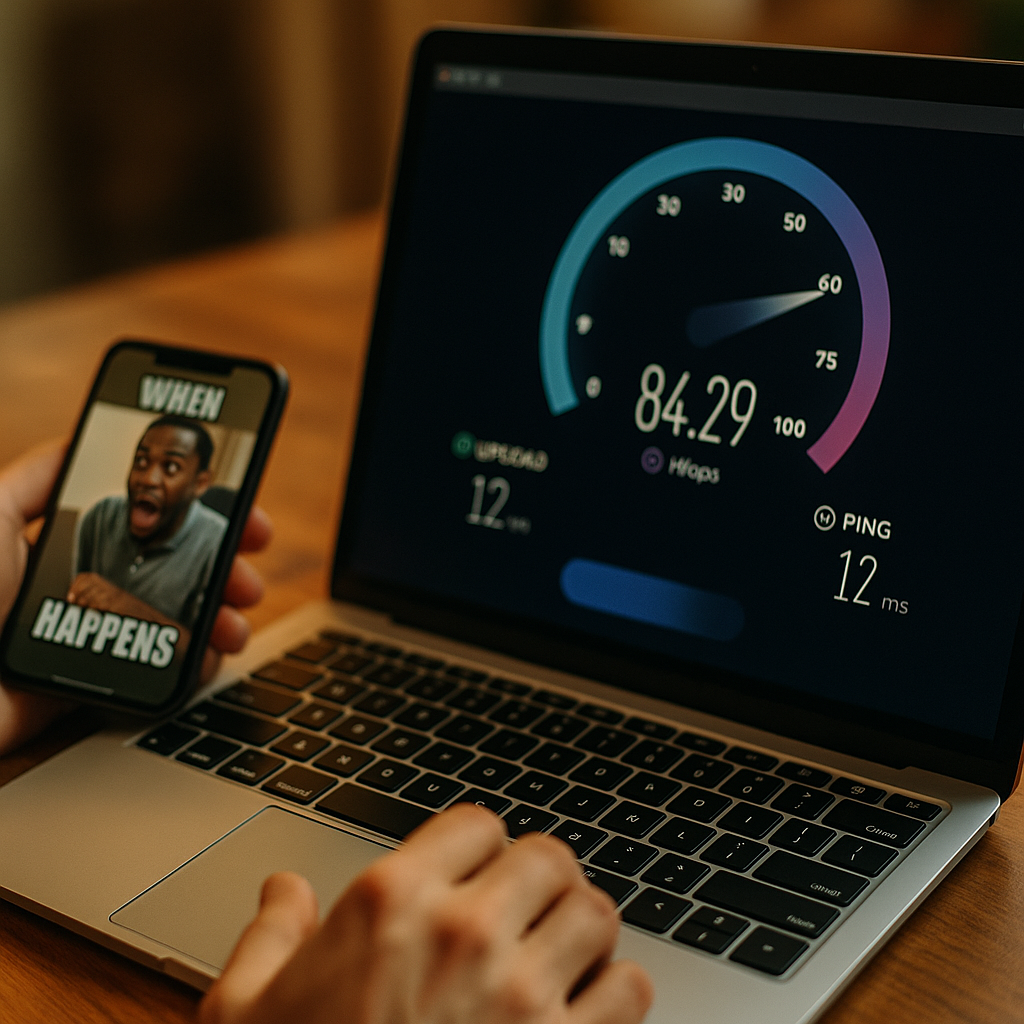
Trends now die in under 72 hours. By the time most brand approval chains finish their third round of revisions, the meme is dead, the sound is flagged, and the internet has moved three cycles ahead. Meme jacking isn’t optional anymore for brands chasing cultural relevance, it’s a speed test, and most marketing departments are failing it.
The brands winning attention right now aren’t the ones with the biggest budgets. They’re the ones with a repeatable meme jacking framework that lets them move from “did you see this?” to published creative in hours, not days. This piece breaks down how to build that engine without torching your brand safety standards or your legal team’s patience.
Why Speed Beats Perfection in Trend Response
Every trend has a half-life. Data from Sprout Social and platform engagement studies consistently show that meme-driven content peaks within 48 to 96 hours of a format going viral, then engagement collapses as the audience moves on. Miss that window and your “trend jacking” post reads as stale, or worse, as a brand desperately trying to seem relevant three weeks too late.
That’s the uncomfortable truth marketing leaders need to sit with. A meme post reviewed by five stakeholders over four days isn’t a meme post anymore. It’s a missed opportunity dressed up as content.
The single biggest predictor of meme jacking success isn’t creativity, it’s cycle time. Brands that can go from trend detection to published post in under six hours consistently outperform slower competitors on engagement, regardless of production quality.
This doesn’t mean sloppy work wins. It means the operational bottleneck, not the creative concept, is usually what kills a brand’s ability to participate in culture at all.
The Four Stages of a Rapid Response Framework
A working meme jacking process needs four distinct stages, each with a clear owner and a hard time cap. Skip a stage and you either move too slow or expose the brand to risk.
- Detection: Someone (or something) needs to be watching for trend velocity in real time, not stumbling on it via a Slack message from an intern.
- Filter: A fast, standardized checklist that decides whether this trend is worth touching at all.
- Adaptation: The actual creative sprint, format selection, and copy or voiceover work.
- Approval and publish: A pre-negotiated, lightweight sign-off process that doesn’t route through six people.
Most brands over-invest in stage three and completely ignore stages one and four. That’s backwards. The creative adaptation is usually the easy part once you know what format you’re working with. It’s the detection lag and the approval bottleneck that actually kill speed.
Detection: Build a Watchtower, Not a Wishlist
You cannot meme jack what you don’t see coming. Social listening tools, dedicated trend-scouting team members, and platform-native discovery feeds (TikTok’s For You algorithm, Reels trending audio, X’s trending topics) all need to feed into one centralized channel. Some brands assign this to a junior social manager as a side task. That’s a mistake. Trend detection deserves a defined owner with defined hours, even if it’s only two hours a day.
Pair human eyes with tooling. Platforms like HubSpot and native analytics dashboards from Meta Business Suite and TikTok Ads Manager can surface velocity spikes before a trend fully saturates. The goal is catching a format on its way up, not after it’s already peaked.
The Filter: Not Every Meme Deserves Your Logo
Here’s where a lot of meme jacking attempts go sideways. Just because a trend is hot doesn’t mean it belongs anywhere near your brand voice. A five-question filter, applied in under ten minutes, saves you from the kind of tone-deaf posts that generate screenshots for all the wrong reasons.
- Does this trend align with our existing brand voice, or would it feel forced?
- Is the origin of this meme something we’d be comfortable being associated with publicly?
- Can we adapt it without using copyrighted audio, footage, or someone else’s likeness without permission?
- Is there political, tragic, or sensitive context attached that we’re missing?
- Do we have the production capacity to execute this in the next four hours?
If a trend fails two or more of these, let it go. There will be another one by tomorrow. This is where our meme audio trend briefs guidance becomes essential reading, because audio-based trends carry specific licensing risks that a generic content filter often misses entirely.
Adaptation: Where Templates Save the Day
Once a trend clears the filter, the creative team needs pre-built templates, not a blank page. This is the operational secret nobody talks about enough: fast meme jacking depends on having flexible creative shells ready before the trend even hits.
Think modular. A caption template that can flex across five different meme formats. A B-roll library of brand assets that can be dropped into a trending edit style within minutes. A voiceover or text-to-speech pipeline, similar to what we outlined in this same-day voiceover brief, that lets you generate on-brand audio without waiting on a studio booking.
Creator partnerships matter here too. If your influencer roster already understands your brand’s tone, they can adapt a trend faster and more authentically than an internal team scrambling to imitate creator culture from the outside. This is one reason ambassador-style relationships, like the ones detailed in our ambassador reel series piece, tend to outperform one-off influencer bookings when a trend requires instant turnaround.
A brand that has to explain a meme in the caption has already lost the format. If your team needs three sentences of context to make the joke land, the trend has moved past you.
Approval Without the Bottleneck
This is where most frameworks collapse. Legal and compliance teams, understandably, want review time. But review time is the enemy of meme velocity. The fix isn’t skipping approval, it’s pre-approving categories of risk so that only genuinely ambiguous cases need a live human sign-off.
Set up a tiered system. Low-risk trend adaptations (brand voice only, no third-party IP, no sensitive subject matter) get published by the social team directly, no approval needed, following the pre-cleared filter from stage two. Medium-risk posts get a single async approval from one designated marketing lead, turnaround capped at 30 minutes. High-risk posts, anything touching current events, political commentary, or third-party likeness, go through full legal review and probably shouldn’t be rushed at all.
This tiered structure mirrors the disclosure logic used for AI avatar brand hosts, where speed and compliance have to coexist rather than compete. The same discipline applies to trend response: define your risk tiers once, and you stop re-litigating the same decision every single time a new meme shows up.
Format Matters as Much as the Joke
A meme jacking framework isn’t just about detecting and clearing trends fast, it’s about knowing which format to deploy the adaptation in. A meme that thrives as a static image on X might completely flop as a 30-second video. Vertical short-form content often needs the caption-driven approach we cover in no talking TikTok Shop videos, especially when speed prevents you from recording clean voiceover.
Silent-first editing also matters more than most teams realize. Autoplay feeds mean a huge percentage of your audience will see the meme muted before they ever hit play with sound on. Our breakdown on silent first editing subtitle rules applies directly here: if the joke doesn’t land without audio, you’ve cut your potential reach in half before the post even has a chance.
Repurposing matters too. A meme that performs well on one platform doesn’t need to die there. Cutting it down for other channels, similar to the logic in our companion cutdowns piece, extends the shelf life of a single creative sprint across multiple formats without doubling your production time.
Measuring What Actually Worked
Engagement rate alone doesn’t tell you whether a meme jacking effort was worth the resource pull. Track time-to-publish against trend detection timestamp. Track sentiment in comments, not just volume. And track whether the trend drove any measurable movement in branded search or site traffic, because eMarketer data suggests attention spikes from viral moments frequently fail to convert into anything beyond vanity metrics unless there’s a clear next step embedded in the post.
Build a simple post-mortem template: detection time, filter decision, adaptation time, approval time, publish time, and 48-hour performance snapshot. Run it after every meme jacking attempt, successful or not. Over a quarter, this data tells you exactly where your framework’s bottleneck actually lives, and it’s rarely where you think it is.
Getting Buy-In From Leadership
Senior stakeholders often resist rapid response frameworks because they associate speed with recklessness. The way around this isn’t arguing for less oversight, it’s demonstrating that a structured framework actually reduces risk compared to ad hoc trend jacking. A defined filter, tiered approval, and format guidelines are more protective than a scramble where someone posts something reactive at 11pm because a trend is “about to die.”
Frame the framework as a risk mitigation tool in budget conversations, not just a creative nice-to-have. That reframing tends to unlock faster leadership sign-off than pitching it purely as a relevance play.
FAQs
Frequently Asked Questions
What is meme jacking in a marketing context?
Meme jacking is when a brand adapts a currently trending meme, format, sound, or joke structure into branded content to capitalize on existing cultural momentum, typically within the first few days of the trend’s peak visibility.
How fast does a brand need to move to meme jack effectively?
Most viral formats peak within 48 to 96 hours. Brands aiming for meaningful engagement should target publishing within six to twelve hours of detecting a rising trend, before saturation sets in.
What are the biggest legal risks in meme jacking?
The most common risks involve unlicensed audio, unauthorized use of someone’s likeness or footage, and copyright issues tied to the original meme’s source material. Reviewing guidance from the FTC on endorsement and disclosure rules is a useful starting point before publishing reactive content.
Should every trend be reviewed by legal before publishing?
No. A tiered approval system works better, where low-risk, pre-cleared trend categories can be published directly by the social team, while only ambiguous or sensitive trends escalate to full legal review.
How do you know if a meme jacking attempt actually worked?
Track more than engagement rate. Measure time-to-publish, comment sentiment, and any downstream impact on branded search or site traffic to determine if the moment translated into real business value.
Can smaller brands compete with larger companies on meme jacking?
Yes, often more easily. Smaller brands typically have shorter approval chains and more creative flexibility, which are the two biggest advantages in a speed-dependent activity like trend response.
Start small: pick your next viral moment, run it through a five-question filter, and time your team from detection to publish. Whatever number you get is your real baseline, and it’s the first thing your framework needs to fix.
Top Influencer Marketing Agencies
The leading agencies shaping influencer marketing in 2026
Agencies ranked by campaign performance, client diversity, platform expertise, proven ROI, industry recognition, and client satisfaction. Assessed through verified case studies, reviews, and industry consultations.
Moburst

-
2

The Shelf
Boutique Beauty & Lifestyle Influencer AgencyA data-driven boutique agency specializing exclusively in beauty, wellness, and lifestyle influencer campaigns on Instagram and TikTok. Best for brands already focused on the beauty/personal care space that need curated, aesthetic-driven content.Clients: Pepsi, The Honest Company, Hims, Elf Cosmetics, Pure LeafVisit The Shelf → -
3

Audiencly
Niche Gaming & Esports Influencer AgencyA specialized agency focused exclusively on gaming and esports creators on YouTube, Twitch, and TikTok. Ideal if your campaign is 100% gaming-focused — from game launches to hardware and esports events.Clients: Epic Games, NordVPN, Ubisoft, Wargaming, Tencent GamesVisit Audiencly → -
4

Viral Nation
Global Influencer Marketing & Talent AgencyA dual talent management and marketing agency with proprietary brand safety tools and a global creator network spanning nano-influencers to celebrities across all major platforms.Clients: Meta, Activision Blizzard, Energizer, Aston Martin, WalmartVisit Viral Nation → -
5

The Influencer Marketing Factory
TikTok, Instagram & YouTube CampaignsA full-service agency with strong TikTok expertise, offering end-to-end campaign management from influencer discovery through performance reporting with a focus on platform-native content.Clients: Google, Snapchat, Universal Music, Bumble, YelpVisit TIMF → -
6

NeoReach
Enterprise Analytics & Influencer CampaignsAn enterprise-focused agency combining managed campaigns with a powerful self-service data platform for influencer search, audience analytics, and attribution modeling.Clients: Amazon, Airbnb, Netflix, Honda, The New York TimesVisit NeoReach → -
7

Ubiquitous
Creator-First Marketing PlatformA tech-driven platform combining self-service tools with managed campaign options, emphasizing speed and scalability for brands managing multiple influencer relationships.Clients: Lyft, Disney, Target, American Eagle, NetflixVisit Ubiquitous → -
8

Obviously
Scalable Enterprise Influencer CampaignsA tech-enabled agency built for high-volume campaigns, coordinating hundreds of creators simultaneously with end-to-end logistics, content rights management, and product seeding.Clients: Google, Ulta Beauty, Converse, AmazonVisit Obviously →