


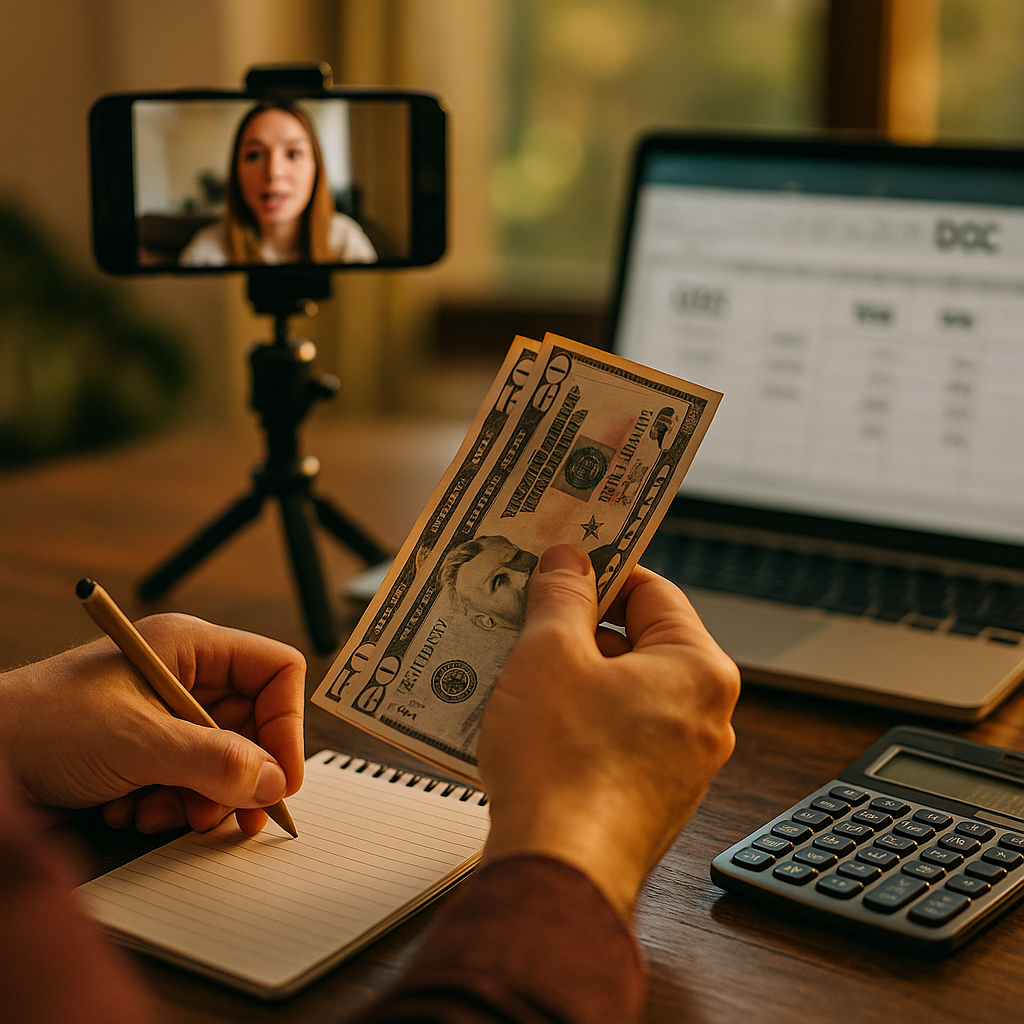
Fifty to eighty dollars a video. That’s what top-tier UGC creators now command for a single piece of raw, unpolished content, no usage rights negotiation required, no agency retainer attached. Pay-to-play UGC pricing has quietly become the new floor for brands sourcing authentic-feeling content at scale, and it’s rewriting how marketing teams budget for creator-generated assets.
Why UGC Rates Suddenly Jumped
Three years ago, brands could book a solid UGC creator for fifteen or twenty dollars a video. Today, the same tier of talent is quoting quadruple that. What changed?
Demand exploded first. Every DTC brand, retail media network, and CTV advertiser now wants “authentic” content that looks native to a feed rather than a studio. Meta and TikTok’s ad libraries are saturated with UGC-style creative because it consistently outperforms polished brand content on click-through and conversion. That performance data pushed procurement budgets toward creator-sourced assets, and demand outpaced the supply of creators willing to churn out usable footage on tight turnarounds.
Second, platforms shifted algorithmic weight toward native-feeling video. TikTok’s For You Page and Instagram Reels both reward content that doesn’t scream “ad.” Brands chasing organic-style reach had to pay for creators who could nail that tone, and the best ones knew their leverage.
Third, marketplaces matured. Platforms like Billo, Trend, and JoinBrands built pricing tiers that made rate benchmarking public. Once creators could see what peers were charging, negotiating power consolidated at the top of the talent pool.
Top-tier UGC creators charging 50 to 80 dollars per video aren’t pricing based on production cost. They’re pricing based on proven conversion lift, and brands are paying it because the math still works out cheaper than in-house production.
What “Pay-to-Play” Actually Means Here
Pay-to-play in this context isn’t about pay-for-placement schemes or algorithmic boosting. It refers to a straightforward transactional model: brands pay a flat rate per video, get the raw footage, and use it in paid media without needing an ongoing relationship with the creator. No long-term contract. No exclusivity clause unless you pay extra for it. Just a deliverable and a price tag.
This is fundamentally different from traditional influencer partnerships, where compensation often ties to reach, engagement, or affiliate performance. UGC creators in the pay-to-play tier aren’t publishing to their own audience at all in many cases. Their entire value proposition is the content itself, engineered to look organic when a brand runs it as a paid ad.
That distinction matters for anyone budgeting influencer programs. A UGC creator charging 65 dollars per video is not comparable to a nano-influencer charging a similar rate for a sponsored post to their own following. One is a production line for ad creative. The other is earned trust with an audience. Brands mixing up the two in their budget models end up with mismatched expectations on deliverables.
The Real Cost Breakdown
Fifty to eighty dollars sounds cheap next to a five-figure macro-influencer campaign, but the math shifts fast once you scale volume. A brand running twenty video variants a month for creative testing is now spending 1,000 to 1,600 dollars monthly just on raw UGC, before editing, paid media spend, or platform fees.
Compare that to hiring a single in-house content creator at a fully loaded salary north of 60,000 dollars annually. On a per-asset basis, UGC marketplaces still win on cost, especially for brands that need variety across demographics, tones, and hooks to feed always-on ad testing.
But the rate creep is real. Data from creator marketplaces suggests average per-video rates have climbed roughly 30 to 40 percent over the past two years for creators with proven ad performance history. That trend tracks with broader shifts in the creator economy, where creator economy valuations keep climbing even as brands struggle to build sustainable long-term sourcing plans.
Here’s the operational risk nobody talks about enough: as top creators command premium rates, brands face a choice. Pay up for proven performers, or roll the dice on cheaper, unproven talent and risk lower conversion. Most performance marketers are choosing the former, which is exactly why rates keep climbing.
Where the Money Actually Goes
- Raw footage capture: typically 60 to 70 percent of the quoted rate
- Revisions and reshoots: often billed separately, adding 15 to 25 dollars per round
- Usage rights extensions: paid ad usage beyond 30 days can add another 20 to 50 dollars
- Rush delivery fees: 24 to 48 hour turnaround commonly carries a 15 to 20 percent premium
Brands that don’t account for these add-ons in their initial budget conversations tend to blow past projections by month two.
Is This Sustainable, or a Bubble?
Fair question. Rate inflation always invites the “bubble” conversation, and UGC pricing is no exception.
The counterargument to bubble talk: unlike follower-based influencer pricing, UGC rates are tied to a measurable output, ad performance. If a creator’s content reliably drives lower cost-per-acquisition, brands will keep paying regardless of rate creep, because the ROI math still clears. This mirrors what’s happening across performance-driven creator spend, where smaller, high-conversion creators are increasingly outperforming reach-heavy talent on pure efficiency.
That said, the market has a saturation ceiling. Once enough brands flood marketplaces with demand for the same handful of proven performers, rates plateau or clients get priced out and shift to training up mid-tier creators instead. Several agencies are already doing exactly that: identifying promising but underpriced UGC talent and locking in volume deals before rates catch up to the top tier.
Marketers should also watch platform policy risk. Changes to disclosure requirements or ad transparency rules from regulators could reshape how UGC content gets labeled and used. The FTC’s endorsement guidelines already require clear disclosure when content is paid, and enforcement scrutiny on “authentic-looking” paid content isn’t going away. Brands treating UGC as a compliance-free zone because it’s not “influencer marketing” in the traditional sense are taking on unnecessary risk.
How Brands Should Budget for This Now
Stop treating UGC as a line item you set once a year. Rates are moving too fast for that.
Build a quarterly rate review into your creator ops process. Pull current marketplace benchmarks from platforms like Billo or Trend, compare against your historical spend, and flag creators whose rates have jumped more than 20 percent since your last booking. That’s your signal to either renegotiate, diversify your roster, or test new talent.
Second, separate your UGC budget line from your influencer partnership budget entirely. They serve different functions and get evaluated on different metrics. Mixing them in a single “creator marketing” bucket makes it nearly impossible to prove ROI on either, a problem ROI benchmarking research has flagged repeatedly when brands try to defend creator spend to finance teams.
Third, negotiate usage rights upfront and in writing. The 50 to 80 dollar base rate typically covers limited usage. If you’re planning to run the content across paid social, CTV, and retail media placements, that’s a different contract with a different price. Brands that skip this step often end up renegotiating mid-campaign at a worse rate than if they’d locked in broader rights initially.
Finally, don’t ignore how this pricing pressure connects to bigger structural shifts. As nano and affiliate-driven creator spend keeps bypassing traditional agency models, UGC marketplaces are becoming the default sourcing layer for performance creative. Brands that build direct relationships with reliable UGC talent now, rather than relying solely on marketplace matching, will have pricing leverage later.
Separating UGC production budgets from influencer partnership budgets isn’t just cleaner accounting. It’s the only way to actually prove which spend is driving conversions versus reach.
What This Means for Agency Relationships
Agencies that used to mark up UGC sourcing by 40 to 60 percent are getting squeezed as brands realize they can go direct through marketplaces. That’s part of a broader pattern documented in reporting on agency fees eating into influencer budgets, where brands are increasingly asking why they’re paying a markup for sourcing they could handle in-house with the right tooling.
The counterargument agencies make: vetting, quality control, and rights management are worth the fee. That’s true for complex, multi-market campaigns. But for straightforward UGC sourcing at the 50 to 80 dollar tier, plenty of brands are building lean in-house teams to manage this directly, similar to the shift seen when Coty brought creator casting in house to cut turnaround times and fees simultaneously.
Tools like Sprout Social and HubSpot now offer creator workflow features that make direct sourcing more manageable for lean marketing teams, reducing the operational justification for agency involvement in this specific slice of the budget.
The Bottom Line for Budget Planning
UGC pricing at 50 to 80 dollars per video isn’t a temporary spike. It reflects a maturing market where top creators finally have visibility into their own value and the leverage to charge for it. Brands that keep treating UGC sourcing as a cheap, infinite resource are going to get squeezed on both cost and quality as top talent prices out casual buyers.
The move now is simple: build UGC into a dedicated, regularly reviewed budget line, lock usage rights in writing, and start cultivating direct creator relationships before marketplace rates climb further.
FAQs
What is pay-to-play UGC pricing?
Pay-to-play UGC pricing refers to a flat, transactional rate brands pay creators for raw video content, typically without ongoing partnership terms or reach-based compensation. Creators deliver footage, brands own it for paid media use, and the relationship ends unless renewed.
Why are top UGC creators charging 50 to 80 dollars per video?
Rates reflect proven ad performance rather than production cost. Creators with a track record of driving strong click-through and conversion rates in paid social campaigns can command premium pricing because brands see measurable ROI from their content.
Is UGC pricing different from influencer sponsorship rates?
Yes. UGC pricing pays for content creation itself, usually for use in a brand’s own paid media. Influencer sponsorship rates typically compensate for access to the creator’s own audience and organic reach, which is a fundamentally different value exchange.
How should brands budget for rising UGC costs?
Separate UGC spend from influencer partnership budgets, review marketplace rate benchmarks quarterly, negotiate usage rights in writing upfront, and factor in add-on costs like revisions and rush delivery fees that aren’t included in base quotes.
Do brands need to worry about disclosure rules with UGC content?
Yes. If UGC content is paid for and used in advertising, disclosure and endorsement guidelines still apply. Brands should review current FTC guidance to ensure paid UGC content meets transparency requirements, even when it’s not run through a traditional influencer sponsorship.
Top Influencer Marketing Agencies
The leading agencies shaping influencer marketing in 2026
Agencies ranked by campaign performance, client diversity, platform expertise, proven ROI, industry recognition, and client satisfaction. Assessed through verified case studies, reviews, and industry consultations.
Moburst

-
2

The Shelf
Boutique Beauty & Lifestyle Influencer AgencyA data-driven boutique agency specializing exclusively in beauty, wellness, and lifestyle influencer campaigns on Instagram and TikTok. Best for brands already focused on the beauty/personal care space that need curated, aesthetic-driven content.Clients: Pepsi, The Honest Company, Hims, Elf Cosmetics, Pure LeafVisit The Shelf → -
3

Audiencly
Niche Gaming & Esports Influencer AgencyA specialized agency focused exclusively on gaming and esports creators on YouTube, Twitch, and TikTok. Ideal if your campaign is 100% gaming-focused — from game launches to hardware and esports events.Clients: Epic Games, NordVPN, Ubisoft, Wargaming, Tencent GamesVisit Audiencly → -
4

Viral Nation
Global Influencer Marketing & Talent AgencyA dual talent management and marketing agency with proprietary brand safety tools and a global creator network spanning nano-influencers to celebrities across all major platforms.Clients: Meta, Activision Blizzard, Energizer, Aston Martin, WalmartVisit Viral Nation → -
5

The Influencer Marketing Factory
TikTok, Instagram & YouTube CampaignsA full-service agency with strong TikTok expertise, offering end-to-end campaign management from influencer discovery through performance reporting with a focus on platform-native content.Clients: Google, Snapchat, Universal Music, Bumble, YelpVisit TIMF → -
6

NeoReach
Enterprise Analytics & Influencer CampaignsAn enterprise-focused agency combining managed campaigns with a powerful self-service data platform for influencer search, audience analytics, and attribution modeling.Clients: Amazon, Airbnb, Netflix, Honda, The New York TimesVisit NeoReach → -
7

Ubiquitous
Creator-First Marketing PlatformA tech-driven platform combining self-service tools with managed campaign options, emphasizing speed and scalability for brands managing multiple influencer relationships.Clients: Lyft, Disney, Target, American Eagle, NetflixVisit Ubiquitous → -
8

Obviously
Scalable Enterprise Influencer CampaignsA tech-enabled agency built for high-volume campaigns, coordinating hundreds of creators simultaneously with end-to-end logistics, content rights management, and product seeding.Clients: Google, Ulta Beauty, Converse, AmazonVisit Obviously →