


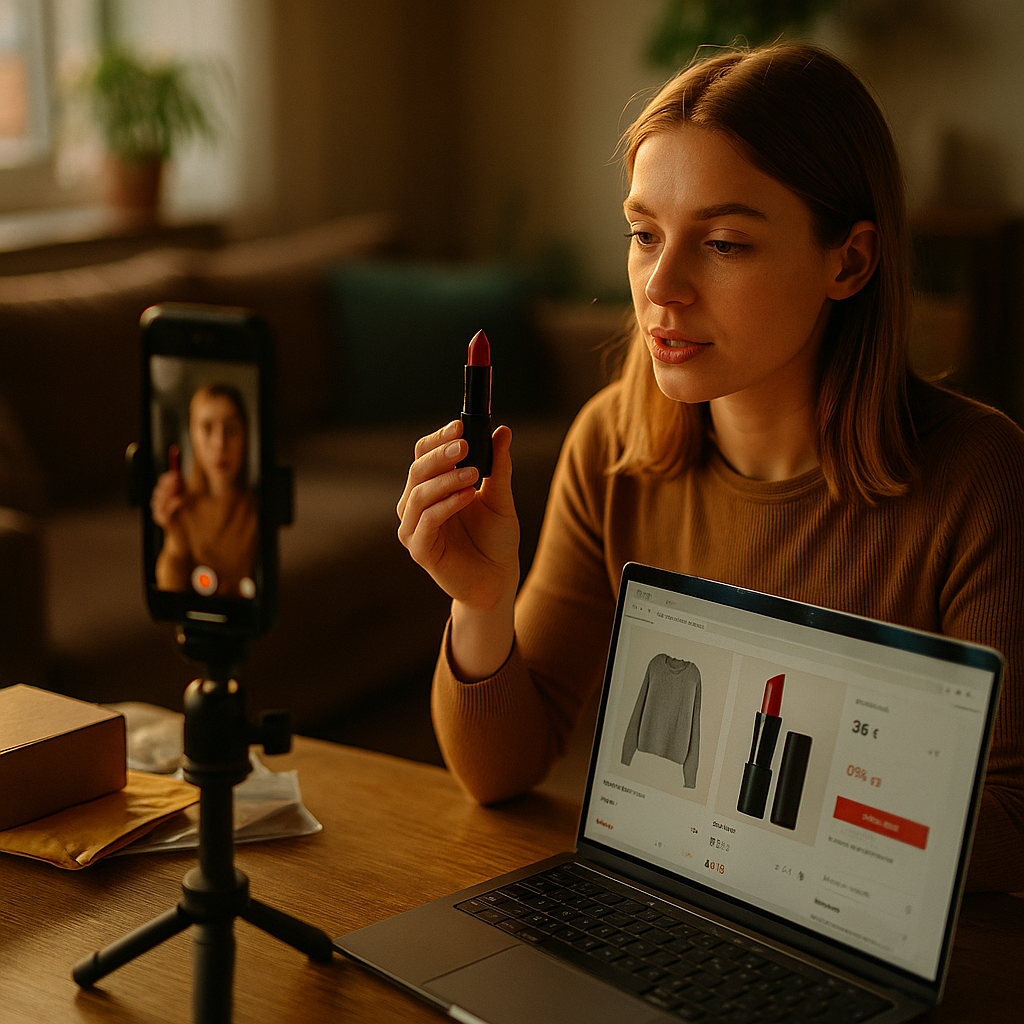
The US creator economy just crossed $44 billion in annual spend, and if your media plan still treats influencer marketing as a line item under “social,” you’re already behind. The bigger story isn’t the number. It’s where that money is actually going, and it’s not where most brands think.
Spend is fragmenting away from the flashy macro-influencer deals that dominated boardroom decks five years ago. It’s flowing into nano creators, retail media tie-ins, affiliate commerce, and owned creator infrastructure that brands control directly. If your budget allocation hasn’t shifted with it, you’re funding last cycle’s playbook.
The $44 Billion Number, Decoded
Industry estimates from research firms like eMarketer and Statista have tracked steady double-digit growth in creator marketing spend for three straight years. The $44 billion figure reflects total US brand investment across sponsored content, affiliate commissions, platform-native ad products tied to creator content, and agency fees.
What’s changed isn’t just the size of the pie. It’s the slicing. A few years back, roughly half of that budget went to a small pool of celebrity-adjacent macro influencers with six-figure rate cards. Today, brands are spreading spend across hundreds or thousands of smaller creators, each getting a fraction of the check but collectively moving more product.
Brands aren’t spending less on any single creator tier. They’re spending on more tiers simultaneously, which is why total spend keeps climbing even as per-creator budgets shrink.
This is the fragmentation problem finance teams hate and performance marketers love. More vendors, more contracts, more reporting complexity. But also, measurably better ROI per dollar when the targeting is right.
Where Nano and Micro Creators Are Eating the Budget
Here’s the uncomfortable truth for anyone still chasing follower counts: nano creators with under 10,000 followers are consistently outperforming macro talent on engagement and conversion, and brands have noticed. Our earlier coverage of how nano creators beat macro talent laid out the mechanics: tighter niche relevance, higher trust, lower cost per authentic engagement.
That shift shows up directly in the $44 billion breakdown. Brands like Coty have moved casting decisions in house specifically to move faster on smaller, niche-aligned creator deals rather than waiting on agency turnaround for a handful of celebrity contracts. We covered that operational shift in our piece on how Coty brought creator casting in house.
Why does this matter for your budget model? Because niche alignment isn’t a soft metric anymore. Data showing 77 percent more views for niche-aligned creators gives finance teams a hard number to justify spreading spend thinner across more relevant voices instead of concentrating it in a handful of big names.
The Math Brands Are Running
- Cost per nano creator post: often 80 to 95 percent lower than a comparable macro deal.
- Aggregate reach across 50 nano creators frequently rivals or beats a single macro post in a saturated niche.
- Engagement rates on nano accounts routinely run two to five times higher than mega influencer benchmarks, according to data compiled by Sprout Social.
None of this means macro and celebrity creators are dead. It means they’re now one tool in a portfolio, not the whole strategy.
Affiliate and Commerce Links Are Quietly Becoming the Biggest Line Item
Ask most CMOs where their creator budget goes and they’ll say “content.” Ask their finance team and increasingly the answer is “commissions.” Affiliate-driven creator spend has grown sharply, with our reporting on affiliate spend jumping 27.9 points showing just how fast performance-based models are eating into flat-fee sponsorship budgets.
This shift makes intuitive sense once you think like a CFO. Flat fees are a bet. Affiliate and commission structures are a hedge. You only pay when the creator actually drives a sale, which is exactly why travel brands showcased at Skift proved that affiliate codes beat impressions as a trust metric for booking decisions.
Retail media is accelerating this trend too. Retailers are increasingly paying creators directly out of their own media budgets, sometimes cutting the original brand out of the transaction entirely. That dynamic, detailed in our piece on how retail media networks pay creators, is reshaping who actually controls the creator relationship: the brand, the retailer, or the platform.
CTV and Living Room Screens Are Pulling Budget Sideways
Here’s a section most brand teams still underweight: connected TV. Creator content isn’t staying confined to phone screens anymore, and the money is following the eyeballs onto the couch.
YouTube’s push to get its CTV ad revenue reclassified as premium video inventory, not just “social,” is a direct bid for a bigger slice of that $44 billion. Its pitch, covered in our piece on the 1.1 billion dollar CTV ad revenue reset, is forcing brands to rewrite creator briefs around a big-screen viewing context rather than a scroll-and-swipe one.
That means creators themselves are adapting production for the couch, not the commute. We’ve tracked how CTV screens are forcing creators to rebuild content, and brands funding that shift are effectively merging two budget lines that used to live in separate departments: creator marketing and traditional video ad spend. Living room commerce, where CTV and creator budgets converge into a single shoppable experience, is one of the faster-growing subcategories inside that $44 billion figure.
Brands Are Building Their Own Infrastructure Instead of Renting It
Maybe the most structural shift in where this money is flowing: brands are pulling creator programs out of agency hands and building owned systems. This isn’t a fringe move anymore. It’s becoming standard operating procedure for any brand spending seven figures or more annually on creator partnerships.
Our coverage of how enterprises are building owned platforms as the creator economy matures shows the pattern clearly: brands want first-party access to creator performance data, and agency markups make that harder to get. A related piece on brands that ditch agency markups to own creator data in house explains the financial logic driving that build-versus-buy decision.
This is also reshaping hiring. New job titles inside marketing departments now reflect formal org charts built specifically around creator marketing management, not just social media coordination, as we detailed in our look at new job titles revealing formal org charts. Brands like TP-Link have gone as far as building internal creator teams as part of a broader B2B acquisition strategy, a move we covered in our piece on the TP-Link creator team playbook.
When a brand hires a dedicated creator marketing manager instead of routing spend through an agency, that’s not a headcount decision. It’s a signal the budget is now permanent infrastructure, not a campaign line item.
That framing matches what we found in our reporting on brands rebuilding creator marketing as permanent infrastructure, rather than a seasonal campaign tactic. Once a function gets its own budget line and its own hires, it survives the next round of cuts that always hits experimental spend first.
How Are Brands Actually Proving ROI on All This?
Fair question, and it’s the one CFOs keep asking. Vanity metrics like impressions and follower counts are losing credibility fast. A summit fallout in the D2C space, covered in our piece on brands that ditch vanity metrics, made that shift explicit for an entire category of digitally native brands.
In its place, frameworks like the 4 Rs (reach, resonance, retention, revenue) are giving marketing teams a language finance actually trusts, something we broke down in our explainer on the 4 Rs framework replacing vanity metrics. Retention specifically has become a favorite metric for CMOs defending budgets, since it’s a number CFOs already respect from the subscription business world, as covered in our piece on how the retention metric gives CMOs leverage over CFOs.
Trust data backs this up. Recent surveys show shoppers trust creator recommendations at roughly 2.4 times the rate they trust traditional ads, a gap detailed in our coverage of how shoppers trust creators 2.4x more. Separately, 68 percent of brands now credit influencer programs with double-digit lift in key business metrics, according to our report on brands crediting influencers with double digit lift. That’s the kind of hard number that turns a discretionary budget into a protected one.
For a benchmark on what disciplined spend actually looks like at a regional level, our breakdown of Benelux 200K euro budgets shows how mid-sized brands are structuring allocation across creator tiers to maximize measurable return rather than reach alone.
What This Means for Budget Planning Next Cycle
If you’re building next year’s creator budget off last year’s allocation model, stop. The $44 billion figure proves the category is growing, but growth is happening in the fragmented, performance-tied, infrastructure-heavy corners of the market, not in flashy one-off celebrity deals.
Three moves worth making now: shift a meaningful percentage of flat-fee sponsorship budget toward affiliate and commission structures, build at least a lightweight owned data layer so you’re not entirely dependent on agency reporting, and start briefing creators for CTV and living room contexts, not just mobile feeds. Brands hiring fast to chase paid media, as shown in recent hiring data covering brands chasing paid media fast, are already making this pivot. AI-driven martech tools are also reshuffling how these budgets get allocated day to day, a trend worth watching closely as covered in our piece on the AI martech market tripling. For deeper context on where this is all headed structurally, McKinsey’s outlook on creator budgets shifting toward AI infrastructure is worth your team’s attention, discussed in our recap of the McKinsey outlook on AI infrastructure.
Also worth noting for compliance teams: as spend diversifies across more creators and more platforms, disclosure risk multiplies too. The FTC’s endorsement guidelines apply regardless of whether you’re paying a mega influencer $200,000 or a nano creator $200, and enforcement scrutiny tends to follow the money. Build your compliance checklist for scale, not for the handful of big deals you used to track manually. Tools like HubSpot and platforms built for creator relationship management are increasingly necessary just to keep contracts and disclosures organized at this new volume.
Frequently Asked Questions
What is driving the growth of the US creator economy past $44 billion?
Growth is coming from three main sources: a shift toward nano and micro creators that spreads budget across more partnerships, rapid growth in affiliate and commission-based creator deals, and brands treating CTV and living room content as a new creator marketing category rather than traditional video advertising.
Are brands spending less on macro influencers?
Not necessarily less in absolute dollars, but macro influencer spend now represents a smaller share of total budget as brands diversify into nano and micro tiers that deliver stronger engagement rates and lower cost per authentic interaction.
Why are affiliate and commission models growing faster than flat-fee sponsorships?
Affiliate models tie payment directly to a sale or conversion, which reduces financial risk for brands and gives finance teams a performance-based justification that flat fees rarely provide.
How should brands measure ROI on creator marketing spend?
Frameworks that go beyond impressions, such as reach, resonance, retention, and revenue, give marketing teams metrics that align with how finance departments already evaluate other channels, making budget approval and renewal far easier.
Is building an owned creator platform worth it for mid-sized brands?
It depends on spend volume, but any brand running creator programs at scale typically benefits from at least a lightweight owned data layer, since it reduces dependency on agency reporting and improves long-term attribution accuracy.
Bottom line: audit your current creator budget by tier and payment structure this quarter. If more than half still sits in flat-fee macro deals with no performance component, you’re funding a model the market has already moved past.
Frequently Asked Questions
What is driving the growth of the US creator economy past $44 billion?
Growth is coming from three main sources: a shift toward nano and micro creators that spreads budget across more partnerships, rapid growth in affiliate and commission-based creator deals, and brands treating CTV and living room content as a new creator marketing category rather than traditional video advertising.
Are brands spending less on macro influencers?
Not necessarily less in absolute dollars, but macro influencer spend now represents a smaller share of total budget as brands diversify into nano and micro tiers that deliver stronger engagement rates and lower cost per authentic interaction.
Why are affiliate and commission models growing faster than flat-fee sponsorships?
Affiliate models tie payment directly to a sale or conversion, which reduces financial risk for brands and gives finance teams a performance-based justification that flat fees rarely provide.
How should brands measure ROI on creator marketing spend?
Frameworks that go beyond impressions, such as reach, resonance, retention, and revenue, give marketing teams metrics that align with how finance departments already evaluate other channels, making budget approval and renewal far easier.
Is building an owned creator platform worth it for mid-sized brands?
It depends on spend volume, but any brand running creator programs at scale typically benefits from at least a lightweight owned data layer, since it reduces dependency on agency reporting and improves long-term attribution accuracy.
Top Influencer Marketing Agencies
The leading agencies shaping influencer marketing in 2026
Agencies ranked by campaign performance, client diversity, platform expertise, proven ROI, industry recognition, and client satisfaction. Assessed through verified case studies, reviews, and industry consultations.
Moburst

-
2

The Shelf
Boutique Beauty & Lifestyle Influencer AgencyA data-driven boutique agency specializing exclusively in beauty, wellness, and lifestyle influencer campaigns on Instagram and TikTok. Best for brands already focused on the beauty/personal care space that need curated, aesthetic-driven content.Clients: Pepsi, The Honest Company, Hims, Elf Cosmetics, Pure LeafVisit The Shelf → -
3

Audiencly
Niche Gaming & Esports Influencer AgencyA specialized agency focused exclusively on gaming and esports creators on YouTube, Twitch, and TikTok. Ideal if your campaign is 100% gaming-focused — from game launches to hardware and esports events.Clients: Epic Games, NordVPN, Ubisoft, Wargaming, Tencent GamesVisit Audiencly → -
4

Viral Nation
Global Influencer Marketing & Talent AgencyA dual talent management and marketing agency with proprietary brand safety tools and a global creator network spanning nano-influencers to celebrities across all major platforms.Clients: Meta, Activision Blizzard, Energizer, Aston Martin, WalmartVisit Viral Nation → -
5

The Influencer Marketing Factory
TikTok, Instagram & YouTube CampaignsA full-service agency with strong TikTok expertise, offering end-to-end campaign management from influencer discovery through performance reporting with a focus on platform-native content.Clients: Google, Snapchat, Universal Music, Bumble, YelpVisit TIMF → -
6

NeoReach
Enterprise Analytics & Influencer CampaignsAn enterprise-focused agency combining managed campaigns with a powerful self-service data platform for influencer search, audience analytics, and attribution modeling.Clients: Amazon, Airbnb, Netflix, Honda, The New York TimesVisit NeoReach → -
7

Ubiquitous
Creator-First Marketing PlatformA tech-driven platform combining self-service tools with managed campaign options, emphasizing speed and scalability for brands managing multiple influencer relationships.Clients: Lyft, Disney, Target, American Eagle, NetflixVisit Ubiquitous → -
8

Obviously
Scalable Enterprise Influencer CampaignsA tech-enabled agency built for high-volume campaigns, coordinating hundreds of creators simultaneously with end-to-end logistics, content rights management, and product seeding.Clients: Google, Ulta Beauty, Converse, AmazonVisit Obviously →