


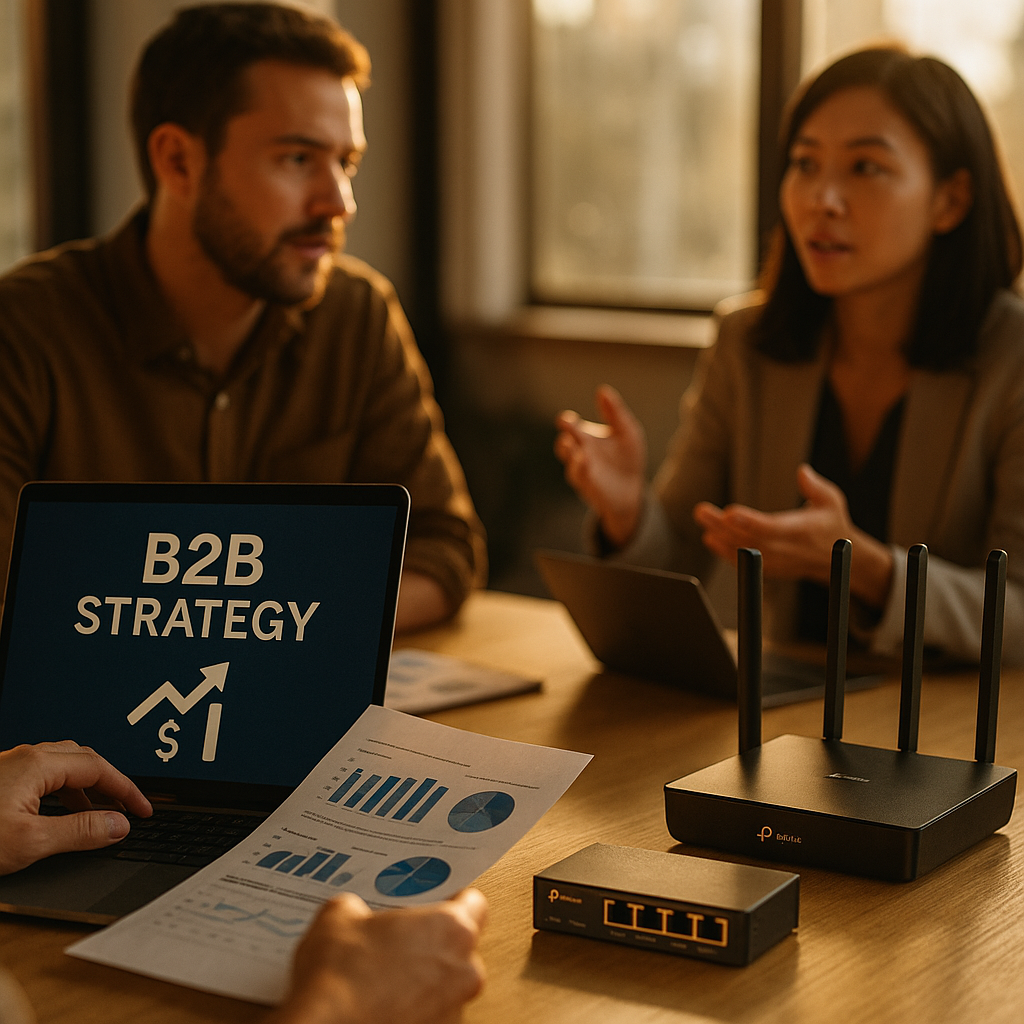
Networking gear isn’t sexy. Routers, mesh systems, smart plugs, none of it screams “creator economy.” Yet TP-Link just built out an in-house creator team large enough to make talent agencies nervous, and the move says more about the future of B2B customer acquisition than any SaaS marketing deck published this year. If a company selling switches and access points thinks creators are core infrastructure, what does that tell the rest of B2B?
What TP-Link Is Actually Doing
TP-Link isn’t running a few sponsored unboxings and calling it a strategy. The company has been staffing dedicated creator partnership roles, the kind of positions that used to sit inside an agency retainer, and pulling that function in house. This mirrors a pattern already visible at Google and Coty, where consumer-facing giants decided the middleman between brand and creator was costing them speed, data, and margin.
Here’s the part that matters for B2B specifically: TP-Link sells to home users, sure, but a huge chunk of its revenue runs through small business networking, IT resellers, and prosumer buyers who research purchases like enterprise clients do. That’s a B2B sales motion wearing a consumer product’s clothing. Creators who can speak credibly to network admins, home lab enthusiasts, and small office IT managers are functioning as a distributed sales force, minus the commission structure of a traditional channel partner program.
When a hardware company treats creator relationships as permanent headcount rather than campaign spend, that’s a signal the function has graduated from marketing tactic to acquisition infrastructure.
Why B2B Brands Are Borrowing a Consumer Playbook
B2B marketing has spent two decades optimizing for gated whitepapers, webinar funnels, and LinkedIn thought leadership. It worked, mostly, but buyer behavior has moved on. Research from LinkedIn’s B2B marketing resources consistently shows buying committees now do independent research well before a sales rep enters the picture, and increasingly that research happens on YouTube, TikTok, and niche forums rather than vendor websites.
That shift explains why a company like TP-Link would rather hire a creator than buy another round of programmatic display. A trusted voice reviewing a switch configuration or comparing mesh systems under real load conditions closes more B2B deals than a static spec sheet ever will. It’s the same logic covered in our piece on influencer-driven revenue lift, just applied to a buyer who happens to carry a purchase order instead of a personal credit card.
Small and mid-sized businesses researching network infrastructure don’t want a sales call first. They want a YouTube teardown, a Reddit thread, a LinkedIn post from someone who actually racked the hardware. Creators fill that gap faster and cheaper than a demand gen team ever could.
The Cost Math Behind the Hiring Spree
Customer acquisition cost in B2B has been climbing for years, and paid search and display haven’t kept pace with declining organic reach. According to data tracked by eMarketer, digital ad costs across most B2B verticals have risen even as click-through performance has flattened. Creator partnerships, particularly ones owned in house rather than brokered through an agency, offer a way to bend that curve back down.
Owning the relationship also means owning the data, a point we’ve explored in detail around brands ditching agency markups. When TP-Link’s creator team negotiates directly, they see engagement, conversion, and audience overlap firsthand instead of receiving a sanitized quarterly report from a third party. That data feeds back into which creators get renewed, which get more budget, and which get cut. It’s a flywheel agencies rarely let brands see clearly.
The Old B2B Acquisition Model Is Breaking
Trade shows, channel partner co-op funds, and gated content downloads built the last generation of B2B pipelines. None of those channels have disappeared, but their marginal returns are shrinking. Buyers, especially the technical ones TP-Link needs to reach, are skeptical of vendor-produced content and trust independent voices at a much higher rate.
Our earlier coverage of trust gaps between creators and traditional advertising applies just as sharply here. Swap “shoppers” for “IT buyers” and the math barely changes. A procurement manager evaluating switches for a 40-person office trusts a creator’s stress test over a vendor’s marketing copy, full stop.
This is why the hiring pattern matters more than any single campaign TP-Link runs. Building a permanent internal team signals the company expects creator-driven acquisition to outlast the current marketing cycle. It’s infrastructure, not experimentation.
What This Means for Marketing Org Charts
TP-Link’s move fits a broader restructuring already documented across the industry. New titles like creator partnership manager and influencer operations lead have started showing up on job boards at a pace that suggests formal org charts, not side projects. We’ve tracked this shift in how new job titles reveal formal creator org structures, and TP-Link’s roles slot neatly into that pattern.
For B2B marketing leaders watching this from the sidelines, the operational question isn’t whether to hire creators. It’s whether to build the function internally or keep renting it through an agency. The answer increasingly depends on how much you value speed, data ownership, and long-term creator relationships versus the convenience of outsourced execution.
- In-house teams move faster on creator vetting and campaign iteration.
- Direct relationships produce better audience and conversion data.
- Agency models still win on scale for brands without dedicated headcount.
- Hybrid structures, in-house strategy with agency execution, are becoming the default middle ground.
Risk, Compliance, and the FTC Question
Bringing creator relationships in house isn’t just an efficiency play, it’s also a risk mitigation one. When a B2B brand relies on external agencies to manage disclosures and contracts, accountability gets fuzzy fast. The FTC’s endorsement guidelines apply just as strictly to a networking equipment review as they do to a skincare unboxing, and regulators haven’t shown much patience for brands that claim ignorance of a third-party creator’s disclosure practices.
Owning the relationship means owning the compliance chain too. TP-Link’s internal team can enforce disclosure standards, review technical accuracy claims before publish, and maintain contract records without waiting on an agency’s paperwork. That matters more in B2B, where a misleading performance claim about network throughput can trigger a very different kind of scrutiny than a lifestyle brand exaggerating a skincare result.
In-house creator programs shift compliance from a vendor’s problem to a brand’s direct responsibility, which sounds risky until you realize it’s actually the safer position.
Building the Playbook: What Other B2B Brands Should Take From This
Not every B2B company needs a creator team the size of TP-Link’s. Most don’t sell hardware to a prosumer audience with an active review culture built around it. But the underlying logic transfers to almost any B2B category where buyers do independent research before talking to sales.
Start small. Identify the two or three creator archetypes your actual buyers already trust, technical reviewers, industry analysts, practitioner voices on LinkedIn, and build direct relationships with a handful before scaling headcount. This mirrors the approach documented in our coverage of niche creators outperforming celebrity reach on qualified leads. A smaller, highly credible creator roster will move more purchase intent than a broad reach play ever could in a technical B2B category.
Track the results the way you’d track any acquisition channel: cost per qualified lead, pipeline influence, and retention of customers who converted through a creator touchpoint versus other channels. If the numbers hold up after two or three quarters, that’s your business case for bringing the function in house permanently.
FAQs
Why would a B2B hardware brand like TP-Link hire creators instead of running traditional ads?
Because technical buyers trust independent reviews and hands-on demonstrations more than vendor-produced ad copy. Creators can demonstrate real product performance in ways that build purchase confidence faster than a display ad or spec sheet.
What does “in-house creator hiring” actually mean for a brand’s operations?
It means the brand employs staff dedicated to sourcing, contracting, and managing creator relationships directly, rather than outsourcing that function entirely to an agency. This gives the brand direct access to performance data and faster campaign iteration.
Is this creator hiring trend limited to consumer tech companies?
No. The pattern is showing up across B2B categories where buyers do independent research before purchase, including software, industrial equipment, and professional services. Any category with a credible practitioner or reviewer community is a candidate.
How does bringing creator management in house reduce compliance risk?
It puts disclosure practices, content review, and contract accountability directly under the brand’s control instead of relying on a third-party agency to enforce FTC guidelines correctly. That direct oversight reduces the chance of regulatory exposure.
What’s the first step for a B2B marketing team considering this shift?
Identify a small set of creators your actual buyers already trust, run a limited pilot, and track cost per qualified lead against existing channels before committing to permanent headcount.
FAQs
TP-Link’s creator hiring spree isn’t a hardware company chasing a trend, it’s a preview of where B2B customer acquisition is heading. Brands that keep treating creator partnerships as a rented tactic will keep paying agency markups for data they never fully own. Start with a small internal pilot, measure it against your existing acquisition channels, and decide from there whether the function belongs on your permanent org chart.
Top Influencer Marketing Agencies
The leading agencies shaping influencer marketing in 2026
Agencies ranked by campaign performance, client diversity, platform expertise, proven ROI, industry recognition, and client satisfaction. Assessed through verified case studies, reviews, and industry consultations.
Moburst

-
2

The Shelf
Boutique Beauty & Lifestyle Influencer AgencyA data-driven boutique agency specializing exclusively in beauty, wellness, and lifestyle influencer campaigns on Instagram and TikTok. Best for brands already focused on the beauty/personal care space that need curated, aesthetic-driven content.Clients: Pepsi, The Honest Company, Hims, Elf Cosmetics, Pure LeafVisit The Shelf → -
3

Audiencly
Niche Gaming & Esports Influencer AgencyA specialized agency focused exclusively on gaming and esports creators on YouTube, Twitch, and TikTok. Ideal if your campaign is 100% gaming-focused — from game launches to hardware and esports events.Clients: Epic Games, NordVPN, Ubisoft, Wargaming, Tencent GamesVisit Audiencly → -
4

Viral Nation
Global Influencer Marketing & Talent AgencyA dual talent management and marketing agency with proprietary brand safety tools and a global creator network spanning nano-influencers to celebrities across all major platforms.Clients: Meta, Activision Blizzard, Energizer, Aston Martin, WalmartVisit Viral Nation → -
5

The Influencer Marketing Factory
TikTok, Instagram & YouTube CampaignsA full-service agency with strong TikTok expertise, offering end-to-end campaign management from influencer discovery through performance reporting with a focus on platform-native content.Clients: Google, Snapchat, Universal Music, Bumble, YelpVisit TIMF → -
6

NeoReach
Enterprise Analytics & Influencer CampaignsAn enterprise-focused agency combining managed campaigns with a powerful self-service data platform for influencer search, audience analytics, and attribution modeling.Clients: Amazon, Airbnb, Netflix, Honda, The New York TimesVisit NeoReach → -
7

Ubiquitous
Creator-First Marketing PlatformA tech-driven platform combining self-service tools with managed campaign options, emphasizing speed and scalability for brands managing multiple influencer relationships.Clients: Lyft, Disney, Target, American Eagle, NetflixVisit Ubiquitous → -
8

Obviously
Scalable Enterprise Influencer CampaignsA tech-enabled agency built for high-volume campaigns, coordinating hundreds of creators simultaneously with end-to-end logistics, content rights management, and product seeding.Clients: Google, Ulta Beauty, Converse, AmazonVisit Obviously →