


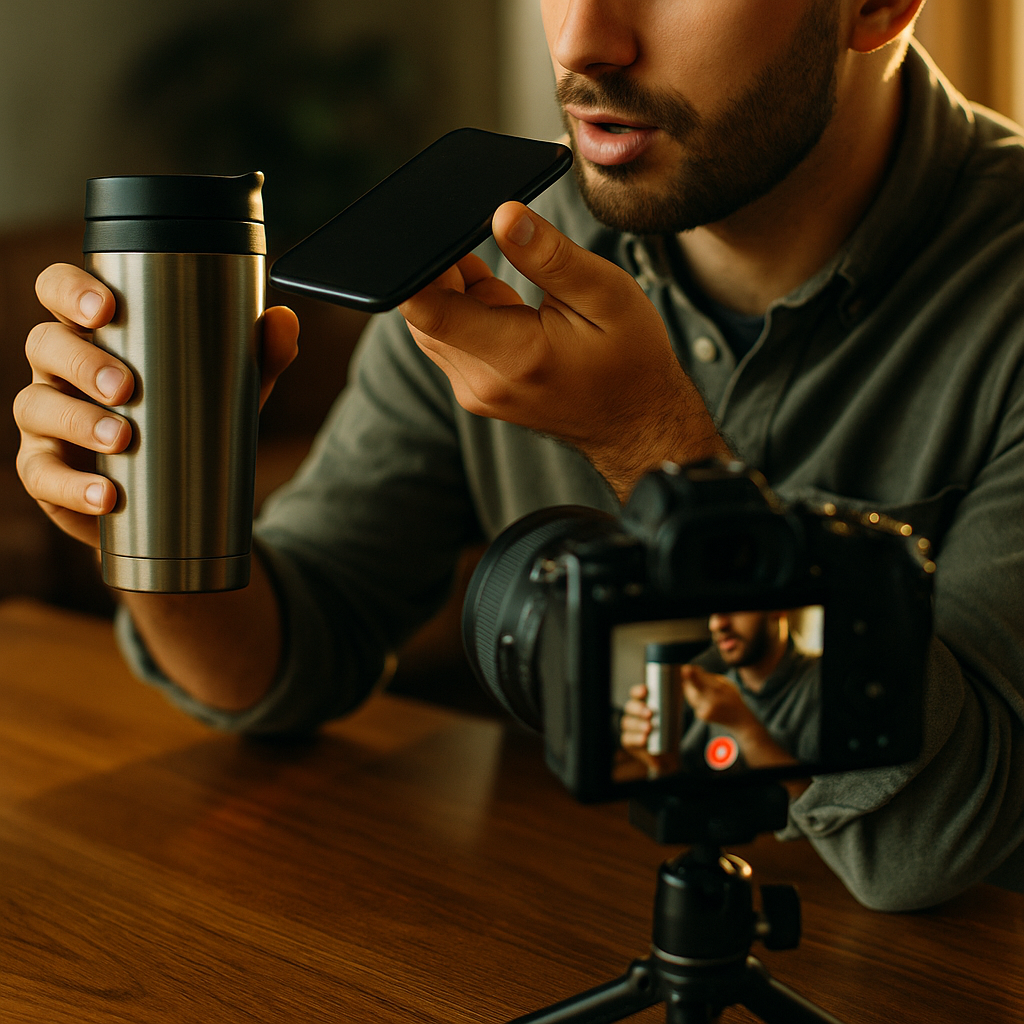
Nearly 40% of Gen Z now opens YouTube before Google when they have a product question, according to eMarketer research on discovery habits. That shift changes everything about how brands should brief video content. Product Q&A video content built for YouTube’s conversational search isn’t optional anymore, it’s the format that decides whether your answer shows up when a buyer asks “does this actually work” out loud.
Why YouTube Search Stopped Rewarding Keyword Stuffing
YouTube’s search and recommendation systems have quietly shifted toward understanding intent, not just matching titles. The platform now leans on natural language processing to parse spoken dialogue, on-screen text, and chapter markers to figure out what a video actually answers. That means a video titled “Best Wireless Earbuds” with no substantive Q&A inside it gets outranked by a scrappier video that directly answers “do these earbuds work for running in the rain.”
This is the same conversational shift reshaping AI search overviews and chat-based assistants. Brands already adapting their copy for conversational ad scripts are seeing the pattern repeat on YouTube: structure and phrasing now matter as much as production value.
YouTube isn’t just indexing your video anymore, it’s indexing the specific question your video answers and matching it to the specific question the viewer typed or spoke.
What Counts as “Product Q&A” in This Context
Not every unboxing or review qualifies. A true Q&A video for conversational search follows a recognizable pattern: a question stated in plain language, an answer delivered within the first few seconds of that segment, and a natural pause before the next question begins. Think of it as an FAQ page that talks.
- Direct comparison answers (“is X better than Y for small kitchens”)
- Objection handling (“will this void my warranty if I install it myself”)
- Use-case validation (“can this handle a home gym setup”)
- Troubleshooting (“why does mine keep disconnecting from Bluetooth”)
Each of these maps almost word-for-word to how someone would phrase a voice search or type a query into an AI assistant. That’s the whole point. You’re not writing for search engines anymore, you’re writing for how people actually talk.
Structure the Video Like a Voice Search Would Ask It
Open with the question, restated clearly, ideally as a full sentence. Skip the clever intro. Skip the brand jingle. If someone lands on your video because they searched “is this blender loud,” the first four seconds need to acknowledge that exact concern or you’ll lose them to a competitor’s clip.
Here’s a workable beat structure for a single Q&A segment:
- State the question verbatim, on screen and spoken
- Give the direct answer in one sentence (yes, no, it depends, here’s why)
- Show the proof (demo, spec, side-by-side)
- Address the follow-up objection viewers are likely thinking
- Transition cleanly to the next question
This rhythm plays nicely with YouTube’s chapter system, which is increasingly used by both human viewers and AI summarization tools to jump straight to relevant segments. If you haven’t already built a chaptering habit into your video briefs, it’s worth reviewing timestamp chaptering as a standalone discipline, because it directly feeds how conversational search engines extract answer snippets from long-form content.
Titles and Descriptions Still Do Heavy Lifting
Conversational search doesn’t eliminate metadata, it raises the bar for it. Titles phrased as questions (“Does This Robot Vacuum Work on Thick Carpet?”) consistently outperform declarative titles in click-through for product content, based on patterns Influencers Time has tracked across creator partner channels. Descriptions should include a plain-language summary of each question answered in the video, not a keyword list.
Google’s own guidance on video metadata best practices reinforces this: descriptive, natural phrasing outperforms forced keyword density every time. Write descriptions like you’re explaining the video to a colleague, not gaming an algorithm.
A Quick Note on Closed Captions
Auto-generated captions are a starting point, not a finish line. YouTube’s conversational search relies heavily on transcript accuracy to match spoken answers to typed or spoken queries. A mispunctuated or misheard product name in your captions can quietly tank discoverability for that entire segment. Budget time (or a cheap human editing pass) to clean captions before publishing, especially for branded terms and technical specs.
Format Length: Shorter Isn’t Always Smarter
There’s a temptation to chop every Q&A into a 30-second Short. Sometimes that’s right. But conversational search often favors depth, especially for high-consideration purchases where the viewer wants proof, not a punchline. A seven-minute video answering twelve real questions in sequence can outperform twelve separate Shorts because it signals topical authority to YouTube’s ranking systems.
That doesn’t mean ignore Shorts. It means pair them. Use Shorts to answer the single most-searched question and drive traffic to the full Q&A video for viewers who want the complete picture. This layered approach mirrors what’s already working in long form product documentaries, where depth builds trust that a 15-second clip simply can’t.
A single well-structured Q&A video can rank for dozens of long-tail conversational queries at once, something a scattered library of short clips rarely achieves.
Sourcing Real Questions Instead of Guessing
The biggest mistake brands make is writing Q&A scripts from the marketing team’s assumptions instead of actual customer language. Pull from these sources before you script anything:
- Customer support tickets and live chat transcripts
- Amazon or retailer Q&A sections for your product category
- Reddit threads and niche forums where your category gets debated
- Comment sections on competitor product videos
- Sales team call notes, especially objections that stall deals
This same sourcing discipline is what makes briefs for AEO ready creator briefs effective for AI citation, and it transfers directly to YouTube. If a question shows up in five different customer channels, it belongs in your next video, full stop.
Measuring Whether It’s Actually Working
Standard view counts won’t tell you if your Q&A content is winning conversational search. Watch these signals instead:
- Average view duration on individual chapters, not just the whole video
- Search terms report inside YouTube Studio, checking for long-tail question matches
- Suggested video traffic from competitor Q&A content, which signals topical relevance
- Comment questions that repeat questions already answered in the video (a sign your pacing or captions need work)
Data from Sprout Social’s platform benchmarking consistently shows that videos structured around explicit questions retain viewers longer past the two-minute mark, a threshold that correlates with stronger recommendation performance on YouTube specifically.
If you’re running paid alongside organic, cross-reference performance with your comparison content strategy. Formats like spec comparison reels often surface the exact objections worth turning into a dedicated Q&A segment.
Where This Is Headed
Voice assistants and AI overviews are increasingly pulling from YouTube transcripts to generate spoken or summarized answers, not just linking to the video. That means the brands winning conversational search a year from now will be the ones whose video answers are clean, quotable, and structured enough for an AI to lift verbatim. HubSpot’s ongoing research on AI search behavior points the same direction: structured, question-first content consistently gets cited more than narrative-style content, regardless of production budget.
None of this requires a bigger budget. It requires a different brief.
Next Step
Pull your last twenty customer support questions, script one video that answers all of them in sequence, and structure it with the five-beat format above. Measure chapter-level retention after two weeks, not just total views, and let that data decide your next Q&A batch.
FAQs
What makes a video count as “conversational search optimized” on YouTube?
It states questions in natural spoken language, answers them directly within the first few seconds of each segment, and uses accurate captions and chapter markers so YouTube’s systems can match the content to how people actually phrase queries.
Should product Q&A videos be short-form or long-form?
Both have a role. Shorts work well for single high-volume questions, while a longer video answering multiple related questions in sequence tends to build stronger topical authority and rank for more long-tail searches at once.
Do auto-generated captions hurt search performance?
They can, especially when product names or technical terms get misheard. A quick manual cleanup pass on captions, particularly around branded terminology, protects discoverability for that segment.
Where should brands find real customer questions instead of guessing?
Support tickets, retailer Q&A sections, Reddit and forum threads, competitor video comments, and sales call objection notes are all stronger sources than internal marketing assumptions.
How is this different from a standard FAQ page?
The structure is similar, but video adds spoken tone, visual proof, and pacing cues that text can’t replicate, which is part of why conversational search engines increasingly favor video answers for demonstrable, high-consideration products.
FAQs
What makes a video count as “conversational search optimized” on YouTube?
It states questions in natural spoken language, answers them directly within the first few seconds of each segment, and uses accurate captions and chapter markers so YouTube’s systems can match the content to how people actually phrase queries.
Should product Q&A videos be short-form or long-form?
Both have a role. Shorts work well for single high-volume questions, while a longer video answering multiple related questions in sequence tends to build stronger topical authority and rank for more long-tail searches at once.
Do auto-generated captions hurt search performance?
They can, especially when product names or technical terms get misheard. A quick manual cleanup pass on captions, particularly around branded terminology, protects discoverability for that segment.
Where should brands find real customer questions instead of guessing?
Support tickets, retailer Q&A sections, Reddit and forum threads, competitor video comments, and sales call objection notes are all stronger sources than internal marketing assumptions.
How is this different from a standard FAQ page?
The structure is similar, but video adds spoken tone, visual proof, and pacing cues that text can’t replicate, which is part of why conversational search engines increasingly favor video answers for demonstrable, high-consideration products.
Top Influencer Marketing Agencies
The leading agencies shaping influencer marketing in 2026
Agencies ranked by campaign performance, client diversity, platform expertise, proven ROI, industry recognition, and client satisfaction. Assessed through verified case studies, reviews, and industry consultations.
Moburst

-
2

The Shelf
Boutique Beauty & Lifestyle Influencer AgencyA data-driven boutique agency specializing exclusively in beauty, wellness, and lifestyle influencer campaigns on Instagram and TikTok. Best for brands already focused on the beauty/personal care space that need curated, aesthetic-driven content.Clients: Pepsi, The Honest Company, Hims, Elf Cosmetics, Pure LeafVisit The Shelf → -
3

Audiencly
Niche Gaming & Esports Influencer AgencyA specialized agency focused exclusively on gaming and esports creators on YouTube, Twitch, and TikTok. Ideal if your campaign is 100% gaming-focused — from game launches to hardware and esports events.Clients: Epic Games, NordVPN, Ubisoft, Wargaming, Tencent GamesVisit Audiencly → -
4

Viral Nation
Global Influencer Marketing & Talent AgencyA dual talent management and marketing agency with proprietary brand safety tools and a global creator network spanning nano-influencers to celebrities across all major platforms.Clients: Meta, Activision Blizzard, Energizer, Aston Martin, WalmartVisit Viral Nation → -
5

The Influencer Marketing Factory
TikTok, Instagram & YouTube CampaignsA full-service agency with strong TikTok expertise, offering end-to-end campaign management from influencer discovery through performance reporting with a focus on platform-native content.Clients: Google, Snapchat, Universal Music, Bumble, YelpVisit TIMF → -
6

NeoReach
Enterprise Analytics & Influencer CampaignsAn enterprise-focused agency combining managed campaigns with a powerful self-service data platform for influencer search, audience analytics, and attribution modeling.Clients: Amazon, Airbnb, Netflix, Honda, The New York TimesVisit NeoReach → -
7

Ubiquitous
Creator-First Marketing PlatformA tech-driven platform combining self-service tools with managed campaign options, emphasizing speed and scalability for brands managing multiple influencer relationships.Clients: Lyft, Disney, Target, American Eagle, NetflixVisit Ubiquitous → -
8

Obviously
Scalable Enterprise Influencer CampaignsA tech-enabled agency built for high-volume campaigns, coordinating hundreds of creators simultaneously with end-to-end logistics, content rights management, and product seeding.Clients: Google, Ulta Beauty, Converse, AmazonVisit Obviously →