


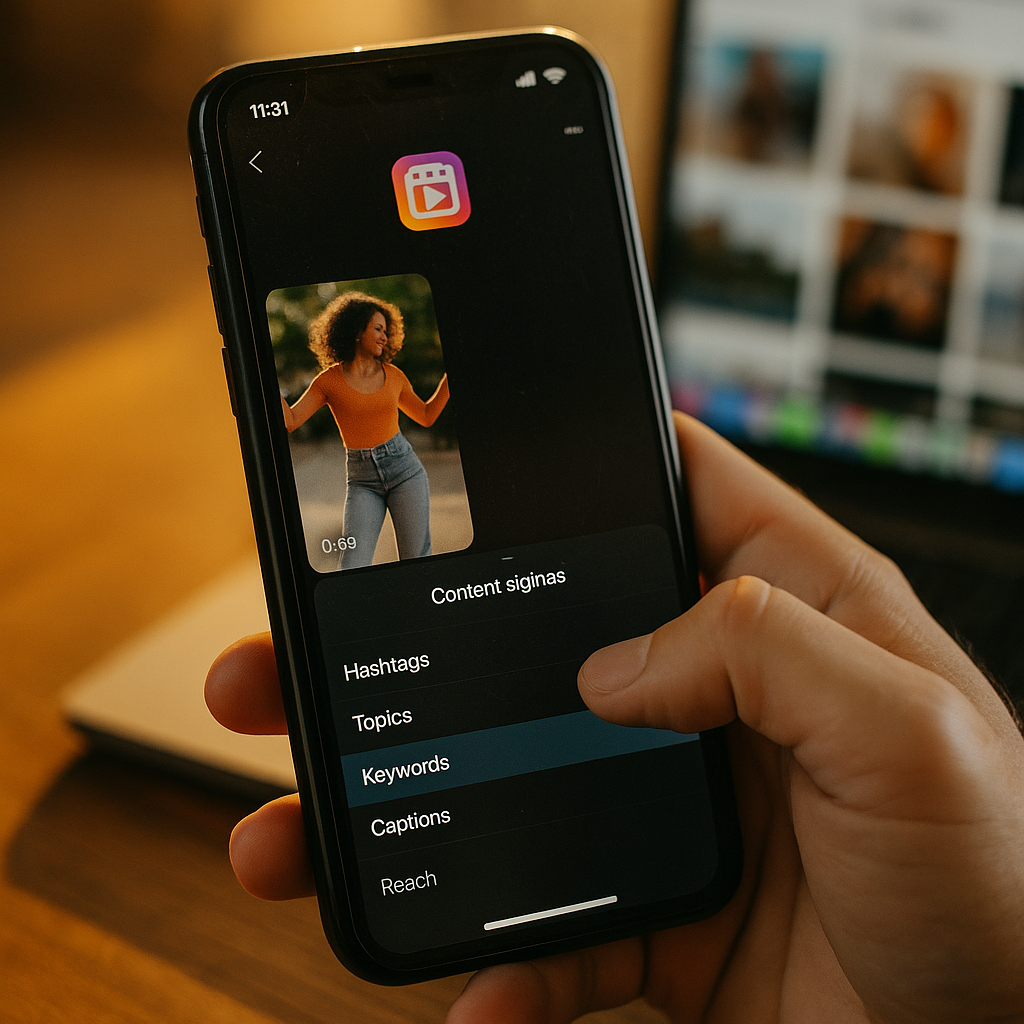
Instagram now serves more Reels based on what you’re interested in than who you follow. Meta’s own engineering team has confirmed that over half of the content people see in Reels and Explore comes from accounts they don’t follow. If your content strategy still treats followers as the primary distribution mechanism, you’re optimizing for a system that no longer exists. Instagram Reels interest based discovery has quietly become the dominant ranking framework, and most brand content calendars haven’t caught up.
The Follower Graph Is Dead Weight Now
For years, brands built Instagram strategy around follower count. Grow the audience, post to the audience, measure reach against the audience. That model made sense when the feed was chronological and follower relationships drove distribution. It doesn’t make sense anymore.
Instagram’s recommendation system now evaluates content against interest clusters, behavioral signals, and topic affinity, independent of whether the viewer follows your account. A skincare brand with 40,000 followers can outperform a competitor with 400,000 followers if its Reels match what the algorithm has identified as high-intent skincare interest signals in a given user’s session. Follower count still matters for direct messaging, community, and retention. It’s stopped being the gatekeeper for reach.
Meta has stated publicly that Reels recommendations are increasingly driven by content understanding and viewer interest signals rather than social graph connections, a shift that fundamentally changes how brands should plan content.
What Interest Based Discovery Actually Measures
Instagram’s system classifies every Reel across dozens of interest and topic vectors using computer vision, audio analysis, caption text, and engagement patterns. It then matches that classification against a viewer’s inferred interest profile, built from watch history, likes, saves, shares, and even how long someone lingered on similar content without engaging.
This means the algorithm isn’t just asking “will this person’s followers like this.” It’s asking “does this content match patterns this specific viewer has shown interest in, regardless of who they follow.” That’s a fundamentally different optimization target, and it rewards topic consistency over follower cultivation.
- Content classification signals: visual objects, spoken audio, on-screen text, hashtags, and caption keywords all feed topic tagging.
- Viewer interest signals: watch-through rate on similar content, save behavior, and repeat engagement with a niche.
- Session context: what someone watched in the last few minutes influences what gets served next, meaning adjacency matters.
Brands that publish across scattered topics dilute their own classification. A creator or brand account that consistently posts within a tight interest lane trains the algorithm faster and gets matched to relevant discovery pools sooner.
Why Niche Consistency Beats Broad Reach
This is the part that trips up brand marketing teams used to broad-reach campaigns. Interest based discovery punishes topic sprawl. If your Reels bounce between product demos, company culture, memes, and influencer collabs with no topical throughline, the algorithm struggles to classify your account into a stable interest cluster. That uncertainty translates directly into weaker distribution.
Compare that to accounts that stay in a lane. A B2B software brand that consistently publishes Reels about workflow automation, productivity tips, and SaaS trends builds a clean interest signature. Instagram learns exactly which discovery pools to slot that content into. Our related breakdown on cross platform relevance ranking covers how this topical consistency also affects how Reels perform when repurposed on other platforms.
Optimizing Content for the New Signal Hierarchy
So what actually moves the needle under interest based discovery? A few levers matter more than others right now.
Hook within the first two seconds. Watch-through rate remains one of the strongest signals feeding the interest classification model. If viewers drop off immediately, the algorithm treats that as a mismatch signal even if the content is topically relevant.
Saves and shares outrank likes. Instagram has repeatedly signaled that saves and shares indicate stronger topic affinity than passive likes. A save tells the system “this content matches something I care about enough to revisit.” That’s a much stronger training signal than a tap-to-like. We covered this shift in depth in our guide on save and share signal optimization, which is essential reading if your creator briefs still prioritize likes and comments as primary KPIs.
Caption and audio clarity. Instagram’s classification models parse spoken audio and on-screen text to tag content topics. Vague captions and mumbled voiceovers make classification harder, which delays or weakens discovery matching. Say the keyword topic out loud in the first sentence of your video if it’s relevant. It sounds unsophisticated, but it works.
Accounts that maintain a tight, recognizable content lane for eight to twelve consecutive Reels typically see faster interest cluster matching than accounts that vary topics post to post, based on patterns marketing teams have reported across creator campaigns.
Rethinking Creator Partnerships Around Interest Clusters
This shift changes how brands should vet and brief creators too. Historically, brands chased creators with the largest, most engaged follower base in their category. Under interest based discovery, a creator’s actual content classification matters more than their follower count. A mid-tier creator whose account is tightly classified into a high-intent interest cluster (say, budget travel hacks or home organization) can deliver stronger discovery-driven reach for a branded Reel than a larger, more generalist creator.
This has real implications for rate negotiation and creator selection. Brands should be asking creators for their content classification consistency, not just follower demographics. Our guide on creator rate negotiation under interest discovery walks through how to reframe briefs and pricing conversations now that reach is decoupled from follower size. It’s a useful companion piece if your procurement team still benchmarks rates purely against follower tiers.
Also worth revisiting: how Explore ranking interacts with save rate specifically, since Explore and Reels increasingly share underlying interest signals. The breakdown in Explore ranking and save rate briefing is directly relevant here.
Measurement: Stop Reporting Reach Against Follower Count
If interest based discovery decouples reach from followers, your reporting framework needs to follow. Reporting reach as a percentage of follower count is now a misleading metric internally, because a huge share of your views are coming from non-followers matched by interest signals.
Better metrics to track:
- Save rate as a percentage of total views, not just raw save count.
- Non-follower reach percentage, available in Instagram’s native Insights for Reels.
- Watch-through rate on the first three seconds, since this is a leading indicator of classification match quality.
- Topic consistency score across your last fifteen posts (a manual audit, but worth doing quarterly).
Marketing teams that still lead board reports with total reach and follower growth are missing the more actionable story: whether their content is being correctly classified and matched to relevant interest pools. Data from eMarketer and Sprout Social both point to declining follower-based reach as a category-wide trend across short-form video platforms, not just an Instagram quirk.
A Quick Word on Compliance and Disclosure
One operational wrinkle: interest based discovery means sponsored Reels can now surface to audiences who have zero context on your brand or the creator relationship. That raises the disclosure stakes. A branded Reel served to a cold, non-follower audience needs clear, unambiguous sponsorship labeling since there’s no prior brand familiarity to soften the ask. Our playbook on disclosure compliance and reach optimization covers how to keep FTC-compliant labeling from tanking discovery performance, and it’s worth cross-referencing against current FTC endorsement guidance before your next campaign brief goes out.
Building a Content Calendar Around Interest Signals
Practically, this means restructuring how brand teams plan Reels. Instead of a monthly calendar built around product launches and campaign moments, build around two or three core interest pillars your brand can credibly own. Publish consistently within those pillars for weeks at a time before testing a new one.
Test one pillar at a time. Give it four to six weeks of consistent publishing before evaluating whether the algorithm has matched your account to that interest cluster. Switching topics every week resets your classification signal and keeps you perpetually in cold-start mode with the recommendation system. Reference Meta’s business resources for the latest documented shifts in Reels ranking factors, since Meta updates its public guidance periodically as the model evolves.
The practical next step: audit your last twenty Reels for topic consistency, tag each one by interest category, and see how scattered your content signature actually is. If it’s all over the place, that’s your reach problem, not your creative.
Frequently Asked Questions
What is Instagram Reels interest based discovery?
It’s the ranking system Instagram uses to serve Reels to users based on inferred topic interest and behavioral signals rather than solely on whether the viewer follows the account posting the content.
Does follower count still matter for Instagram Reels reach?
Follower count still matters for community, direct engagement, and retention, but it’s no longer the primary driver of discovery reach. A large share of Reels views now come from non-followers matched through interest signals.
What content signals matter most under interest based discovery?
Saves, shares, watch-through rate in the first few seconds, and topic classification consistency across posts are the strongest signals feeding Instagram’s interest matching model.
How often should brands change content topics on Instagram Reels?
Brands should test one content pillar for at least four to six weeks before switching, since frequent topic changes make it harder for Instagram to classify the account into a stable interest cluster.
How does interest based discovery change creator partnership strategy?
Brands should evaluate a creator’s content classification consistency alongside follower metrics, since a tightly niched mid-tier creator can outperform a larger generalist account in discovery-driven reach.
Top Influencer Marketing Agencies
The leading agencies shaping influencer marketing in 2026
Agencies ranked by campaign performance, client diversity, platform expertise, proven ROI, industry recognition, and client satisfaction. Assessed through verified case studies, reviews, and industry consultations.
Moburst

-
2

The Shelf
Boutique Beauty & Lifestyle Influencer AgencyA data-driven boutique agency specializing exclusively in beauty, wellness, and lifestyle influencer campaigns on Instagram and TikTok. Best for brands already focused on the beauty/personal care space that need curated, aesthetic-driven content.Clients: Pepsi, The Honest Company, Hims, Elf Cosmetics, Pure LeafVisit The Shelf → -
3

Audiencly
Niche Gaming & Esports Influencer AgencyA specialized agency focused exclusively on gaming and esports creators on YouTube, Twitch, and TikTok. Ideal if your campaign is 100% gaming-focused — from game launches to hardware and esports events.Clients: Epic Games, NordVPN, Ubisoft, Wargaming, Tencent GamesVisit Audiencly → -
4

Viral Nation
Global Influencer Marketing & Talent AgencyA dual talent management and marketing agency with proprietary brand safety tools and a global creator network spanning nano-influencers to celebrities across all major platforms.Clients: Meta, Activision Blizzard, Energizer, Aston Martin, WalmartVisit Viral Nation → -
5

The Influencer Marketing Factory
TikTok, Instagram & YouTube CampaignsA full-service agency with strong TikTok expertise, offering end-to-end campaign management from influencer discovery through performance reporting with a focus on platform-native content.Clients: Google, Snapchat, Universal Music, Bumble, YelpVisit TIMF → -
6

NeoReach
Enterprise Analytics & Influencer CampaignsAn enterprise-focused agency combining managed campaigns with a powerful self-service data platform for influencer search, audience analytics, and attribution modeling.Clients: Amazon, Airbnb, Netflix, Honda, The New York TimesVisit NeoReach → -
7

Ubiquitous
Creator-First Marketing PlatformA tech-driven platform combining self-service tools with managed campaign options, emphasizing speed and scalability for brands managing multiple influencer relationships.Clients: Lyft, Disney, Target, American Eagle, NetflixVisit Ubiquitous → -
8

Obviously
Scalable Enterprise Influencer CampaignsA tech-enabled agency built for high-volume campaigns, coordinating hundreds of creators simultaneously with end-to-end logistics, content rights management, and product seeding.Clients: Google, Ulta Beauty, Converse, AmazonVisit Obviously →