


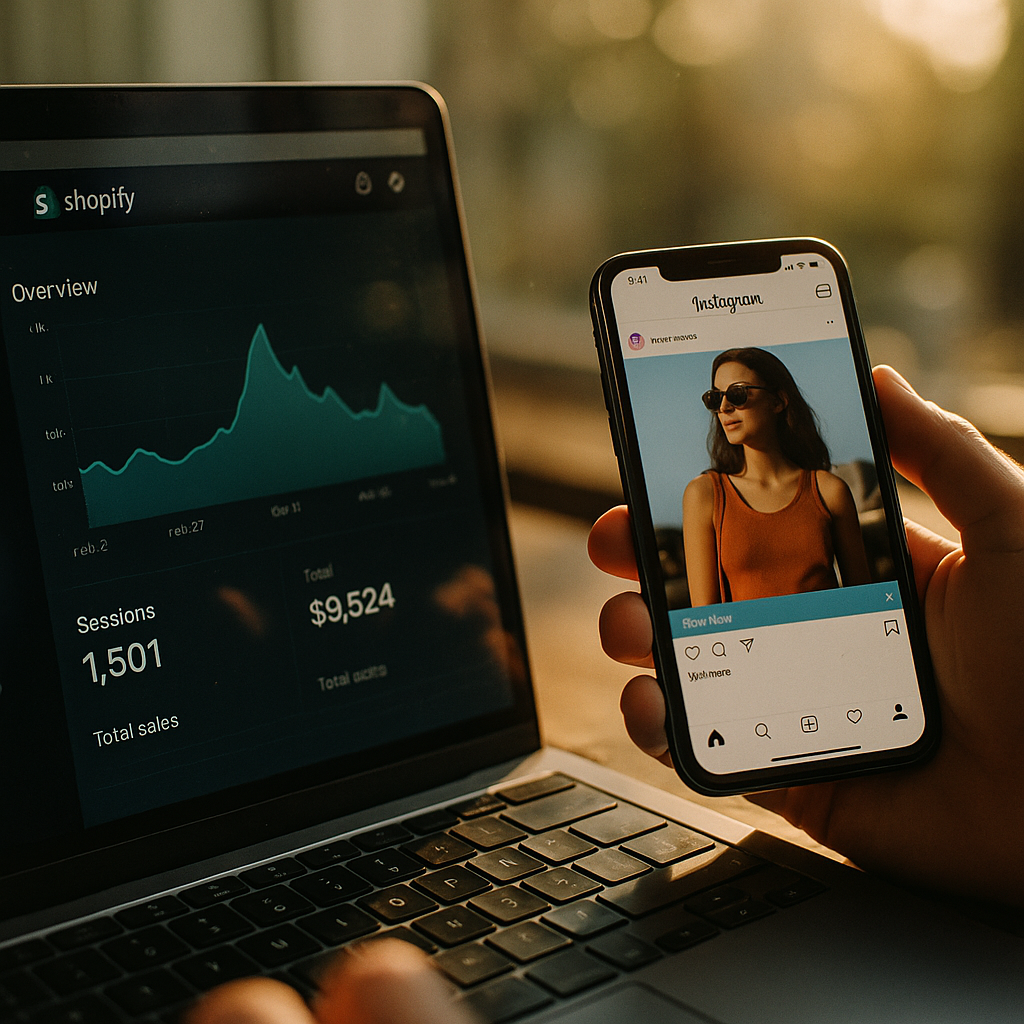
Instagram drives more creator discovery than any platform on earth, yet brands still can’t answer a simple question: which post actually sold the product? Meta’s own commerce tools stop short of full-funnel attribution, and marketers are left stitching together promo codes, UTM guesses, and vibes. Euka’s Shopify layer for Instagram creator commerce closes that gap by connecting the tap, the DM, the Story link, and the checkout into one reconciled ledger. That’s not a minor plumbing fix. It’s the difference between an influencer program you can defend to a CFO and one you’re still justifying with reach screenshots.
Why Instagram Still Has a Commerce Attribution Problem
Instagram built shopping tags, product stickers, and checkout tests years ago. Most of them got quietly shelved or region-locked. What’s left is a platform where creators drive enormous intent, but the purchase almost always happens somewhere else: a Shopify store, a DTC landing page, an Amazon listing. That handoff is where measurement dies.
Ask any brand marketer running a mid-size influencer roster how they attribute Instagram-driven sales, and you’ll usually get a shrug followed by “discount codes, mostly.” Codes are better than nothing, but they undercount. Shoppers forget them, screenshot them for later, or just buy without entering one because they were already convinced. eMarketer has flagged this exact gap as one of the reasons brands underinvest in influencer budgets relative to actual performance: the ROI is real, but it’s invisible in the reporting.
If your attribution model only catches shoppers who type a code correctly, you’re not measuring influencer commerce. You’re measuring compliance.
What Euka’s Shopify Layer Actually Does
Euka positions itself as a creator commerce operating system, and the Shopify integration is where that claim gets tested. Instead of relying purely on codes, the layer maps creator-specific links and tagged product pages directly into Shopify’s order data. When a shopper lands from an Instagram post, clicks through a creator’s tracked link, and completes checkout, that order gets tagged back to the originating creator, post, and even the specific content format (Reel, Story, feed post, or Live).
Practically, this means:
- Every Shopify order carries a creator attribution tag, not just a discount code reference.
- Multi-touch paths (someone sees a Reel, saves it, buys three days later from a Story reminder) get partial credit instead of falling into “direct” traffic.
- Payout calculations for commission-based deals pull straight from verified order data, not creator self-reporting.
- Brand teams get a single dashboard view instead of exporting CSVs from five different creator platforms.
This isn’t a novel concept for TikTok Shop, where native checkout made attribution simpler by default. Instagram never had that luxury. Euka’s approach essentially retrofits TikTok Shop style closed-loop tracking onto a platform that was never built for it. If you’re already running Euka on other channels, the workflow will feel familiar, our Euka creator commerce breakdown covers how the same logic applies across TikTok Shop and Instagram side by side.
Setting Up the Integration Without Breaking Your Existing Stack
Rolling this out isn’t a five-minute plugin install, and treating it that way is the fastest way to end up with duplicate tracking or messy order tags. A few operational realities worth planning for:
- Audit your current UTM and code structure first. Euka’s tags need to sit alongside, not conflict with, whatever naming convention your team already uses in Shopify and Google Analytics.
- Decide on attribution windows before launch, not after. A seven-day click window versus a thirty-day view-through window will produce wildly different “top performer” lists. Lock this in with finance before creators start posting.
- Map creator links to specific SKUs, not just storefronts. Generic storefront links waste the granularity Euka is built to capture.
- Sync your payout terms to the same data source. If commission calculations and performance reporting pull from different systems, you’ll spend every month reconciling disputes with creators.
That last point matters more than most teams expect. Payout disputes are one of the biggest quiet drains on influencer program efficiency, and they usually stem from mismatched data sources between the brand’s finance team and the creator’s own analytics. If you’ve dealt with this pain on YouTube, the reconciliation logic is nearly identical to what’s outlined in our cross platform payout reconciliation guide, and the same discipline applies here.
Does This Actually Move the Needle on ROI?
Short answer: yes, but only if you were previously underreporting Instagram’s contribution, which most brands were. Closed-loop attribution doesn’t create new sales out of thin air. It reveals sales that were already happening but getting misattributed to “organic” or “direct” traffic in your analytics.
Brands running Shopify as their commerce backbone have historically struggled to connect Instagram engagement to bottom-line revenue in a way that satisfies a finance team. HubSpot’s research on marketing attribution consistently shows multi-touch models surfacing 20 to 40 percent more assisted conversions than last-click models alone. Apply that lens to Instagram creator content, where the save-now-buy-later behavior is extremely common, and the underreporting problem becomes obvious.
Most brands aren’t underperforming on Instagram commerce. They’re under-measuring it, and the gap between the two is where budget gets cut for the wrong reasons.
There’s a compliance upside too. When attribution is tied to verified Shopify order data rather than creator-reported screenshots, disclosure and performance claims become easier to audit. That matters if you’re operating under scrutiny from the FTC on endorsement transparency, since accurate performance data also tends to correlate with cleaner disclosure practices. If disclosure compliance is already a pain point in your program, it’s worth pairing this rollout with a look at Instagram disclosure compliance practices so the commerce layer and the legal layer move in sync.
Where the Content Strategy Needs to Change
A Shopify attribution layer is only as good as the content feeding it. If creators are still posting generic product mentions with a swipe-up and nothing else, you’re leaving performance on the table regardless of how good the backend tracking is.
Instagram’s Explore and feed ranking increasingly rewards saves and shares over raw likes, which means the content that performs best for discovery is often the same content that drives delayed purchase behavior Euka is built to catch. A tutorial-style Reel that gets saved for later isn’t a vanity metric anymore, it’s a leading indicator of a future tracked conversion. Our save and share signals guide covers how to brief creators for that behavior specifically, and it pairs directly with a commerce layer designed to capture the delayed buy.
Discovery-stage content also matters more than most brands assume. Instagram’s interest-based discovery surfaces content to people who’ve never followed the brand or the creator, meaning first-touch attribution has to account for cold traffic that converts on a second or third visit. Rate negotiations with creators should reflect that reality too, since a creator driving high-value discovery traffic that converts three days later deserves credit even if the last click came from a retargeting ad. Our creator rate negotiation framework walks through how to price that fairly.
Common Pitfalls Brands Should Plan For
A few recurring mistakes show up whenever brands adopt a new commerce attribution layer, and Instagram is no exception:
- Over-trusting the first month of data. Attribution models need a few purchase cycles to stabilize, especially for products with longer consideration periods.
- Ignoring cross-device behavior. Someone browsing Instagram on mobile but purchasing on desktop can still break tracking if cookie and link matching isn’t configured properly.
- Treating every creator link the same. Macro-influencers and micro-creators often drive different purchase timelines, and lumping them into one reporting bucket hides useful nuance.
- Skipping a compliance review of link disclosures. Tracked commerce links still need to be clearly disclosed as affiliate or sponsored content under FTC guidance, and a new tracking layer doesn’t change that obligation.
None of these are dealbreakers. They’re the same growing pains every brand goes through when it moves from guesswork attribution to a real measurement system, whether that’s on Instagram, TikTok Shop, or anywhere else creator commerce is scaling.
Next Step
Before rolling Euka’s Shopify layer out to your full creator roster, pilot it with five to ten creators across different content formats for one full purchase cycle, then compare the attributed revenue against your old code-based numbers. The delta will tell you exactly how much Instagram commerce you’ve been undercounting, and that number is the real business case for scaling the integration.
Frequently Asked Questions
What is Euka’s Shopify layer for Instagram creator commerce?
It’s an integration that connects creator-tagged links and content on Instagram directly to Shopify order data, allowing brands to attribute specific purchases back to individual creators and posts instead of relying solely on discount codes.
Does this replace discount codes entirely?
Not necessarily. Codes still work well for tracking specific promotions, but Euka’s layer adds order-level attribution that captures sales even when a shopper doesn’t use a code, which significantly reduces underreporting.
How long does it take to see reliable attribution data after launch?
Most brands need at least one full purchase cycle, often three to six weeks depending on the product category, before the data stabilizes enough to make budget decisions.
Does this work for brands outside of beauty or fashion?
Yes. Any brand running a Shopify storefront with an active Instagram creator program can use the integration, though categories with shorter consideration cycles will see cleaner attribution faster than considered purchases like furniture or electronics.
What compliance considerations come with tracked creator links?
Tracked affiliate or sponsored links still require clear disclosure under FTC guidelines. Adding a commerce tracking layer doesn’t reduce that obligation, and brands should audit disclosure language alongside any new attribution rollout.
Top Influencer Marketing Agencies
The leading agencies shaping influencer marketing in 2026
Agencies ranked by campaign performance, client diversity, platform expertise, proven ROI, industry recognition, and client satisfaction. Assessed through verified case studies, reviews, and industry consultations.
Moburst

-
2

The Shelf
Boutique Beauty & Lifestyle Influencer AgencyA data-driven boutique agency specializing exclusively in beauty, wellness, and lifestyle influencer campaigns on Instagram and TikTok. Best for brands already focused on the beauty/personal care space that need curated, aesthetic-driven content.Clients: Pepsi, The Honest Company, Hims, Elf Cosmetics, Pure LeafVisit The Shelf → -
3

Audiencly
Niche Gaming & Esports Influencer AgencyA specialized agency focused exclusively on gaming and esports creators on YouTube, Twitch, and TikTok. Ideal if your campaign is 100% gaming-focused — from game launches to hardware and esports events.Clients: Epic Games, NordVPN, Ubisoft, Wargaming, Tencent GamesVisit Audiencly → -
4

Viral Nation
Global Influencer Marketing & Talent AgencyA dual talent management and marketing agency with proprietary brand safety tools and a global creator network spanning nano-influencers to celebrities across all major platforms.Clients: Meta, Activision Blizzard, Energizer, Aston Martin, WalmartVisit Viral Nation → -
5

The Influencer Marketing Factory
TikTok, Instagram & YouTube CampaignsA full-service agency with strong TikTok expertise, offering end-to-end campaign management from influencer discovery through performance reporting with a focus on platform-native content.Clients: Google, Snapchat, Universal Music, Bumble, YelpVisit TIMF → -
6

NeoReach
Enterprise Analytics & Influencer CampaignsAn enterprise-focused agency combining managed campaigns with a powerful self-service data platform for influencer search, audience analytics, and attribution modeling.Clients: Amazon, Airbnb, Netflix, Honda, The New York TimesVisit NeoReach → -
7

Ubiquitous
Creator-First Marketing PlatformA tech-driven platform combining self-service tools with managed campaign options, emphasizing speed and scalability for brands managing multiple influencer relationships.Clients: Lyft, Disney, Target, American Eagle, NetflixVisit Ubiquitous → -
8

Obviously
Scalable Enterprise Influencer CampaignsA tech-enabled agency built for high-volume campaigns, coordinating hundreds of creators simultaneously with end-to-end logistics, content rights management, and product seeding.Clients: Google, Ulta Beauty, Converse, AmazonVisit Obviously →