


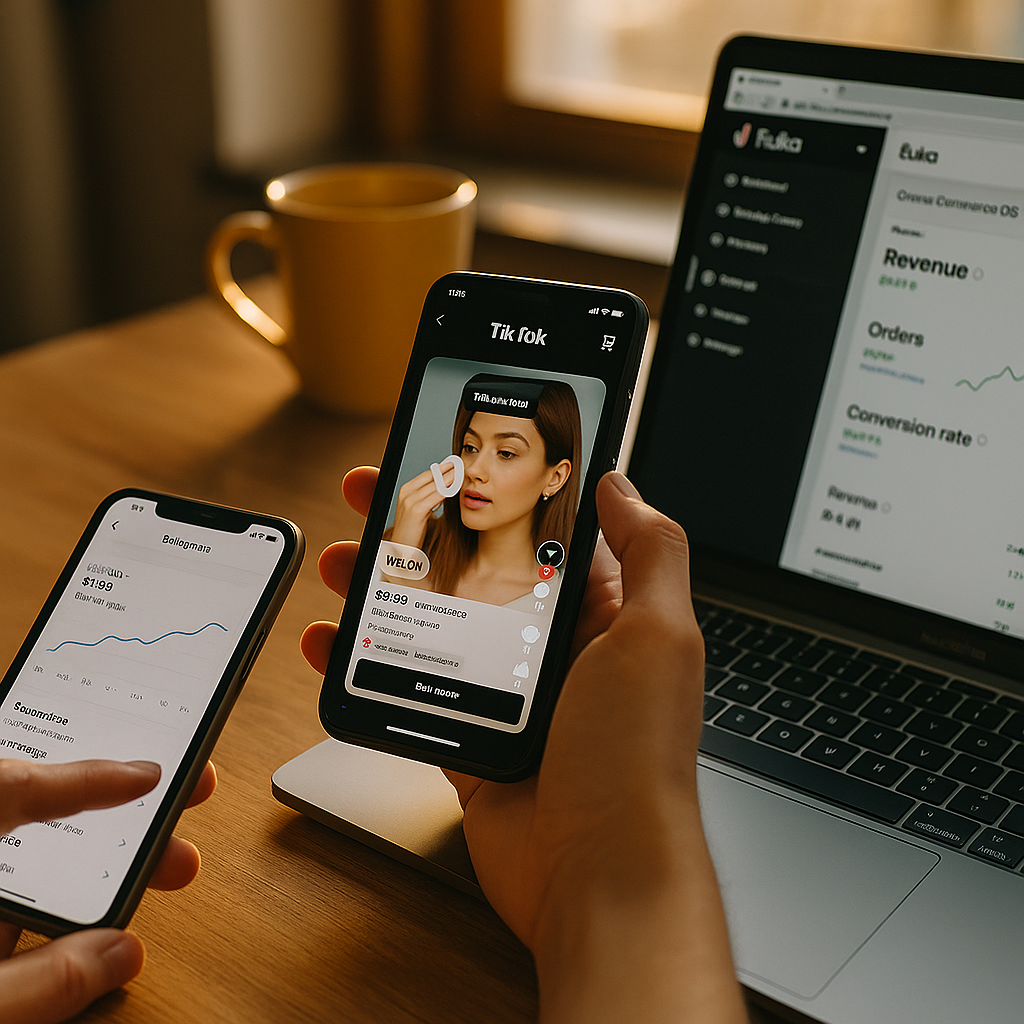
Brands lose an average of 15 to 20 percent of trackable revenue when a creator’s content lives on two platforms but the attribution stack only watches one. That’s not a rounding error, that’s a budget-allocation problem hiding in plain sight. Euka’s Creator Commerce OS was built to close that gap, specifically for the TikTok Shop to Instagram handoff that’s become standard practice for creators running cross-platform storefronts. This playbook breaks down how it works and whether your team should bother.
Why Cross-Platform Commerce Broke the Old Playbook
For years, brand attribution models assumed a single-platform journey. A creator posts, a viewer clicks, a sale happens, all on the same app. TikTok Shop changed that math by turning the app into a closed commerce loop, while Instagram remained the discovery and trust-building layer for the same audience. Creators now routinely tease a product on Instagram Reels, then push the actual transaction to TikTok Shop where checkout friction is lower and affiliate commissions are cleaner.
The problem? Most brand dashboards treat these as two unrelated campaigns. Marketing teams end up double-paying for the same conversion, or worse, they cut a creator’s Instagram budget because “it’s not driving sales,” when in reality it’s driving the awareness that made the TikTok Shop sale possible.
When a single creator relationship spans two platforms with two different attribution windows, the brand that can’t connect the dots isn’t just missing data, it’s making budget decisions on incomplete information.
What Euka’s Creator Commerce OS Actually Does
Euka positions itself as connective tissue rather than a replacement for platform-native tools. It sits between TikTok Shop’s affiliate and seller dashboards and Instagram’s creator marketplace and content insights, pulling both into a single reconciliation layer. In practice, that means three things for a brand marketing team:
- Unified creator profiles. Instead of two separate creator IDs across platforms, Euka merges performance history so a strategist can see one creator’s full funnel: Instagram reach and saves, TikTok Shop clicks and completed orders.
- Cross-platform attribution windows. The OS applies a configurable lookback window (commonly 3 to 7 days) that credits Instagram touchpoints even when the purchase completes inside TikTok Shop’s checkout.
- Payout reconciliation. Commission structures differ wildly between TikTok Shop’s affiliate program and Instagram’s brand partnership tools. Euka standardizes the payout math so finance teams aren’t reconciling two currencies of “credit.”
This isn’t dissimilar to the reconciliation logic covered in our cross platform payout reconciliation breakdown, except the TikTok Shop to Instagram link introduces its own quirks, namely TikTok’s aggressive short-window attribution versus Instagram’s slower, trust-building content cycle.
The Actual Workflow, Step by Step
Here’s what implementation looks like for a mid-size DTC brand running 20 to 40 active creators monthly.
- Connect both storefronts. Link your TikTok Shop seller account and your Instagram Shopping catalog to Euka’s dashboard using the same product SKUs. Mismatched SKUs are the number one setup error brands make, so audit this before anything else.
- Tag creators by platform role. Some creators are “discovery” assets on Instagram, others are “conversion” assets on TikTok Shop. Euka lets you label this so reporting doesn’t flatten everyone into the same KPI bucket.
- Set attribution rules. Decide whether Instagram views, saves, or link clicks count as assist events for a downstream TikTok Shop sale. Most brands start with a 5-day window and adjust after a full reporting cycle.
- Run the reconciliation report. Weekly, not monthly. Creator commerce moves fast, and a 30-day lag means you’re paying for last month’s performance with this month’s budget.
- Reallocate based on assisted revenue, not last-click. This is the step most teams skip, and it’s the one that actually changes outcomes.
Is This Just Another Attribution Tool?
Fair question. The creator tech space is crowded with dashboards claiming to “unify” data. What separates Euka’s approach is that it doesn’t try to replace TikTok Shop’s or Instagram’s native reporting, it reconciles them after the fact using API-level data pulls rather than pixel-based guesswork. That matters because TikTok’s in-app checkout doesn’t expose the same tracking parameters that Meta’s ad ecosystem relies on.
Brands already using Meta Business Suite for Instagram reporting and TikTok Ads Manager for Shop performance will find Euka layers on top rather than forcing a migration. That’s a meaningful operational win. Nobody wants to rip out their existing stack for a new tool, no matter how good the pitch deck looks.
Where It Gets Complicated: Compliance and Disclosure
Cross-platform creator campaigns multiply your disclosure risk. A creator who properly tags an Instagram post as a paid partnership but forgets to disclose on the corresponding TikTok Shop video has created a compliance gap that lives on a platform your legal team might not be monitoring as closely. The FTC’s endorsement guidelines don’t care which app the disclosure lives on, they care that it exists, clearly and conspicuously, everywhere the endorsement appears.
Euka’s OS includes a disclosure audit layer that flags mismatched compliance status across platforms for the same creator relationship. It won’t file your FTC paperwork for you, but it will catch the gap before a regulator does.
A creator campaign that’s compliant on one platform and silent on the other isn’t half-compliant. It’s a liability with your brand name attached.
This connects directly to the broader compliance conversation we’ve covered around TikTok disclosure compliance and Instagram disclosure optimization, both of which get harder to manage once a single creator relationship spans multiple apps with different disclosure UI.
Budget Reallocation: The Part That Actually Moves ROI
Once you have unified attribution, the real work starts: deciding where the next dollar goes. Brands using cross-platform reconciliation tools typically discover that their “best” TikTok Shop creators were being fed by Instagram content they weren’t paying attention to, according to industry benchmarks tracked by eMarketer on creator commerce spend. That reframes the entire negotiation conversation with creators, since a creator’s Instagram rate should reflect its assist value, not just its standalone engagement metrics, a point we’ve explored in our creator rate negotiation guide.
Practical reallocation moves brands are making once they get clean cross-platform data:
- Shifting a portion of “conversion-only” TikTok Shop budget toward Instagram content that demonstrably assists sales, even if it never generates a direct click.
- Renegotiating flat-fee Instagram deals into hybrid structures that include a small affiliate kicker tied to downstream TikTok Shop performance.
- Cutting creators who perform well on one platform but show zero assist value on the other, since that often signals audience overlap issues rather than genuine reach.
None of this works without weekly reporting discipline. Monthly cycles are simply too slow for the pace at which TikTok Shop trends rise and fall, and by the time a monthly report lands, the creative moment it’s measuring is already stale.
What This Means for Smaller Teams
Not every brand has a dedicated analytics hire to manage a reconciliation layer. If your team is lean, start with a simplified version: manually cross-reference your top 5 creators’ Instagram engagement against their TikTok Shop affiliate link performance in a shared spreadsheet before investing in a full platform like Euka. It’s not elegant, but it builds the muscle memory your team needs before automating it. The goal isn’t the tool itself, it’s the habit of treating a creator’s cross-platform footprint as one relationship instead of two disconnected line items.
Next Step
Pick your five highest-spend creators this quarter, pull their Instagram and TikTok Shop performance side by side, and look for the assist patterns you’ve been missing. That single exercise will tell you more about whether a tool like Euka is worth the investment than any vendor demo will.
Frequently Asked Questions
What is Euka’s Creator Commerce OS?
It’s a reconciliation platform that connects TikTok Shop affiliate and sales data with Instagram creator content performance, giving brands a unified view of how a single creator relationship performs across both platforms.
Does Euka replace TikTok Ads Manager or Meta Business Suite?
No. It sits on top of existing platform tools, pulling data from both to reconcile attribution and payouts rather than replacing native reporting dashboards.
How does cross-platform attribution work between TikTok Shop and Instagram?
Brands set a configurable lookback window, typically 3 to 7 days, that credits Instagram touchpoints like views or saves as assists when a purchase later completes inside TikTok Shop’s checkout.
Is this only useful for large enterprise brands?
No, though setup and cost scale with creator roster size. Smaller teams can approximate the same insight manually with spreadsheets before investing in a dedicated platform.
What compliance risks does cross-platform creator commerce introduce?
The main risk is inconsistent disclosure, where a creator properly tags a partnership on one platform but omits it on the other. FTC endorsement guidelines require clear disclosure everywhere the endorsement appears, not just on one app.
How often should brands run reconciliation reports?
Weekly is recommended. Monthly cycles are too slow to catch fast-moving TikTok Shop trends before the budget decision window closes.
Top Influencer Marketing Agencies
The leading agencies shaping influencer marketing in 2026
Agencies ranked by campaign performance, client diversity, platform expertise, proven ROI, industry recognition, and client satisfaction. Assessed through verified case studies, reviews, and industry consultations.
Moburst

-
2

The Shelf
Boutique Beauty & Lifestyle Influencer AgencyA data-driven boutique agency specializing exclusively in beauty, wellness, and lifestyle influencer campaigns on Instagram and TikTok. Best for brands already focused on the beauty/personal care space that need curated, aesthetic-driven content.Clients: Pepsi, The Honest Company, Hims, Elf Cosmetics, Pure LeafVisit The Shelf → -
3

Audiencly
Niche Gaming & Esports Influencer AgencyA specialized agency focused exclusively on gaming and esports creators on YouTube, Twitch, and TikTok. Ideal if your campaign is 100% gaming-focused — from game launches to hardware and esports events.Clients: Epic Games, NordVPN, Ubisoft, Wargaming, Tencent GamesVisit Audiencly → -
4

Viral Nation
Global Influencer Marketing & Talent AgencyA dual talent management and marketing agency with proprietary brand safety tools and a global creator network spanning nano-influencers to celebrities across all major platforms.Clients: Meta, Activision Blizzard, Energizer, Aston Martin, WalmartVisit Viral Nation → -
5

The Influencer Marketing Factory
TikTok, Instagram & YouTube CampaignsA full-service agency with strong TikTok expertise, offering end-to-end campaign management from influencer discovery through performance reporting with a focus on platform-native content.Clients: Google, Snapchat, Universal Music, Bumble, YelpVisit TIMF → -
6

NeoReach
Enterprise Analytics & Influencer CampaignsAn enterprise-focused agency combining managed campaigns with a powerful self-service data platform for influencer search, audience analytics, and attribution modeling.Clients: Amazon, Airbnb, Netflix, Honda, The New York TimesVisit NeoReach → -
7

Ubiquitous
Creator-First Marketing PlatformA tech-driven platform combining self-service tools with managed campaign options, emphasizing speed and scalability for brands managing multiple influencer relationships.Clients: Lyft, Disney, Target, American Eagle, NetflixVisit Ubiquitous → -
8

Obviously
Scalable Enterprise Influencer CampaignsA tech-enabled agency built for high-volume campaigns, coordinating hundreds of creators simultaneously with end-to-end logistics, content rights management, and product seeding.Clients: Google, Ulta Beauty, Converse, AmazonVisit Obviously →