


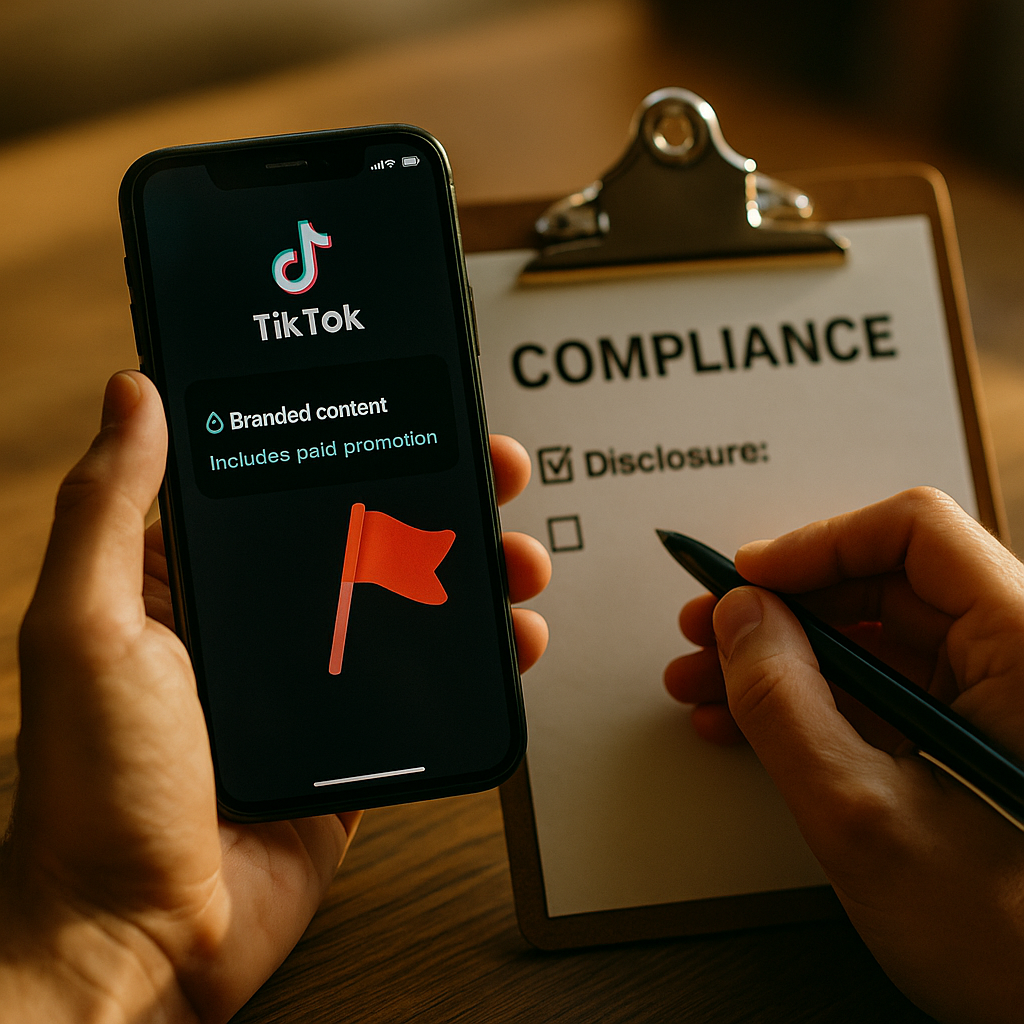
One flagged video. One missed toggle. One FTC inquiry letter that lands on your general counsel’s desk before your community manager even sees the notification. That’s the new reality now that TikTok’s automatic commercial content flag is scanning uploads at scale, and most brand teams still don’t have a documented response plan.
TikTok quietly rolled out an AI-driven detection layer that identifies paid partnerships, product placements, and affiliate links even when creators forget (or choose not) to disclose them manually. For brands running influencer programs at any real volume, this isn’t a minor platform update. It’s a compliance shift that touches contracts, briefing docs, and how you monitor creator output after content goes live.
What the Automatic Flag Actually Does
TikTok’s system scans video content, captions, audio, and linked commerce elements (think TikTok Shop tags, affiliate storefront links, discount codes spoken aloud) and cross-references them against disclosure signals already on the post. If the platform detects commercial intent but no branded content toggle, no #ad hashtag, and no verbal disclosure, it can apply its own label or restrict distribution until the creator fixes it.
This is different from the old honor-system model, where disclosure compliance depended entirely on creators remembering to flip a switch. Now TikTok is making an editorial judgment call about your brand’s content, sometimes before your team has even reviewed the post.
The shift means brands can no longer treat disclosure as a creator-side checkbox. It’s now a platform-enforced signal that affects reach, and potentially your legal exposure, regardless of what your contract says.
Why This Is Happening Now
Regulators have been tightening the screws on influencer disclosure for a while. The FTC’s endorsement guidance has always required clear and conspicuous disclosure of material connections, but enforcement historically relied on complaints and spot audits. That’s changing. The FTC has signaled more proactive sweeps of social platforms, and UK regulators under the ICO have pushed similar transparency expectations tied to data and advertising practices.
Platforms are responding by building compliance into the product itself rather than waiting for a regulatory referral. TikTok isn’t alone here, but its version is more aggressive because so much of its commerce activity (Shop links, affiliate tags, live selling) generates revenue directly on-platform. That gives TikTok both the incentive and the technical hooks to police disclosure automatically.
The Compliance Risk Brands Can No Longer Ignore
Here’s the uncomfortable part. Even if your creator agreement includes airtight disclosure language, an automatic flag (or a missed one) creates a paper trail that regulators and plaintiffs’ attorneys can reference. If TikTok’s system catches something your internal QA missed, that’s evidence your monitoring process has gaps.
According to industry benchmarking from Sprout Social, disclosure inconsistency remains one of the top compliance complaints brands face in influencer audits, right alongside inconsistent FTC hashtag placement. Automatic flagging doesn’t fix that problem. It just makes it visible faster, and to more people.
How the Detection Model Reads Your Content
TikTok hasn’t published the full technical spec (understandably), but based on platform documentation and observed behavior, the flag appears to weigh several signals together rather than relying on a single trigger:
- Commerce links present. TikTok Shop tags, affiliate storefront links, or shoppable product stickers raise the likelihood of a commercial content classification.
- Spoken or on-screen brand mentions. Repeated product naming, discount code call-outs, or “link in bio” language gets parsed alongside visual cues.
- Existing disclosure metadata. If the branded content toggle is already active, the system generally doesn’t escalate. It’s the absence of disclosure paired with commercial signals that triggers review.
- Account-level patterns. Creators who post sponsored content frequently without disclosure history may get scrutinized more closely than first-time affiliate posters.
If you’re running affiliate-heavy programs through TikTok’s affiliate program, this matters even more. Affiliate content often skips traditional “paid partnership” framing because creators aren’t being paid a flat fee, they’re earning commission. TikTok’s flag doesn’t care about the payment structure. Commercial intent is commercial intent.
Building Your Brand’s Disclosure Playbook
You need a documented process, not a verbal reminder in your creator brief. Here’s what that looks like operationally.
1. Audit your current creator contracts
Most templates were written before automatic flagging existed. Update language to explicitly require the branded content toggle be enabled at time of posting, not added after the fact if flagged. Specify that failure to disclose properly (whether caught by TikTok or not) is a contract breach, not just a suggestion.
2. Rebuild your creator briefing docs
Add a disclosure checklist directly into your briefing template, the same document where you cover hooks, CTAs, and posting windows. If you’re already using structured briefing processes for other formats, like those outlined in our TikTok briefing template guide, disclosure requirements should sit right next to creative specs, not in a separate legal appendix nobody reads.
3. Monitor post-publish, not just pre-publish
Approval workflows catch problems before content goes live. They don’t catch what happens after, when a creator edits captions, swaps a link, or a video gets flagged 48 hours post-launch. Assign someone (agency or in-house) to run weekly disclosure audits across active campaigns, specifically checking for platform-applied labels versus creator-applied ones.
Brands running high-volume affiliate programs should treat disclosure monitoring the same way they treat performance monitoring: as a recurring operational task, not a one-time contract clause.
4. Build an escalation path for flagged content
When TikTok flags a post automatically, someone on your team needs authority to act fast: pause paid amplification, request creator correction, or pull the content if the disclosure gap is severe. Waiting for a weekly sync meeting isn’t fast enough. Define who owns this decision before you need it, not during a crisis.
What Happens When Creators Get Flagged Incorrectly?
This is the question most brand teams ask once they understand how the system works, and it’s a fair one. Automatic detection isn’t perfect. A creator reviewing a product they bought themselves, with no brand relationship, could theoretically get swept up if the content looks commercial enough.
TikTok provides an appeals path through TikTok’s business help center, but appeals take time, and time is exactly what you don’t have during a launch window. The practical fix is prevention: make sure every genuinely sponsored post has proper disclosure enabled from the start, so there’s no ambiguity for the algorithm to misjudge. Clean data in reduces false positives and false negatives alike.
Where This Intersects With TikTok Shop and Live Selling
If your brand runs live selling events or manages affiliate recruiting at scale, disclosure compliance gets more complicated, not less. Live commerce moves fast, hosts improvise, and disclosure language spoken thirty seconds into a two-hour stream is easy to miss on review.
Programs built around structured live scheduling should bake disclosure reminders directly into host run-of-show documents. Similarly, brands scaling affiliate recruitment through the methods covered in our affiliate scaling playbook need standardized onboarding that covers disclosure requirements before creators ever post their first affiliate video, not after a flag shows up on video number twelve.
For brands managing multiple creator marketplaces and platforms simultaneously, this is also a good moment to revisit vendor selection criteria. Our creator marketplace buying guide covers how platform compliance tooling should factor into procurement decisions, not just pricing and reach metrics.
The Bottom Line for Budget Owners
Disclosure compliance used to be a legal checkbox item, something outside counsel reviewed once a year. Automatic flagging turns it into an ongoing operational cost center that touches creative approval, contract management, and platform relations simultaneously. Brands that build the monitoring infrastructure now will spend less time firefighting flagged content and more time actually running campaigns. Data from eMarketer continues to show creator-led commerce growing as a share of overall social spend, which means the compliance stakes only get bigger from here, not smaller.
Frequently Asked Questions
What triggers TikTok’s automatic commercial content flag?
The system evaluates a combination of signals, including TikTok Shop links, affiliate tags, spoken brand or discount mentions, and whether the branded content toggle is already active. Posts with commercial signals but no disclosure metadata are most likely to get flagged.
Does the automatic flag replace the need for creator disclosure hashtags?
No. Hashtags like #ad and the branded content toggle remain the primary disclosure mechanisms. The automatic flag is a backstop that catches content where those disclosures are missing, not a replacement for them.
Can a brand be held liable if a creator’s content gets flagged for non-disclosure?
Potentially, yes. Under FTC guidance, brands share responsibility for ensuring creators disclose material connections properly. A platform flag doesn’t create new legal liability on its own, but it does create documentation that regulators or plaintiffs could reference during an inquiry.
How should brands update creator contracts for this change?
Contracts should explicitly require the branded content toggle be enabled before publishing, define disclosure failure as a breach, and specify response timelines if content gets flagged post-publish. Legal teams should review templates at least annually as platform policies evolve.
Does this affect TikTok Shop affiliate content differently than traditional sponsorships?
Yes. Affiliate content often lacks the obvious “sponsored” framing of a paid partnership, since creators earn commission rather than a flat fee. TikTok’s detection model treats commercial intent the same regardless of payment structure, so affiliate creators need the same disclosure training as directly sponsored ones.
Visible FAQ Section (HTML)
The next step isn’t waiting for a flagged post to force your hand. Audit your active creator contracts this week, add disclosure checkpoints to your briefing template, and assign clear ownership for post-publish monitoring before your next campaign launches.
Top Influencer Marketing Agencies
The leading agencies shaping influencer marketing in 2026
Agencies ranked by campaign performance, client diversity, platform expertise, proven ROI, industry recognition, and client satisfaction. Assessed through verified case studies, reviews, and industry consultations.
Moburst

-
2

The Shelf
Boutique Beauty & Lifestyle Influencer AgencyA data-driven boutique agency specializing exclusively in beauty, wellness, and lifestyle influencer campaigns on Instagram and TikTok. Best for brands already focused on the beauty/personal care space that need curated, aesthetic-driven content.Clients: Pepsi, The Honest Company, Hims, Elf Cosmetics, Pure LeafVisit The Shelf → -
3

Audiencly
Niche Gaming & Esports Influencer AgencyA specialized agency focused exclusively on gaming and esports creators on YouTube, Twitch, and TikTok. Ideal if your campaign is 100% gaming-focused — from game launches to hardware and esports events.Clients: Epic Games, NordVPN, Ubisoft, Wargaming, Tencent GamesVisit Audiencly → -
4

Viral Nation
Global Influencer Marketing & Talent AgencyA dual talent management and marketing agency with proprietary brand safety tools and a global creator network spanning nano-influencers to celebrities across all major platforms.Clients: Meta, Activision Blizzard, Energizer, Aston Martin, WalmartVisit Viral Nation → -
5

The Influencer Marketing Factory
TikTok, Instagram & YouTube CampaignsA full-service agency with strong TikTok expertise, offering end-to-end campaign management from influencer discovery through performance reporting with a focus on platform-native content.Clients: Google, Snapchat, Universal Music, Bumble, YelpVisit TIMF → -
6

NeoReach
Enterprise Analytics & Influencer CampaignsAn enterprise-focused agency combining managed campaigns with a powerful self-service data platform for influencer search, audience analytics, and attribution modeling.Clients: Amazon, Airbnb, Netflix, Honda, The New York TimesVisit NeoReach → -
7

Ubiquitous
Creator-First Marketing PlatformA tech-driven platform combining self-service tools with managed campaign options, emphasizing speed and scalability for brands managing multiple influencer relationships.Clients: Lyft, Disney, Target, American Eagle, NetflixVisit Ubiquitous → -
8

Obviously
Scalable Enterprise Influencer CampaignsA tech-enabled agency built for high-volume campaigns, coordinating hundreds of creators simultaneously with end-to-end logistics, content rights management, and product seeding.Clients: Google, Ulta Beauty, Converse, AmazonVisit Obviously →