


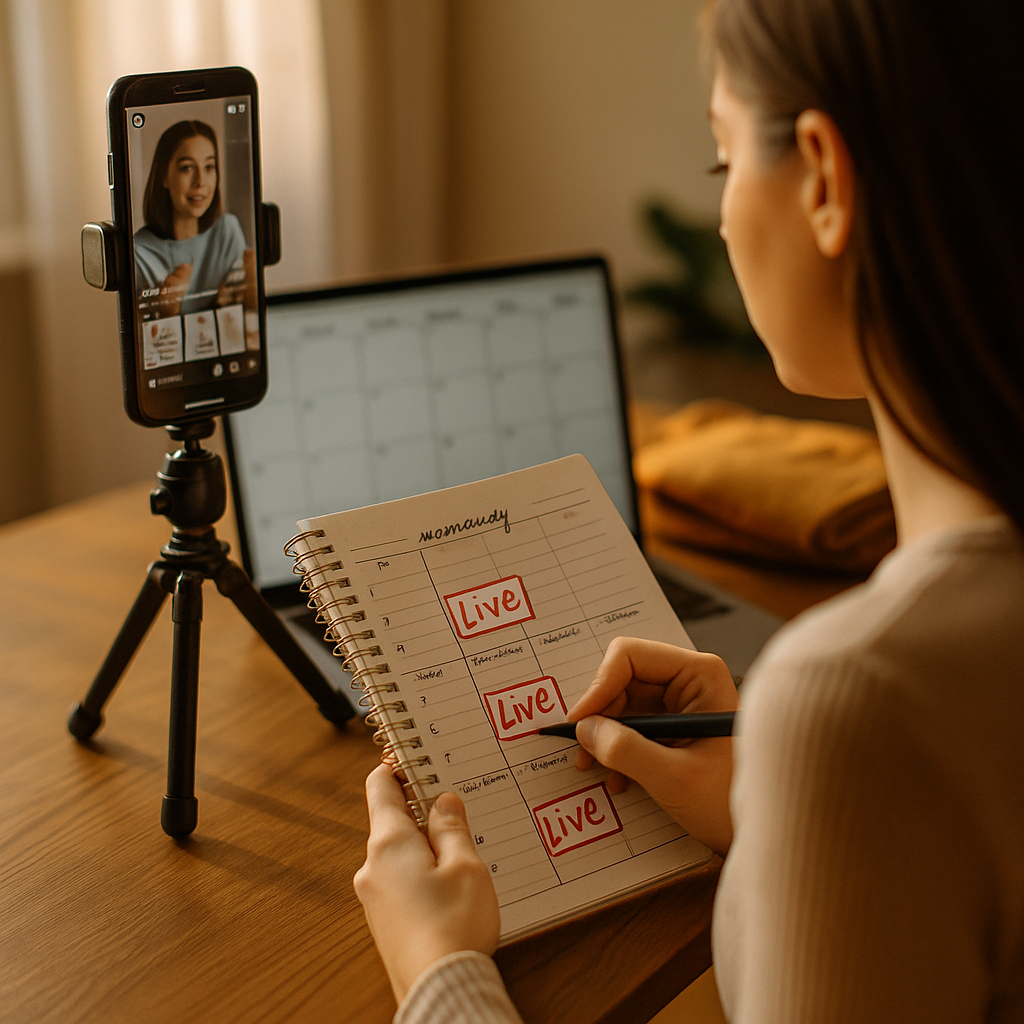
TikTok’s live shopping algorithm doesn’t just reward good content. It rewards rhythm. Brands running one-off livestreams and wondering why reach flatlines are missing the core mechanic: TikTok Shop Live prioritizes hosts who show up on a predictable cadence, and it punishes gaps in scheduling almost as harshly as it punishes low watch time. If your live commerce strategy treats streaming like a occasional event instead of a scheduled habit, you’re leaving reach on the table.
Why Cadence Beats One-Off Livestreams
TikTok’s recommendation system for Shop Live behaves a lot like its For You feed logic: it tests content with a small audience segment, measures engagement velocity, then decides whether to widen distribution. But live shopping adds a layer the standard algorithm doesn’t have to deal with: session-to-session continuity signals. TikTok’s system tracks whether a host streams at consistent times, whether followers return, and whether the account has built a “live habit” with its audience.
Sellers who stream sporadically get treated as a cold start every single time. That means the algorithm has to relearn who the audience is, re-test reach in smaller circles, and rebuild momentum from near zero. Sellers who stream on a fixed schedule, say, four times a week at the same windows, get compounding benefits. The algorithm has historical data to lean on, follower notifications fire more reliably, and the “for you” surface treats the account as a known quantity worth pushing to warm audiences faster.
A predictable streaming cadence turns every session into a data point the algorithm already trusts, instead of a cold start it has to re-evaluate from scratch.
What “Peak Reach” Actually Means in TikTok Shop Live
Reach in live shopping isn’t just concurrent viewers. TikTok Shop’s internal ranking weighs a blend of signals: average watch duration, comment rate, share rate, add-to-cart clicks during the stream, and post-stream conversion within a short attribution window. Brands obsessed with peak concurrent viewers often miss that a smaller, more engaged stream with strong purchase intent can outrank a bigger, passive one in future distribution.
This matters for cadence planning because the algorithm isn’t just asking “did people watch.” It’s asking “did this session justify pushing the next one to more people.” Every stream is essentially an audition for the next slot’s reach ceiling.
The Three Cadence Models Brands Are Testing
- High-frequency daily streaming: One or two shorter sessions (45-75 minutes) every day. Works well for brands with deep catalogs and rotating promos, but burns out hosts fast without a rotation bench.
- Anchor-day cadence: Three to four fixed weekly slots, same days and times, building a “appointment viewing” habit. This is the model most mid-size brands land on because it balances host sustainability with algorithmic consistency.
- Event-spike cadence: Heavy streaming around drops, restocks, or seasonal moments, with quiet stretches in between. This can spike short-term reach but resets the algorithm’s trust each time, meaning every campaign starts from a weaker baseline.
Most brands underestimate how much the anchor-day model outperforms event-spike streaming over a quarter, even though event-spike feels more efficient on paper.
How Often Should Brands Actually Go Live?
There’s no universal number, but data patterns across TikTok Shop sellers point to a floor: fewer than three sessions per week rarely builds enough algorithmic memory to escape cold-start treatment. Brands that treat live shopping as a serious revenue channel, not a side experiment, tend to converge on four to six sessions weekly, split across at least two hosts to avoid burnout and voice fatigue.
Frequency alone isn’t the whole story though. Timing consistency matters almost as much as volume. A host who streams Tuesday, Thursday, and Saturday at 7pm local time every single week builds a stronger recurring-viewer base than one who streams five times but at random hours. TikTok’s push notifications to followers about “live now” status also perform better when there’s a pattern viewers have internalized, even subconsciously.
Building a Host Rotation That Doesn’t Kill Momentum
Here’s the tension every brand running live commerce eventually hits: cadence needs consistency, but consistency burns out individual hosts. A single host doing five 90-minute streams a week will fade in energy, and viewers notice fatigue faster than brands think. The fix isn’t fewer streams. It’s a rotation bench of two to four trained hosts who share the schedule while maintaining brand voice consistency.
The mistake brands make here is rotating hosts without rotating scripts, energy pacing, or product sequencing training. Viewers who tune in for a specific host’s energy will bounce if a replacement host feels flat or unprepared. Treat host rotation like a broadcast network treats anchor rotation: same format, same pacing, same production value, different face. This is also where recruiting and vetting affiliate hosts through structured programs pays off. Brands scaling this properly are already leaning on affiliate recruiting frameworks to build a bench deep enough to sustain daily or near-daily cadence without quality drop-off.
Signal Stacking: What the Algorithm Actually Watches During a Stream
Beyond cadence itself, TikTok Shop Live’s ranking model weighs in-stream behavior heavily, and understanding these signals helps hosts structure sessions to maximize algorithmic reward:
- Early engagement velocity: Comments and shares in the first five minutes strongly influence whether the stream gets pushed to a wider test audience. Hosts should front-load interactive moments, polls, giveaways, direct questions, rather than saving the best hooks for later.
- Watch time retention curves: Steep early drop-off tells the algorithm the stream isn’t holding attention, capping reach expansion regardless of later performance.
- Cart interactions per minute: Shop Live specifically tracks product tag clicks and add-to-cart events as commerce-intent signals, separate from general engagement.
- Return-viewer rate: Are the same accounts showing up stream after stream? This is arguably the strongest long-term cadence signal, and it’s directly built by consistent scheduling.
Brands running paid promotion alongside organic streams should also study how boosted content interacts with these signals, similar to lessons from paid boosting strategies on other platforms, where organic momentum and paid amplification need to work in tandem rather than in isolation.
Scheduling Around TikTok’s Own Traffic Patterns
Cadence planning also has to account for platform-level traffic rhythms. TikTok’s own seller resources note that evening hours and weekends tend to see higher live shopping engagement across most verticals, though this varies by category and audience geography. Brands should treat platform guidance from TikTok’s advertising resources as a starting point, then validate with their own Shop analytics rather than assuming universal windows apply.
Fashion and beauty sellers, for instance, often see strong weekday lunch-hour engagement in addition to evening peaks, while home goods and gadget sellers skew more heavily toward weekend browsing sessions. The cadence that wins for one vertical can underperform in another, so testing multiple fixed slots over several weeks before locking in a permanent schedule is worth the short-term reach sacrifice.
Measuring Whether Your Cadence Is Actually Working
Brands need a measurement framework that goes beyond “did viewership go up.” Track these week-over-week rather than stream-over-stream, since single-session variance is normal and not diagnostic on its own:
- Return viewer percentage: Rising numbers indicate the algorithm is building recognition and pushing content to warm, habituated audiences.
- Time-to-first-sale: Faster conversion early in a stream suggests the algorithm is matching you with higher-intent viewers, a sign of trust building.
- Reach-per-follower ratio: If this metric climbs even as follower count stays flat, cadence consistency is doing real work independent of audience growth.
- Host fatigue indicators: Declining energy scores (measurable via comment sentiment and pacing) signal it’s time to expand the rotation bench before performance craters.
According to data referenced by eMarketer, live commerce engagement in the U.S. is still in early growth compared to markets like China, meaning brands testing cadence now are building institutional knowledge competitors will need to catch up on later. This is a rare window where disciplined experimentation actually compounds into durable advantage.
For brands weighing where to concentrate live commerce investment relative to affiliate and marketplace models, it’s also worth revisiting how payout structures affect margin across platforms, since cadence-heavy live programs carry different cost bases than affiliate-driven content strategies.
Compliance and Disclosure Don’t Pause Because You’re Live
One operational risk brands overlook when scaling cadence: disclosure consistency across dozens of weekly sessions. Every host, every stream, needs clear and compliant sponsorship or affiliate disclosure, not just on the first stream of a campaign but on every single one. The FTC’s endorsement guidance applies equally to a Tuesday afternoon stream with 40 viewers and a Saturday primetime stream with 4,000. Brands running high-frequency cadence should build disclosure checks into host training and QA, not treat it as a one-time onboarding item.
The Real Takeaway
Cadence isn’t a scheduling detail bolted onto a live commerce strategy. It’s the primary lever TikTok Shop’s algorithm uses to decide who earns wider reach, and treating it as an afterthought guarantees you’re competing with one hand tied behind your back. Start with a fixed anchor-day schedule, build a two-to-four-person host rotation before burnout forces your hand, and give the algorithm eight weeks of consistent signal before judging whether the cadence is working.
FAQs
How many times a week should a brand go live on TikTok Shop?
Most brands treating live commerce as a serious channel land on four to six sessions weekly, split across at least two hosts. Fewer than three sessions per week rarely builds enough algorithmic memory to escape cold-start treatment each time.
Does streaming at the same time every day actually matter to the algorithm?
Yes. Consistent timing helps build recurring-viewer habits and improves how reliably follower notifications convert into live watch time, both of which are signals TikTok’s ranking model weighs when deciding how far to push a stream.
What’s the biggest mistake brands make with host rotation?
Rotating hosts without standardizing scripts, pacing, or product sequencing. Viewers tolerate a new face if the format feels consistent, but they bounce quickly when a replacement host feels unprepared or the energy drops noticeably.
Is bigger viewership always better for algorithmic reach?
No. TikTok Shop’s ranking weighs engagement quality, watch time retention, and cart interactions alongside raw viewer counts. A smaller, highly engaged stream can outperform a larger passive one in future distribution.
How long should brands test a cadence before changing it?
Give a fixed schedule at least eight weeks before making major changes. Single-session variance is normal, and the algorithm needs repeated exposure to build trust in a consistent schedule.
Top Influencer Marketing Agencies
The leading agencies shaping influencer marketing in 2026
Agencies ranked by campaign performance, client diversity, platform expertise, proven ROI, industry recognition, and client satisfaction. Assessed through verified case studies, reviews, and industry consultations.
Moburst

-
2

The Shelf
Boutique Beauty & Lifestyle Influencer AgencyA data-driven boutique agency specializing exclusively in beauty, wellness, and lifestyle influencer campaigns on Instagram and TikTok. Best for brands already focused on the beauty/personal care space that need curated, aesthetic-driven content.Clients: Pepsi, The Honest Company, Hims, Elf Cosmetics, Pure LeafVisit The Shelf → -
3

Audiencly
Niche Gaming & Esports Influencer AgencyA specialized agency focused exclusively on gaming and esports creators on YouTube, Twitch, and TikTok. Ideal if your campaign is 100% gaming-focused — from game launches to hardware and esports events.Clients: Epic Games, NordVPN, Ubisoft, Wargaming, Tencent GamesVisit Audiencly → -
4

Viral Nation
Global Influencer Marketing & Talent AgencyA dual talent management and marketing agency with proprietary brand safety tools and a global creator network spanning nano-influencers to celebrities across all major platforms.Clients: Meta, Activision Blizzard, Energizer, Aston Martin, WalmartVisit Viral Nation → -
5

The Influencer Marketing Factory
TikTok, Instagram & YouTube CampaignsA full-service agency with strong TikTok expertise, offering end-to-end campaign management from influencer discovery through performance reporting with a focus on platform-native content.Clients: Google, Snapchat, Universal Music, Bumble, YelpVisit TIMF → -
6

NeoReach
Enterprise Analytics & Influencer CampaignsAn enterprise-focused agency combining managed campaigns with a powerful self-service data platform for influencer search, audience analytics, and attribution modeling.Clients: Amazon, Airbnb, Netflix, Honda, The New York TimesVisit NeoReach → -
7

Ubiquitous
Creator-First Marketing PlatformA tech-driven platform combining self-service tools with managed campaign options, emphasizing speed and scalability for brands managing multiple influencer relationships.Clients: Lyft, Disney, Target, American Eagle, NetflixVisit Ubiquitous → -
8

Obviously
Scalable Enterprise Influencer CampaignsA tech-enabled agency built for high-volume campaigns, coordinating hundreds of creators simultaneously with end-to-end logistics, content rights management, and product seeding.Clients: Google, Ulta Beauty, Converse, AmazonVisit Obviously →