


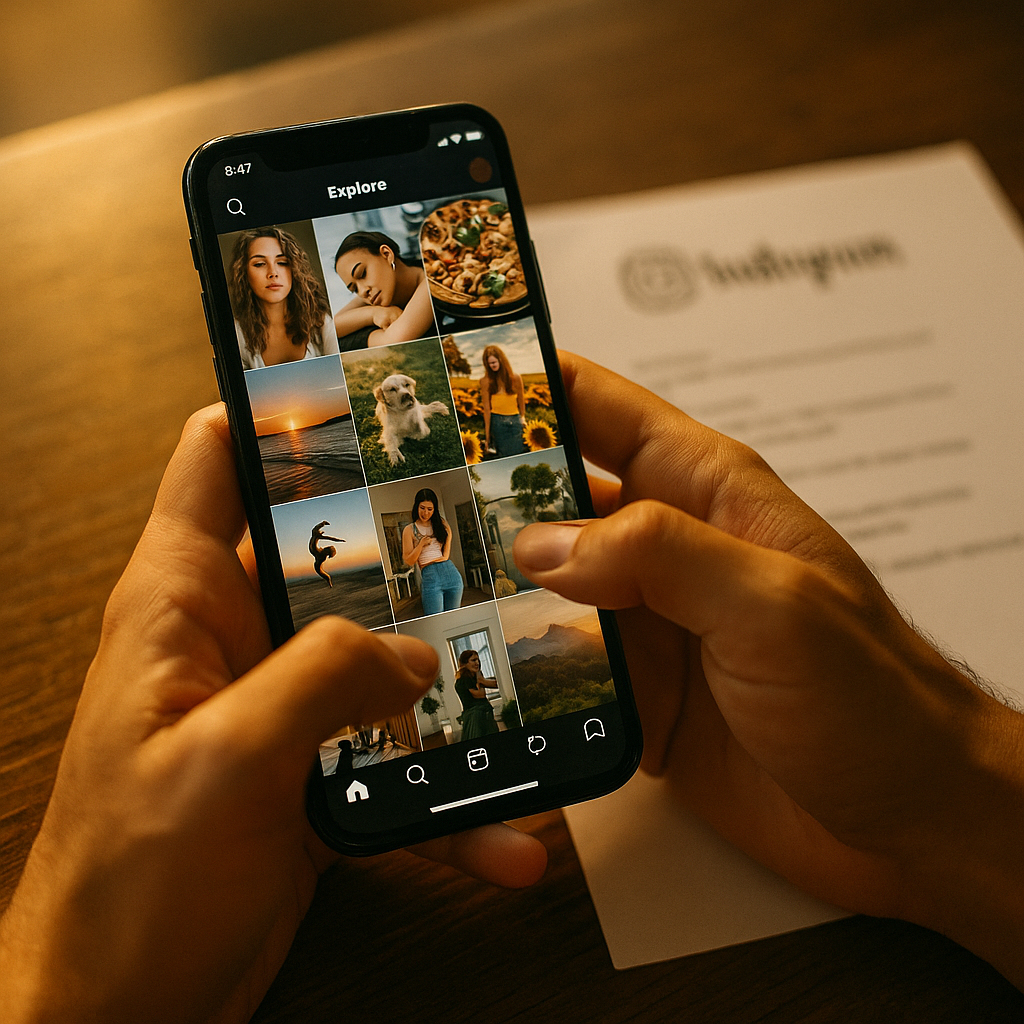
Instagram quietly rewired Explore’s ranking model this year, and the brands still optimizing for likes are bleeding reach they don’t even know they’re losing. Meta’s own creator tools documentation now weights save rate and “shopping intent” signals above comment volume for product content surfaced in Explore. If your Instagram Explore feed strategy hasn’t changed since last year, it’s already outdated.
This shift matters more than another algorithm tweak because Explore has become the primary discovery surface for product-led content, not the main feed or even Reels. For brands running influencer programs, that means the creative brief, the creator selection criteria, and the measurement stack all need an update.
What Actually Changed in Explore’s Ranking Logic
Meta has been public about testing what it calls “intent-weighted ranking” across Explore and Shop tabs, prioritizing content that historically correlates with downstream purchase behavior rather than pure engagement volume. Practically, that means a Reel with modest likes but high save-to-view ratio and product tag clicks can now outrank a viral-looking post with strong comments but low commercial signal.
The mechanics lean on a few specific signals:
- Save rate relative to reach, particularly saves within the first hour
- Product tag taps and time spent on tagged product stickers
- Share-to-DM behavior, which Meta treats as a stronger purchase-intent proxy than public shares
- Watch-through on Reels featuring product demos versus lifestyle-only framing
- Repeat visits to a creator’s shop tab after viewing their Explore content
This isn’t just theory. Sprout Social’s engagement benchmarks have shown save-driven content consistently outperforming comment-driven content in reach retention over the past two platform cycles, and Meta’s own business tools documentation increasingly frames saves as the top-tier signal for commerce discovery.
Content optimized for comments and shares used to win Explore placement. Now, content optimized for saves and product intent wins, and most creator briefs haven’t caught up.
Why Brands Are Still Briefing for the Wrong Metrics
Here’s the uncomfortable part. Most influencer briefs still ask creators to “drive engagement” as a catchall goal. That’s vague, and worse, it’s actively counterproductive under the new ranking logic. A creator chasing comments will often produce content that’s entertaining but skippable, the kind of thing you watch once and move past. Content built for saves needs to be useful enough that someone wants to reference it later: a how-to, a comparison, a styling breakdown, a “here’s exactly how I use this” walkthrough.
Brands running large-scale influencer programs need to rebuild briefs around this distinction now, not after Q1 reporting shows a reach cliff nobody can explain.
We covered a related shift in save and share signal briefing, and the same logic applies directly to Explore-specific product content. If your brief doesn’t explicitly ask for “save-worthy” framing, most creators will default to whatever format got them likes last quarter.
The Format Shift: From Aesthetic to Reference Material
Product content that performs in the new Explore environment tends to share a structure. It opens with a clear problem statement in the first two seconds, demonstrates the product solving that problem, and closes with a specific, repeatable action. Think “3 ways to style this jacket for work” rather than “obsessed with this jacket.” The former gets saved for later reference. The latter gets a like and gets forgotten.
This also changes how you should think about carousel sequencing for product drops. A carousel that front-loads the payoff loses save value because there’s nothing left to revisit. Sequencing that builds toward a usable takeaway, a recipe, a routine, a comparison chart, tends to hold save rates significantly higher. We go deeper on the mechanics in our carousel sequencing playbook, which is worth pairing with any Explore-focused creator brief.
Creator Selection: Reach Numbers Lie Now More Than Ever
A creator with 200,000 followers and mediocre save rates will underperform a creator with 40,000 followers and a loyal, bookmark-happy audience. That’s a hard pill for brand teams used to negotiating rates off follower count and average likes.
Ask any creator you’re vetting for their save rate on product content specifically, not their overall engagement rate. Most serious creators track this in their own analytics dashboards and will share it if asked directly, especially if it helps them land the deal. If they can’t produce it, that’s a signal in itself.
This ties directly into rate negotiation. Creators with strong save and shop-tab conversion data have real leverage now, and brands that don’t understand the new signal hierarchy risk overpaying for reach that Explore’s algorithm won’t reward. Our creator rate negotiation guide breaks down how to price against these newer intent signals instead of legacy vanity metrics.
Building an Explore-Optimized Content Framework
Here’s a practical framework marketing teams can run through before greenlighting any creator product content meant for Explore placement:
- Define the reference use case. What would someone realistically want to save this for? If there’s no answer, rework the concept.
- Front-load the problem, not the product. Explore’s ranking favors watch-through, and viewers stick around for problems they relate to, not brand names.
- Build in a natural “save trigger.” Phrases like “save this for later” or “screenshot this” measurably lift save rates when they’re earned, not just tacked on.
- Tag products early and often. Product tag interaction is now a ranking input, not just a shopping convenience.
- Test DM-share framing. Content that prompts “send this to a friend who needs this” activates the share-to-DM signal Meta weights heavily.
None of this replaces creative quality. It’s a filter, not a formula. A boring product demo with perfect save-trigger language still won’t perform. But a genuinely useful piece of content that ignores these mechanics will underperform its potential, and that’s the gap most brands are currently leaving on the table.
Measurement: What to Actually Track Now
Most brand dashboards still lead with reach and engagement rate as headline KPIs for influencer product content. Under the new Explore logic, those numbers can be actively misleading. A campaign showing flat reach but rising save rate and shop-tab visits might be outperforming a campaign with double the impressions.
Reprioritize your reporting stack around:
- Save rate as a percentage of reach (not just raw save count)
- Product tag click-through rate
- Shop-tab return visits attributable to specific creator content
- Share-to-DM rate, where platform reporting makes it available
- Explore-specific reach as a distinct line from feed and Reels reach
eMarketer’s recent commerce-content research has flagged save rate as an increasingly reliable leading indicator of purchase intent across visual platforms, which aligns with what Meta’s own ranking behavior suggests. If your reporting template still buries saves below comments, it’s time to reorder the hierarchy. For teams also managing cross-platform creator payouts and reconciliation, this is a good moment to revisit measurement infrastructure more broadly, something our cross-platform payout reconciliation guide addresses from an operational angle even though it’s YouTube-focused.
Compliance Doesn’t Get to Take a Back Seat
None of this Explore optimization work matters if the content isn’t properly disclosed, and increased product-tag interaction actually raises the disclosure stakes. The FTC’s endorsement guidance applies just as strictly to Explore-surfaced content as it does to feed posts, and Meta’s automated compliance checks have gotten more aggressive about flagging undisclosed commercial content in discovery surfaces specifically, since that’s where regulatory scrutiny tends to concentrate.
Brands optimizing hard for save and shop-tab signals should double-check that disclosure language isn’t getting trimmed for the sake of a punchier hook. Our disclosure compliance playbook covers how to keep reach optimization and legal compliance from working against each other, which is a more common conflict than most teams expect once creative teams start chasing save-trigger phrasing.
Quick Answers to What Teams Are Asking Right Now
Does this affect paid Explore placements too?
Yes, though less directly. Organic Explore ranking signals increasingly inform Meta’s algorithmic recommendations for paid amplification, meaning organic content with strong save performance tends to amplify more efficiently when boosted. Brands running paid social alongside organic creator content should treat save rate as a pre-flight indicator before committing ad spend to a piece of creator content.
How fast should teams expect to see reach changes?
Meta’s rollout has been gradual and regionally staggered, so some brand accounts saw shifts months ago while others are only now noticing reach volatility on product content. If your Explore reach has been unpredictable without an obvious creative reason, this ranking shift is a likely culprit.
Where This Leaves Brand Teams Heading Into Next Quarter
Audit your last quarter’s top five performing product posts by save rate, not likes, then reverse-engineer what made them save-worthy before writing a single new brief. Update creator scorecards to include save rate as a standard vetting metric alongside reach and engagement rate. That single change will do more for Explore performance than any creative overhaul.
Frequently Asked Questions
What is the Instagram Explore feed shift affecting brand content?
Meta has updated Explore’s ranking to prioritize save rate, product tag interaction, and share-to-DM behavior over likes and comments, particularly for product-tagged content. This favors useful, referenceable content over purely entertaining posts.
How can brands optimize creator content for Explore discovery?
Brief creators to build content around a clear reference use case, front-load the problem before the product, tag products early, and include natural save triggers. Prioritize creators with strong save rates over those with high follower counts but low save engagement.
Does follower count still matter for Explore performance?
Follower count still affects initial reach, but it no longer predicts Explore placement reliably. Creators with smaller, highly engaged audiences that save and revisit content often outperform larger accounts with low save rates.
What metrics should replace likes and comments in reporting?
Prioritize save rate as a percentage of reach, product tag click-through rate, shop-tab return visits, and share-to-DM rate where available. These signals now correlate more closely with both Explore placement and purchase intent.
Does this change affect disclosure and compliance requirements?
No, disclosure obligations remain the same regardless of ranking changes. However, brands optimizing aggressively for save-trigger language should ensure disclosure isn’t shortened or buried in the process, since FTC guidance applies fully to Explore-surfaced content.
Top Influencer Marketing Agencies
The leading agencies shaping influencer marketing in 2026
Agencies ranked by campaign performance, client diversity, platform expertise, proven ROI, industry recognition, and client satisfaction. Assessed through verified case studies, reviews, and industry consultations.
Moburst

-
2

The Shelf
Boutique Beauty & Lifestyle Influencer AgencyA data-driven boutique agency specializing exclusively in beauty, wellness, and lifestyle influencer campaigns on Instagram and TikTok. Best for brands already focused on the beauty/personal care space that need curated, aesthetic-driven content.Clients: Pepsi, The Honest Company, Hims, Elf Cosmetics, Pure LeafVisit The Shelf → -
3

Audiencly
Niche Gaming & Esports Influencer AgencyA specialized agency focused exclusively on gaming and esports creators on YouTube, Twitch, and TikTok. Ideal if your campaign is 100% gaming-focused — from game launches to hardware and esports events.Clients: Epic Games, NordVPN, Ubisoft, Wargaming, Tencent GamesVisit Audiencly → -
4

Viral Nation
Global Influencer Marketing & Talent AgencyA dual talent management and marketing agency with proprietary brand safety tools and a global creator network spanning nano-influencers to celebrities across all major platforms.Clients: Meta, Activision Blizzard, Energizer, Aston Martin, WalmartVisit Viral Nation → -
5

The Influencer Marketing Factory
TikTok, Instagram & YouTube CampaignsA full-service agency with strong TikTok expertise, offering end-to-end campaign management from influencer discovery through performance reporting with a focus on platform-native content.Clients: Google, Snapchat, Universal Music, Bumble, YelpVisit TIMF → -
6

NeoReach
Enterprise Analytics & Influencer CampaignsAn enterprise-focused agency combining managed campaigns with a powerful self-service data platform for influencer search, audience analytics, and attribution modeling.Clients: Amazon, Airbnb, Netflix, Honda, The New York TimesVisit NeoReach → -
7

Ubiquitous
Creator-First Marketing PlatformA tech-driven platform combining self-service tools with managed campaign options, emphasizing speed and scalability for brands managing multiple influencer relationships.Clients: Lyft, Disney, Target, American Eagle, NetflixVisit Ubiquitous → -
8

Obviously
Scalable Enterprise Influencer CampaignsA tech-enabled agency built for high-volume campaigns, coordinating hundreds of creators simultaneously with end-to-end logistics, content rights management, and product seeding.Clients: Google, Ulta Beauty, Converse, AmazonVisit Obviously →