


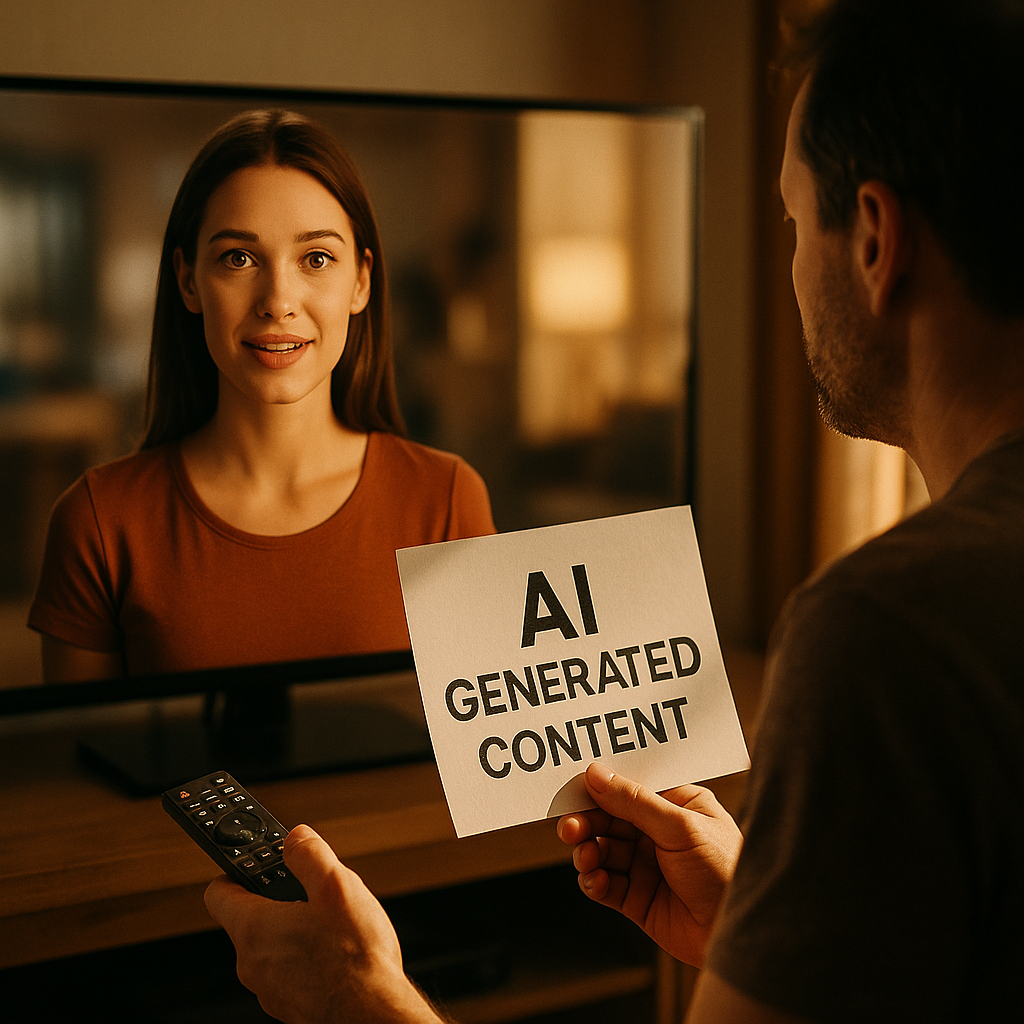
Sixty-seven percent of marketers say they’ve used or plan to use AI-generated avatars or synthetic spokespeople in creator campaigns, and almost none of them have a standardized disclosure protocol for it. That’s not a compliance gap. That’s a compliance canyon. As AI-generated spokesperson content keeps getting harder to distinguish from an actual human sitting in front of a ring light, the FTC’s disclosure rules haven’t gotten softer. They’ve gotten sharper, and brands are the ones holding the liability bag when a synthetic “customer testimonial” turns out to be fully fabricated.
This is the new frontier of fake-organic content: not a paid actor pretending to be a fan, but an AI persona that was never a person at all, dressed up to look like unscripted, authentic social proof.
Why Synthetic Spokespeople Broke the Old Disclosure Playbook
The FTC’s Endorsement Guides were written for a world where the risk was undisclosed payment. A real person got paid or got free product, and forgot (or chose not) to say so. The compliance frameworks brands built over the past decade, hashtags, disclosure banners, platform-native paid partnership tags, all assume there’s a human endorser behind the content whose relationship to the brand needs disclosing.
AI-generated spokespeople blow up that assumption. There’s no human relationship to disclose. There’s a synthetic one, and current guidance doesn’t cleanly map onto “this person doesn’t exist.” The content still looks organic: a talking-head video, a casual tone, an unboxing-style delivery. It still functions as social proof. It still influences purchase decisions. But it fails the basic test of what an endorsement is supposed to be, a genuine opinion from someone who actually used the thing.
If your audience can’t tell whether the “customer” in your ad is a real person, an actor, or a fully synthetic AI persona, you already have a disclosure problem, regardless of what the video says about the product.
Brands that have already navigated scripted actor disclosures understand the mechanics here. AI spokesperson content is really an extension of that same problem, just with a synthetic actor instead of a paid human one, and the disclosure obligations are arguably heavier because there’s an added layer of “is this even a real person” deception to untangle.
The FTC Is Already Signaling Where This Goes
The FTC has been explicit that AI-generated endorsements, testimonials, and reviews are squarely within its enforcement scope. Its guidance on fake reviews and AI-related deception makes clear that a synthetic persona presenting fabricated experience with a product is treated as a false endorsement, full stop. There’s no special carve-out because a generative model made the video instead of a human actor.
That means the same core question applies: does the audience understand what they’re looking at? If a reasonable consumer would assume they’re watching a real customer sharing a real experience, and they’re actually watching an AI-generated composite with no lived relationship to the product, that’s material deception. The FTC doesn’t need a new rule to go after that. It just needs to point to the existing framework and ask why disclosure didn’t happen.
Where Brands Are Actually Getting Burned
The failure points aren’t exotic. They’re operational, and they repeat across nearly every brand we’ve talked to in this space.
- Vendor black boxes. Marketing teams brief an agency or a UGC platform, get back “customer testimonial” style content, and never ask whether the person in the video is real. The vendor knows. The brand doesn’t ask. Ignorance isn’t a defense once the FTC comes calling.
- Platform tagging gaps. Meta, TikTok, and YouTube all have AI content labeling tools, but they’re opt-in and inconsistently applied. A brand can technically use the platform’s disclosure sticker and still fail an FTC materiality test if the label is buried, tiny, or contradicted by the content’s framing.
- Repurposing without re-disclosure. AI spokesperson content built for one channel gets pulled into paid social, a landing page testimonial carousel, or a sales deck, and the original disclosure doesn’t travel with it. This is the same failure pattern covered in repurposed UGC indemnification gaps, just with a synthetic layer added on top.
- Assuming “not a real endorsement” means no disclosure needed. Some legal teams have reasoned that because there’s no human endorser, the Endorsement Guides don’t technically apply. That’s a bet nobody should be making without outside counsel sign-off.
What a Real AI Spokesperson Disclosure Protocol Looks Like
Closing this gap isn’t about slapping “AI-generated” on a video and calling it done, though that’s a start. It requires a structured protocol that treats synthetic personas as a distinct content category with its own rules, not a subset of standard influencer disclosure.
- Label at first frame, not buried in captions. Disclosure needs to appear before the persuasive content lands, ideally as an on-screen visual element in the first few seconds, not a small text overlay that scrolls past in a nine-second hook.
- Separate “AI-assisted” from “AI-generated persona.” A real creator using AI editing tools is a different risk category than a fully synthetic spokesperson with no human behind it. Brands need distinct disclosure language for each, and vendor contracts should require this distinction upfront.
- Contractually require vendor disclosure of synthetic content. Every UGC or creator agency contract should include a clause requiring the vendor to flag any AI-generated or AI-composited spokesperson content before delivery. Silence should be treated as a material breach, not an oversight.
- Audit repurposed assets separately. Build a tagging system in your DAM that flags AI spokesperson content specifically, so it doesn’t quietly migrate into a channel where the original disclosure doesn’t apply.
- Document your reasonable consumer test. Legal and marketing should jointly sign off on whether a reasonable viewer would understand the content is synthetic. Keep that documentation. It’s your evidence of good-faith compliance if regulators ever ask.
This is essentially the same governance muscle brands built for actor-based UGC disclosure, extended one layer further into synthetic territory. If your team already has that infrastructure, adapting it is a matter of adding new categories, not rebuilding from scratch.
Agency Vetting Just Got More Complicated
Here’s the uncomfortable part: many brands don’t actually know how much of their “organic-style” creator content is synthetic, because the agencies producing it aren’t volunteering that information. Vetting an agency for AI transparency is now as important as vetting for FTC endorsement compliance generally, and the two questions are converging.
The same due diligence gaps that show up in agency vetting for endorsement compliance apply directly here. Ask vendors point-blank: does any of this content use AI-generated or AI-composited spokespeople? Get it in writing. If an agency hedges or can’t answer clearly, that’s a signal worth taking seriously before a contract gets signed, not after a campaign goes live.
There’s also a network-level risk. Brands sourcing content through large creator marketplaces or agency networks often have limited visibility into how sub-vendors produce assets. The verification challenges outlined in coverage of large-scale creator network verification apply just as much to synthetic content sourcing as they do to creator identity fraud.
Regional Complexity Makes This Harder, Not Easier
If you’re running campaigns across multiple markets, the AI spokesperson disclosure question doesn’t get simpler outside the U.S. The EU’s approach to synthetic content transparency is arguably stricter, particularly under frameworks tied to AI transparency obligations, and UK regulators have their own expectations for clear and prominent disclosure. A disclosure standard built for FTC compliance alone may not satisfy EU requirements around AI-generated content labeling, which increasingly demand explicit machine-generated labeling regardless of endorsement context.
Brands already managing multilingual and multi-jurisdiction disclosure complexity, the kind detailed in multilingual disclosure compliance, will recognize the pattern. AI spokesperson labeling needs a market-by-market matrix, not a single global template, because “AI-generated” doesn’t trigger the same legal threshold everywhere.
A disclosure that satisfies the FTC in the U.S. may still fail an EU AI transparency requirement. Global campaigns need a jurisdiction-specific disclosure matrix, not a single copy-paste label.
The Business Case, Beyond Just Avoiding Fines
There’s a temptation to treat this purely as a legal cost center. It’s not. Transparent AI disclosure is quietly becoming a trust signal, not a liability admission. Consumers are increasingly savvy about synthetic media, and audiences that feel deceived don’t just distrust the ad, they distrust the brand behind it. Clear, upfront AI labeling can actually perform better in trust-sensitive categories like health, finance, and parenting products, where authenticity is the entire value proposition.
Compare that to the reputational cost of getting caught running undisclosed synthetic testimonials. It’s not a fine you can quietly absorb. It’s a news cycle, a screenshot campaign, and a credibility hit that outlasts the ad spend it was meant to protect. Marketing teams that have already had to defend program credibility, similar to the scrutiny covered in brand liability exposure in creator networks, know how fast that reputational math turns negative.
For deeper background on where the FTC’s endorsement framework is heading generally, the agency’s own guidance remains the primary source brands should be monitoring directly at ftc.gov, alongside sector analysis from research firms like eMarketer and Statista tracking AI adoption rates in marketing content production.
Building the Internal Checklist
If you’re starting from zero, don’t try to solve this with a single policy document. Build it as a checklist that touches legal, creative, and media buying simultaneously:
- Does every vendor contract require disclosure of synthetic spokesperson use?
- Is there a DAM tag for AI-generated persona content, separate from AI-assisted editing?
- Does disclosure travel with the asset when it’s repurposed across channels?
- Is disclosure language jurisdiction-specific for regions with stricter AI transparency rules?
- Has legal signed off on the “reasonable consumer” understanding test for each major asset type?
Platforms are building tools to help here too. Meta’s Meta Business and TikTok’s TikTok Ads platforms both offer AI content labeling features, but treat them as a floor, not a ceiling. Platform compliance and legal compliance are not the same thing, and only one of them keeps you out of an FTC consent decree.
Next step: Pull your last quarter of creator and UGC assets, flag anything featuring an AI-generated or AI-composited spokesperson, and check whether disclosure appeared before the pitch, not after it. If you can’t complete that audit in an afternoon, that’s your compliance gap, and it’s the first thing to fix.
FAQs
What counts as an AI-generated spokesperson under FTC rules?
Any synthetic persona, whether fully AI-generated or AI-composited from real footage, that presents an opinion, testimonial, or endorsement without disclosing it’s not a genuine human customer or verified endorser.
Does using an AI avatar automatically require disclosure?
Yes, if the content functions as an endorsement or testimonial and a reasonable viewer would otherwise assume it’s a real person’s genuine experience. The FTC’s endorsement framework applies regardless of whether the endorser is human or synthetic.
Is a small “AI-generated” text tag enough to satisfy disclosure requirements?
Not necessarily. Disclosure needs to be clear and conspicuous, meaning it should appear prominently, ideally before the persuasive content, not buried in captions or fine print that most viewers will scroll past.
Who’s liable if a vendor delivers undisclosed AI spokesperson content?
The brand typically carries primary liability for FTC compliance regardless of vendor error, which is why contracts need explicit clauses requiring vendors to flag synthetic content before delivery.
Do EU rules on AI-generated content differ from U.S. FTC requirements?
Yes. EU AI transparency frameworks often require explicit labeling of AI-generated content independent of endorsement context, which can be stricter than what satisfies U.S. FTC disclosure standards alone.
FAQs
What counts as an AI-generated spokesperson under FTC rules?
Any synthetic persona, whether fully AI-generated or AI-composited from real footage, that presents an opinion, testimonial, or endorsement without disclosing it’s not a genuine human customer or verified endorser.
Does using an AI avatar automatically require disclosure?
Yes, if the content functions as an endorsement or testimonial and a reasonable viewer would otherwise assume it’s a real person’s genuine experience. The FTC’s endorsement framework applies regardless of whether the endorser is human or synthetic.
Is a small “AI-generated” text tag enough to satisfy disclosure requirements?
Not necessarily. Disclosure needs to be clear and conspicuous, meaning it should appear prominently, ideally before the persuasive content, not buried in captions or fine print that most viewers will scroll past.
Who’s liable if a vendor delivers undisclosed AI spokesperson content?
The brand typically carries primary liability for FTC compliance regardless of vendor error, which is why contracts need explicit clauses requiring vendors to flag synthetic content before delivery.
Do EU rules on AI-generated content differ from U.S. FTC requirements?
Yes. EU AI transparency frameworks often require explicit labeling of AI-generated content independent of endorsement context, which can be stricter than what satisfies U.S. FTC disclosure standards alone.
Top Influencer Marketing Agencies
The leading agencies shaping influencer marketing in 2026
Agencies ranked by campaign performance, client diversity, platform expertise, proven ROI, industry recognition, and client satisfaction. Assessed through verified case studies, reviews, and industry consultations.
Moburst

-
2

The Shelf
Boutique Beauty & Lifestyle Influencer AgencyA data-driven boutique agency specializing exclusively in beauty, wellness, and lifestyle influencer campaigns on Instagram and TikTok. Best for brands already focused on the beauty/personal care space that need curated, aesthetic-driven content.Clients: Pepsi, The Honest Company, Hims, Elf Cosmetics, Pure LeafVisit The Shelf → -
3

Audiencly
Niche Gaming & Esports Influencer AgencyA specialized agency focused exclusively on gaming and esports creators on YouTube, Twitch, and TikTok. Ideal if your campaign is 100% gaming-focused — from game launches to hardware and esports events.Clients: Epic Games, NordVPN, Ubisoft, Wargaming, Tencent GamesVisit Audiencly → -
4

Viral Nation
Global Influencer Marketing & Talent AgencyA dual talent management and marketing agency with proprietary brand safety tools and a global creator network spanning nano-influencers to celebrities across all major platforms.Clients: Meta, Activision Blizzard, Energizer, Aston Martin, WalmartVisit Viral Nation → -
5

The Influencer Marketing Factory
TikTok, Instagram & YouTube CampaignsA full-service agency with strong TikTok expertise, offering end-to-end campaign management from influencer discovery through performance reporting with a focus on platform-native content.Clients: Google, Snapchat, Universal Music, Bumble, YelpVisit TIMF → -
6

NeoReach
Enterprise Analytics & Influencer CampaignsAn enterprise-focused agency combining managed campaigns with a powerful self-service data platform for influencer search, audience analytics, and attribution modeling.Clients: Amazon, Airbnb, Netflix, Honda, The New York TimesVisit NeoReach → -
7

Ubiquitous
Creator-First Marketing PlatformA tech-driven platform combining self-service tools with managed campaign options, emphasizing speed and scalability for brands managing multiple influencer relationships.Clients: Lyft, Disney, Target, American Eagle, NetflixVisit Ubiquitous → -
8

Obviously
Scalable Enterprise Influencer CampaignsA tech-enabled agency built for high-volume campaigns, coordinating hundreds of creators simultaneously with end-to-end logistics, content rights management, and product seeding.Clients: Google, Ulta Beauty, Converse, AmazonVisit Obviously →