


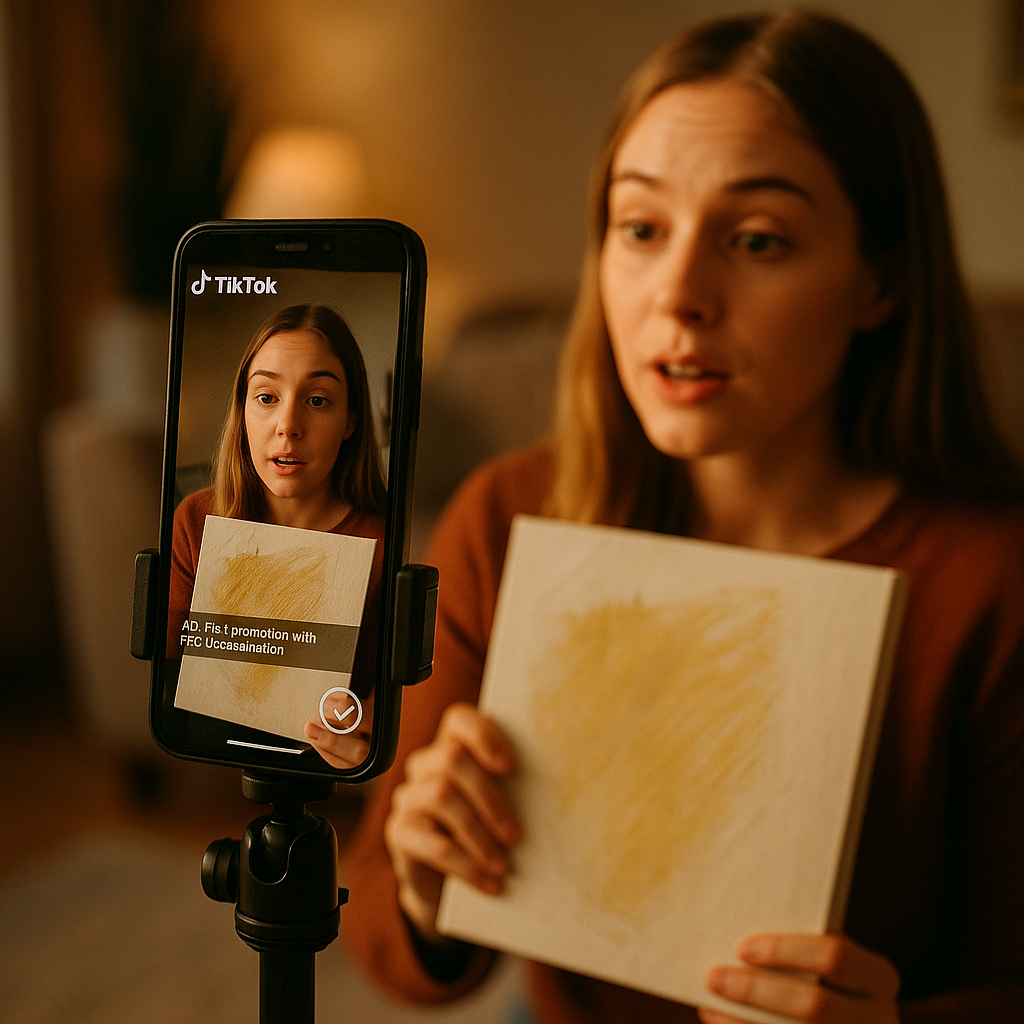
Would you disclose a paid ad that looks exactly like your cousin’s Saturday morning rant? That’s the question Canvas UGC forces on every brand running actor creator content right now. TikTok’s Canvas tool lets marketers build ads using performers who read scripts, hit marks, and deliver lines with the polish of a commercial, all while the final asset looks indistinguishable from an organic post. The FTC disclosure framework was not built with this format in mind, and that gap is now a live compliance risk for any brand running performance creative at scale.
What Canvas UGC Actually Is, and Why It Confuses the Disclosure Rules
Canvas is TikTok’s production tool for generating UGC-style ad creative using vetted performers rather than organic creators posting from their own accounts. Brands brief a script, cast an actor through a talent marketplace, and Canvas outputs a video that mimics the shaky-cam, direct-to-camera aesthetic of a genuine review. It’s fast, it’s cheap relative to full creator campaigns, and it converts well because audiences trust “someone like me” content more than obvious brand ads.
The problem is that the FTC’s endorsement guidance was written around a simple model: a real person genuinely uses a product, then tells their audience about it, and if there’s a material connection to the brand, they disclose it. Canvas breaks that model in half. There is no organic user. There is no audience relationship. There is an actor reading copy a brand wrote, uploaded through a brand’s ad account, targeted like any paid unit. Structurally, it’s a commercial. Aesthetically, it’s a testimonial. That mismatch is exactly what regulators flag when a format’s presentation diverges from its substance.
If the format is engineered to look organic while functioning as paid media, the FTC has already told you where it lands: treat it as an ad, disclose it as an ad, and don’t let the production style do the deciding for you.
The FTC’s Existing Rules Already Cover This, Even Without New Labels
Here’s the part brand teams tend to miss: you don’t need a new rule to have exposure. The FTC’s Endorsement Guides already require disclosure whenever there is a “material connection” between an endorser and a marketer, and payment for a scripted performance is about as material as it gets. The agency has also been explicit for years that fake or paid reviews presented as genuine consumer opinion are deceptive regardless of the production tool used to make them. Canvas doesn’t create a new legal category. It creates a new way to violate an old one at higher volume.
That distinction matters for how you build your compliance program. You’re not waiting on rulemaking. You’re already required to disclose, and the ad platform’s format just makes it easier to accidentally skip that step because the creative doesn’t visually cue “sponsored” the way a branded overlay or a recognizable creator account would. Our earlier coverage on scripted hook liability walked through how the scripting itself, not just the disclosure, creates exposure when performers make claims the brand can’t substantiate.
Where the Actual Labeling Gap Sits
The gap isn’t in the law. It’s in the operational layer between legal’s compliance memo and the media buyer who’s shipping forty Canvas variants a week. A few specific failure points show up repeatedly:
- Platform-native disclosure tools get skipped. TikTok’s built-in “paid partnership” label and Meta’s branded content tag exist, but Canvas assets are often uploaded as standard ad creative rather than routed through the partnership disclosure flow, which means the in-app label never appears.
- In-video verbal disclosure is inconsistent. Some scripts include a spoken “ad” or “sponsored” cue, others rely entirely on a small on-screen tag that disappears in three seconds, which the FTC has previously found insufficient for “clear and conspicuous” standards.
- Actor talent isn’t briefed on endorsement law. A hired performer reading a script has no personal liability exposure comparable to a creator endorsing a product they claim to use, but the brand’s liability doesn’t shrink just because the “endorser” is a hired actor rather than an organic fan.
- Volume outpaces review. When a single campaign spins up dozens of Canvas variants for testing, manual compliance review often can’t keep pace, so disclosure becomes a template assumption rather than a per-asset check.
None of this is exotic. It’s the same operational drift that shows up whenever a new production format scales faster than the review process built around it.
Does an Actor Reading a Script Count as an “Endorser”?
This is the question brand counsel keeps circling back to, and the honest answer is: it doesn’t matter for disclosure purposes. The FTC’s test isn’t whether the performer personally believes the claims. It’s whether the audience is likely to believe the content reflects genuine, independent opinion rather than paid messaging. An actor delivering “I’ve used this for three weeks and my skin has never looked better” triggers the same disclosure obligation as a real user saying it, because the deceptive potential to the viewer is identical. The performer’s actual belief is irrelevant. The viewer’s likely inference is what regulators care about.
That’s a subtle but important shift for teams used to thinking about creator disclosure as a talent-relationship issue. With Canvas, disclosure becomes a pure creative-and-format issue, decoupled from who the person on screen actually is.
Building a Labeling Standard That Doesn’t Wait for New Rules
Smart brand teams aren’t waiting for the FTC to publish Canvas-specific guidance, which may never arrive in a form specific enough to matter. Instead, they’re building internal standards that assume the strictest reasonable interpretation applies. A workable baseline looks like this:
- Route every Canvas asset through the platform’s native paid partnership or branded content disclosure tool, not just the standard ad upload flow.
- Require a spoken or on-screen “ad” cue that persists for the duration of the video, not a flash tag in the first three seconds.
- Maintain a substantiation file for every claim in the script, treating actor-delivered lines with the same evidentiary rigor as creator-delivered claims.
- Build a pre-launch checklist that a media buyer can run in under two minutes per asset, so compliance scales with production volume instead of falling behind it.
- Audit a sample of live Canvas creative monthly against the checklist, not just at campaign launch.
This isn’t about slowing down testing velocity. It’s about making disclosure a checkbox in the workflow rather than a judgment call left to whoever’s uploading creative at 11pm before a launch deadline.
Every dollar saved by skipping a disclosure review shows up later as a much larger number: legal fees, platform penalties, and the brand-trust cost of a public FTC action.
What This Means for Agency and Vendor Contracts
If you’re working with a Canvas production vendor or a UGC agency running the talent marketplace side, your contract needs to say explicitly who owns the disclosure decision. Too many statements of work treat “creative production” and “compliance review” as separate line items handled by different teams that never actually talk to each other. Build disclosure verification into the vendor’s deliverable definition, not as an optional add-on. The same logic that applies to agency vetting for endorsement gaps applies here: if your vendor can’t show you their disclosure checklist before the contract is signed, that’s a signal, not a formality.
It’s also worth tightening indemnification language specifically around actor-delivered claims. If a Canvas script overstates a product benefit and the actor delivers it convincingly, the brand is on the hook regardless of whether the performer is a career actor or a first-time UGC talent. Recent industry data from eMarketer shows performance creative spend continuing to shift toward UGC-style formats precisely because of their conversion lift, which means the volume problem here is only going to grow, not shrink.
How This Connects to Broader UGC Rights and Audit Practices
Disclosure doesn’t live in isolation. It’s one line item in a larger rights and compliance stack that should already include usage rights, talent releases, and claim substantiation. Teams building out a formal UGC rights audit framework should fold Canvas-specific disclosure checks directly into that process rather than treating it as a separate workstream. Similarly, cross-platform campaigns that mix Canvas ads with organic affiliate content need a single disclosure standard applied consistently, which is the exact challenge covered in our breakdown of reconciling multiple FTC rulebooks across platforms.
The organizations getting this right treat disclosure as infrastructure, not as a creative afterthought. They build it into the brief, the vendor contract, the upload workflow, and the monthly audit cycle. The ones getting it wrong are betting that regulators won’t notice the gap between how the content looks and how it actually functions. Given the FTC’s ongoing enforcement pattern on fake and undisclosed endorsements, that’s not a bet with great odds.
The Real Risk Isn’t the Format, It’s the Assumption
Nobody at the FTC has said Canvas needs its own rulebook, and it probably won’t get one anytime soon. But that’s precisely why brands can’t wait for explicit guidance before tightening their process. The existing endorsement framework already reaches this content. The risk sits entirely in the assumption that a slick, organic-looking ad format somehow falls outside rules written for less polished creator content. It doesn’t. If anything, the more convincingly an ad mimics genuine UGC, the more scrutiny it deserves, not less.
Next step: pull your last thirty days of Canvas creative and check each asset against a simple test: does it carry a persistent, clear disclosure that a reasonable viewer would notice within the first five seconds? If more than a handful fail that test, fix the workflow before you scale the format further.
FAQs
Does the FTC have specific rules for TikTok Canvas UGC ads?
No. The FTC has not issued Canvas-specific guidance. The existing Endorsement Guides already apply because they cover any content with a material connection between a brand and the person delivering the message, regardless of the production tool used.
Do actors hired through Canvas count as endorsers under FTC rules?
Yes, functionally. The disclosure requirement depends on whether viewers are likely to believe the content reflects genuine, independent opinion. An actor’s personal belief in the product is irrelevant to that test.
What’s the minimum disclosure standard for Canvas-style ad creative?
A clear, persistent disclosure (spoken or on-screen) that lasts through the video, combined with the platform’s native paid partnership or branded content label, rather than a brief tag that disappears within seconds.
Who is liable if a Canvas ad makes an unsubstantiated claim?
The brand carries primary liability regardless of whether the claim was delivered by a hired actor or an organic creator. Vendor contracts should assign disclosure and substantiation responsibility explicitly to avoid disputes after the fact.
How often should brands audit their Canvas UGC compliance?
Monthly spot audits against a documented checklist are a reasonable baseline for high-volume programs, with a mandatory review built into the pre-launch workflow for every new creative batch.
FAQs
Does the FTC have specific rules for TikTok Canvas UGC ads?
No. The FTC has not issued Canvas-specific guidance. The existing Endorsement Guides already apply because they cover any content with a material connection between a brand and the person delivering the message, regardless of the production tool used.
Do actors hired through Canvas count as endorsers under FTC rules?
Yes, functionally. The disclosure requirement depends on whether viewers are likely to believe the content reflects genuine, independent opinion. An actor’s personal belief in the product is irrelevant to that test.
What’s the minimum disclosure standard for Canvas-style ad creative?
A clear, persistent disclosure (spoken or on-screen) that lasts through the video, combined with the platform’s native paid partnership or branded content label, rather than a brief tag that disappears within seconds.
Who is liable if a Canvas ad makes an unsubstantiated claim?
The brand carries primary liability regardless of whether the claim was delivered by a hired actor or an organic creator. Vendor contracts should assign disclosure and substantiation responsibility explicitly to avoid disputes after the fact.
How often should brands audit their Canvas UGC compliance?
Monthly spot audits against a documented checklist are a reasonable baseline for high-volume programs, with a mandatory review built into the pre-launch workflow for every new creative batch.
Top Influencer Marketing Agencies
The leading agencies shaping influencer marketing in 2026
Agencies ranked by campaign performance, client diversity, platform expertise, proven ROI, industry recognition, and client satisfaction. Assessed through verified case studies, reviews, and industry consultations.
Moburst

-
2

The Shelf
Boutique Beauty & Lifestyle Influencer AgencyA data-driven boutique agency specializing exclusively in beauty, wellness, and lifestyle influencer campaigns on Instagram and TikTok. Best for brands already focused on the beauty/personal care space that need curated, aesthetic-driven content.Clients: Pepsi, The Honest Company, Hims, Elf Cosmetics, Pure LeafVisit The Shelf → -
3

Audiencly
Niche Gaming & Esports Influencer AgencyA specialized agency focused exclusively on gaming and esports creators on YouTube, Twitch, and TikTok. Ideal if your campaign is 100% gaming-focused — from game launches to hardware and esports events.Clients: Epic Games, NordVPN, Ubisoft, Wargaming, Tencent GamesVisit Audiencly → -
4

Viral Nation
Global Influencer Marketing & Talent AgencyA dual talent management and marketing agency with proprietary brand safety tools and a global creator network spanning nano-influencers to celebrities across all major platforms.Clients: Meta, Activision Blizzard, Energizer, Aston Martin, WalmartVisit Viral Nation → -
5

The Influencer Marketing Factory
TikTok, Instagram & YouTube CampaignsA full-service agency with strong TikTok expertise, offering end-to-end campaign management from influencer discovery through performance reporting with a focus on platform-native content.Clients: Google, Snapchat, Universal Music, Bumble, YelpVisit TIMF → -
6

NeoReach
Enterprise Analytics & Influencer CampaignsAn enterprise-focused agency combining managed campaigns with a powerful self-service data platform for influencer search, audience analytics, and attribution modeling.Clients: Amazon, Airbnb, Netflix, Honda, The New York TimesVisit NeoReach → -
7

Ubiquitous
Creator-First Marketing PlatformA tech-driven platform combining self-service tools with managed campaign options, emphasizing speed and scalability for brands managing multiple influencer relationships.Clients: Lyft, Disney, Target, American Eagle, NetflixVisit Ubiquitous → -
8

Obviously
Scalable Enterprise Influencer CampaignsA tech-enabled agency built for high-volume campaigns, coordinating hundreds of creators simultaneously with end-to-end logistics, content rights management, and product seeding.Clients: Google, Ulta Beauty, Converse, AmazonVisit Obviously →