


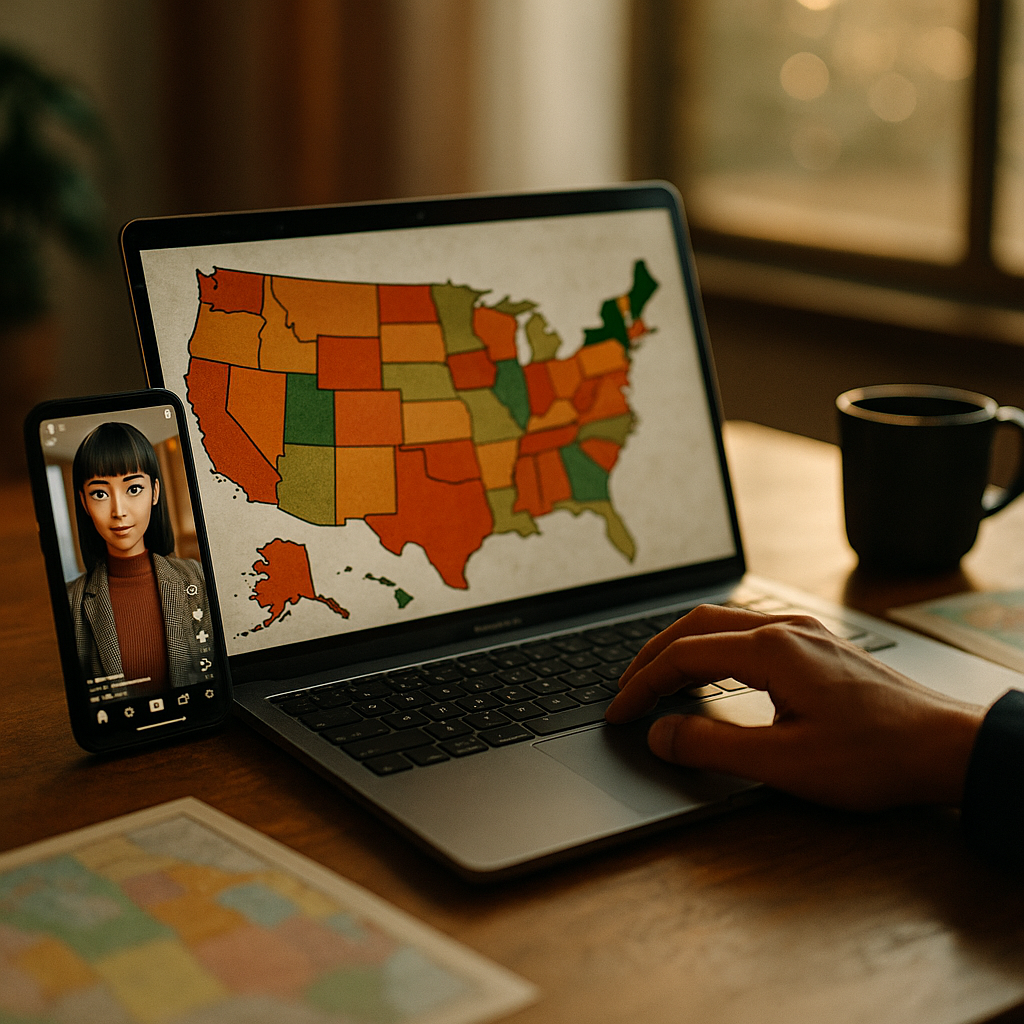
California fines start at $1,000 per undisclosed AI-generated post. Multiply that across a virtual influencer campaign running in all fifty states, and a “cost-efficient” digital creator program starts looking like a legal liability line item. State AI disclosure laws are no longer a distant compliance footnote. They are live, enforceable, and actively targeting the exact content format brands rushed toward to cut production costs: virtual influencers.
If your brand has a Lil Miquela type asset, an AI brand ambassador, or a synthetic spokesperson running paid partnerships, you need to know where the legal exposure sits right now, not after a state attorney general sends a letter.
Why This Is Suddenly a Brand Problem, Not Just a Creator Problem
For years, virtual influencer disclosure was treated as a platform policy issue. TikTok and Instagram had labeling tools, the FTC had general endorsement guidance, and brands assumed that was the ceiling of their obligation. That assumption is now wrong.
A growing bloc of states have passed or amended statutes that specifically address synthetic media, AI-generated personas, and digital replicas in commercial content. These laws don’t just apply to deepfake political ads. Several were written broadly enough to capture branded content featuring a fully computer-generated influencer, especially when that content implies human experience, opinion, or endorsement the persona cannot actually have.
The legal risk isn’t that your virtual influencer is fake. Everyone knows that. The risk is failing to say so clearly, at the moment of exposure, in a way state law now requires.
This connects directly to a pattern we’ve tracked across the creator compliance space: state-level rules filling gaps that federal guidance leaves open. We covered a similar dynamic in AI spokespeople disclosure requirements, where the FTC’s endorsement guides simply weren’t built with generative personas in mind. States are moving faster than federal rulemaking, and that’s exactly why brand legal teams keep getting caught flat-footed.
The Patchwork: Where Enforcement Actually Bites
Not every state treats virtual influencer content the same way. Some have consumer protection statutes broad enough to sweep in AI personas. Others have carved out AI-specific disclosure mandates tied to political or commercial speech. Here’s the practical breakdown brands need to map against their campaign footprint.
- California: AB 602 and related consumer protection amendments create liability for digitally altered or synthetic media used in commercial contexts without clear disclosure. Enforcement leans on the state’s existing unfair competition law, meaning private right of action is a real exposure, not just regulatory fines.
- New York: Proposed and enacted synthetic media transparency requirements focus on labeling AI-generated content shared for commercial gain. New York’s Attorney General has signaled interest in creator economy enforcement broadly, which raises the odds that virtual influencer campaigns get swept into a wider sweep.
- Texas: Texas’s approach ties into its broader deceptive trade practices statute. A synthetic persona endorsing a product without disclosure could trigger claims under existing consumer protection law even without a dedicated AI disclosure statute, because the deception theory doesn’t require a brand new law to work.
- Illinois: Building on its biometric privacy reputation (BIPA), Illinois regulators have shown willingness to stretch existing frameworks to cover synthetic likeness and digital replica issues, particularly where a virtual influencer’s design borrows recognizable traits from a real person.
- Washington and Colorado: Both have advanced AI transparency legislation with consumer-facing disclosure components that legal teams should monitor closely, since language in these bills increasingly references “synthetic performers” and “AI-generated endorsers” explicitly.
The pattern across all of these: state legislators are done waiting for federal clarity. They’re either passing dedicated AI transparency laws or reinterpreting existing consumer protection and privacy statutes to reach virtual influencer content. Either path lands on the same brand obligation, disclose clearly, disclose consistently, and don’t assume a small “AI” badge buried in a bio satisfies the requirement.
What Counts as Adequate Disclosure Right Now?
This is the part legal and marketing teams keep arguing about internally. Most state statutes borrow language from FTC guidance on clear and conspicuous disclosure, meaning a disclosure buried in a caption’s fifth line, or hidden behind a “see more” click, likely won’t hold up. The safer standard emerging across jurisdictions:
- Disclosure appears in the video or image itself, not only in text below it
- Language is unambiguous (“AI-generated,” “virtual influencer,” “synthetic media”) rather than vague terms like “digital creation”
- Disclosure repeats across platforms rather than relying on a one-time bio update
- Paid partnership tags stack with AI disclosure, they are not interchangeable
That last point trips up more brands than any other. A paid partnership label tells consumers about commercial relationship. An AI disclosure tells consumers about the nature of the persona itself. Regulators increasingly expect both, not one covering for the other. We broke down a related version of this stacking requirement in our piece on TikTok paid partnership labeling gaps, and the logic transfers directly to synthetic personas.
Building the Brand Risk Map
If your virtual influencer program runs nationally, treating disclosure as a single federal-standard checkbox is the single biggest mistake you can make right now. Instead, build a risk map that mirrors how your campaign actually distributes.
Start with where your paid media spend concentrates. If California, New York, Texas, and Illinois account for the bulk of your targeted impressions, those four jurisdictions should drive your baseline compliance standard, not the loosest state in your footprint. Compliance built to the strictest applicable standard travels well. Compliance built to the weakest standard creates exposure everywhere it applies below the strictest bar.
Brands running national virtual influencer campaigns should assume California’s disclosure bar is the floor, not the ceiling, for every market they touch.
Next, audit your contracts with the studios or agencies that manage your virtual influencer’s content pipeline. Who is contractually responsible for adding the disclosure at the point of publishing? Is it baked into the creative brief, or assumed to be “handled somewhere downstream”? This is the same operational gap we’ve seen cause disputes in adjacent areas of creator compliance, like the ownership and liability questions raised in UGC work for hire agreements. Ambiguous contract language is where enforcement risk quietly accumulates.
Where Agencies and In-House Teams Get This Wrong
The most common failure mode isn’t ignorance of the law. It’s assuming a platform-level label satisfies a state statute. TikTok’s “AI-generated” tool and Meta’s synthetic content labels are useful, but they were built for platform policy compliance, not state legal compliance. A brand can be fully compliant with TikTok’s content policy and still be exposed under California’s consumer protection statute if the platform label doesn’t meet the state’s “clear and conspicuous” threshold.
The second failure mode: treating virtual influencer disclosure as a one-time creative decision rather than an ongoing operational process. Laws change. State AG enforcement priorities shift. A disclosure standard that was defensible last year might not hold up against updated guidance this year. Brands with the least exposure treat this the way they treat data privacy compliance, as a living process with periodic legal review, not a checkbox closed at launch.
The Cost Comparison Nobody Runs Until It’s Too Late
Here’s the uncomfortable math. Virtual influencers got popular partly because they’re cheaper and more controllable than human creators, no scheduling conflicts, no off-brand behavior, no personal scandal risk. But the compliance overhead of running a multi-state synthetic media program can erode that cost advantage fast if legal review isn’t built into the production pipeline from day one.
Compare that to human creator programs, where disclosure norms are more mature and enforcement patterns are well documented. We’ve mapped how disclosure obligations stack across regulators in FTC and local disclosure rules, and the maturity gap between human creator compliance and virtual influencer compliance is stark. Brands moving fast into synthetic personas are essentially building compliance infrastructure from scratch, in real time, while regulators write the rules around them.
According to industry tracking from eMarketer, virtual influencer sponsored content has grown as a share of overall influencer marketing spend, which naturally increases the surface area for state-level scrutiny. More spend means more impressions in more jurisdictions, which means more chances for a single unclear disclosure to trigger a complaint.
Practical Steps for the Next Quarter
- Map every state where your virtual influencer campaign runs paid media or organic content with meaningful reach
- Identify which of those states have AI-specific disclosure statutes or precedent for stretching consumer protection law to cover synthetic media
- Set your disclosure standard to the strictest applicable jurisdiction, then apply it universally
- Update creative briefs and agency contracts to name a responsible party for disclosure placement, not just “the team”
- Build a quarterly legal review into the campaign calendar, not just a launch-day sign-off
None of this requires slowing down your virtual influencer strategy. It requires treating disclosure as infrastructure rather than an afterthought, similar to how Sprout Social and other platform partners have pushed brands to build governance workflows around AI content generally, not just around one campaign.
FAQs
Frequently Asked Questions
Do state AI disclosure laws apply to virtual influencers specifically, or only to deepfakes?
Most state statutes were written broadly enough to cover any synthetic or AI-generated persona used in commercial content, not just deepfakes of real people. Virtual influencers fall squarely within that broader definition in states like California, and existing consumer protection laws in states like Texas can reach the same content through deception claims even without a dedicated AI statute.
Is a platform’s built-in AI label enough to satisfy state disclosure requirements?
Not necessarily. Platform tools like TikTok’s AI-generated label or Meta’s synthetic content tag satisfy platform policy but weren’t designed to meet specific state legal standards for clear and conspicuous disclosure. Brands should treat platform labels as a starting point, not a compliance guarantee.
Which states currently pose the highest compliance risk for virtual influencer campaigns?
California, New York, Texas, and Illinois currently represent the highest combined risk due to a mix of dedicated AI transparency statutes and broad consumer protection or privacy laws that regulators have shown willingness to apply to synthetic media.
How is virtual influencer disclosure different from standard paid partnership disclosure?
Paid partnership disclosure tells consumers about a commercial relationship between a brand and creator. AI disclosure tells consumers that the persona itself is synthetic rather than human. Regulators increasingly expect both disclosures to appear together, not as substitutes for one another.
What is the safest disclosure standard for a brand running a national virtual influencer campaign?
Build your disclosure standard to match the strictest state your campaign reaches, typically California, and apply that standard universally across all markets. This avoids the need to maintain separate disclosure versions per state and reduces the chance of an inconsistent standard triggering enforcement in a stricter jurisdiction.
Run your next virtual influencer brief through the strictest state standard first, assign disclosure ownership in writing, and review it every quarter. That single habit closes most of the gap between where state law is heading and where most brand programs currently sit.
Top Influencer Marketing Agencies
The leading agencies shaping influencer marketing in 2026
Agencies ranked by campaign performance, client diversity, platform expertise, proven ROI, industry recognition, and client satisfaction. Assessed through verified case studies, reviews, and industry consultations.
Moburst

-
2

The Shelf
Boutique Beauty & Lifestyle Influencer AgencyA data-driven boutique agency specializing exclusively in beauty, wellness, and lifestyle influencer campaigns on Instagram and TikTok. Best for brands already focused on the beauty/personal care space that need curated, aesthetic-driven content.Clients: Pepsi, The Honest Company, Hims, Elf Cosmetics, Pure LeafVisit The Shelf → -
3

Audiencly
Niche Gaming & Esports Influencer AgencyA specialized agency focused exclusively on gaming and esports creators on YouTube, Twitch, and TikTok. Ideal if your campaign is 100% gaming-focused — from game launches to hardware and esports events.Clients: Epic Games, NordVPN, Ubisoft, Wargaming, Tencent GamesVisit Audiencly → -
4

Viral Nation
Global Influencer Marketing & Talent AgencyA dual talent management and marketing agency with proprietary brand safety tools and a global creator network spanning nano-influencers to celebrities across all major platforms.Clients: Meta, Activision Blizzard, Energizer, Aston Martin, WalmartVisit Viral Nation → -
5

The Influencer Marketing Factory
TikTok, Instagram & YouTube CampaignsA full-service agency with strong TikTok expertise, offering end-to-end campaign management from influencer discovery through performance reporting with a focus on platform-native content.Clients: Google, Snapchat, Universal Music, Bumble, YelpVisit TIMF → -
6

NeoReach
Enterprise Analytics & Influencer CampaignsAn enterprise-focused agency combining managed campaigns with a powerful self-service data platform for influencer search, audience analytics, and attribution modeling.Clients: Amazon, Airbnb, Netflix, Honda, The New York TimesVisit NeoReach → -
7

Ubiquitous
Creator-First Marketing PlatformA tech-driven platform combining self-service tools with managed campaign options, emphasizing speed and scalability for brands managing multiple influencer relationships.Clients: Lyft, Disney, Target, American Eagle, NetflixVisit Ubiquitous → -
8

Obviously
Scalable Enterprise Influencer CampaignsA tech-enabled agency built for high-volume campaigns, coordinating hundreds of creators simultaneously with end-to-end logistics, content rights management, and product seeding.Clients: Google, Ulta Beauty, Converse, AmazonVisit Obviously →